Pete's Dragon Budget
 AdventureFamilyFantasy1h 43m
Updated
Synopsis
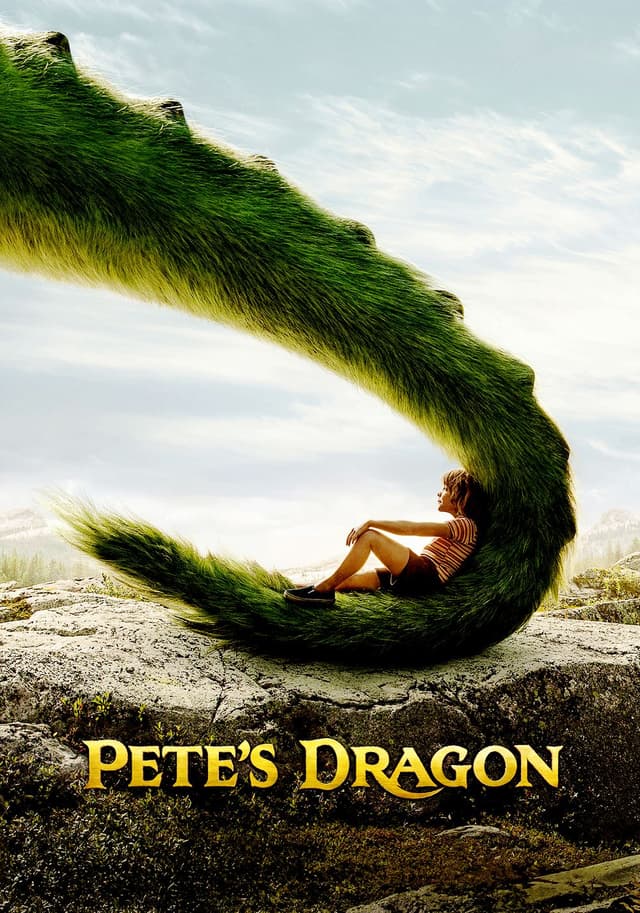
For years, old wood carver Mr. Meacham has delighted local children with his tales of the fierce dragon that resides deep in the woods of the Pacific Northwest. To his daughter, Grace, who works as a forest ranger, these stories are little more than tall tales... until she meets Pete, a mysterious 10-year-old with no family and no home who claims to live in the woods with a giant, green dragon named Elliott. And from Pete's descriptions, Elliott seems remarkably similar to the dragon from Mr. Meacham's stories. With the help of Natalie, an 11-year-old girl whose father Jack owns the local lumber mill, Grace sets out to determine where Pete came from, where he belongs, and the truth about this dragon.
What Is the Budget of Pete's Dragon?
Pete's Dragon (2016) was produced on a budget of $65 million by Walt Disney Pictures. The film represents a mid-tier production for the studio, modest by Disney's blockbuster standards but reflecting the deliberate creative choice to tell an intimate, character-driven story rather than a spectacle-first tentpole. Director David Lowery, best known for intimate independent films, brought a restrained sensibility that shaped how the budget was allocated.
The film grossed $76.2 million domestically and $143.3 million worldwide, giving it a solid if unremarkable theatrical run. While the worldwide total covered the production budget, it fell well short of the total investment once print and advertising costs are factored in. Disney's returns came from home video, streaming rights, and merchandising over subsequent years.
Key Budget Allocation Categories
- Above-the-Line Talent: Robert Redford, Bryce Dallas Howard, Karl Urban, and Wes Bentley form a strong ensemble cast. Redford's participation, in what was then announced as his final theatrical film before retirement, carried particular above-the-line weight. Combined talent fees for the principal cast and Lowery's director fee likely consumed $15 to $20 million of the $65 million budget.
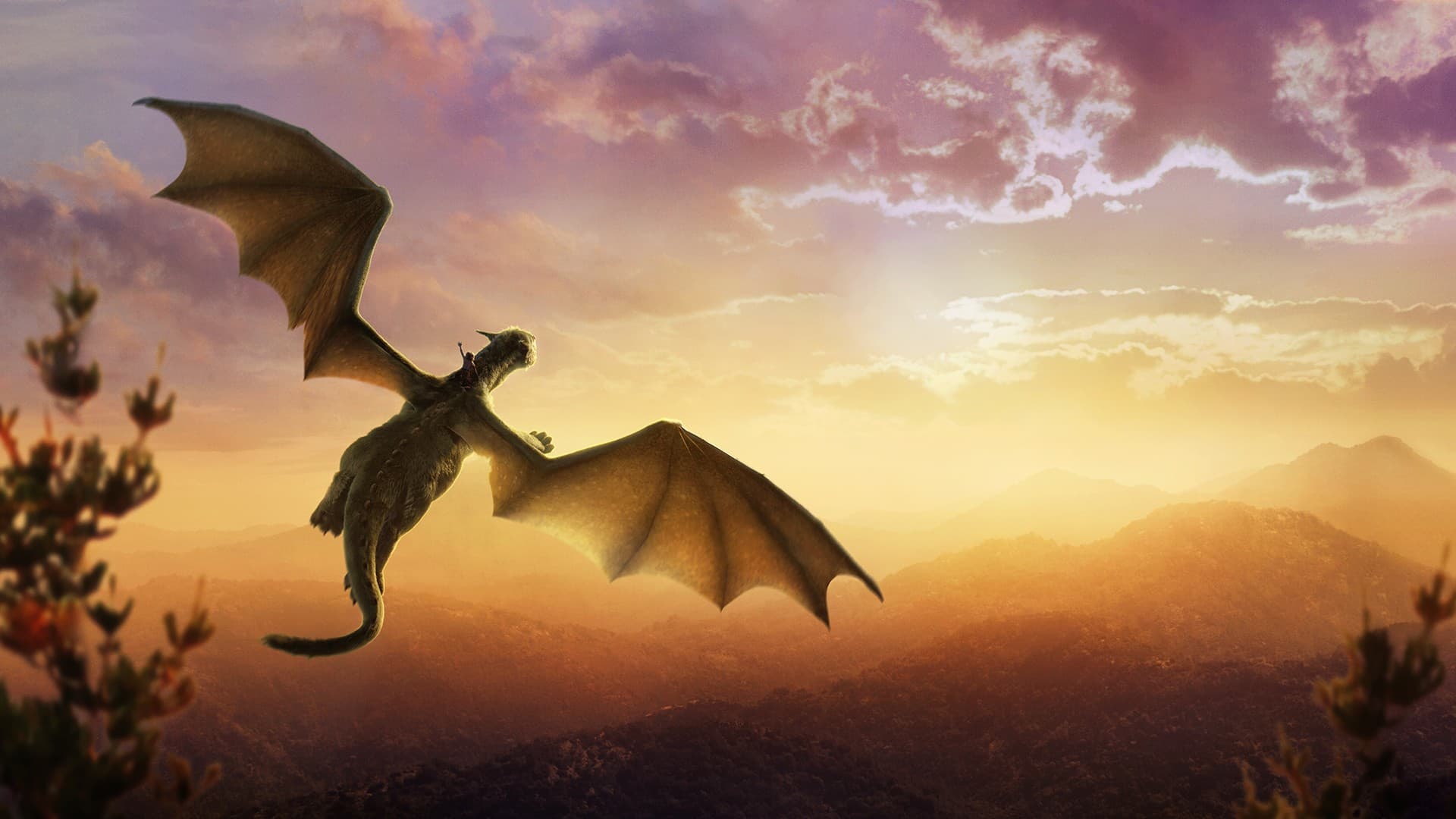
- Visual Effects (Elliot the Dragon): The film's defining creative challenge was rendering Elliot as a large, green-furred, photorealistic dragon capable of conveying emotion convincingly. Method Studios led the VFX work, developing the fur simulation and creature rig from scratch. The Elliot pipeline alone is estimated to have consumed $18 to $22 million, the single largest budget line item on the production.
- New Zealand Location Filming: Principal photography took place primarily in New Zealand's South Island, including the dense rainforests around the Fiordland National Park area and additional work at Stone Street Studios in Wellington. New Zealand's screen production rebate provided meaningful cost relief, and the remote, ancient feel of the locations was central to the film's visual identity. Location costs including transport, crew, and base camp infrastructure are estimated at $8 to $10 million.
- Production Design and Practical Sets: Production designer Eric Aadahl and the art department constructed the film's Pacific Northwest logging town set pieces with an emphasis on period-adjacent Americana. The practical environments complemented the largely location-based photography and helped ground the fantastical dragon story in a tactile, believable world.
- Music Score: Composer Daniel Hart, a frequent Lowery collaborator, wrote a spare, atmospheric folk-influenced score that became one of the film's most praised elements. Hart built the score around acoustic textures suited to the film's quiet emotional register, earning it particular critical recognition alongside the film's visual achievements.
How Does Pete's Dragon's Budget Compare to Similar Films?
At $65 million, Pete's Dragon occupies a specific niche: too expensive to be an indie, too restrained to compete as a Disney event film. Comparable productions illuminate how the studio positioned it.
- The Jungle Book (2016): Budget $175M | Worldwide $966M. Jon Favreau's photorealistic live-action remake released the same year demonstrated Disney's appetite for maximum-scale productions. Pete's Dragon was greenlit as a smaller, artistic counterpoint, built on the strength of Lowery's vision rather than franchise expectations.
- Cinderella (2015): Budget $95M | Worldwide $543M. Disney's previous live-action fairy tale adaptation spent $30 million more than Pete's Dragon while targeting a similarly family-oriented audience. The comparison reveals how lean Lowery's production was given its VFX demands.
- A Monster Calls (2016): Budget $43M | Worldwide $44M. This Spanish-British fantasy drama about a boy confronting grief through a monstrous creature is thematically the closest analog to Pete's Dragon. The extra $22 million bought New Zealand locations and a deeper VFX pipeline.
- Beasts of the Southern Wild (2012): Budget $1.8M | Worldwide $21M. The independent benchmark for child-in-nature survival fantasy. Pete's Dragon draws on similar thematic territory at 36 times the budget, exchanging Hushpuppy's bayou for Pete's ancient New Zealand forest.
Pete's Dragon Box Office Performance
Pete's Dragon was distributed by Walt Disney Studios Motion Pictures and opened on August 12, 2016, in wide release across North America. The film earned $21.5 million in its opening weekend, which tracked below studio expectations given the $65 million production budget. It held reasonably well in subsequent weeks due to positive word of mouth, ultimately accumulating $76.2 million domestically.
Internationally, the film added $67.1 million for a worldwide total of $143.3 million. Break-even for a $65 million production with estimated print and advertising spend of $40 million requires roughly $210 million worldwide at a 50 percent studio share. Pete's Dragon did not reach theatrical break-even, earning an estimated $71.6 million in studio-side revenue against a total investment of $105 million. Disney's merchandising program and strong home video performance reduced the net loss over subsequent years.
Box Office Breakdown
Pete's Dragon

On production budget alone, the film returned roughly $2.20 for every $1 invested. Once P&A is included, however, the theatrical window fell short of recovering the full investment. Disney's additional revenue streams, including home video, digital rentals, Disney+ streaming, and Elliot-branded merchandise, have made the film profitable over the long term.
Pete's Dragon Production History
Pete's Dragon (2016) originated as a studio-driven reimagining of the 1977 Disney musical of the same name. The original had maintained a cult following through decades of home video release, and Disney development executives pitched the concept of a live-action remake in the early 2010s as part of the studio's broader strategy of revisiting its catalogue, alongside Cinderella, The Jungle Book, and Beauty and the Beast.
David Lowery was an unconventional choice to direct a Disney family film. At the time, he was best known for Ain't Them Bodies Saints (2013), a quiet, mournful neo-Western that premiered at Sundance and earned him critical recognition but minimal commercial exposure. Lowery and co-writer Toby Halbrooks departed substantially from the 1977 source material: the setting was relocated from the coast of Maine to the Pacific Northwest, Pete's backstory was rewritten to focus on survival in the wilderness, and Elliot was reimagined as a large, green-furred, photorealistic creature. Lowery described the new Elliot as resembling a Labrador Retriever in emotional expressiveness.
Principal photography began in October 2014 in New Zealand, with additional studio work at Stone Street Studios in Wellington. The South Island's Fiordland and West Coast regions provided the dense, moss-covered rainforests that gave the film its signature visual atmosphere. Cinematographer Bojan Bazelli's approach emphasized natural light and wide lenses to make the forest feel genuinely vast and ancient. New Zealand's film incentive structure also made the international shoot economically competitive with domestic alternatives. Production wrapped in early 2015 after approximately 11 weeks of principal photography.
Post-production was extensive, driven by the complexity of the Elliot VFX pipeline. Method Studios built the dragon's fur simulation system and animation rig over more than a year. The film premiered at the Traverse City Film Festival in July 2016 and opened wide in North America on August 12, 2016. Robert Redford's participation drew sustained press attention after he announced Pete's Dragon would be among his final theatrical films before retirement, a statement he later reversed.
Awards and Recognition
Pete's Dragon received recognition from the animation and fantasy film communities, though it did not receive mainstream awards season attention despite its strong critical standing.
The Annie Awards nominated Pete's Dragon for Outstanding Achievement for Character Animation in a Live Action Production, recognizing the sustained quality of Elliot's performance animation across the film. The Saturn Awards, presented by the Academy of Science Fiction, Fantasy and Horror Films, included the film in their nominations, acknowledging it as a standout entry in family fantasy filmmaking for 2016.
Robert Redford's participation generated sustained entertainment media coverage when he announced Pete's Dragon as one of his final theatrical films before retirement. The attention reinforced the film's profile beyond its conventional marketing reach, drawing viewers who might not otherwise have sought out a family fantasy.
Critical Reception
Pete's Dragon earned an 88 percent approval rating on Rotten Tomatoes, reflecting broad critical enthusiasm for Lowery's unexpectedly personal approach to a family fantasy premise. Critics consistently praised the film's willingness to prioritize mood and emotional authenticity over conventional blockbuster spectacle, describing it as one of the more unusual family films Disney had released in years.
Reviewers singled out Oakes Fegley's performance as Pete as the emotional anchor of the film. Playing a feral child who has lived alone in the forest with a dragon for six years, Fegley carried scenes requiring both physical expressiveness and emotional restraint. Bojan Bazelli's cinematography, with its painterly use of the New Zealand forest environments, and Daniel Hart's folk-influenced score also received sustained critical attention.
Some critics noted that the film's quiet pacing and melancholy undertone made it a challenging sell to younger audiences expecting a more kinetically exciting Disney adventure. The box office underperformance relative to studio expectations was widely attributed to this tonal mismatch with the marketing position of a summer family blockbuster rather than any deficiency in filmmaking quality. Among critics and film enthusiasts, Pete's Dragon has grown in reputation since its initial release, increasingly cited as a hidden gem in Lowery's filmography and an example of what studio family filmmaking can achieve when a director is given genuine creative latitude.
Frequently Asked Questions
How much did it cost to make Pete's Dragon (2016)?
The production budget was $65,000,000, covering principal photography, cast and crew salaries, locations, sets, post-production, and music. Marketing and distribution (P&A) costs are estimated at an additional $32,500,000 - $52,000,000, bringing the total studio investment to approximately $97,500,000 - $117,000,000.
How much did Pete's Dragon (2016) earn at the box office?
Pete's Dragon grossed $143,695,338 worldwide.
Was Pete's Dragon (2016) profitable?
The film did not break even theatrically, earning $143,695,338 against an estimated $162,500,000 needed. Ancillary revenue may have improved the picture.
What were the biggest costs in producing Pete's Dragon?
The primary cost drivers were above-the-line talent (Oakes Fegley, Bryce Dallas Howard, Wes Bentley); visual effects, practical stunts, and A-list talent compensation.
How does Pete's Dragon's budget compare to similar adventure films?
At $65,000,000, Pete's Dragon is classified as a mid-budget production. The median budget for wide-release adventure films in the 2010s ranges from $30 - 80M for mid-budget to $150M+ for tentpoles. Comparable budgets: 300 (2007, $65,000,000); A Knight's Tale (2001, $65,000,000); Collateral (2004, $65,000,000).
Did Pete's Dragon (2016) go over budget?
There are no widely reported accounts of significant budget overruns for this production. However, studios rarely disclose precise budget overrun figures publicly. The reported production budget reflects the final estimated cost.
What was the return on investment (ROI) for Pete's Dragon?
The theatrical ROI was 121.1%, calculated as ($143,695,338 − $65,000,000) ÷ $65,000,000 × 100. This measures gross revenue against production budget only - it does not account for P&A or exhibitor shares.
Who directed Pete's Dragon and who were the key crew members?
Directed by David Lowery, written by Toby Halbrooks, David Lowery, shot by Bojan Bazelli, with music by Daniel Hart, edited by Lisa Zeno Churgin.
Where was Pete's Dragon filmed?
Pete's Dragon was filmed in United States of America.
Filmmakers
Pete's Dragon

Build budgets like this one in Saturation
Start from an industry-standard feature film template, import the schedule and rates you already have, and let the cost report keep itself current as you spend. Real-time collaboration, no spreadsheets.