Old School Budget
 Comedy1h 32m
Updated
Synopsis
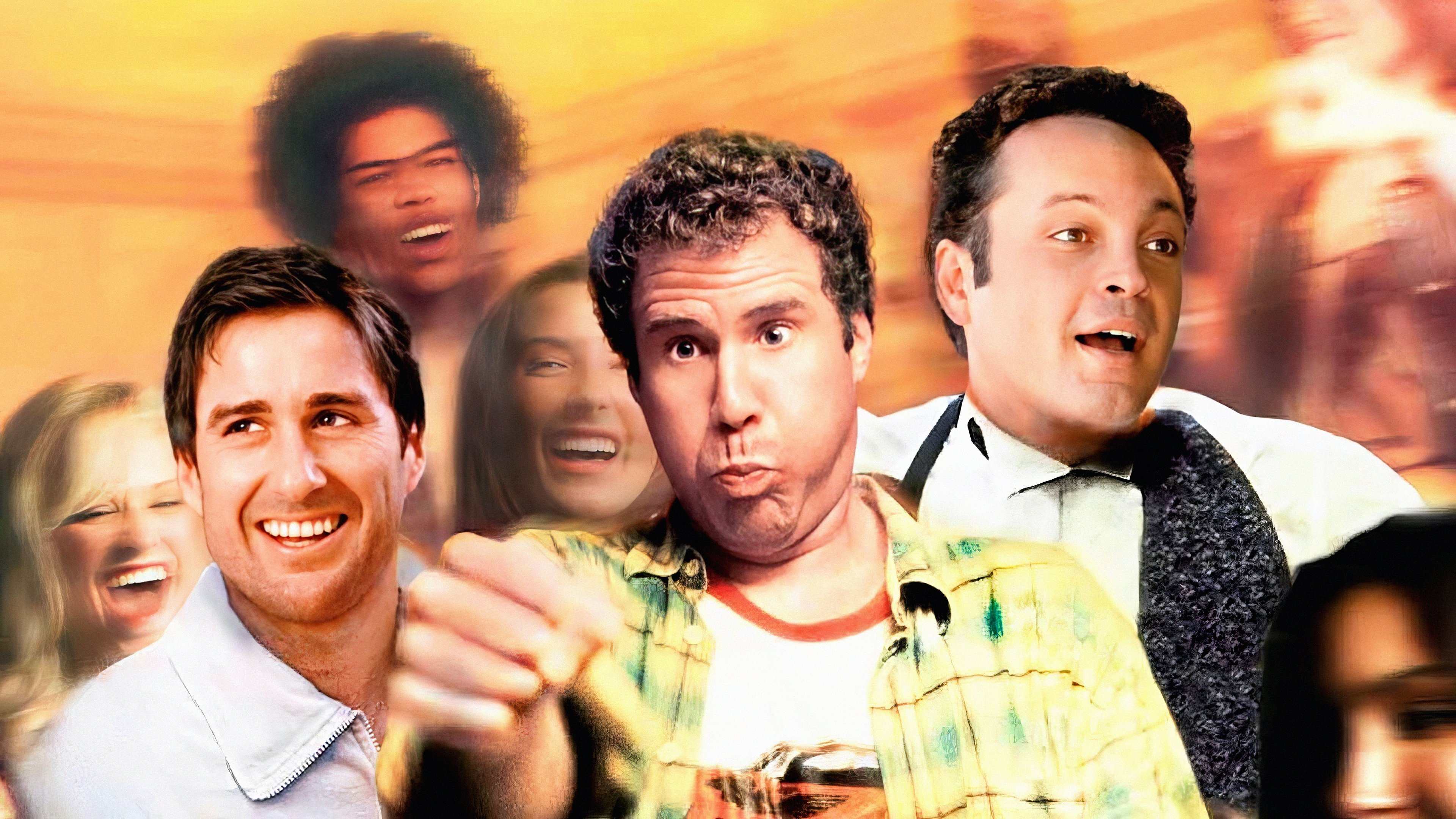
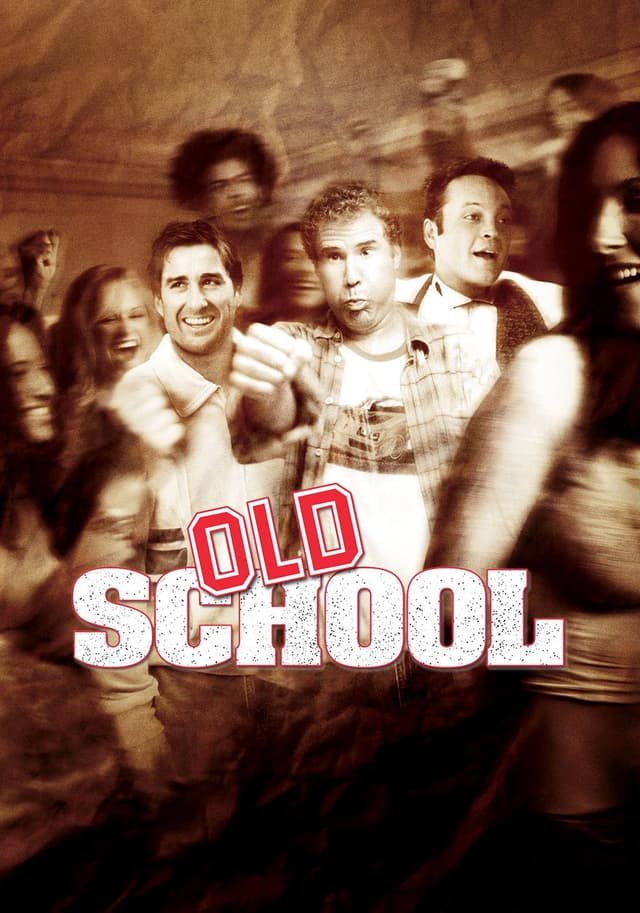
"Old School" (2003) is a comedy that follows the misadventures of three friends—Mitch, Frank, and Beanie—who are struggling to navigate the challenges of adulthood. After Mitch, played by Luke Wilson, experiences a painful breakup, he decides to reclaim his youth by throwing a wild party at a house he recently purchased. This spontaneous gathering quickly spirals into a full-blown fraternity, attracting a motley crew of college students and rekindling the carefree spirit of their younger days.
As the trio attempts to manage their new fraternity, they face a series of hilarious obstacles, including clashes with the university's strict administration and the antics of their eccentric new members. Frank, portrayed by Will Ferrell, brings his outrageous energy to the group, while Beanie, played by Vince Vaughn, tries to keep the chaos in check. The film explores themes of friendship, nostalgia, and the struggle to balance responsibilities with the desire for fun, all wrapped in a comedic package that resonates with anyone who has ever longed for the simplicity of their college years.
What is the budget of Old School?
"Old School," a comedy released in 2003, was directed by Todd Phillips and stars Luke Wilson, Will Ferrell. The production budget was $24,000,000, placing it in the mid-budget range for comedy productions of its era.
Key Budget Allocation Categories
While specific budget breakdowns are not publicly available, typical cost drivers for a comedy production like this include:
- Talent Salaries & Producing Deals: Established comedic talent can command $15 to 20 million per film, with top-tier stars earning even more through producing credits and backend deals.
- Production & Location Filming: While comedies generally avoid the VFX costs of action films, location shooting in recognizable cities or exotic locales adds meaningful production expense.
- Marketing & P&A (Prints & Advertising): Comedies rely heavily on marketing to build opening-weekend momentum.
- Production: At the 1998 Sundance Film Festival, Todd Phillips premiered the documentary Frat House to acclaim, winning the Grand Jury Prize in the Documentary category with co-director Andrew Gurland.
What were the major cost factors in Old School?
Several factors contributed to the overall production costs of "Old School."
- Talent Salaries: Talent Salaries & Producing Deals is one of the primary cost drivers in comedy productions of this scale.
- Production: Production & Location Filming is one of the primary cost drivers in comedy productions of this scale.
- Marketing: Marketing & P&A (Prints & Advertising) is one of the primary cost drivers in comedy productions of this scale.
How Does Old School's Budget Compare to Similar Films?
At $24,000,000, Old School sits in the mid-budget range. Here is how it compares to productions with a similar budget:
- Double Take (2001): Budget $24,000,000, Worldwide Gross $31,600,000
- Faster (2010): Budget $24,000,000, Worldwide Gross $23,081,726
- Fences (2016): Budget $24,000,000, Worldwide Gross $64,400,000
- Foxcatcher (2014): Budget $24,000,000, Worldwide Gross $12,096,300
- Howl's Moving Castle (2004): Budget $24,000,000, Worldwide Gross $236,049,757
The median budget for wide-release comedy films in the 2000s ranges from $30 to 80M for mid-budget to $150M+ for tentpoles.
Old School Box Office Performance
"Old School" earned $75,585,093 domestically and $87,100,000 worldwide at the box office. Against a production budget of $24,000,000, the film performed strongly at the box office.
A film typically needs to earn approximately twice its production budget to cover marketing and distribution costs. For "Old School," that break-even threshold was roughly $48,000,000. With worldwide earnings of $87,100,000, the film cleared that threshold comfortably.
Box Office Breakdown
Old School

At 262.9%, "Old School" earned roughly $3.63 for every $1 invested in production.
Old School Production History
At the Mitch-a-Palooza party, Snoop Dogg and Kokane perform "Paper'd Up", sampling Eric B & Rakim's track "Paid in Full". The soundtrack also includes "Fun Night" by Andrew W.K., "Dust in the Wind" by Kansas, "Hungry Like the Wolf", "The Farmer in the Dell", "Gonna Make You Sweat", "Louie Louie" by Black Flag, "Chariots of Fire", "Good Lovin' Gone Bad", "Master of Puppets" by Metallica, "Playground in My Mind" by Clint Holmes and "The Sound of Silence" by Simon & Garfunkel. The main song in this movie is "Here I Go Again" by Whitesnake, which is played when Will Ferrell's character is fixing his car and in the closing credits.
Awards and Recognition
5 nominations total
Critical Reception
Old School received mixed to positive reviews. On Rotten Tomatoes, the film has an approval rating of 60% based on reviews from 167 critics, with an average score of 5.7/10. The website's consensus states, "While not consistently funny, the movie does have its moments." On Metacritic, it has a score of 54 out of 100 based on reviews from 32 critics, indicating "Mixed or average reviews". Audiences surveyed by CinemaScore gave the film a grade B+ on a scale of A to F.
Frequently Asked Questions
How much did it cost to make Old School (2003)?
The production budget was $24,000,000, covering principal photography, cast and crew salaries, locations, sets, post-production, and music. Marketing and distribution (P&A) costs are estimated at an additional $12,000,000 - $19,200,000, bringing the total studio investment to approximately $36,000,000 - $43,200,000.
How much did Old School (2003) earn at the box office?
Old School grossed $75,585,093 domestic, $11,514,907 international, totaling $87,100,000 worldwide.
Was Old School (2003) profitable?
Yes. Against a production budget of $24,000,000 and estimated total costs of ~$60,000,000, the film earned $87,100,000 theatrically - a 263% ROI on production costs alone.
What were the biggest costs in producing Old School?
The primary cost drivers were above-the-line talent (Luke Wilson, Will Ferrell, Vince Vaughn); star comedian salaries, location filming, and aggressive marketing campaigns.
How does Old School's budget compare to similar comedy films?
At $24,000,000, Old School is classified as a low-budget production. The median budget for wide-release comedy films in the 2000s ranges from $30 - 80M for mid-budget to $150M+ for tentpoles. Comparable budgets: Double Take (2001, $24,000,000); Faster (2010, $24,000,000); Fences (2016, $24,000,000).
Did Old School (2003) go over budget?
There are no widely reported accounts of significant budget overruns for this production. However, studios rarely disclose precise budget overrun figures publicly. The reported production budget reflects the final estimated cost.
What was the return on investment (ROI) for Old School?
The theatrical ROI was 262.9%, calculated as ($87,100,000 − $24,000,000) ÷ $24,000,000 × 100. This measures gross revenue against production budget only - it does not account for P&A or exhibitor shares.
What awards did Old School (2003) win?
5 nominations total.
Who directed Old School and who were the key crew members?
Directed by Todd Phillips, written by Court Crandall, Todd Phillips, Scot Armstrong, shot by Mark Irwin, with music by Theodore Shapiro, edited by Michael Jablow.
Where was Old School filmed?
Old School was filmed in United States of America.
Filmmakers
Old School

Official Trailer
Build budgets like this one in Saturation
Start from an industry-standard feature film template, import the schedule and rates you already have, and let the cost report keep itself current as you spend. Real-time collaboration, no spreadsheets.