Nixon Budget
 DramaHistory3h 12m
Updated
Synopsis
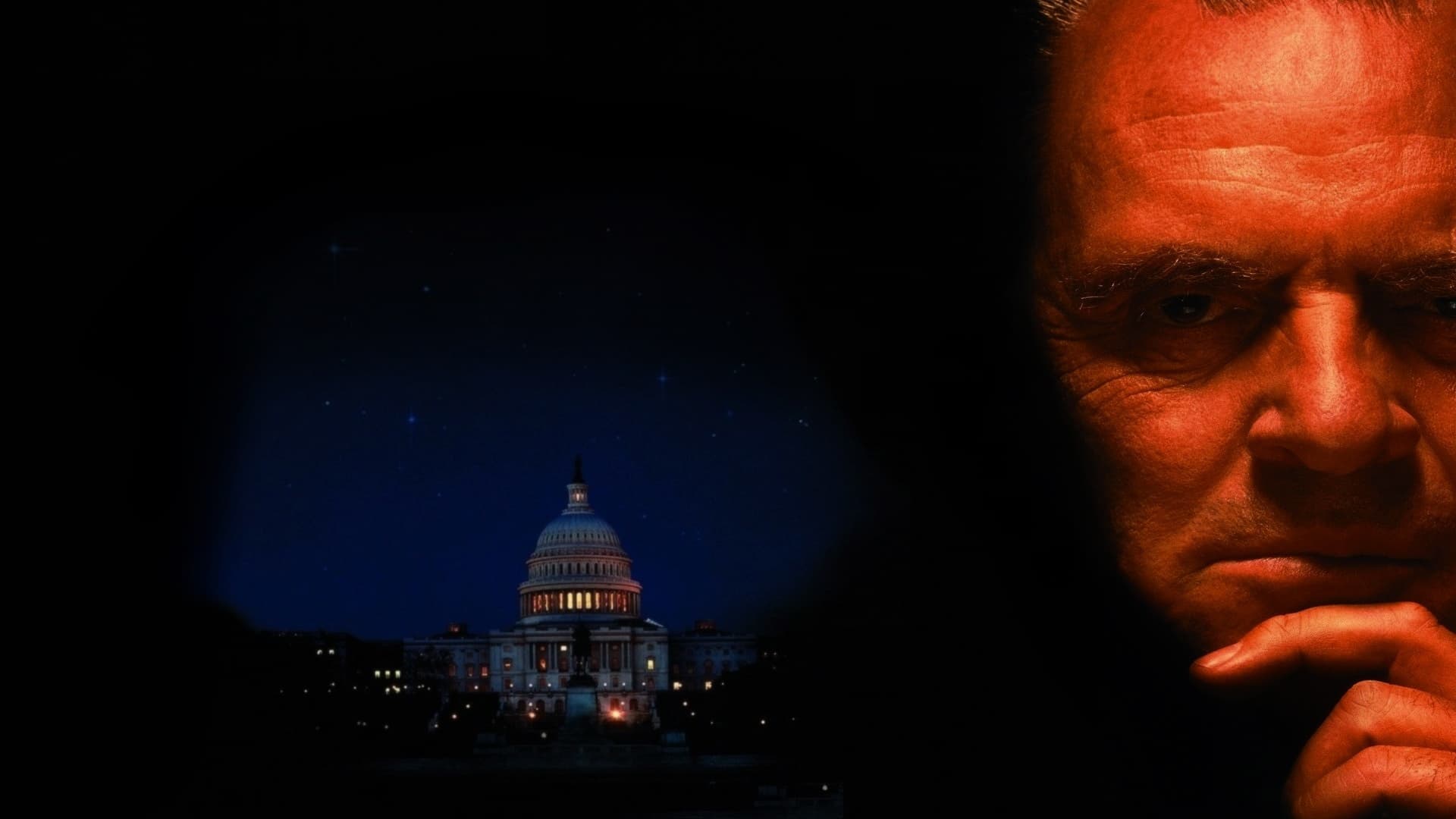
A psychological portrait of Richard Nixon, tracing his rise from a poor California childhood through Congress, the vice presidency, his 1960 defeat to John F. Kennedy, his improbable 1968 comeback, and his self-destruction in the Watergate scandal. Oliver Stone's 192-minute biographical drama charts how ambition, paranoia, and grievance combined inside one of the most consequential and tragic figures in modern American politics.
What Is the Budget of Nixon (1995)?
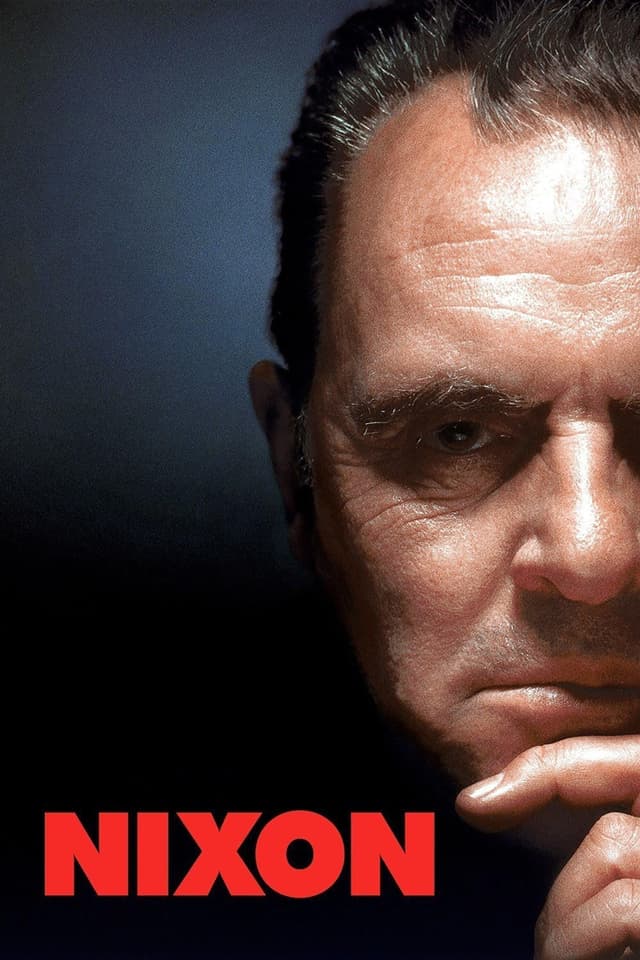
Nixon (1995), directed by Oliver Stone and distributed by Hollywood Pictures, a Disney subsidiary, was produced on a reported budget of $44,000,000. The sprawling biographical drama charted the political career and inner psychology of Richard Milhous Nixon from his impoverished Quaker childhood in Yorba Linda, California through his 1974 resignation in the wake of the Watergate scandal. Cinergi Pictures and Stone's Illusion Entertainment co-financed the production, with Hollywood Pictures providing North American distribution and Cinergi handling foreign sales.
The budget reflected the ambition of Stone's third presidential film. Following JFK (1991), which cost $40,000,000 and grossed $205,400,000 worldwide on the back of a saturated conspiracy thesis, Stone secured roughly the same capital to mount an even more interior and stylistically dense portrait. The 192-minute theatrical cut required extensive period reconstruction spanning five decades, A-list lead casting, archival film integration, and a John Williams score, all financed against a story whose commercial ceiling was capped by its dense political subject matter and demanding running time.
Key Budget Allocation Categories
Nixon's reported $44,000,000 budget was distributed across several core production areas:
- Above-the-Line Talent: Anthony Hopkins, fresh off his 1992 Best Actor Oscar for The Silence of the Lambs, commanded a top-tier quote to anchor the film's 192 minutes of screen time as Nixon. Director Oliver Stone took a writer-director-producer fee, and supporting roles for Joan Allen as Pat Nixon, Powers Boothe as Alexander Haig, Ed Harris as E. Howard Hunt, James Woods as H. R. Haldeman, Bob Hoskins as J. Edgar Hoover, Paul Sorvino as Henry Kissinger, and David Hyde Pierce as John Dean filled out an unusually deep ensemble whose collective quotes accounted for a substantial slice of the negative cost.
- Period Reconstruction: The film covered roughly fifty years of American political history, from the late 1920s through 1974, requiring exhaustive period detail. Production designer Victor Kempster oversaw recreations of the Oval Office, the White House Lincoln Sitting Room, the Watergate complex interiors, 1960 campaign whistle-stops, and 1968 Republican convention staging. Costume designer Richard Hornung dressed hundreds of speaking parts and crowd extras across decades of changing political and social fashion.
- Archival Integration and Stock Footage: Stone and editors Brian Berdan and Hank Corwin built the film around an aggressive collage of color and black-and-white footage, newsreels, archival broadcasts, and faux-archival inserts shot specifically for the film on period stocks. Licensing fees for genuine archival material, including network news coverage of the Kennedy assassination, the moon landing, and Vietnam combat reportage, formed a meaningful line item.
- Score and Music: John Williams composed the original score, his second collaboration with Stone after Born on the Fourth of July (1989) and JFK (1991). The brooding, often piano-driven score was recorded with the London Symphony Orchestra and underwrote a significant portion of the post-production budget. Williams also drew on period needle drops licensed for specific historical sequences.
- Visual Effects and Optical Work: Pacific Data Images contributed digital compositing, including the integration of Hopkins into archival footage and the seamless transitions between staged scenes and genuine newsreel material. Multiple optical houses handled film-on-film composites, split screens, and the picture-in-picture inserts that became a signature of Stone's 1990s style.
- Locations and Studio Stages: Principal photography was anchored at Sony Pictures Studios in Culver City with additional shooting across Los Angeles, including Beverly Hills, Pasadena, and Long Beach, plus a second-unit run to Washington, D.C. for exterior establishing photography of the Capitol, the Lincoln Memorial, and the White House perimeter.
- Prosthetics and Makeup: Makeup designer Matthew Mungle aged Hopkins, Allen, and the supporting ensemble across roughly five decades of life, with subtle prosthetic work to evoke Nixon's jowls, brow, and posture without descending into impersonation. The makeup department staffed multiple chairs running each shooting day to maintain continuity across the film's nonlinear structure.
How Does Nixon's Budget Compare to Similar Films?
At a reported $44,000,000, Nixon sits in the mid-range of historical political dramas and presidential biopics. The comparison set illustrates how its commercial outcome diverged from its budgetary peers:
- JFK (1991): Budget $40,000,000 | Worldwide $205,400,000. Stone's previous presidential film cost slightly less, generated controversy that fueled ticket sales, and ran 189 minutes, a structural sibling to Nixon that turned its comparable investment into a 5x worldwide multiple.
- Frost/Nixon (2008): Budget $25,000,000 | Worldwide $27,400,000. Ron Howard's adaptation of the David Frost interviews cost roughly half of Nixon and barely cleared its production budget worldwide, illustrating the narrow commercial ceiling for prestige Nixon material.
- Vice (2018): Budget $60,000,000 | Worldwide $76,100,000. Adam McKay's Dick Cheney biopic spent more than Nixon, leaned on a similar A-list lead transformation (Christian Bale), and earned only a modest multiple on its budget despite eight Oscar nominations.
- The Post (2017): Budget $50,000,000 | Worldwide $193,100,000. Steven Spielberg's Pentagon Papers drama, set in the same Nixon-era Washington, cost slightly more and earned more than triple Nixon's worldwide gross by anchoring its story around press freedom rather than the inner life of the president.
- Born on the Fourth of July (1989): Budget $14,000,000 | Worldwide $161,000,000. Stone's previous Tom Cruise collaboration cost less than a third of Nixon and earned a 10x multiple, evidence that the director's commercial peak preceded his late-career interior portraits.
- Malcolm X (1992): Budget $34,000,000 | Worldwide $73,000,000. Spike Lee's three-hour political biopic shared Nixon's structural ambition and length, undershot it on budget by about 25%, and out-grossed it worldwide despite a similarly dense subject and demanding running time.
Nixon Box Office Performance
Nixon opened on December 20, 1995, in limited release in New York and Los Angeles before expanding nationwide on December 22 to 514 theaters. The film grossed $2,201,153 in its opening weekend on 514 screens, a per-screen average of $4,283 that ranked seventh for the weekend and sat well below the year-end box office leaders Toy Story and Jumanji. Nixon never broke into the weekend top three and was effectively finished as a theatrical proposition by mid-January 1996.
Against a reported production budget of $44,000,000, the film needed approximately $88,000,000 in worldwide gross to reach profitability when accounting for marketing and distribution costs. Here is the financial breakdown:
Box Office Breakdown
Nixon

Nixon returned approximately $0.21 in theatrical revenue for every $1 invested when measured against total estimated production and marketing spend, placing it among the most pronounced commercial disappointments of Oliver Stone's studio career. Domestic gross of $13,681,765 comprised essentially the entire worldwide haul, with international distribution through Cinergi never producing meaningful theatrical revenue and the film effectively functioning as a domestic-only release for an American political subject.
The shortfall contributed to the slow-motion collapse of Cinergi Pictures, which absorbed losses on Nixon alongside The Scarlet Letter (1995) and Color of Night (1994) before winding down its production operations by 1998. Hollywood Pictures, already under pressure from a string of underperformers, was folded into Disney's Touchstone label later in the decade. Critically, however, Nixon found a substantial second life on home video, laserdisc, and eventually a 212-minute extended director's cut DVD release that cemented its reputation among Stone partisans.
Nixon Production History
Development on Nixon began in earnest in 1993, when Oliver Stone optioned a screenplay treatment by Stephen J. Rivele and Christopher Wilkinson and began an extensive rewrite with the pair to fold in his own research and dramatic shape. Stone had been circling the Nixon presidency since the late 1980s and treated the project as a natural sequel to JFK (1991), with the two films forming what he described as a diptych of postwar American political tragedy. Cinergi Pictures, run by Andrew G. Vajna, financed and packaged the production with Hollywood Pictures as North American distributor.
Casting Anthony Hopkins was a deliberate counterintuitive choice. Hopkins, a Welsh actor with little physical resemblance to Nixon, beat out reported finalists Tom Hanks, Jack Nicholson, Warren Beatty, and Gene Hackman after Stone became convinced that a performer who could not be confused with the historical figure would liberate the role from impersonation. Joan Allen was cast as Pat Nixon, with Powers Boothe as Alexander Haig, Ed Harris as E. Howard Hunt, James Woods as H. R. Haldeman, Paul Sorvino as Henry Kissinger, Bob Hoskins as J. Edgar Hoover, Mary Steenburgen as Nixon's mother Hannah, and David Hyde Pierce, in his first major film role, as White House counsel John Dean.
Principal photography ran from May to August 1995 across Los Angeles, California, with Sony Pictures Studios in Culver City serving as the production base and additional location work at the Ambassador Hotel, Pasadena City Hall (doubling for Washington interiors), the Greystone Mansion in Beverly Hills, Long Beach, and the Los Angeles Convention Center. A second-unit ran to Washington, D.C. for establishing exteriors of the Capitol, the White House perimeter, and the Lincoln Memorial. Stone shot on a mixture of 35mm color, 16mm black-and-white, and Super 8 to evoke the texture of period news photography, with cinematographer Robert Richardson coordinating the multi-gauge approach.
Post-production was unusually intense. Stone, editors Brian Berdan and Hank Corwin, and composer John Williams worked into November 1995 on a 192-minute theatrical cut that Hollywood Pictures pushed through to a December 20 platform release in order to qualify for that year's Academy Awards. A subsequent 212-minute director's cut was prepared for the 1996 home video release. Williams' score, recorded with the London Symphony Orchestra, became one of the most discussed elements of the finished film and earned the only one of the production's four Oscar nominations to come from a craft category.
Awards and Recognition
Nixon earned four Academy Award nominations at the 68th Oscars in March 1996: Best Actor (Anthony Hopkins), Best Supporting Actress (Joan Allen), Best Original Screenplay (Stephen J. Rivele, Christopher Wilkinson, and Oliver Stone), and Best Original Dramatic Score (John Williams). The film converted none of its nominations, with the wins going to Nicolas Cage for Leaving Las Vegas, Mira Sorvino for Mighty Aphrodite, Christopher McQuarrie for The Usual Suspects, and Luis Bacalov for Il Postino respectively.
Hopkins and Allen also received Golden Globe nominations for Best Actor in a Drama and Best Supporting Actress, with neither winning. Joan Allen took home the National Board of Review Best Supporting Actress prize and a New York Film Critics Circle Award for the same role, the strongest critics' group endorsement the film received. The Writers Guild of America nominated the screenplay for Best Original Screenplay.
Outside the major precursor circuit, Nixon was named to multiple year-end top ten lists, including those of Roger Ebert and the Los Angeles Times. The film has been repeatedly reassessed since release, with the Criterion Collection issuing the extended director's cut on DVD in 2008, an unusual prestige imprimatur for a commercial disappointment.
Critical Reception
Nixon received generally positive reviews from major critics, though the response was more divided than for JFK four years earlier. The film holds a 77% approval rating on Rotten Tomatoes based on 60 critic reviews, with a critical consensus that praised Hopkins' performance and Stone's ambition while noting the film's length and density. On Metacritic, the film scored 75 out of 100, indicating generally favorable reviews. CinemaScore did not survey opening weekend audiences for the limited release.
Roger Ebert gave the film four stars in the Chicago Sun-Times and called it "a brilliant, frightening, deeply involving portrait of a man who became the most powerful in the world, and used that power mostly to wound himself." Janet Maslin of The New York Times praised Hopkins for "a colossal performance" and credited Stone with finding "a sympathetic vein in the most unsympathetic of American presidents." Todd McCarthy in Variety described the film as "intelligent, ambitious and finally exhausting," capturing the dominant ambivalence among the trade press.
Detractors objected to the film's nearly three-and-a-quarter-hour running time, the use of speculative scenes implying Nixon's involvement in CIA-linked conspiracies, and the fragmented chronology. Members of the Nixon family, including daughters Tricia Nixon Cox and Julie Nixon Eisenhower, publicly denounced the film as a character assassination, and the Nixon Library issued a formal rebuttal of several of its claims. Despite the family pushback and the box office collapse, the critical consensus solidified over time as one of the more respected entries in Stone's filmography, frequently cited alongside JFK and Born on the Fourth of July as the high-water mark of his 1990s political work.
Frequently Asked Questions
How much did it cost to make Nixon (1995)?
The reported production budget was $44,000,000. Hollywood Pictures, a Disney subsidiary, co-financed and distributed the film with Cinergi Pictures, run by Andrew G. Vajna, and Oliver Stone's Illusion Entertainment.
How much did Nixon (1995) earn at the box office?
The film grossed $13,681,765 worldwide, essentially all of it from the domestic North American market. It opened on December 20, 1995 in limited release before expanding to 514 theaters on December 22, where it took in $2,201,153 in its opening wide weekend.
Was Nixon a box office bomb?
Yes. Against a $44,000,000 production budget and an estimated $20,000,000 to $25,000,000 in marketing spend, the film returned approximately $0.21 in worldwide gross for every $1 invested. It is widely cited as one of the more pronounced commercial disappointments of Oliver Stone's studio career and contributed to the eventual winding down of co-financier Cinergi Pictures.
Who directed Nixon (1995)?
Oliver Stone directed the film, working from a screenplay he co-wrote with Stephen J. Rivele and Christopher Wilkinson. Nixon was Stone's third presidential film after Born on the Fourth of July (1989) and JFK (1991) and his second directorial collaboration with composer John Williams.
Who played Richard Nixon in Oliver Stone's film?
Anthony Hopkins played Richard Nixon. The Welsh actor, fresh off his 1992 Best Actor Oscar for The Silence of the Lambs, was a deliberate counterintuitive choice; Stone became convinced that a performer who could not be confused with the historical figure would liberate the role from impersonation. Tom Hanks, Jack Nicholson, Warren Beatty, and Gene Hackman were among the reported finalists.
Where was Nixon (1995) filmed?
Principal photography ran from May to August 1995 in Los Angeles, California, anchored at Sony Pictures Studios in Culver City. Additional location work took place at the Ambassador Hotel, Pasadena City Hall (doubling for Washington interiors), Greystone Mansion in Beverly Hills, Long Beach, and the Los Angeles Convention Center. A second unit shot establishing exteriors of the Capitol, the White House perimeter, and the Lincoln Memorial in Washington, D.C.
How many Oscar nominations did Nixon receive?
Nixon earned four Academy Award nominations at the 68th Oscars in March 1996: Best Actor (Anthony Hopkins), Best Supporting Actress (Joan Allen), Best Original Screenplay (Stephen J. Rivele, Christopher Wilkinson, Oliver Stone), and Best Original Dramatic Score (John Williams). The film won none of the four.
How long is Nixon (1995)?
The original theatrical cut released on December 20, 1995 ran 192 minutes. A subsequent 212-minute extended director's cut was prepared for the 1996 home video release and was later issued by the Criterion Collection on DVD in 2008.
What did critics think of Nixon (1995)?
The film received generally positive reviews, with a 77% approval rating on Rotten Tomatoes based on 60 critic reviews and a 75 out of 100 score on Metacritic. Roger Ebert gave the film four stars and called it "a brilliant, frightening, deeply involving portrait." Detractors objected to its 192-minute running time, the use of speculative scenes implying Nixon's involvement in CIA-linked conspiracies, and the fragmented chronology.
How does Nixon compare to Oliver Stone's JFK?
JFK (1991) cost $40,000,000 and grossed $205,400,000 worldwide, a 5x multiple. Nixon cost $44,000,000 and grossed $13,681,765 worldwide, falling well below its production budget. Stone treated the two films as a diptych of postwar American political tragedy, but JFK's conspiracy thesis fueled controversy that drove ticket sales in a way Nixon's interior psychological portrait could not replicate.
Filmmakers
Nixon

Official Trailer
Build budgets like this one in Saturation
Start from an industry-standard feature film template, import the schedule and rates you already have, and let the cost report keep itself current as you spend. Real-time collaboration, no spreadsheets.