Network Budget
 Drama2h 2m
Updated
Synopsis
In the 1970s, terrorist violence is the stuff of networks' nightly news programming and the corporate structure of the UBS Television Network is changing. Meanwhile, Howard Beale, the aging UBS news anchor, has lost his once strong ratings share and so the network fires him. Beale reacts in an unexpected way. We then see how this affects the fortunes of Beale, his coworkers (Max Schumacher and Diana Christensen), and the network.
What is the budget of Network?
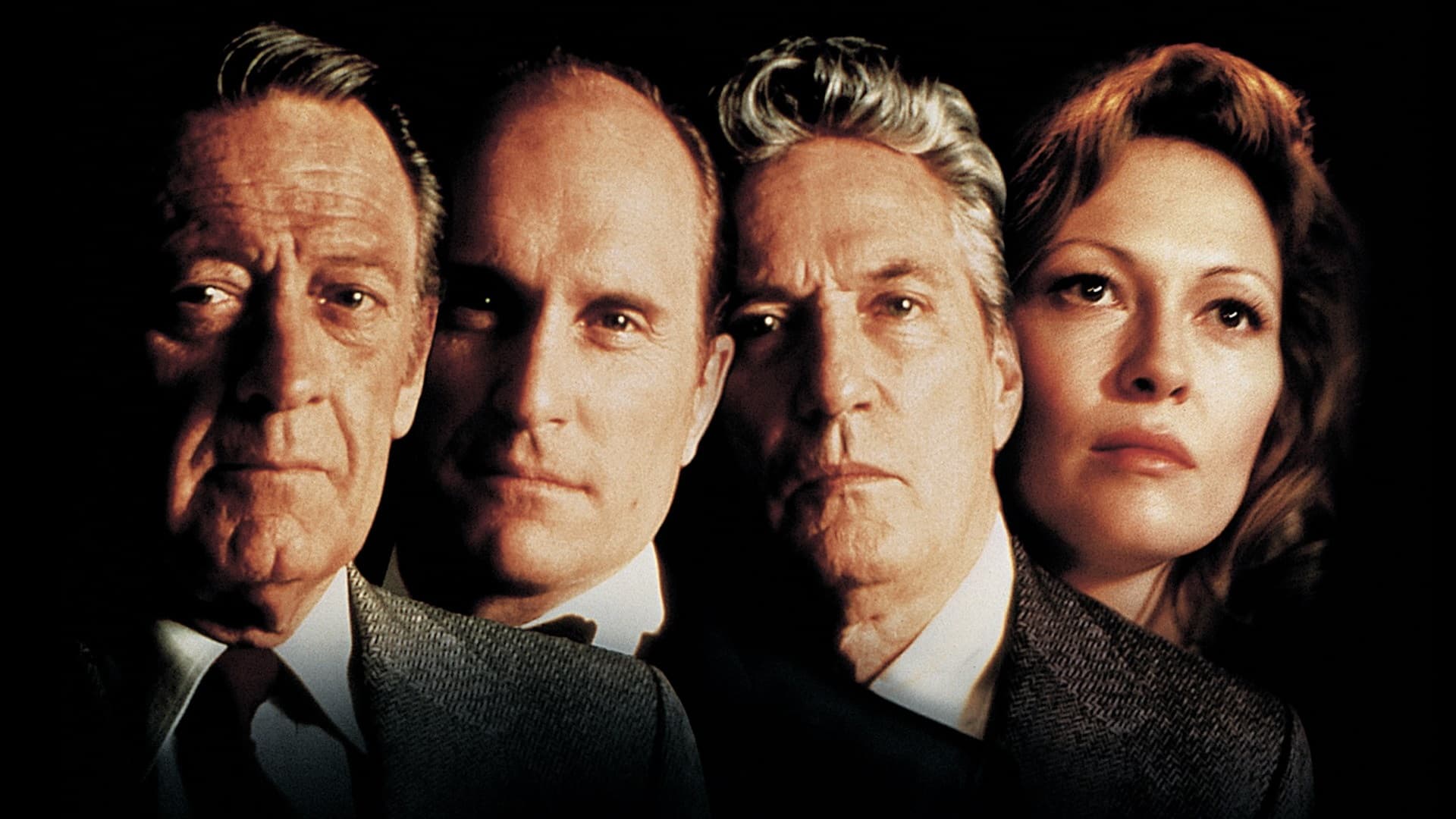
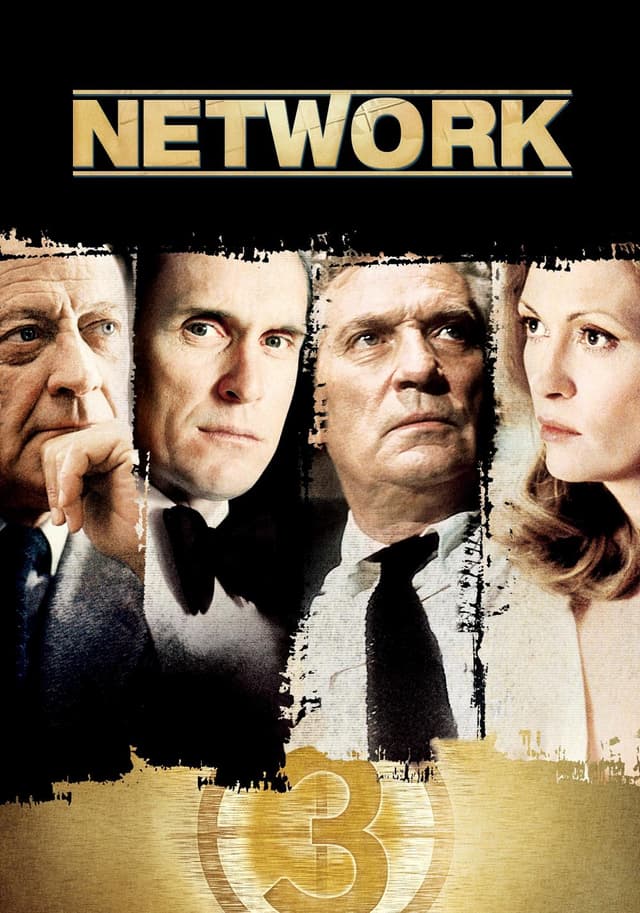
"Network," a drama released in 1976, was directed by Sidney Lumet and stars Faye Dunaway, William Holden. The production budget was $3,800,000, placing it in the micro-budget range for drama productions of the 1970s.
Key Budget Allocation Categories
While specific budget breakdowns are not publicly available, typical cost drivers for a drama production like this include:
- Above-the-Line Talent: Drama films live or die on the strength of their performances.
- Location Filming & Period Production Design: Authentic locations , whether contemporary or historical , require scouting, permits, travel, lodging, and often significant dressing to match the story's time period.
- Post-Production, Color Grading & Score: The editorial process for dramas is typically longer than genre films, with careful attention to pacing and tone.
- Casting: In his notes, Chayefsky jotted down his ideas about casting.
What were the major cost factors in Network?
Several factors contributed to the overall production costs of "Network."
- Above-the-Line Talent: Above-the-Line Talent is one of the primary cost drivers in drama productions of this scale.
- Location Filming: Location Filming & Period Production Design is one of the primary cost drivers in drama productions of this scale.
- Post-Production: Post-Production, Color Grading & Score is one of the primary cost drivers in drama productions of this scale.
How Does Network's Budget Compare to Similar Films?
At $3,800,000, Network sits in the micro-budget range. Here is how it compares to productions with a similar budget:
- The Treasure of the Sierra Madre (1948): Budget $3,800,000, Worldwide Gross $4,307,000
- My Neighbor Totoro (1988): Budget $3,700,000, Worldwide Gross $41,000,000
- Flow (2024): Budget $3,700,000, Worldwide Gross $17,660,107
- Carandiru (2003): Budget $3,684,600, Worldwide Gross $10,782,155
- Peter Pan (1953): Budget $4,000,000, Worldwide Gross $87,400,000
The median budget for wide-release drama films in the era ranges from $30 to 80M for mid-budget to $150M+ for tentpoles.
Network Box Office Performance
"Network" earned $23,689,877 domestically and $23,700,000 worldwide at the box office. Against a production budget of $3,800,000, the film performed strongly at the box office.
A film typically needs to earn approximately twice its production budget to cover marketing and distribution costs. For "Network," that break-even threshold was roughly $7,600,000. With worldwide earnings of $23,700,000, the film cleared that threshold comfortably.
Box Office Breakdown
Network

At 523.7%, "Network" earned roughly $6.24 for every $1 invested in production.
Network Production History
In his notes, Chayefsky jotted down his ideas about casting. For Howard Beale, who would eventually be played by Peter Finch, he envisioned Henry Fonda, Cary Grant, James Stewart and Paul Newman. He went so far as to write Newman, telling him that "You and a very small handful of other actors are the only ones I can think of with the range for this part." Lumet wanted Fonda, with whom he had worked several times, but Fonda declined the role, finding it too "hysterical" for his taste.
After two weeks of rehearsals, filming started in Toronto in January 1976 with many scenes filmed at the CFTO studios at 9 Channel Nine Court in Scarborough. Lumet recalled that Chayefsky was usually on set during filming, and sometimes offered advice about how certain scenes should be played. Lumet allowed that his old friend had the better comic instincts of the two.
Awards and Recognition
Won 4 Oscars. 20 wins & 27 nominations total
- National Board of Review: Top Ten Films
- Academy Award for Best Writing, Original Screenplay: Paddy Chayefsky (49th Academy Awards)
- Academy Award for Best Supporting Actress: Beatrice Straight (49th Academy Awards)
- Academy Award for Best Actress: Faye Dunaway (49th Academy Awards)
- Academy Award for Best Actor: Peter Finch (49th Academy Awards)
Frequently Asked Questions
How much did it cost to make Network (1976)?
The production budget was $3,800,000, covering principal photography, cast and crew salaries, locations, sets, post-production, and music. Marketing and distribution (P&A) costs are estimated at an additional $1,900,000 - $3,040,000, bringing the total studio investment to approximately $5,700,000 - $6,840,000.
How much did Network (1976) earn at the box office?
Network grossed $23,689,877 domestic, $10,123 international, totaling $23,700,000 worldwide.
Was Network (1976) profitable?
Yes. Against a production budget of $3,800,000 and estimated total costs of ~$9,500,000, the film earned $23,700,000 theatrically - a 524% ROI on production costs alone.
What were the biggest costs in producing Network?
The primary cost drivers were above-the-line talent (Faye Dunaway, William Holden, Peter Finch); talent compensation, authentic period production design, and meticulous post-production.
How does Network's budget compare to similar drama films?
At $3,800,000, Network is classified as a micro-budget production. The median budget for wide-release drama films in the era ranges from $30 - 80M for mid-budget to $150M+ for tentpoles. Comparable budgets: The Treasure of the Sierra Madre (1948, $3,800,000); My Neighbor Totoro (1988, $3,700,000); Flow (2024, $3,700,000).
Did Network (1976) go over budget?
There are no widely reported accounts of significant budget overruns for this production. However, studios rarely disclose precise budget overrun figures publicly. The reported production budget reflects the final estimated cost.
What was the return on investment (ROI) for Network?
The theatrical ROI was 523.7%, calculated as ($23,700,000 − $3,800,000) ÷ $3,800,000 × 100. This measures gross revenue against production budget only - it does not account for P&A or exhibitor shares.
What awards did Network (1976) win?
Won 4 Oscars. 20 wins & 27 nominations total.
Who directed Network and who were the key crew members?
Directed by Sidney Lumet, written by Paddy Chayefsky, shot by Owen Roizman, with music by Elliot Lawrence, edited by Alan Heim.
Where was Network filmed?
Network was filmed in United States of America. After two weeks of rehearsals, filming started in Toronto in January 1976 with many scenes filmed at the CFTO studios at 9 Channel Nine Court in Scarborough. Lumet recalled that Chayefsky was usually on set during filming, and sometimes offered advice about how certain scenes should be played. Lumet allowed that his old friend had the better comic instincts of the two.
Filmmakers
Network

Official Trailer
Build budgets like this one in Saturation
Start from an industry-standard feature film template, import the schedule and rates you already have, and let the cost report keep itself current as you spend. Real-time collaboration, no spreadsheets.