Nashville Budget
Updated
Synopsis
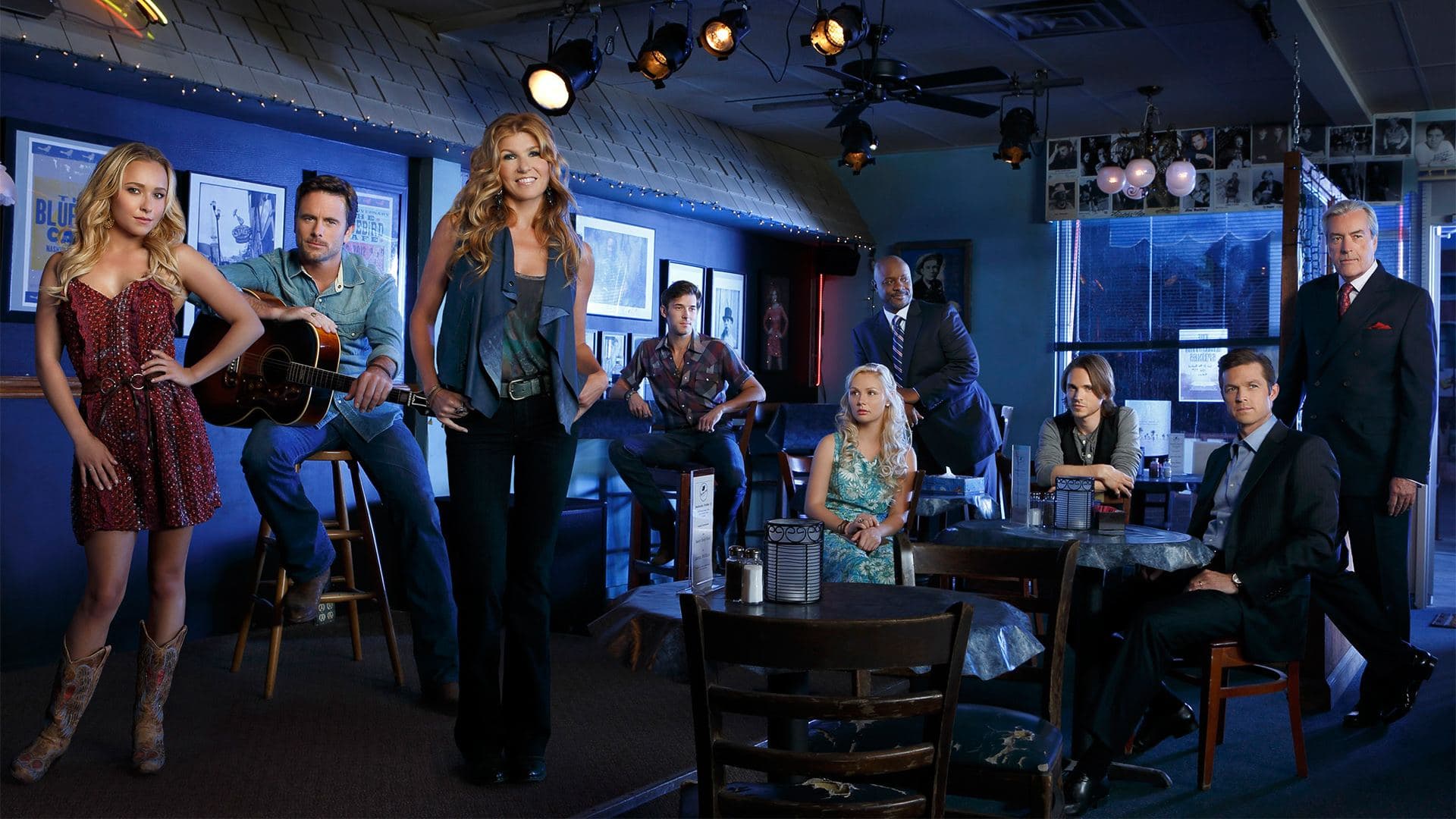
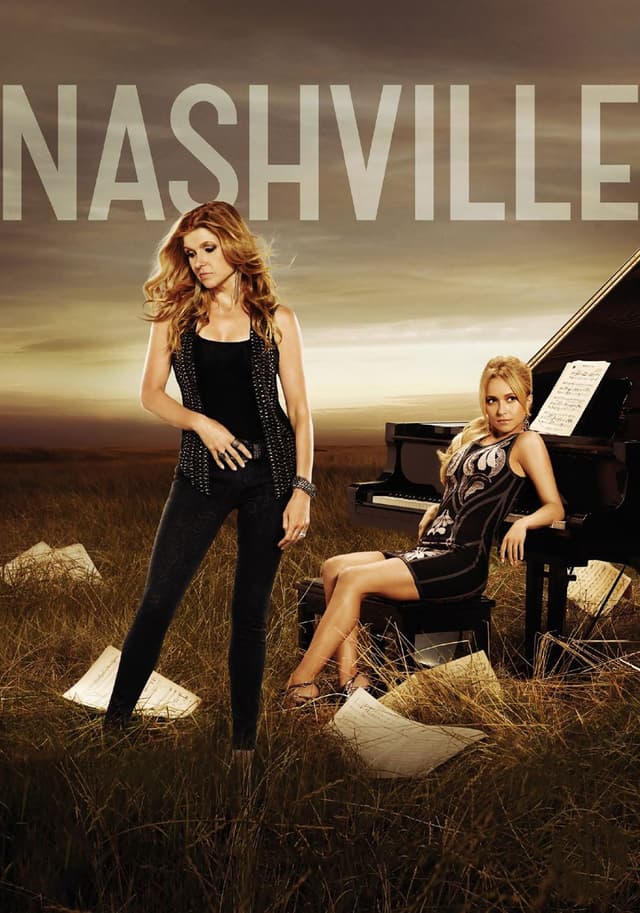
Nashville (2012), the musical drama created by Callie Khouri, follows fading country superstar Rayna Jaymes (Connie Britton) as her career intersects with the calculated ascent of crossover-pop upstart Juliette Barnes (Hayden Panettiere). Across 124 episodes on ABC and then CMT between October 2012 and July 2018, the Lionsgate-produced series shot on practical Nashville locations including Bluebird Cafe replicas and used original music from songwriters T Bone Burnett, Buddy Miller, and the Music City community to anchor the country-and-Americana songbook.
What Is the Budget of Nashville (2012)?
Nashville (2012), the musical drama created by Callie Khouri and produced by Lionsgate Television and ABC Studios for ABC and then CMT, was made on a per-episode budget of approximately $4,000,000 in its season-one ABC era, with total season budgets ranging from $39,700,000 to $91,700,000 according to subsequent trade and tax-incentive reporting. The ABC seasons (1 through 4, 2012 to 2016) ran at the upper end of network drama tariffs because of the show's original-music recording, multi-stage Tennessee location production, and original-song licensing structure.
When ABC cancelled the show at the end of season four in May 2016, CMT picked up seasons five and six (December 2016 to July 2018) at a reduced per-episode tariff and with the assistance of approximately $11,000,000 in Tennessee economic incentives administered through the Tennessee Entertainment Commission's production-grant programme. Across 124 broadcast episodes between October 10, 2012 and July 26, 2018, cumulative production spend is estimated at approximately $400,000,000 to $500,000,000 across the full six-season run.
Key Budget Allocation Categories
Nashville's per-episode spend broke down across the cost centres typical of a network-into-cable hour-long musical drama:
- Above-the-Line Cast: Connie Britton (Friday Night Lights) and Hayden Panettiere (Heroes) anchored the cast budget as the dual leads through season four, with both commanding lead-actor rates appropriate to their pre-Nashville profiles. Supporting cast Charles Esten (Deacon Claybourne), Jonathan Jackson (Avery Barkley), Clare Bowen (Scarlett O'Connor), Sam Palladio (Gunnar Scott), and Chris Carmack (Will Lexington) rounded out the regular ensemble.
- Original Music Production: The show's defining incremental cost. Music supervisor Frankie Pine, with executive music producers T Bone Burnett (season one) and Buddy Miller (seasons two through six), commissioned approximately ten to fifteen original songs per episode from the Music City songwriter community. Each song required studio recording, publishing rights clearance, and on-camera performance staging, adding a substantial weekly music budget above any other Lionsgate Television drama of the period.
- Tennessee Location Production: Principal photography ran on practical Nashville locations across the run, with soundstage replicas of the Bluebird Cafe, Ryman Auditorium-style venues, Music Row offices, and various Nashville neighbourhood exteriors anchoring the recurring world. Lionsgate's commitment to Nashville was a marketing as much as a production decision, with the Tennessee Entertainment Commission documenting that approximately 20% of post-Nashville visitors cited the show as a reason for their visit.
- Live Concert and Performance Production: Recurring on-camera concert performances at venues including the Bluebird Cafe replica, the Ryman replica, and stadium-scale set pieces required live-sound capture, audio post-production, and incremental crew above standard drama hours. Multiple cast members (Britton, Esten, Bowen, Palladio, Carmack) performed original music on camera, requiring vocal training, recording-studio time, and live-performance prep.
- Soundtrack and Publishing Operations: Lionsgate operated an in-house music-publishing operation in partnership with Big Machine Records (Taylor Swift's former label) and ABC's music division, releasing soundtrack albums after each season and individual song singles through iTunes and Spotify. The publishing operation was a recurring above-the-line cost line item that also generated meaningful soundtrack revenue.
- Production Design and Set Build: The Bluebird Cafe soundstage replica was a season-one signature build, with the cafe's real Nashville location (Hillsboro Village) used only for exterior establishing shots and a limited number of practical-interior episodes. The standing-set commitment to the Bluebird, Music Row offices, and various character homes formed a substantial ongoing production-design overhead.
- Tennessee Tax Incentive Recovery: The Tennessee Entertainment Commission's production-grant programme offered up to 25% rebate on qualifying Tennessee spend during the show's run, and the CMT-era seasons 5 and 6 received an additional approximately $11,000,000 in incentive support to keep production in-state after the ABC cancellation. The incentive economics were the principal reason CMT could revive the show at a sustainable per-episode tariff.
- Network and Cable Delivery: Picture editing, sound, music post, ADR, and network delivery ran through Lionsgate Television's in-house pipeline. The transition from ABC to CMT in December 2016 reset the delivery specs slightly but kept the show's technical profile largely intact.
How Does Nashville's Budget Compare to Similar Series?
At approximately $4,000,000 per episode in its ABC seasons, Nashville sat in the standard ABC drama tariff but with an unusual cost-mix that loaded the music budget far above peer dramas. The comparison set illustrates how its production scale stacked up:
- Empire (2015): Estimated per-episode budget approximately $3,500,000 to $5,000,000. Fox and 20th Television's Lee Daniels-created hip-hop family drama is Nashville's closest in-class peer, with comparable original-music production costs, soundtrack-driven marketing, and serialised family drama structure. Empire's per-episode budget was broadly comparable to Nashville's.
- Glee (2009): Estimated per-episode budget approximately $3,000,000 to $4,500,000. Fox and 20th Television's Ryan Murphy-created high-school musical hit a comparable per-episode tariff but with covers-and-licensed-music rather than original composition, illustrating one alternative musical-drama economic model.
- Friday Night Lights (2006): Estimated per-episode budget approximately $3,500,000 to $4,000,000. NBC and Universal Television's Peter Berg-created Texas-football drama, where Connie Britton played Tami Taylor before her Nashville role, hit a comparable per-episode tariff on Texas location production. The structural parallels between the two shows extend to small-town American setting, ensemble emotional architecture, and Britton's anchor performance.
- Greys Anatomy (2005): Estimated per-episode budget approximately $4,500,000 to $7,000,000. ABC and ABC Signature's Shonda Rhimes hospital drama, the network's flagship across the same window as Nashville's 2012 to 2016 ABC run, hit a comparable to slightly higher per-episode budget on standard hospital drama production without musical overhead.
- This Is Us (2016): Estimated per-episode budget approximately $5,000,000 to $7,000,000. NBC and 20th Television's Dan Fogelman family drama cost roughly 25% to 75% more per episode than Nashville on standard family-drama production, illustrating how the broader prestige-network drama tariff trended upward across the late 2010s.
- Treme (2010): Estimated per-episode budget approximately $4,000,000 to $5,000,000. HBO and Blown Deadline Productions's David Simon New Orleans musical drama is the closest American TV peer to Nashville in its commitment to live original music as a structural element. Treme's per-episode budget was broadly comparable, although its compressed four-season run and HBO premium-cable model differed materially from Nashville's network-into-basic-cable trajectory.
Nashville Season Performance and Ratings
Nashville premiered on ABC on October 10, 2012 to strong opening figures of approximately 9,000,000 viewers and a 2.8 18-49 rating, finishing as the highest-rated new drama of the autumn 2012 schedule. The economic framework breaks down as follows:
- Per-Episode Budget: approximately $4,000,000 in the ABC seasons (1 to 4); reduced tariff in the CMT seasons (5 and 6) supported by approximately $11,000,000 in Tennessee economic incentives
- Total Series Investment: approximately $400,000,000 to $500,000,000 across 124 episodes and six seasons
- Network: ABC (seasons 1 to 4, October 2012 to May 2016); CMT (seasons 5 to 6, December 2016 to July 2018); CMT seasons also simulcast on Spectrum, Hulu, and various streaming platforms
- Audience/Ratings: season 1 premiere: 9,000,000 viewers and 2.8 18-49 rating; ABC seasons settled to 5,000,000 to 6,000,000 viewer range; CMT seasons reached 1,200,000 to 1,800,000 viewers
- Soundtrack Performance: soundtrack albums released after each season through Big Machine Records and ABC's music division; multiple chart entries on Billboard country and Billboard 200 charts
- Library/Streaming Value: available on Hulu and various international streaming services; soundtrack catalog continues to generate publishing revenue through Big Machine Records and Lionsgate Music
ABC cancelled the show at the end of season four in May 2016, citing declining ratings and the network's broader prime-time scheduling priorities. CMT, supported by the Tennessee incentive package and by Hulu's acquisition of streaming rights, picked up the show for two additional seasons (5 and 6) at a reduced per-episode tariff. The CMT seasons reached smaller audience totals but performed steadily on Hulu and drove sustained soundtrack and tourism revenue.
Music supervisor Frankie Pine won multiple Guild of Music Supervisors Awards for the show's work, and the Lionsgate / Big Machine soundtrack operation released 17 soundtrack albums and over 200 individual song releases across the run. The Tennessee Entertainment Commission has documented that approximately 1 in 5 post-Nashville Music City visitors attributed their visit to the show, making it one of the most economically impactful state-funded television productions in US history.
Nashville Production History
Callie Khouri, the Oscar-winning screenwriter of Thelma & Louise (1991), developed Nashville for Lionsgate Television in 2011, drawing on her Nashville residence and her marriage to record producer T Bone Burnett to inform the show's music-industry milieu. The pitch centred on the generational handoff between a fading country superstar and an ascending pop-crossover upstart, with the Bluebird Cafe and Music Row as recurring physical signifiers of the city. ABC ordered the pilot in 2011, and principal photography was committed to Tennessee from the project's inception, supported by the Tennessee Entertainment Commission's production-grant programme offering up to 25% rebate on qualifying in-state spend.
Casting Connie Britton as Rayna Jaymes was the project's defining creative decision. Britton, fresh off Friday Night Lights, brought a literary-television gravitas to the country-music format and was a primary reason ABC committed to the project at a $4,000,000 per-episode tariff. Hayden Panettiere's casting as Juliette Barnes anchored the show's second-lead arc, with Britton and Panettiere's contrasting acting registers becoming the show's structural engine. Charles Esten, Jonathan Jackson, Clare Bowen, Sam Palladio, and Chris Carmack rounded out the regular ensemble across the run.
Principal photography ran on practical Nashville locations from 2012 to 2018, with soundstage builds for the Bluebird Cafe replica, Music Row offices, and various character homes occupying production stages around the city. Music supervisor Frankie Pine and executive music producers T Bone Burnett (season one) and Buddy Miller (seasons two through six) commissioned original songs from the Music City songwriter community each episode, with major Nashville songwriters including Lori McKenna, Cary Barlowe, Jaida Dreyer, Sarah Buxton, and Connie Britton herself contributing to the catalogue.
ABC cancelled the show at the end of season four in May 2016 on declining ratings, but Lionsgate and the Tennessee Entertainment Commission jointly secured a CMT pickup for seasons five and six (December 2016 to July 2018) with approximately $11,000,000 in additional state incentive support. The CMT seasons retained the principal cast and creative team while operating at a reduced per-episode tariff, and Hulu's streaming-rights acquisition was a meaningful component of the season-five-and-six economic model.
The series wound down at the end of season six in July 2018. Connie Britton, Hayden Panettiere, and the supporting cast went on to other projects, with the Lionsgate / Big Machine soundtrack catalogue and the Nashville-tourism legacy continuing to generate revenue through the late 2010s and 2020s.
Awards and Recognition
Nashville received steady recognition across its run, principally in music-supervision and music-craft categories. Music supervisor Frankie Pine won multiple Guild of Music Supervisors Awards across the show's six seasons, recognising the Lionsgate music operation's unusual original-composition pipeline.
Connie Britton received a Golden Globe nomination for Best Performance by an Actress in a Television Series (Drama) for her work as Rayna Jaymes in the show's first season (2013). She had previously received Emmy nominations for Friday Night Lights and would receive additional nominations for American Horror Story: The People v. O. J. Simpson (2016). Hayden Panettiere received a Golden Globe nomination for Best Supporting Actress (Television) for her work as Juliette Barnes in 2013.
The show's original songs received Country Music Association Awards consideration, with multiple original Nashville songs charting on Billboard country and Billboard 200. The Music City Walk of Fame and the Tennessee Entertainment Commission have both formally recognised the show's contribution to Nashville's music industry and tourism economy, with the show's cultural impact regularly cited as a primary driver of Music City's post-2012 tourism boom.
Critical Reception
Nashville received critical acclaim on its 2012 ABC launch. The show earned a Metacritic score of 85 out of 100 for season one, indicating universal acclaim, and was widely cited as the autumn 2012 schedule's breakout drama. The New York Times described the premiere as "a smart, melodious country-music soap opera anchored by Connie Britton at the absolute height of her powers," and The Hollywood Reporter's Tim Goodman called it "an unexpectedly substantial show whose musical numbers carry as much narrative weight as its dialogue."
Critical reception softened across the ABC seasons as the show settled into its weekly serialised cadence. Reviewers including Variety's Brian Lowry and The A.V. Club's Erik Adams noted that the soap-opera plot mechanics became more visible in seasons two through four, although the music production and ensemble chemistry continued to draw consistent praise. The Bluebird Cafe replica and the Britton-Panettiere lead dynamic remained the show's critical strengths through the ABC era.
The CMT-era seasons (5 and 6, 2016 to 2018) received more divided reviews. The death of Connie Britton's Rayna Jaymes character early in season five was treated as a structural risk by reviewers including The Guardian's Sam Wollaston and Vulture's Margaret Lyons, and the show's arc through seasons five and six was widely characterised as more uneven than its earlier ABC run. Retrospective reappraisal has been broadly positive on the show's contribution to Music City's cultural economy and on Britton's lead performance, with Nashville now widely cited as a foundational 2010s American musical-drama landmark.
Frequently Asked Questions
How much did each episode of Nashville (2012) cost to produce?
Approximately $4,000,000 per episode in its season-one ABC era, with total season budgets ranging from $39,700,000 to $91,700,000 according to subsequent trade and tax-incentive reporting. The CMT-era seasons (5 and 6, 2016 to 2018) operated at a reduced per-episode tariff supported by approximately $11,000,000 in Tennessee economic incentives.
How many seasons and episodes of Nashville were made?
Nashville ran for six seasons and 124 episodes between October 10, 2012 and July 26, 2018. ABC aired seasons 1 through 4 (October 2012 to May 2016), and CMT aired seasons 5 and 6 (December 2016 to July 2018) after the ABC cancellation.
Who created Nashville (2012)?
Callie Khouri, the Oscar-winning screenwriter of Thelma & Louise (1991), created the series for Lionsgate Television and ABC Studios. Khouri drew on her Nashville residence and her marriage to record producer T Bone Burnett (executive music producer of season one) to inform the show's music-industry milieu.
Where was Nashville filmed?
Principal photography ran on practical Nashville, Tennessee locations across the full six-season run, supported by the Tennessee Entertainment Commission's production-grant programme offering up to 25% rebate on qualifying in-state spend. Soundstage builds for the Bluebird Cafe replica, Music Row offices, and various character homes occupied production stages around the city.
Why was Nashville cancelled by ABC?
ABC cancelled the show at the end of season four in May 2016, citing declining ratings and the network's broader prime-time scheduling priorities. Season-one viewership of approximately 9,000,000 had settled to a 5,000,000 to 6,000,000 viewer range by season four, and ABC's autumn 2016 schedule prioritised other drama slots.
How did Nashville move from ABC to CMT?
Lionsgate Television and the Tennessee Entertainment Commission jointly secured a CMT pickup for seasons five and six (December 2016 to July 2018) with approximately $11,000,000 in additional state incentive support, plus Hulu's acquisition of streaming rights. CMT retained the principal cast and creative team while operating at a reduced per-episode tariff.
Who plays Rayna Jaymes in Nashville?
Connie Britton, fresh off Friday Night Lights, plays Rayna Jaymes across the first half of season five before the character is written out. Britton brought a literary-television gravitas to the country-music format and was a primary reason ABC committed to the project at a $4,000,000 per-episode tariff. She received a Golden Globe nomination for Best Performance by an Actress in a Television Series (Drama) for her work in season one (2013).
How does Nashville compare to Empire and Glee?
Empire (Fox, 2015) is Nashville's closest in-class peer, with comparable per-episode budgets of approximately $3,500,000 to $5,000,000, similar original-music production costs, soundtrack-driven marketing, and serialised family-drama structure. Glee (Fox, 2009) hit a comparable per-episode tariff at approximately $3,000,000 to $4,500,000 but with covers-and-licensed-music rather than original composition, illustrating one alternative musical-drama economic model.
How did the music on Nashville work?
Music supervisor Frankie Pine, with executive music producers T Bone Burnett (season one) and Buddy Miller (seasons two through six), commissioned approximately ten to fifteen original songs per episode from the Music City songwriter community. Lionsgate operated an in-house music-publishing operation in partnership with Big Machine Records and ABC's music division, releasing soundtrack albums after each season and individual song singles. Multiple Nashville songs charted on Billboard country and Billboard 200.
What impact did Nashville have on Music City tourism?
The Tennessee Entertainment Commission has documented that approximately 1 in 5 post-Nashville Music City visitors attributed their visit to the show, making it one of the most economically impactful state-funded television productions in US history. The Music City Walk of Fame and the Tennessee Entertainment Commission have both formally recognised the show's contribution to Nashville's music industry and tourism economy.
Filmmakers
Nashville

Official Trailer
Build budgets like this one in Saturation
Start from an industry-standard feature film template, import the schedule and rates you already have, and let the cost report keep itself current as you spend. Real-time collaboration, no spreadsheets.