My People, My Country Budget
Updated
Synopsis
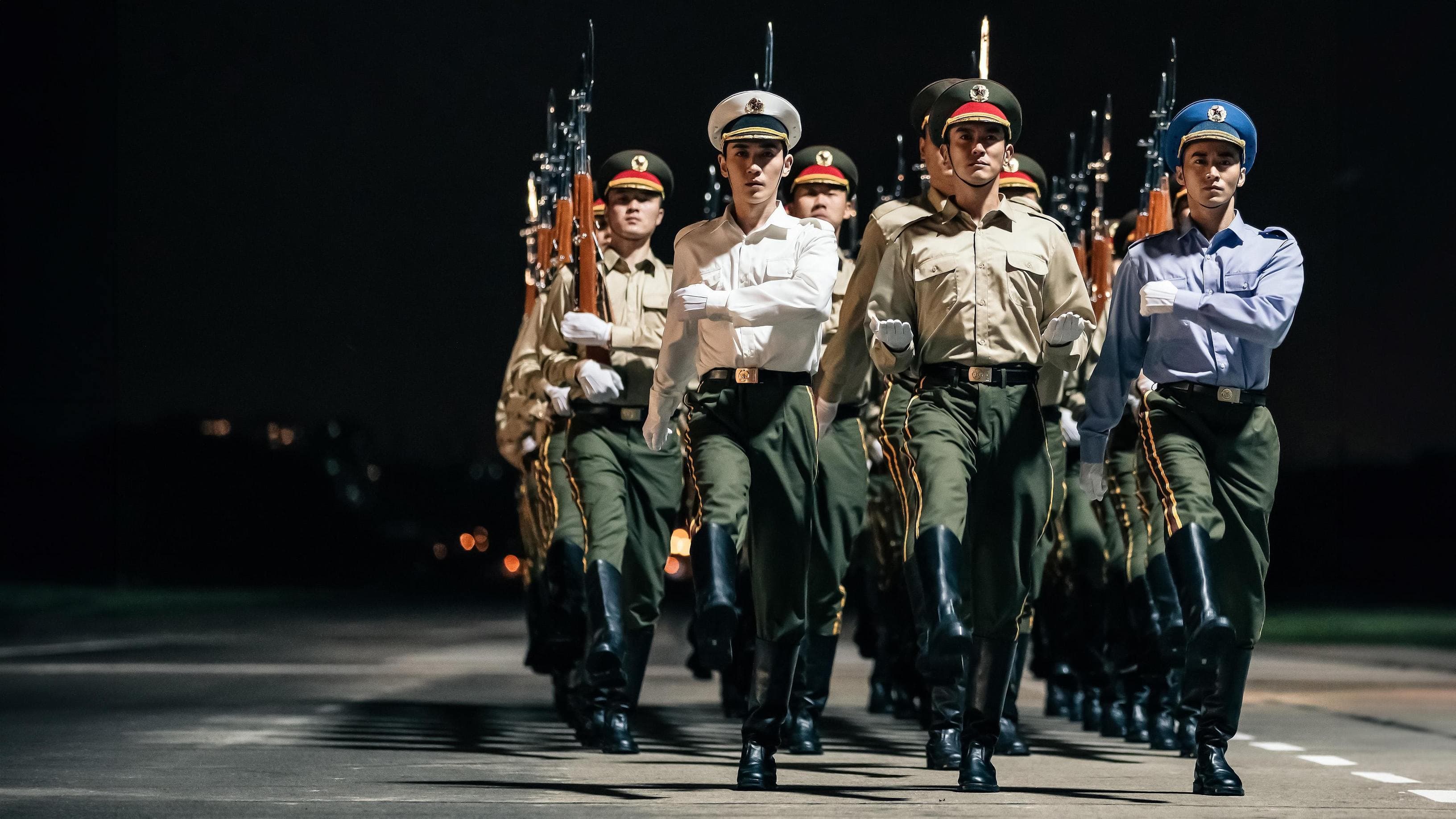
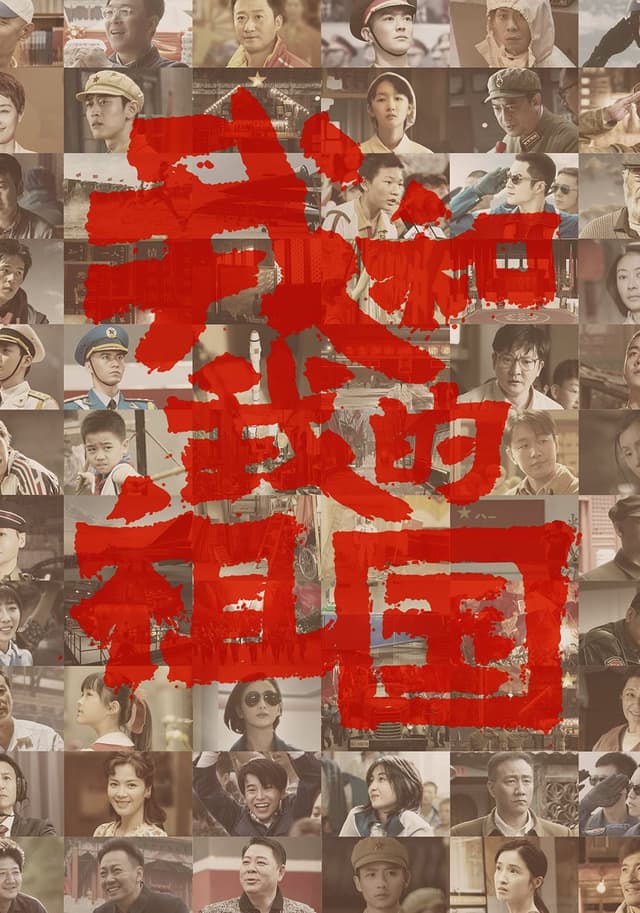
My People, My Country is a Chinese anthology film commissioned to mark the 70th anniversary of the founding of the People's Republic of China. Seven segments by seven prominent Chinese directors, anchored by chief director Chen Kaige, trace seven defining historical moments from the 1949 founding ceremony, the 1964 first nuclear test, the 1984 Olympics gold medal, the 1997 Hong Kong handover, the 2008 Beijing Olympics, and the 2016 Shenzhou-11 mission, to the 2017 People's Liberation Army Hong Kong Garrison parade.
What Is the Budget of My People, My Country (2019)?
My People, My Country (我和我的祖国, original title) is a 2019 Chinese anthology film overseen by chief director Chen Kaige and produced on a reported budget of approximately RMB 60,000,000 to RMB 80,000,000, equivalent to roughly $8,500,000 to $11,500,000 USD. The film was commissioned by the China Film Group and Huaxia Film Distribution as the marquee theatrical release marking the 70th anniversary of the founding of the People's Republic of China on October 1, 1949. Seven segments by seven prominent Chinese directors trace seven historical moments from 1949 to 2019.
The budget was modest relative to the film's commercial impact, which exceeded $400,000,000 at the Chinese box office. Each segment was produced largely independently under its own director, with shared marketing and distribution coordinated by China Film Group. The directors involved (Chen Kaige, Zhang Yibai, Guan Hu, Xue Xiaolu, Xu Zheng, Ning Hao, and Wen Muye) waived or reduced their normal directing fees as a contribution to the anniversary project.
Key Budget Allocation Categories
My People, My Country's estimated RMB 60,000,000 to RMB 80,000,000 budget was distributed across seven segments and shared infrastructure:
- Seven Director Segments: Each of the seven segments received an allocated portion of the overall budget, ranging from roughly RMB 6,000,000 to RMB 12,000,000 depending on the historical period, cast scale, and visual effects requirements of the segment. Xu Zheng's segment about the 1984 Summer Olympics and Ning Hao's segment about the 2008 Beijing Olympics required the most physical reconstruction, while Wen Muye's 2015 Tiantian-themed segment was the most contemporary and required minimal period work.
- Above-the-Line Talent: The seven directors form one of the most decorated coalitions in Chinese cinema, including Cannes Palme d'Or laureate Chen Kaige (Farewell My Concubine), Xu Zheng (Lost in Russia), Ning Hao (Crazy Stone), and rising talents Wen Muye and Xue Xiaolu. The ensemble cast spans hundreds of Chinese actors across the seven segments.
- Period Reconstruction: Each segment required period-specific production design, costume, and set work. Guan Hu's opening 1949 founding segment, Zhang Yibai's 1964 nuclear test segment, and Chen Kaige's 1984 Hong Kong handover segment each required dedicated period research and historical reconstruction crews.
- Visual Effects: Period replications of historical moments, including aerial footage of the 1964 nuclear test, crowd scale for the 1984 Olympics gold-medal celebration, and reconstructed footage of the 2008 Beijing Olympics opening, required significant CG work integrated with archival footage.
- Cinematography: Each segment used its own director of photography, with shared visual coordination across the anthology. Cao Yu (Chen Kaige's segment) and others contributed.
- Score and Music: The film centers on the patriotic song My People, My Country (我和我的祖国), arranged in multiple versions across the segments. Music supervision integrated period-appropriate Chinese popular and patriotic music across the seven historical eras.
How Does My People, My Country's Budget Compare to Similar Films?
At an estimated $8,500,000 to $11,500,000 USD, My People, My Country sits modestly within the Chinese theatrical mid-tier, with a commercial result far exceeding its cost. The comparison set illustrates the budget-to-box-office ratio:
- My Country, My Parents (2021): Budget approximately $20,000,000 | Worldwide $222,000,000. The direct anthology sequel cost roughly twice as much and earned about half the worldwide haul, demonstrating diminishing-returns dynamics on patriotic anthology programming.
- The Battle at Lake Changjin (2021): Budget $200,000,000 | Worldwide $902,548,476. The Korean War spectacle from Chen Kaige, Tsui Hark, and Dante Lam cost twenty times more and remains the highest-grossing Chinese film of all time.
- Wolf Warrior 2 (2017): Budget $30,000,000 | Worldwide $874,393,433. Wu Jing's solo-directed nationalist action film offers the closest single-film comparison to My People, My Country's commercial reach against modest production cost.
- My People, My Homeland (2020): Budget approximately $12,000,000 | Worldwide $422,000,000. The 2020 anthology sequel co-directed by the same anchor group cost a similar amount and earned a similar commercial result, validating the model.
- The Wandering Earth (2019): Budget $50,000,000 | Worldwide $699,800,000. Frant Gwo's science-fiction blockbuster of the same calendar year demonstrates the upper end of Chinese commercial spending in 2019.
My People, My Country Box Office Performance
My People, My Country opened in China on September 30, 2019, the day before the October 1 National Day, and ran through the Golden Week holiday window. The film grossed RMB 311,000,000 (approximately $44,000,000 USD) on its opening day and finished the seven-day Golden Week with RMB 1,840,000,000 (approximately $260,000,000 USD), the highest seven-day take in Chinese box office history at that point.
Against a reported production budget of approximately $8,500,000 to $11,500,000 USD, the film delivered one of the highest budget-to-box-office multiples in modern Chinese cinema. Here is the financial breakdown:
Box Office Breakdown
My People, My Country

The film returned approximately $14 to $17 in worldwide gross for every $1 invested. The result was so commercially successful that China Film Group commissioned a direct sequel, My People, My Homeland (2020), and a third entry, My People, My Country: Going Home (2024), establishing the patriotic anthology format as a recurring National Day commercial pattern.
My People, My Country Production History
Development on My People, My Country began in early 2019 as a China Film Group commission to mark the 70th anniversary of the People's Republic of China. Chen Kaige was appointed chief director to coordinate the anthology, and the production rapidly assembled seven director-segment pairings drawing from the leading directors of the mainland Chinese commercial industry.
Each segment was produced largely independently across spring and summer 2019, with shared production coordination from China Film Group and Huaxia Film Distribution. Production locations spanned Beijing (the founding ceremony recreation, the 2008 Olympics segment), Hong Kong (the 1984 handover segment), Sichuan (the 1964 nuclear test segment), and rural Inner Mongolia (the Shenzhou-11 segment). The compressed seven-month production timeline from commission to release was made possible by the parallel-segment structure.
Post-production took place across multiple Beijing facilities through summer 2019, with the film completed in time for its September 30 release. The marketing campaign was coordinated with the broader 70th-anniversary commemorations and the National Day holiday programming, providing the film with unprecedented promotional reach across Chinese state and commercial media.
Awards and Recognition
My People, My Country received significant industry recognition. At the 35th Golden Rooster Awards, the highest film honor in China, the film won Best Director (collective award to the seven directors) and Best Feature Film. It also received Hundred Flowers Awards recognition and was named the official Chinese submission for various cultural-exchange programs.
The film's commercial success drove a recurring National Day patriotic-anthology programming pattern that has since produced My People, My Homeland (2020), My People, My Country: Going Home (2024), and parallel sequels exploring different anniversary themes. Within the Chinese commercial film industry, the model has become a defining template for state-anniversary commemorative theatrical releases.
Critical Reception
My People, My Country received strong reviews within the Chinese-language critical sphere. Douban, the principal Chinese film-rating platform, scored the film 8.0 out of 10 based on hundreds of thousands of audience and critic ratings, a high rating for a state-commissioned anniversary film. Maoyan, the Chinese commercial film platform, scored the film 9.7 out of 10 on audience ratings.
Chinese critics broadly praised the film's ensemble approach, the variety of period reconstructions, and the way individual segments balanced personal story with national-historical scope. Particular praise went to Xu Zheng's segment about the 1984 Summer Olympics gold-medal celebration in a Shanghai longtang neighborhood and Ning Hao's segment about a Beijing taxi driver during the 2008 Beijing Olympics opening ceremony, both of which were widely considered the standout segments.
International critical reception was limited by the film's primary domestic-market focus and the restricted international theatrical release in markets with Chinese-language diaspora audiences. Where reviewed, English-language critics generally acknowledged the production craft while noting the explicit state-commissioned nationalist framing. Variety's Maggie Lee called the film "a polished, frequently moving anthology that nonetheless makes its propagandistic purpose explicit at every turn."
Frequently Asked Questions
How much did it cost to make My People, My Country (2019)?
The reported production budget was approximately RMB 60,000,000 to RMB 80,000,000, equivalent to roughly $8,500,000 to $11,500,000 USD. The film was commissioned by the China Film Group and Huaxia Film Distribution as the marquee theatrical release marking the 70th anniversary of the People's Republic of China.
How much did My People, My Country make at the box office?
The film grossed approximately RMB 3,170,000,000 (around $432,000,000 USD) worldwide, with the vast majority coming from the Chinese theatrical release. It opened to RMB 311,000,000 on its first day and earned RMB 1,840,000,000 in its first seven-day Golden Week holiday window, the highest seven-day take in Chinese box office history at that point.
Who directed My People, My Country?
Chen Kaige served as chief director, coordinating six co-directors: Zhang Yibai, Guan Hu, Xue Xiaolu, Xu Zheng, Ning Hao, and Wen Muye. Each director helmed one of the seven anthology segments tracing a different historical moment from 1949 to 2019.
What are the seven segments of My People, My Country?
The seven segments trace: 1) the 1949 founding ceremony of the People's Republic, directed by Guan Hu; 2) the 1964 first Chinese nuclear test, directed by Zhang Yibai; 3) the 1984 Summer Olympics women's volleyball gold medal celebrated in a Shanghai longtang, directed by Xu Zheng; 4) the 1997 Hong Kong handover, directed by Xue Xiaolu; 5) the 2008 Beijing Olympics opening ceremony seen through a Beijing taxi driver, directed by Ning Hao; 6) the 2016 Shenzhou-11 manned spaceflight mission, directed by Chen Kaige; and 7) the 2017 People's Liberation Army Hong Kong Garrison parade, directed by Wen Muye.
Why was My People, My Country made?
The film was commissioned by the China Film Group as the marquee theatrical release marking the 70th anniversary of the founding of the People's Republic of China on October 1, 1949. It was the centerpiece of the National Day Golden Week holiday programming and the broader 70th anniversary commemorations.
Is My People, My Country a propaganda film?
The film is an explicitly state-commissioned anniversary commemoration that frames Chinese twentieth- and twenty-first-century history through a patriotic lens. Chinese critics and audiences received it as a national-anniversary work, while international observers including Variety's Maggie Lee noted its "explicit propagandistic purpose" alongside its production craft.
Did My People, My Country win any awards?
At the 35th Golden Rooster Awards, the highest film honor in China, the film won Best Director (collective award to the seven directors) and Best Feature Film. It also received Hundred Flowers Awards recognition and remains a defining template for state-anniversary commemorative theatrical releases.
Are there sequels to My People, My Country?
Yes. The commercial success drove a recurring National Day patriotic-anthology programming pattern that has since produced My People, My Homeland (2020), My People, My Country: Going Home (2024), and parallel sequels exploring different anniversary themes. The format has become a defining commercial template in mainland Chinese cinema.
Where was My People, My Country filmed?
Production took place across multiple Chinese locations including Beijing (the founding ceremony recreation and the 2008 Olympics segment), Hong Kong (the 1984 and 1997 segments), Sichuan (the 1964 nuclear test segment), and rural Inner Mongolia (the Shenzhou-11 segment). Each director-segment was produced largely independently.
What did Chinese audiences think of My People, My Country?
Audience reception was overwhelmingly positive. Douban scored the film 8.0 out of 10 based on hundreds of thousands of ratings, a high rating for a state-commissioned anniversary film. Maoyan scored it 9.7 out of 10 on audience ratings. The Xu Zheng and Ning Hao Olympic-themed segments were the most widely praised among Chinese viewers.
Filmmakers
My People, My Country

Official Trailer
Build budgets like this one in Saturation
Start from an industry-standard feature film template, import the schedule and rates you already have, and let the cost report keep itself current as you spend. Real-time collaboration, no spreadsheets.