Mute Budget
 Science FictionMysteryThriller2h 6m
Updated
Synopsis
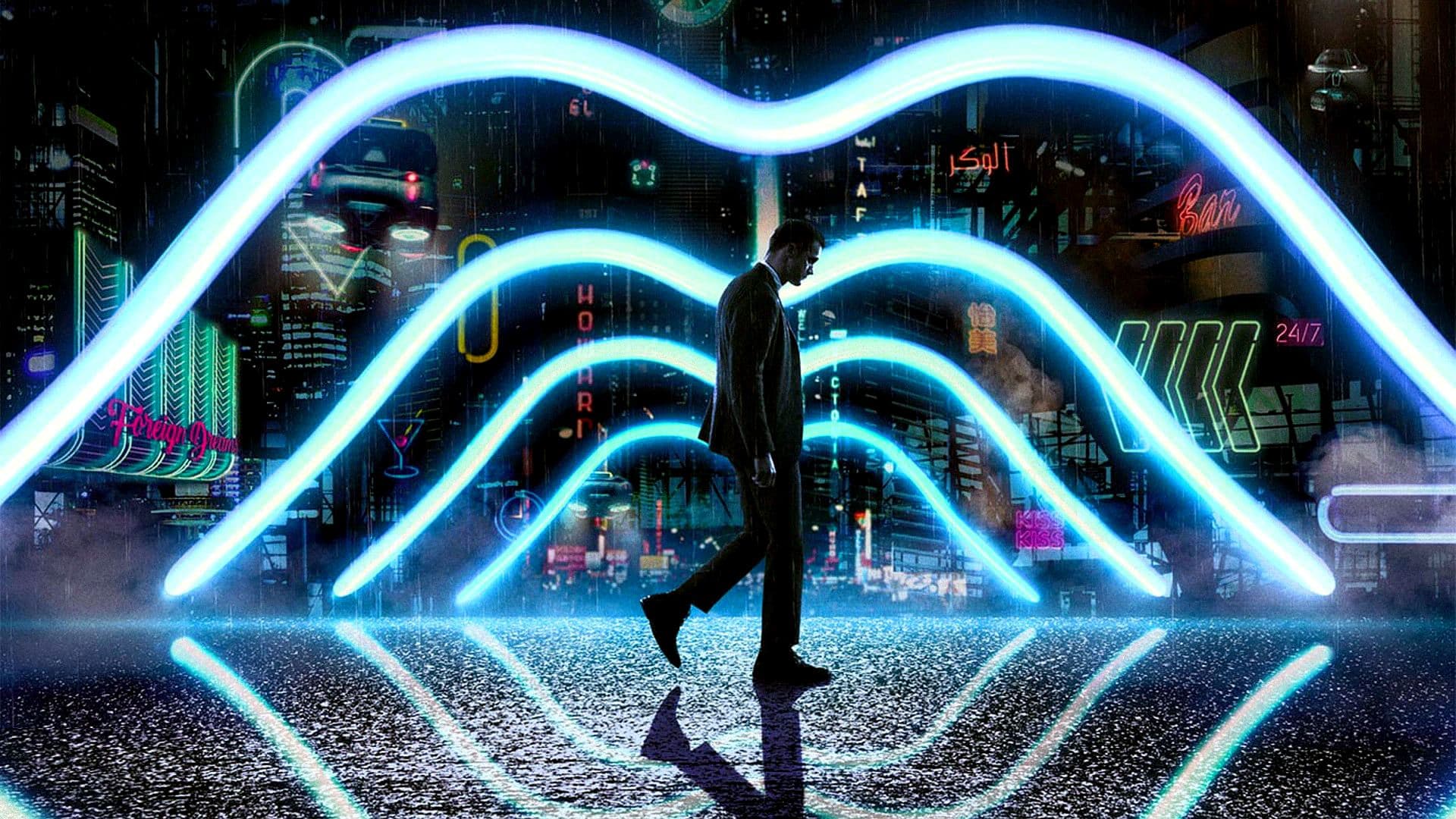
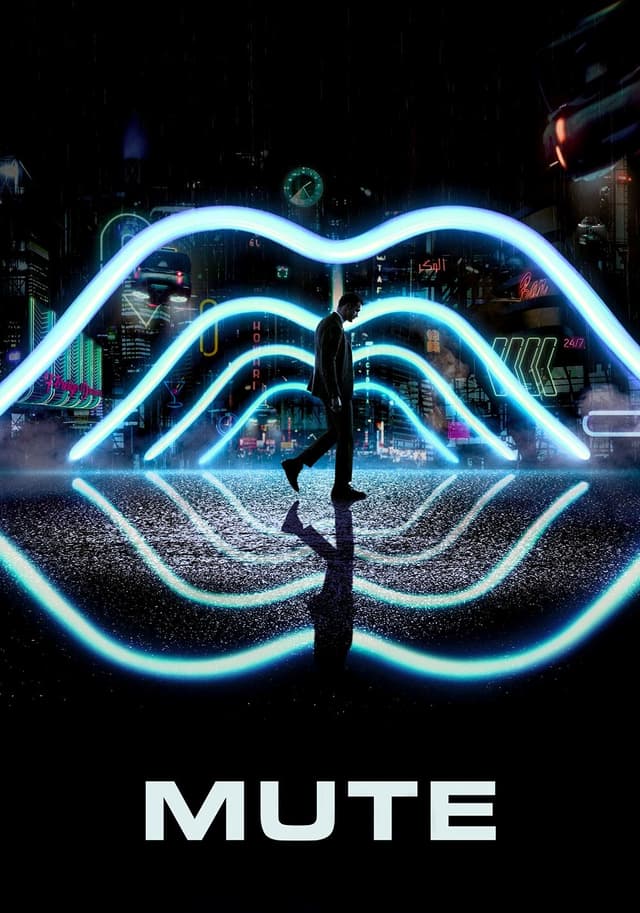
In a near-future Berlin overrun by tech-implanted excess and shadow-economy black markets, a mute Amish bartender named Leo searches the city's underworld for his missing girlfriend, encountering two rogue American military surgeons running off-the-books body work for the local mob. Duncan Jones's 2018 Netflix neo-noir stars Alexander Skarsgård, Paul Rudd, and Justin Theroux.
What Is the Budget of Mute (2018)?
Mute (2018), written and directed by Duncan Jones from a screenplay by Jones and Michael Robert Johnson, was produced on a reported budget of approximately $30,000,000. Netflix financed and distributed the picture as a Netflix Original Films release, with British production company Liberty Films co-producing alongside Jones's own Studio Babelsberg-partnered production team. The picture was a long-developed passion project for Jones, who had been working on the Mute screenplay since the late 2000s before Moon (2009) and Source Code (2011).
The investment supported a Berlin-based shoot at Studio Babelsberg, a near-future production design that recreated a tech-implanted dystopian Berlin, an above-the-line cast led by Alexander Skarsgård, Paul Rudd, and Justin Theroux, and substantial visual effects work for the near-future cityscape and various technology elements. As a Netflix Original Films release, the picture skipped a traditional theatrical window and debuted on the streaming platform on February 23, 2018.
Key Budget Allocation Categories
Mute's $30,000,000 budget was distributed across several major production areas:
- Above-the-Line Cast Alexander Skarsgård, fresh off Big Little Lies (2017) and his Emmy-winning television performance, played the mute Amish bartender Leo at his post-Big Little Lies star fee. Paul Rudd played Cactus Bill, one of the two American military surgeons, and Justin Theroux played Duck, his partner. The supporting cast included Seyneb Saleh as the missing girlfriend Naadirah, Robert Sheehan, Sam Rockwell (in a brief Sam Bell cameo connecting the picture to Jones's earlier Moon), and various German-cast supporting roles.
- Studio Babelsberg and Berlin Production Principal photography took place at Studio Babelsberg in Potsdam, Germany and on location across Berlin. Babelsberg's mature production infrastructure supported the picture's extensive set construction and the near-future production design. The German film tax incentive program supported the production.
- Near-Future Production Design Production designer Gavin Bocquet built the near-future Berlin visual environment including the various nightclub interiors, the tech-implant clinics, the rooftop apartments, and the shadow-economy market environments. The production design represented a substantial budget line item given the picture's densely textured visual world-building ambitions.
- Visual Effects Visual effects vendors handled the near-future cityscape elements, the technology overlays, and the various futuristic implant effects integrated into the practical photography. The VFX work was a significant budget line item and represented the picture's most prominent technical achievement.
- Director and Producing Team Duncan Jones, following Moon (2009), Source Code (2011), and Warcraft (2016), directed at a returning-feature-director rate. Producers included Stuart Fenegan (Jones's longtime producer through Liberty Films), Jones himself, and Trevor Beattie. Netflix executives supervised the production as part of the platform's broader Original Films commitment.
- Score and Music The score by Clint Mansell (Jones's frequent collaborator going back to Moon) delivered a brooding electronic-and-orchestral register that referenced both classical noir scoring and contemporary synth work. The music budget covered original composition, electronic-and-orchestral recording, and licensed source music.
- Costume Design Costume designer Trisha Biggar built a wardrobe that referenced both contemporary urban styling and near-future tech-implanted aesthetics. The costuming was a deliberate visual anchor for the picture's world-building ambitions.
How Does Mute's Budget Compare to Similar Films?
At an estimated $30,000,000, Mute sits in the mid-budget range for streaming-era neo-noir science fiction. The comparison set illustrates how its production scale compared with peer productions:
- Moon (2009): Budget $5,000,000 | Worldwide $9,800,000. Duncan Jones's acclaimed debut cost roughly 17% of Mute's budget and earned roughly a third of the comparable streaming-era theatrical equivalent, providing the director's own indie-scale science-fiction template.
- Source Code (2011): Budget $32,000,000 | Worldwide $147,300,000. Jones's second feature cost roughly the same as Mute and earned dramatically more, with Summit Entertainment's theatrical release providing the theatrical-distribution counterfactual to Mute's streaming-only release.
- Blade Runner 2049 (2017): Budget $185,000,000 | Worldwide $267,800,000. Denis Villeneuve's same-period neo-noir science fiction cost more than six times Mute's budget and earned dramatically more, providing the prestige-studio counterfactual to Mute's streaming model.
- Annihilation (2018): Budget $40,000,000 | Worldwide $43,100,000. Alex Garland's same-year science-fiction release cost roughly 35% more than Mute and received a hybrid theatrical-and-streaming release (Paramount theatrical in U.S., Netflix elsewhere), providing the closest direct distribution-strategy peer.
- Altered Carbon (2018 Netflix series): Budget approximately $7,000,000 per episode, $70,000,000 per season. Netflix's same-year science-fiction series cost roughly 2.3 times Mute per season and operated at a different format altogether but illustrates the broader Netflix science-fiction investment context.
Mute Box Office Performance
Mute debuted on Netflix on February 23, 2018 as a Netflix Original Films streaming-first release. The picture did not receive a wide theatrical release; a limited service-theatrical window in select markets accompanied the streaming launch but did not generate reported box-office numbers of a scale tracked by the major trade trackers.
As a Netflix Original Films release, Mute's commercial performance is measured in streaming engagement rather than ticket sales. Here is the available financial frame:
Box Office Breakdown
Mute

Mute's commercial value to Netflix was measured in subscriber engagement and the platform's growing investment in director-driven Original Films. Netflix did not release specific viewership numbers, but the picture appeared in the platform's global top-10 lists in its debut week and generated substantial science-fiction-community online discussion in the weeks following its release.
The picture is positioned within Netflix's broader 2018 Original Films slate, which included Annihilation, The Cloverfield Paradox, Cargo, and various other science-fiction and genre releases. The recoupment model is materially different from theatrical economics: the production cost is amortized against Netflix's overall content investment, with the picture's specific commercial value being its contribution to subscriber acquisition and the platform's auteur-director portfolio rather than discrete ticket-sale recovery.
Mute Production History
Mute was conceived by Duncan Jones in the late 2000s as a science-fiction noir set in a near-future Berlin. Jones developed the screenplay through the late 2000s and across his Moon (2009) and Source Code (2011) periods, with the picture functioning as a long-developed passion project that traditional studio financing repeatedly declined to support. Jones spoke publicly throughout the 2010s about the project's difficulty finding studio backing despite his commercial success with Source Code and Warcraft (2016).
Netflix committed to the project in 2016 as part of the platform's growing Original Films slate, providing the financing envelope that traditional theatrical studios had declined. The Netflix commitment positioned the picture as a streaming-first release rather than a theatrical-and-streaming hybrid, with the platform's recoupment model removing the box-office-projection requirement that had complicated traditional studio interest.
Principal photography took place at Studio Babelsberg in Potsdam, Germany and on location across Berlin in 2016. The German film tax incentive program supported the production. Production designer Gavin Bocquet built the extensive near-future Berlin sets at Babelsberg, with the studio's mature production infrastructure supporting the densely textured visual world-building. The shoot wrapped in autumn 2016.
Post-production stretched across 2016 and 2017 as the visual-effects integration of the near-future cityscape required substantial compositing work. The picture also incorporates a brief Sam Rockwell cameo as Sam Bell, the protagonist of Jones's Moon, creating a connection between the two pictures that Jones has subsequently described as the beginning of a planned but unrealized loose trilogy.
Mute debuted on Netflix on February 23, 2018 to deeply polarized reception. The picture's release in the same Netflix Original Films slate as Annihilation (which Paramount distributed theatrically in the U.S.) created an immediate critical and commercial contrast that disadvantaged Mute. Jones spoke publicly following the release about the picture's mixed reception while defending the work as the long-developed personal project he had wanted to make for nearly a decade.
Awards and Recognition
Mute received minimal awards recognition. As a Netflix Original Films release in 2018, the picture did not qualify for most North American theatrical-eligibility awards categories. The picture was not nominated at the Academy Awards, BAFTAs, or Golden Globes. Various genre-specific science-fiction awards bodies including the Saturn Awards considered the picture but did not deliver major nominations.
The picture's most durable contribution to its talent's awards profile may be its positioning within Duncan Jones's auteur-director career and within the broader 2018 Netflix Original Films slate. Alexander Skarsgård's lead performance received quiet trade praise but no major awards-body nominations beyond his concurrent television and previous-year recognition for Big Little Lies. Cinematographer Gary Shaw's visual work received craft-level recognition through European cinematography guild discussions.
Critical Reception
Mute received overwhelmingly negative reviews. The film holds a 19% approval rating on Rotten Tomatoes based on 110 critic reviews, with a critical consensus that called the picture a deeply disappointing follow-up to Duncan Jones's earlier work, undermined by a confused screenplay and tonally inconsistent supporting performances. On Metacritic, the film scored 30 out of 100, indicating generally unfavorable reviews. CinemaScore did not survey the picture given its streaming-only release.
Variety's Owen Gleiberman called the picture "a deeply confused work that scatters its director's evident talent across too many tonal registers." The Hollywood Reporter's David Rooney was more reserved, praising the production design and Skarsgård's commitment while criticizing the screenplay's narrative compression. IndieWire's David Ehrlich was particularly critical, calling the picture "the worst science-fiction film of the decade by a wide margin." The Paul Rudd and Justin Theroux supporting performances drew particular criticism for tonal inconsistency.
The picture's reputation has stabilized as one of the most contested entries in Duncan Jones's filmography. Online retrospective conversations frequently position Mute as a deeply personal but creatively troubled work, with science-fiction fan communities divided between defenders citing the production design and the broader Moon-connected universe and critics citing the screenplay and supporting performance issues. Jones has continued to defend the picture in subsequent interviews as the long-developed work he had wanted to make for nearly a decade.
Frequently Asked Questions
How much did Mute (2018) cost to make?
The reported production budget was approximately $30,000,000. Netflix financed the picture as a Netflix Original Films release, with British production company Liberty Films co-producing alongside Studio Babelsberg-partnered production. Principal photography took place in Potsdam, Germany and Berlin in 2016.
How much did Mute earn?
Mute did not receive a wide theatrical release. As a Netflix Original Films release, the picture's commercial performance is measured in streaming engagement rather than ticket sales. The picture debuted on Netflix on February 23, 2018 and appeared in the platform's global top-10 lists in its debut week.
Who directed Mute?
Duncan Jones wrote and directed the film. It was his fourth feature after Moon (2009), Source Code (2011), and Warcraft (2016). Mute was a long-developed passion project that Jones had been working on since the late 2000s.
Where was Mute filmed?
Principal photography took place at Studio Babelsberg in Potsdam, Germany and on location across Berlin in 2016. The German film tax incentive program supported the production. Production designer Gavin Bocquet built the extensive near-future Berlin sets at Babelsberg.
Who stars in Mute?
Alexander Skarsgård stars as the mute Amish bartender Leo. Paul Rudd plays Cactus Bill, one of the two American military surgeons, and Justin Theroux plays Duck, his partner. The supporting cast includes Seyneb Saleh as the missing girlfriend Naadirah, Robert Sheehan, and Sam Rockwell in a brief Sam Bell cameo connecting the picture to Jones's earlier Moon.
Is Mute connected to Moon?
Yes. The picture incorporates a brief Sam Rockwell cameo as Sam Bell, the protagonist of Duncan Jones's Moon (2009), creating an explicit connection between the two pictures. Jones has subsequently described the connection as the beginning of a planned but unrealized loose trilogy set in the same fictional universe.
What is Mute about?
In a near-future Berlin overrun by tech-implanted excess and shadow-economy black markets, a mute Amish bartender named Leo searches the city's underworld for his missing girlfriend Naadirah, encountering two rogue American military surgeons running off-the-books body work for the local mob. The picture is structured as a neo-noir science-fiction mystery.
Why did Duncan Jones make Mute for Netflix?
Duncan Jones had been developing the Mute screenplay since the late 2000s and across his Moon (2009) and Source Code (2011) periods, but traditional studio financing repeatedly declined to support the project. Netflix committed to the project in 2016 as part of the platform's growing Original Films slate, providing the financing envelope that traditional theatrical studios had declined.
What did critics think of Mute?
The film received overwhelmingly negative reviews. It holds a 19% approval rating on Rotten Tomatoes from 110 critics and a 30 out of 100 score on Metacritic. Reviews called the picture a deeply disappointing follow-up to Duncan Jones's earlier work, undermined by a confused screenplay and tonally inconsistent supporting performances.
Where can I watch Mute?
Mute streams globally on Netflix. The picture is available to all Netflix subscribers as part of the platform's monthly content offering, with no additional rental or purchase fee. The picture has remained continuously available since its February 2018 debut.
Filmmakers
Mute

Official Trailer
Build budgets like this one in Saturation
Start from an industry-standard feature film template, import the schedule and rates you already have, and let the cost report keep itself current as you spend. Real-time collaboration, no spreadsheets.