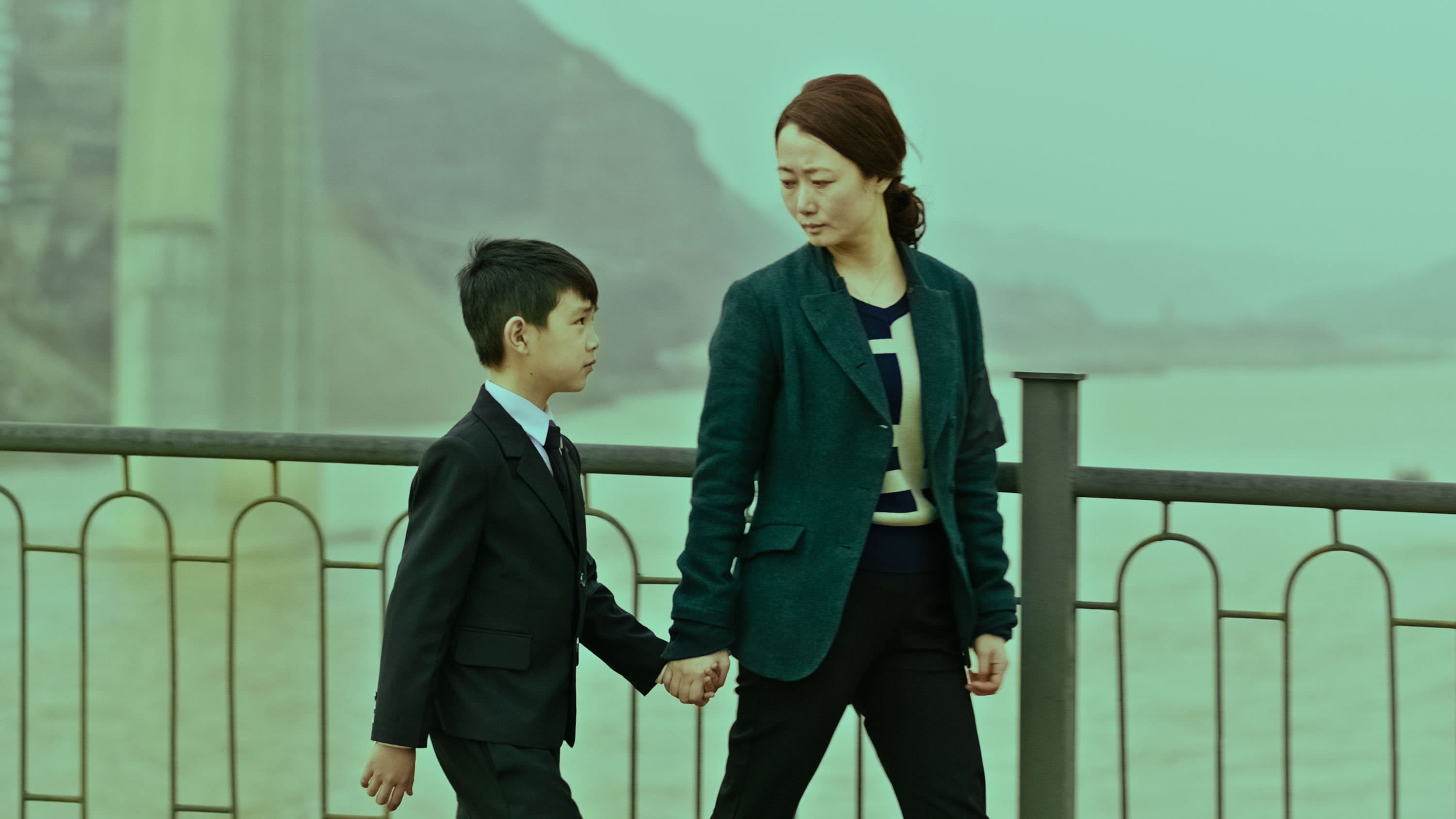
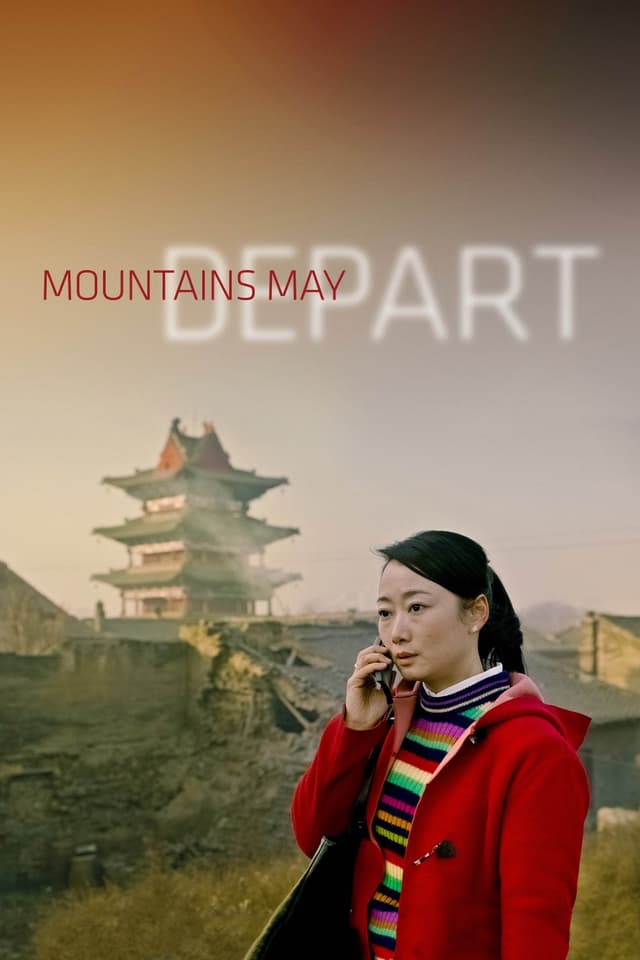
Mountains May Depart Budget
Updated
Synopsis
A young woman in Fenyang, China must choose between two suitors in 1999, a decision that ripples through her family across decades and continents. Spanning 1999, 2014, and 2025, Jia Zhangke's drama charts the emotional cost of China's economic transformation as a son raised in Australia loses his mother tongue and his memory of home.
What Is the Budget of Mountains May Depart (2015)?
Mountains May Depart (2015), written and directed by Jia Zhangke, was produced on an estimated budget of approximately $5,000,000, financed as a Chinese-French-Japanese co-production through Jia's own Xstream Pictures, Marin Karmitz's Paris-based MK Productions, and Takeshi Kitano's Office Kitano. The figure has never been officially disclosed by the filmmakers, but trade reporting from Variety and Screen Daily placed the production cost in the four to six million dollar range, consistent with Jia's previous arthouse features and the scale required to shoot across three decades and two continents.
The budget reflected the ambition of a triptych structure spanning 1999 Fenyang, contemporary 2014 China, and a near-future 2025 Australia. While modest by Chinese commercial standards, the figure was substantial for a director whose earlier films Platform and Still Life were made for considerably less. Distribution rights were sold pre-completion to Kino Lorber in North America, MK2 across most of Europe, and Memento Films International handling the rest of world, providing the gap financing that closed the production.
Key Budget Allocation Categories
The estimated $5,000,000 budget covered the demands of a multi-decade, multi-country production:
- Above-the-Line Talent: Jia Zhangke wrote, directed, and produced, working at the standard arthouse auteur rate. Lead actress Zhao Tao, Jia's longtime collaborator and wife, anchored all three time periods as Shen Tao. Supporting players Zhang Yi, Liang Jingdong, and Dong Zijian commanded modest Chinese feature rates, with Sylvia Chang the highest-paid name in the Australian segment.
- Multi-Era Production Design: The film required period-specific recreation of 1999 Fenyang at the eve of China's WTO accession, contemporary 2014 Shanghai and Shanxi, and a speculative 2025 Australian coastal community. Liu Weixin's production design covered costumes, set dressing, and consumer electronics specific to each era.
- Cinematography and Format Changes: Nelson Yu Lik-wai shot the 1999 segment in 4:3 standard definition on the Panasonic AG-DVX100, the 2014 segment in 1.85:1 on the Arri Alexa, and the 2025 segment in 2.35:1 widescreen. Three distinct camera packages and the post conform to handle the aspect-ratio shifts added cost compared with a single-format shoot.
- Australian Location Shoot: The final third was shot on location in Melbourne and along the Mornington Peninsula coast in early 2015. International cast, crew, equipment shipping, and Australian production services made the Australian block the most expensive single segment.
- Music Licensing: The film leans heavily on the Cantopop song "Take Care" by Sally Yeh, which recurs across all three time periods as an emotional throughline. Synchronization rights for the song, along with the Pet Shop Boys' "Go West" used during the 1999 dance sequence, accounted for a meaningful share of the music budget.
- Post-Production and Cannes Delivery: Matthieu Laclau and Lin Xudong edited the film to meet the May 2015 Cannes competition deadline. Color grading, sound design, and DCP delivery were handled in Paris under MK Productions oversight, the standard workflow for a Cannes premiere with European co-production financing.
How Does Mountains May Depart's Budget Compare to Similar Films?
At approximately $5,000,000, Mountains May Depart sits in the typical range for festival-circuit Chinese arthouse co-productions. The comparison set shows the commercial ceiling for the genre:
- A Touch of Sin (2013): Budget approximately $3,500,000 | Worldwide $2,488,432. Jia's previous feature won Best Screenplay at Cannes and earned a slightly lower worldwide total, but its banned status in China limited theatrical revenue at home.
- The Assassin (2015): Budget approximately $15,000,000 | Worldwide $18,300,000. Hou Hsiao-hsien's wuxia art film cost three times as much and out-earned Mountains May Depart by a wide margin on the strength of its martial arts genre crossover.
- Black Coal, Thin Ice (2014): Budget approximately $4,500,000 | Worldwide $16,400,000. Diao Yinan's Berlin Golden Bear winner cost less than Mountains May Depart but earned five times more, largely on a $15M Chinese domestic theatrical run.
- I Wish I Knew (2010): Budget approximately $2,500,000 | Worldwide reported under $500,000. Jia's earlier Shanghai documentary cost half as much and had no meaningful theatrical footprint outside festivals.
- Still Life (2006): Budget approximately $2,000,000 | Worldwide $2,400,000. Jia's Venice Golden Lion winner serves as a baseline: Mountains May Depart spent more than twice as much and earned roughly 1.3 times as much worldwide.
Mountains May Depart Box Office Performance
Mountains May Depart premiered in competition at the 68th Cannes Film Festival on May 20, 2015, then opened in China on October 30, 2015 through Shanghai Film Group. The Chinese theatrical run grossed approximately $2,200,000, an unusually strong arthouse result helped by Jia Zhangke's domestic profile and a moderate 700-screen release. North American distribution through Kino Lorber began February 12, 2016 in New York and Los Angeles, generating a modest specialty box office gross.
Box Office Breakdown
Mountains May Depart

Mountains May Depart returned approximately $0.43 in theatrical revenue for every $1 invested, a result consistent with Jia Zhangke's previous work and recouped through downstream television, MK2 home video, and SVOD licensing across the MUBI, Criterion Channel, and FilmStruck windows.
The Chinese theatrical performance was particularly notable. At approximately $2,200,000 domestic, the film earned more in China than any of Jia's previous releases combined, signaling that the director's domestic profile had risen even as his films retained their arthouse footprint. The North American gross of approximately $324,000 through Kino Lorber matched expectations for a subtitled Cannes competition title released in specialty venues.
Mountains May Depart Production History
Jia Zhangke conceived Mountains May Depart in 2013, immediately after the completion of A Touch of Sin, as a deliberate pivot from explicit social violence toward intimate family melodrama. The script developed across late 2013 and 2014, structured from the outset as three discrete temporal blocks. Jia has described the film as his most personal work, drawing on his own experience leaving Fenyang for Beijing and watching emigrant friends lose touch with the Mandarin language.
Principal photography began in Fenyang, Shanxi Province in late 2014 for the 1999 segment, then moved to Shanghai and Datong for the 2014 segment. The Australian block was shot on location in Melbourne and along the Mornington Peninsula in early 2015, taking advantage of Australia's production incentives and Victoria's established film services infrastructure. The complete shoot wrapped in time for an aggressive post schedule designed to meet the May 2015 Cannes deadline.
The format shifts between segments were planned from pre-production: 1999 in 4:3 academy ratio to evoke standard-definition television of the era, 2014 in standard widescreen, and 2025 in anamorphic widescreen. Cinematographer Nelson Yu Lik-wai, Jia's longtime collaborator dating to Platform, executed all three looks. The film was the first in Jia's career to shoot any meaningful portion outside Mainland China.
MK Productions provided the European financing backbone, with additional support from Office Kitano in Japan and Shanghai Film Group in China. The Chinese theatrical release on October 30, 2015 came after a politically sensitive period for Jia, whose previous film A Touch of Sin had been effectively banned in China despite official approval. Mountains May Depart cleared the censorship process and became Jia's widest Chinese theatrical release to that point.
Awards and Recognition
Mountains May Depart competed for the Palme d'Or at the 68th Cannes Film Festival in May 2015, ultimately losing the top prize to Jacques Audiard's Dheepan. The film received strong critical reviews from the Cannes press corps and went on to a robust awards season on the international festival circuit.
Major recognition included the Asian Film Award for Best Director for Jia Zhangke and the Asian Film Award for Best Original Music for Yoshihiro Hanno at the 10th Asian Film Awards in 2016. The film also won Best Director for Jia and Best Actress for Zhao Tao at the Asia Pacific Screen Awards, and Best Foreign Language Film at the inaugural Sydney Film Critics Circle awards. Zhao Tao earned Best Actress nominations at the Chicago Film Critics Association and the Toronto Film Critics Association, both bodies that rarely engage with subtitled Mandarin-language performances. The film was selected as the Toronto International Film Festival's opening night gala in the Masters program in September 2015.
Critical Reception
Mountains May Depart received strong reviews from international critics. The film holds an 88% approval rating on Rotten Tomatoes based on 110 reviews, with the critical consensus describing it as a "humane, deeply felt drama" that confirms Jia Zhangke's status as one of the leading auteurs of contemporary world cinema. Metacritic scored the film 76 out of 100, indicating generally favorable reviews.
Critics singled out Zhao Tao's performance across three time periods as the film's emotional anchor. Variety's Justin Chang called the film "an ambitious and emotionally resonant work that finds Jia at his most accessible," while The Hollywood Reporter's Deborah Young described it as "a sweeping, deeply moving portrait of the human cost of China's great leap forward." A.O. Scott in The New York Times praised the film's "remarkable formal control" and singled out the recurring use of Sally Yeh's "Take Care" as one of the most affecting uses of pop music in recent cinema.
The Australian segment proved divisive. Some critics, including Sight & Sound's Tony Rayns, argued that the broken English dialogue and the sentimental father-son arc weakened the film's third act compared with the precision of the Chinese segments. Others defended the linguistic discomfort as essential to Jia's thematic point about cultural displacement. The split has hardened over time into the standard critical reading of the film, with most retrospective coverage treating the Australian section as a daring rather than failed gamble.
Frequently Asked Questions
How much did it cost to make Mountains May Depart (2015)?
The production budget has never been officially disclosed but is estimated at approximately $5,000,000 based on trade reporting from Variety and Screen Daily. The film was financed as a Chinese-French-Japanese co-production through Jia Zhangke's Xstream Pictures, Marin Karmitz's MK Productions in France, and Takeshi Kitano's Office Kitano in Japan, with Shanghai Film Group handling Chinese distribution.
How much did Mountains May Depart earn at the box office?
The film grossed approximately $3,200,000 worldwide, including approximately $2,200,000 in China and approximately $324,000 in North America through Kino Lorber. The Chinese theatrical run was the strongest of Jia Zhangke's career at that point, helped by a moderate 700-screen release on October 30, 2015.
Who directed Mountains May Depart?
Jia Zhangke wrote and directed the film, working with longtime collaborators including cinematographer Nelson Yu Lik-wai and editor Matthieu Laclau. The film was Jia's eighth narrative feature following A Touch of Sin (2013) and continued his career-long focus on the human cost of China's economic transformation.
Where was Mountains May Depart filmed?
Principal photography took place in Fenyang in Shanxi Province for the 1999 segment, in Shanghai and Datong for the 2014 segment, and in Melbourne and along the Mornington Peninsula in Australia for the 2025 segment. The Australian block was shot in early 2015, taking advantage of Victoria's production services infrastructure.
Did Mountains May Depart win the Palme d'Or?
No. The film competed in the main competition at the 68th Cannes Film Festival in May 2015 but lost the Palme d'Or to Jacques Audiard's Dheepan. It did go on to win Best Director and Best Original Music at the Asian Film Awards and Best Director and Best Actress at the Asia Pacific Screen Awards.
Who plays the lead in Mountains May Depart?
Zhao Tao plays Shen Tao, the protagonist whose love triangle in 1999 Fenyang ripples through the film's three time periods. Zhao is Jia Zhangke's wife and longtime collaborator, and she anchors the entire film with a performance that ages from her mid-twenties through her mid-fifties.
What is the significance of the three time periods in Mountains May Depart?
The film is structured as a triptych set in 1999, 2014, and 2025, with each segment shot in a different aspect ratio: 4:3 academy for 1999, 1.85:1 widescreen for 2014, and 2.35:1 anamorphic for 2025. The format shifts trace the technological and emotional evolution of the characters as China transforms and family ties stretch thin.
How does Mountains May Depart compare to other Jia Zhangke films?
Mountains May Depart is Jia's most commercially successful Chinese theatrical release to date and his most accessible film for international audiences. At approximately $5,000,000, it cost more than twice as much as Still Life (2006), which earned $2,400,000 worldwide, and slightly more than A Touch of Sin (2013), which earned $2,488,432 worldwide.
What did critics think of Mountains May Depart?
The film received strong reviews, holding an 88% approval rating on Rotten Tomatoes (110 reviews) and a 76 out of 100 score on Metacritic. Critics praised Zhao Tao's performance and Jia Zhangke's formal control, though the Australian-set third act divided reviewers. Variety, The Hollywood Reporter, and The New York Times all published broadly positive reviews from the Cannes premiere.
Where can I watch Mountains May Depart?
The film is distributed in North America by Kino Lorber and is available to stream on the Criterion Channel and to rent or purchase digitally through Apple, Amazon, and Google. In Europe it was distributed by MK2, and in China by Shanghai Film Group. A Blu-ray release through Kino Lorber's home video label remains in print.
Filmmakers
Mountains May Depart

Official Trailer
Build budgets like this one in Saturation
Start from an industry-standard feature film template, import the schedule and rates you already have, and let the cost report keep itself current as you spend. Real-time collaboration, no spreadsheets.