Mononoke-hime Budget
 AdventureFantasyAnimation2h 14m
Updated
Synopsis
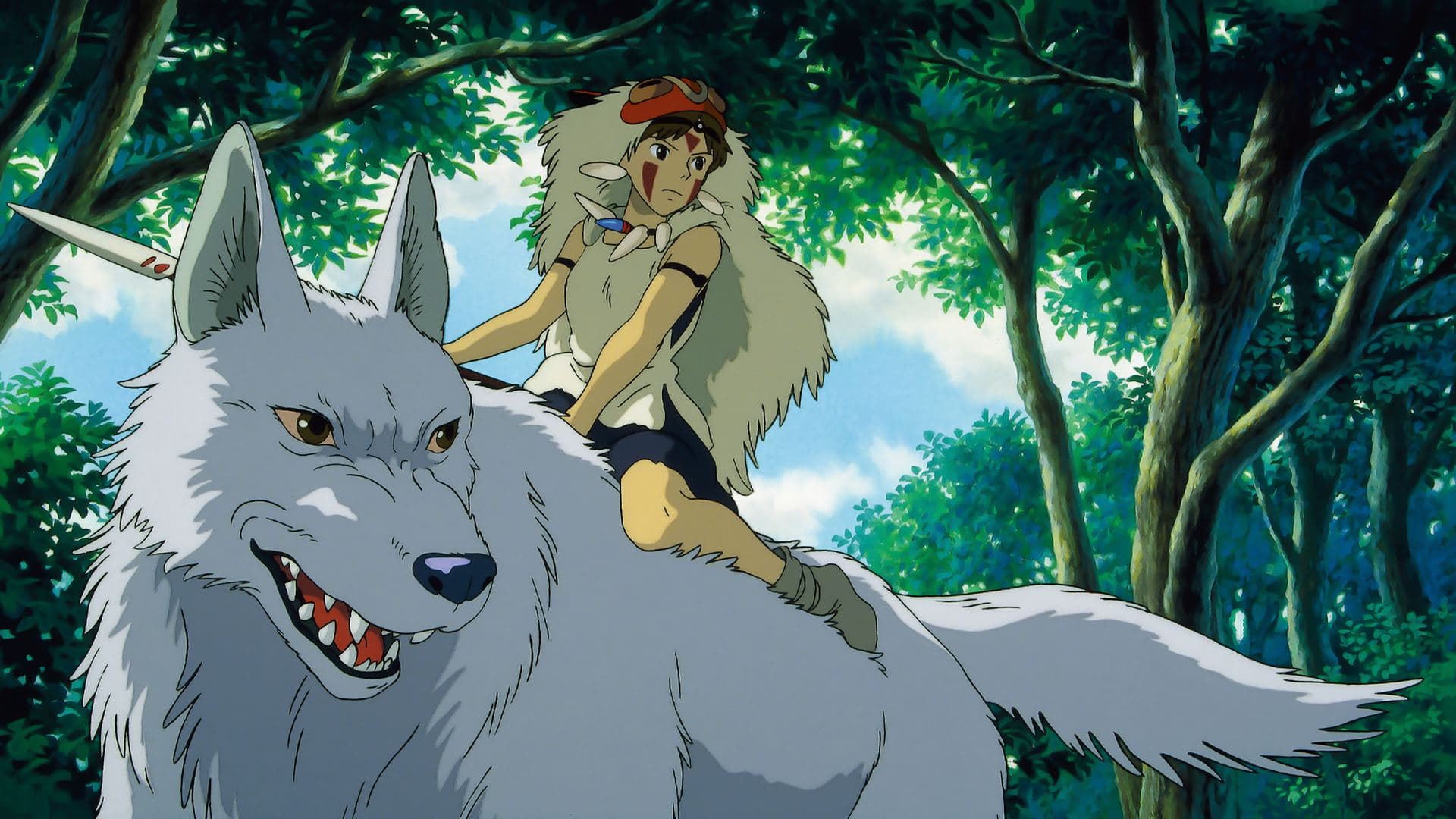
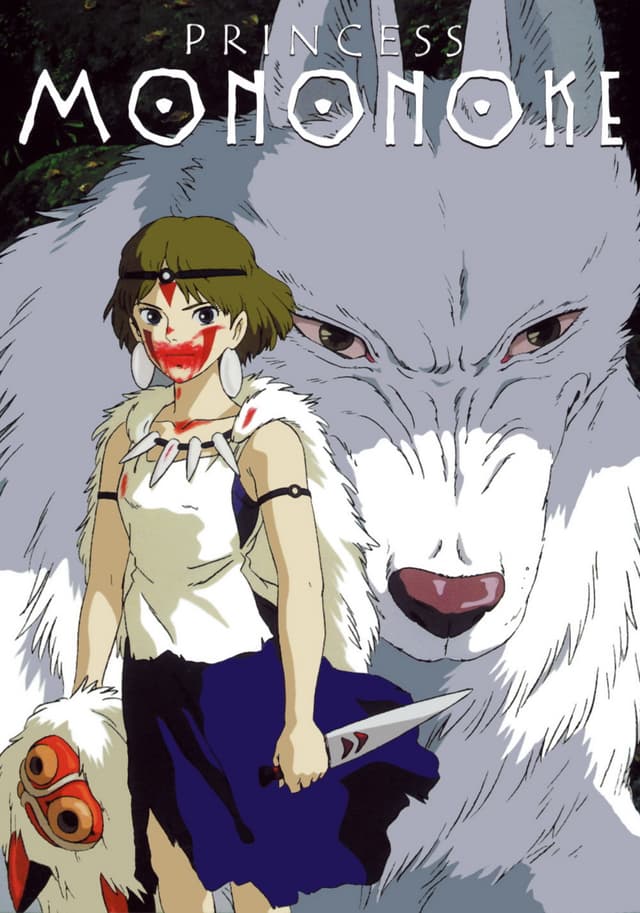
The Emishi people are under attack from a demon boar god. Its prince, Ashitaka, is compelled to save his home. Though he succeeds, a deadly curse is implanted upon him. Knowing his fate, he leaves his village on a journey for answers. He comes upon Irontown where the ambitious Lady Eboshi resides. His life is entwined with a mysterious girl named San and eventually, the battle between nature and civilization will unfold.
What is the budget of Mononoke-hime?
"Mononoke-hime," an adventure released in 1999, was directed by Hayao Miyazaki and stars Yoji Matsuda, Yuriko Ishida. The production budget was $23,500,000, placing it in the mid-budget range for adventure productions of the 1990s.
Key Budget Allocation Categories
While specific budget breakdowns are not publicly available, typical cost drivers for an adventure production like this include:
- Stunts, Action Sequences & Visual Effects: Action films allocate a substantial portion of their budget to choreographing and executing practical stunts, pyrotechnics, and CGI-heavy sequences.
- Above-the-Line Talent (Cast & Director): A-list talent commands significant upfront fees plus backend participation.
- Production Design, Sets & Locations: Action films frequently require multiple international shooting locations, large-scale set construction, vehicle acquisitions and modifications, and specialized equipment , all of which drive production costs well above those of dialogue-driven genres.
- Pre-Production: Hayao Miyazaki composed the preliminary ideas for what would become Princess Mononoke in 1980 after releasing his first film, The Castle of Cagliostro(1979), drawing sketches of a princess living in the woods with a beast.
What were the major cost factors in Mononoke-hime?
Several factors contributed to the overall production costs of "Mononoke-hime."
- Stunts: Stunts, Action Sequences & Visual Effects is one of the primary cost drivers in adventure productions of this scale.
- Above-the-Line Talent (Cast: Above-the-Line Talent (Cast & Director) is one of the primary cost drivers in adventure productions of this scale.
- Production Design: Production Design, Sets & Locations is one of the primary cost drivers in adventure productions of this scale.
How Does Mononoke-hime's Budget Compare to Similar Films?
At $23,500,000, Mononoke-hime sits in the mid-budget range. Here is how it compares to productions with a similar budget:
- The Visitors II: The Corridors of Time (1998): Budget $23,030,000 , Gross $66,000,000
- The Secret World of Arrietty (2010): Budget $23,000,000, Worldwide Gross $149,660,003
- Bad Santa (2003): Budget $23,000,000, Worldwide Gross $76,500,000
- Chasing Liberty (2004): Budget $23,000,000, Worldwide Gross $12,195,626
- Chéri (2009): Budget $23,000,000, Worldwide Gross $9,400,000
The median budget for wide-release adventure films in the era ranges from $30 to 80M for mid-budget to $150M+ for tentpoles.
Mononoke-hime Box Office Performance
"Mononoke-hime" earned $4,845,631 domestically and $176,506,186 worldwide at the box office. Against a production budget of $23,500,000, the film performed strongly at the box office.
A film typically needs to earn approximately twice its production budget to cover marketing and distribution costs. For "Mononoke-hime," that break-even threshold was roughly $47,000,000. With worldwide earnings of $176,506,186, the film cleared that threshold comfortably.
Box Office Breakdown
Mononoke-hime

At 651.1%, "Mononoke-hime" earned roughly $7.51 for every $1 invested in production.
Mononoke-hime Production History
As with most of Miyazaki's previous films, Princess Mononoke score was composed by Joe Hisaishi. According to McCarthy, the score's development involved a much closer collaboration between the two than on previous works. Hisaishi first composed an image album, a collection of demos and musical sketches that serve as a precursor to the finished score, which he shared with Miyazaki and Suzuki.
Awards and Recognition
14 wins & 6 nominations total
- Animation Kobe Theatrical Film Award
- Japan Academy Prize for Picture of the Year
Critical Reception
The film was generally well received by critics in Japan, and Kanō described a "flurry of praise" in the Japanese media following its box office success. The Asahi Shimbun Noboru Akiyama felt that the work displayed a "strong artistic quality" and a number of reviews in animation magazines highlighted its visual fidelity. Several publications featured articles from critics and academics covering several aspects of the film's production as well as interviews with key staff.
Frequently Asked Questions
How much did Princess Mononoke cost to make?
The production budget was approximately $23,500,000, the highest of any Japanese animated film at the time of its 1997 Japanese release. Studio Ghibli mortgaged its facilities to finance the film, betting heavily on Hayao Miyazaki's most ambitious project to date.
How much did Princess Mononoke earn at the box office?
The film grossed approximately $159,400,000 worldwide across its initial Japanese run, its 1999 North American release, and subsequent re-releases. The Japanese theatrical run alone generated approximately $148,000,000, briefly making it the highest-grossing film in Japanese history before Titanic overtook it.
Who directed Princess Mononoke?
Hayao Miyazaki wrote and directed the film. Miyazaki had previously directed My Neighbor Totoro (1988), Kiki's Delivery Service (1989), and Porco Rosso (1992). Princess Mononoke marked his most ambitious work to date and a turning point in Studio Ghibli's international visibility.
Who provided English-language voices for Princess Mononoke?
The English dub featured Claire Danes as San, Billy Crudup as Ashitaka, Minnie Driver as Lady Eboshi, Billy Bob Thornton as Jigo, Gillian Anderson as Moro, and Jada Pinkett Smith as Toki. Neil Gaiman wrote the English-language adaptation of the screenplay.
Why was the US release delayed until 1999?
Miramax acquired distribution rights as part of the Disney-Ghibli output deal but delayed release while Harvey Weinstein pressed for cuts. Miyazaki famously sent Weinstein a katana sword with the message "No cuts." The film was eventually released uncut in October 1999.
Where was Princess Mononoke produced?
Production took place at Studio Ghibli in Koganei, Tokyo. The film required approximately 144,000 cels of animation, the highest count of any Ghibli film. Miyazaki personally retouched or redrew approximately 80,000 of them, an extraordinary level of director involvement.
What did critics think of Princess Mononoke?
The film received universal acclaim. It holds a 93% approval rating on Rotten Tomatoes and an 84 out of 100 score on Metacritic. It is widely cited among the greatest animated films ever made and helped establish Studio Ghibli as a serious international art-house brand.
Did Princess Mononoke win any awards?
Yes. The film won the Japan Academy Prize for Picture of the Year in 1998, the first animated film to win the top award. It also received the Mainichi Film Award for Best Film. Joe Hisaishi's score remains widely cited as among the most accomplished in animation history.
How does Princess Mononoke compare to Spirited Away?
Princess Mononoke ($23,500,000 budget, $159,400,000 worldwide) was Miyazaki's commercial breakthrough that established the international audience that Spirited Away (2001, $19,000,000 budget, $395,800,000 worldwide) would expand. Spirited Away went on to win the Academy Award for Best Animated Feature.
Where can I stream Princess Mononoke?
The film streams on Max in the United States as part of the Studio Ghibli output deal with Warner Bros. Discovery. It is also available for digital purchase on Apple TV, Amazon Prime Video, and Google Play, and through GKIDS theatrical re-release runs.
Official Trailer
Build budgets like this one in Saturation
Start from an industry-standard feature film template, import the schedule and rates you already have, and let the cost report keep itself current as you spend. Real-time collaboration, no spreadsheets.