Love Streams Budget
 Drama2h 21m
Updated
Synopsis
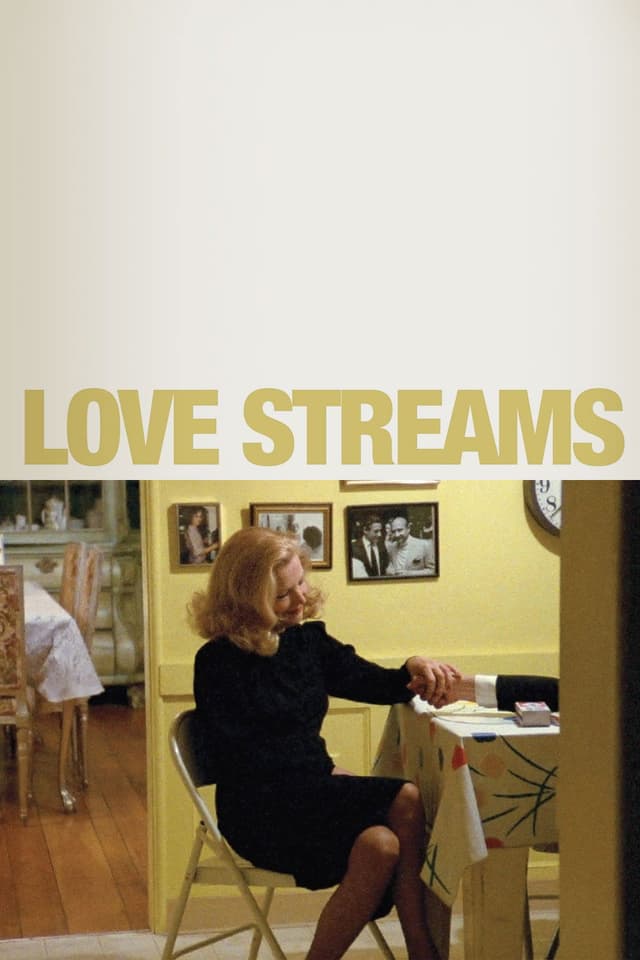
Robert Harmon, a Los Angeles bachelor and writer who chases tomorrow with a parade of women, reluctantly reunites with his unstable sister Sarah, whose unraveling marriage and obsessive longing for love drive her to his doorstep. As they cycle through eccentric companions and emotional crises together, the two siblings discover how deeply they have always needed each other.
What Is the Budget of Love Streams (1984)?
Love Streams (1984), directed by John Cassavetes and distributed by The Cannon Group (Cannon Films), was produced on an estimated budget of $2,000,000. The film was financed by Menahem Golan and Yoram Globus through Cannon Films as the eleventh and final directorial feature in Cassavetes' independent filmmaking career, completed two years before his diagnosis with cirrhosis and five years before his death in 1989.
The budget reflected the contained-production economic model that had defined Cassavetes' independent filmmaking across two decades. Working from a primarily single-location setting at his own Hollywood Hills home, with his wife Gena Rowlands and longtime collaborators in lead roles, Cassavetes held costs to the $2 million range despite the Cannon Films deal that provided the largest production budget of his independent career. The math anticipated festival recognition and limited art-house distribution rather than wide commercial release.
Key Budget Allocation Categories
The estimated $2,000,000 budget for Love Streams was distributed across several core production areas:
- Above-the-Line Talent: Director John Cassavetes commanded a scale-appropriate established-auteur fee and also starred as the lead character Robert Harmon, replacing originally-cast Jon Voight late in pre-production. Gena Rowlands, Cassavetes' wife and longest collaborator, played sister Sarah, with supporting roles for Diahnne Abbott, Seymour Cassel, and Margaret Abbott. The contained ensemble structure kept above-the-line costs manageable.
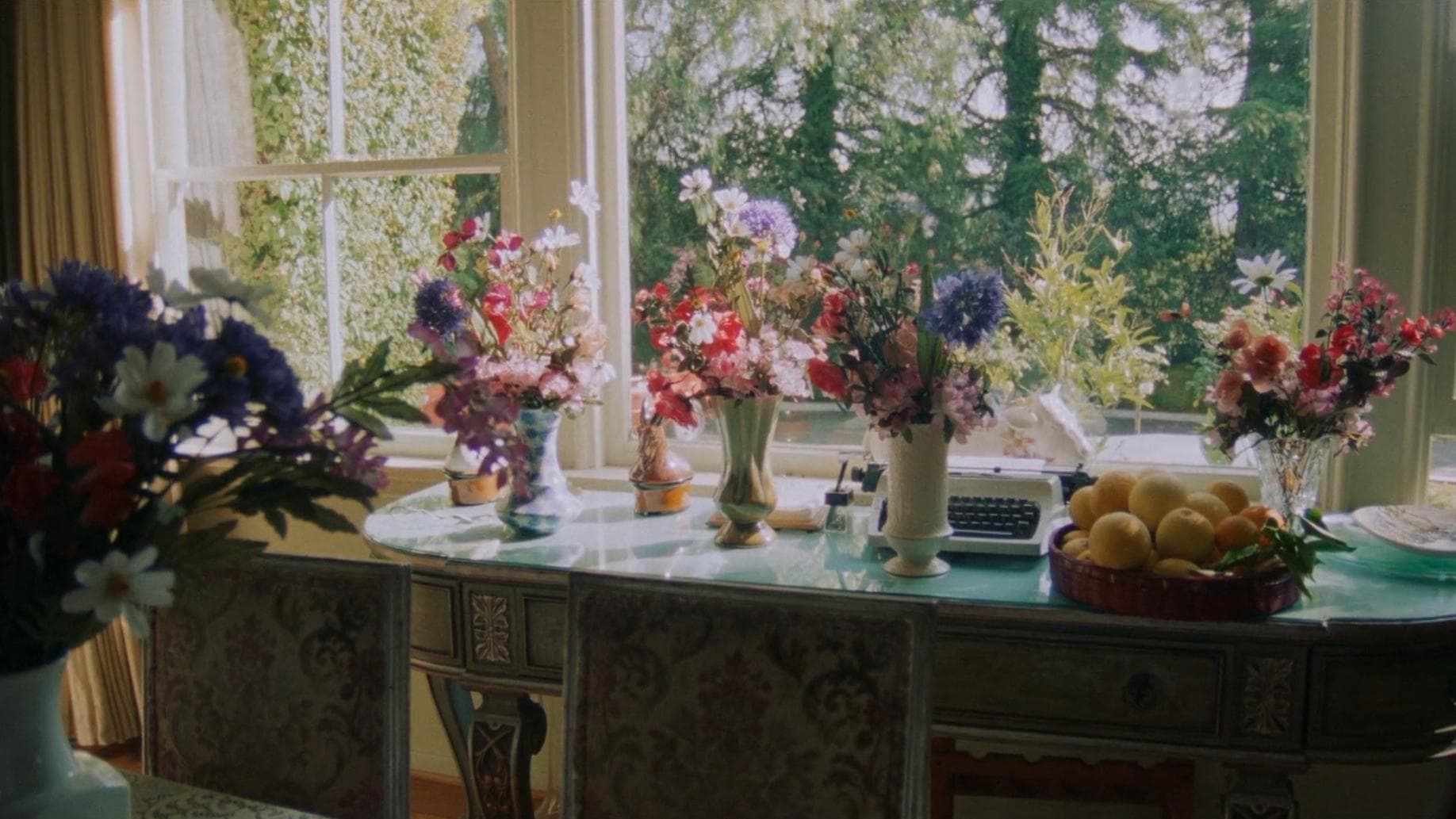
- Hollywood Hills Location: Principal photography took place primarily at Cassavetes' own home in the Hollywood Hills, with the contained setting saving substantial location costs while contributing to the autobiographical resonance of the film. Additional location work in Los Angeles and Las Vegas covered exterior coverage and the casino sequences.
- Writing and Adaptation: The screenplay was adapted by Cassavetes and Ted Allan from Allan's play Love Streams, which had run at the Mark Taper Forum in Los Angeles. The writing fees and rights payments to Allan represented a meaningful above-the-line investment consistent with prestige play adaptations.
- Cinematography: Director of photography Al Ruban shot the film in color 35mm, with the contained domestic setting and improvisational acting style anchoring the visual approach. Ruban had collaborated with Cassavetes on multiple previous productions including A Woman Under the Influence, providing the established creative shorthand that supported the tight schedule.
- Score and Music: Composer Bo Harwood, Cassavetes' frequent music collaborator, delivered the score blending jazz and ambient textures with original songs that became one of the film's most distinctive elements. The score recording sessions in Los Angeles absorbed orchestra and studio time consistent with the contained independent budget.
- Animal Wrangling: The film's extensive use of animals, including a goat, a horse, dogs, a duck, ducklings, chickens, and a parrot, required wrangler fees and on-set animal care across the production. The unusual menagerie was both a creative element and a meaningful below-the-line line item.
How Does Love Streams's Budget Compare to Similar Films?
At an estimated $2,000,000, Love Streams sits in the lower-mid range of mid-1980s American independent budgets. The comparison set illustrates how Cassavetes' work operated within distinct economic territory from both mainstream studio releases and the lowest-budget American independents:
- A Woman Under the Influence (1974): Budget approximately $1,000,000 | Worldwide approximately $6,000,000. Cassavetes' earlier independent feature cost half what Love Streams spent and provides the direct historical comparison for his own filmmaking economics.
- Stranger Than Paradise (1984): Budget approximately $90,000 | Worldwide approximately $2,500,000. Jim Jarmusch's contemporaneous American independent landmark cost less than 5 percent of Love Streams and represents the period's lowest-budget independent tier.
- Paris, Texas (1984): Budget approximately $2,000,000 | Worldwide approximately $4,400,000. Wim Wenders' contemporaneous Cannes Palme d'Or winner operated at the same budget level as Love Streams and provides the closest economic comparison for European-American art-cinema crossover.
- Once Upon a Time in America (1984): Budget approximately $30,000,000 | Worldwide approximately $5,300,000. Sergio Leone's contemporaneous American epic cost 15 times what Love Streams spent and earned roughly twice the worldwide gross, illustrating the structural gap between Cannon's independent backing and major-studio epic production.
Love Streams Box Office Performance
Love Streams premiered at the 34th Berlin International Film Festival on February 23, 1984 where it won the Golden Bear, the festival's top prize. Cannon Films released the film theatrically in the United States on August 24, 1984 in a limited release pattern. The film grossed approximately $1,000,000 in reported U.S. theatrical revenue across its specialty release. The financial breakdown below uses retrospective estimates:
Box Office Breakdown
Love Streams

Love Streams returned an estimated $0.50 to $1.00 in worldwide gross for every $1 invested when measured against total estimated production and marketing spend, marking it a theatrical disappointment relative to its modest budget. The U.S. share dominated the limited theatrical gross, with European festival exposure driving the bulk of the international reception that the Berlin Golden Bear catalyzed.
Long-tail revenue from home video, the Criterion Collection 2014 Blu-ray release, streaming licensing, and the film's permanent place in academic film curricula has delivered sustained returns over the decades. Cannon Films' subsequent acquisition by Pathé and various rights transitions across the late 1980s and 1990s complicated the rights-management chain, but the film has remained continuously available and frequently revived in retrospectives.
Love Streams Production History
Development began in 1983 at Cannon Films, with Menahem Golan and Yoram Globus pursuing a deal with John Cassavetes following a chance meeting at the Cannes Film Festival. Cannon had built its production strategy around acquiring auteur-led prestige projects to balance the company's genre output, and the Cassavetes deal fit that pattern. The film was developed from Ted Allan's play Love Streams, which had run at the Mark Taper Forum in Los Angeles, with Cassavetes and Allan co-adapting the screenplay.
Casting was initially built around Jon Voight in the lead role of Robert Harmon, but creative differences late in pre-production led to Voight's departure and Cassavetes himself stepping into the lead role. Gena Rowlands, Cassavetes' wife of nearly thirty years and his most frequent on-screen collaborator, played sister Sarah, with Diahnne Abbott (Taxi Driver), Seymour Cassel, and Margaret Abbott in supporting roles.
Principal photography ran during winter 1983 across Los Angeles in California, primarily at Cassavetes' own home in the Hollywood Hills. Additional location work covered Las Vegas casino exteriors. The contained schedule and the use of Cassavetes' personal residence as the principal set kept below-the-line costs efficient while contributing to the autobiographical resonance of the final film.
Post-production through autumn 1983 included Bo Harwood's score recording. The film premiered at the 34th Berlin International Film Festival on February 23, 1984 where it won the Golden Bear, beating contenders including The Funeral by Juzo Itami and Class Relations by Jean-Marie Straub and Danièle Huillet. Cannon Films released the film theatrically in the United States on August 24, 1984. Cassavetes' cirrhosis diagnosis came shortly after release, and Love Streams remained his final completed directorial feature before his death in February 1989.
Awards and Recognition
Love Streams won the Golden Bear at the 34th Berlin International Film Festival in 1984, the festival's top prize. It was also nominated for the FIPRESCI Prize at Berlin. The film received subsequent international art-house recognition and entered numerous retrospective best-of-decade lists across the 1980s.
In the United States, the film received no Academy Award nominations and was largely absent from mainstream American critics circles in 1984. However, Cassavetes' career as a whole received subsequent recognition, including an Academy Honorary Award nomination posthumously discussed and the broader film-history reassessment that has positioned Love Streams as one of his major late works. The Criterion Collection's 2014 Blu-ray release and the film's permanent place in academic curricula reflect this retrospective recognition.
Critical Reception
Love Streams received mixed-to-positive reviews on initial release that have strengthened substantially over subsequent decades. The film holds a 96% approval rating on Rotten Tomatoes based on its retrospective reviewer pool, with critics consistently praising Cassavetes' direction, Gena Rowlands' lead performance, and the emotional density of the sibling relationship. No initial Metacritic score exists because the film predates the platform.
Period reception was divided. Pauline Kael in The New Yorker wrote that the film was "so much Cassavetes that anyone allergic to him will be in agony, and anyone in tune with him will be transported." Vincent Canby in The New York Times called it "a remarkable work, almost certainly Mr. Cassavetes' best film in years." Other American critics found the runtime and improvisational density challenging, with mixed reviews framing the film as too much of a Cassavetes specialty work for general audiences.
Retrospective criticism has been overwhelmingly positive. The Criterion Collection 2014 Blu-ray release brought the film back to international art-house audiences and academic film studies. Critics including Jonathan Rosenbaum, J. Hoberman, and Manohla Dargis have positioned Love Streams as one of Cassavetes' major late works and as a foundational text in the lineage of American independent emotional drama. Filmmakers from Sean Baker through the Safdie Brothers have cited Cassavetes' improvisational acting style and contained domestic settings as defining influences on their own work.
Frequently Asked Questions
How much did it cost to make Love Streams (1984)?
The estimated production budget was $2,000,000. The film was financed by Menahem Golan and Yoram Globus through The Cannon Group as part of Cannon's strategy to balance its genre output with auteur-led prestige projects. The budget represented the largest production figure of John Cassavetes' independent filmmaking career.
How much did Love Streams earn at the box office?
The film grossed approximately $1,000,000 in reported U.S. theatrical revenue across its limited release pattern beginning August 24, 1984. Worldwide gross is estimated at $1,500,000 to $2,500,000 across reported territories. The Berlin Golden Bear win drove the bulk of the international reception.
Who directed Love Streams?
John Cassavetes directed the film as the eleventh and final directorial feature in his independent filmmaking career. Cassavetes also starred as the lead character Robert Harmon, replacing originally-cast Jon Voight late in pre-production after creative differences led to Voight's departure.
Who stars in Love Streams?
John Cassavetes stars as Robert Harmon and his wife Gena Rowlands stars as his sister Sarah. Diahnne Abbott (Taxi Driver), Seymour Cassel, Margaret Abbott, Eddy Donno, and Joan Foley appear in supporting roles. The film is one of the last on-screen collaborations between Cassavetes and Rowlands before his 1989 death.
What is Love Streams based on?
The film adapts the play Love Streams by Ted Allan, which had run at the Mark Taper Forum in Los Angeles. Cassavetes and Allan co-adapted the screenplay together. The play and film draw on themes of sibling devotion, romantic obsession, and the parallel emotional landscapes of two adults navigating midlife crises.
Where was Love Streams filmed?
Principal photography ran during winter 1983 across Los Angeles, California, primarily at John Cassavetes' own home in the Hollywood Hills. Additional location work covered Las Vegas casino exteriors. The contained schedule and the use of Cassavetes' personal residence as the principal set kept below-the-line costs efficient while contributing to the film's autobiographical resonance.
Did Love Streams win any awards?
Yes. Love Streams won the Golden Bear at the 34th Berlin International Film Festival in 1984, the festival's top prize. It was also nominated for the FIPRESCI Prize at Berlin. The film received subsequent international art-house recognition and entered numerous retrospective best-of-decade lists across the 1980s.
Was Love Streams the last Cassavetes film?
Love Streams was John Cassavetes' final completed directorial feature. He also acted in other films after Love Streams and contributed to development on additional projects, but no further directorial features were completed before his cirrhosis-related death in February 1989. Cassavetes received his cirrhosis diagnosis shortly after the film's release.
What did critics think of Love Streams?
Period reception was mixed-to-positive, with American critics divided on the runtime and improvisational density. Retrospective criticism has been overwhelmingly positive, with a 96% approval rating on Rotten Tomatoes based on the retrospective reviewer pool. Critics consistently praise Cassavetes' direction, Gena Rowlands' performance, and the emotional density of the sibling relationship.
Is Love Streams available on home video?
Yes. The Criterion Collection released Love Streams on Blu-ray in 2014, with the restoration supervised by cinematographer Al Ruban. The Criterion edition includes commentary, interviews, and supplemental material that have helped position the film within ongoing academic and film-criticism discussion of the Cassavetes filmography.
Filmmakers
Love Streams

Official Trailer
Build budgets like this one in Saturation
Start from an industry-standard feature film template, import the schedule and rates you already have, and let the cost report keep itself current as you spend. Real-time collaboration, no spreadsheets.