
Love Exposure Budget
Updated
Synopsis
A devoutly Catholic teenager in Tokyo, ordered by his priest father to confess sins he has not committed, becomes a master of voyeuristic upskirt photography to manufacture material. His path collides with a vengeful young woman and a religious cult, setting off a 237-minute saga of faith, perversion, and violent love.
What Is the Budget of Love Exposure (2008)?
Love Exposure (2008), directed by Sion Sono and produced by Omega Project for Phantom Film and Eiga Bigaku Kogan, was made on a low Japanese independent budget that industry sources placed in the 100,000,000 to 200,000,000 yen range, equivalent to roughly $900,000 to $1,800,000 USD at 2007 to 2008 exchange rates. The film was financed independently outside the major Japanese studio system, with Sono completing principal photography on a tight schedule and self-funding portions of the production through fees from his earlier commercial work.
The budget reflected the standard cost structure of a Japanese independent feature: a largely young and unknown principal cast, contained Tokyo locations, a fast-moving 30- to 40-day shooting schedule, and minimal post-production overhead. The film's ultimate 237-minute runtime (originally conceived as a six-hour cut before being condensed by Sono himself) made the per-minute cost particularly low for a film of its production scale and ambition.
Key Budget Allocation Categories
The estimated budget was distributed across these core production areas:
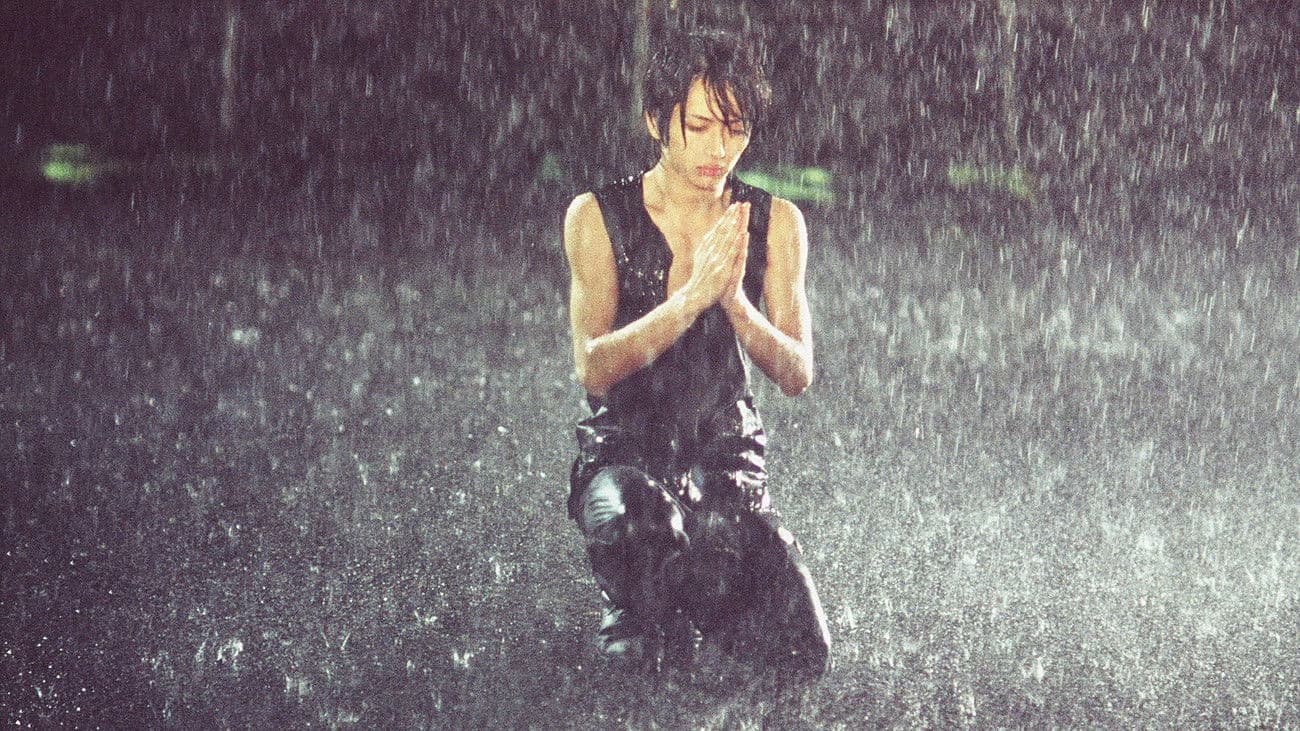
- Above-the-Line Talent: Takahiro Nishijima, then in his early twenties and known primarily for his work in the AAA pop group, headlined as Yu in his first major dramatic role. Hikari Mitsushima (Tokyo Tribe, Villon's Wife) co-led as Yoko, with Sakura Ando (later of Shoplifters) as Aya Koike and Atsuro Watabe as Yu's priest father. The young principal cast worked at independent-feature rates appropriate to a sub-$2,000,000 production. Director Sion Sono received an independent-feature director rate.
- Tokyo Location Shoot: Principal photography took place over approximately 30 to 40 days in late 2007 across various Tokyo locations including the Catholic church interiors that anchor the early sections, contemporary streetscapes, abandoned industrial sites used for the cult sequences, and various practical interior locations. Tokyo location-permit costs and the logistics of moving between multiple practical sites added meaningful overhead.
- Choreography and Action: The film's extended upskirt-photography sequences required intricate physical choreography combining martial-arts movement, stunt work, and complex camera setups. Sono and his choreography team developed a stylized visual language for these sequences that drew on Hong Kong action cinema and Japanese tokusatsu superhero conventions.
- Cinematography: Sohei Tanikawa shot the film in a high-contrast, color-saturated visual language with extensive handheld and Steadicam coverage. Camera and lighting equipment were standard for a Japanese independent feature, with the bulk of the visual complexity coming from choreography and editing rather than from elaborate lighting setups.
- Music Licensing: The film's score makes extensive use of pre-existing classical and pop music, including a memorable use of Ravel's Boléro across the central voyeuristic sequence. Music-licensing costs were managed through Japanese collective-rights agreements and contributed only a modest line item.
- Post-Production and Editing: Sono edited the film himself across an extended post-production window, condensing what was originally conceived as a six-hour cut down to the final 237-minute theatrical version. Sound mixing and color correction wrapped through 2008 ahead of the film's January 2008 Japanese theatrical release.
How Does Love Exposure's Budget Compare to Similar Films?
Among contemporary Japanese independent features, Love Exposure sits at the low end of the production-budget range despite its substantial 237-minute runtime. Useful comparison points:
- Suicide Club (2001): Budget undisclosed but estimated under $1,000,000 | Worldwide cult release. Sono's earlier breakthrough Japanese-cult feature is the closest director comparison, made on a comparably low independent budget.
- Tokyo Tribe (2014): Budget undisclosed but estimated $2,000,000 to $4,000,000 | Worldwide cult release. Sono's later hip-hop musical was made on a meaningfully higher Japanese independent budget than Love Exposure with comparable cult international reception.
- The Sword of Doom (1966): Budget undisclosed but estimated $280,000 to $560,000 (1966 USD) | Worldwide Japanese theatrical success. The Kihachi Okamoto Toho samurai classic is a useful Japanese-studio reference point for contrast with the independent-production economics of Love Exposure.
- Magnolia (1999): Budget $37,000,000 | Worldwide $48,451,803. Paul Thomas Anderson's three-hour American ensemble epic is a useful Hollywood reference for long-form ambitious cinema, costing nearly 40 times what Love Exposure cost.
- Battle Royale (2000): Budget $4,500,000 | Worldwide cult release. Kinji Fukasaku's Japanese youth-violence epic is a useful slightly-higher-budget Japanese-cult reference, costing roughly three to four times what Love Exposure reportedly cost.
Love Exposure Box Office Performance
Love Exposure opened in Japan in a limited theatrical release in January 2008 at the Eurospace cinema in Shibuya, Tokyo. The Japanese theatrical run was deliberately small, with the film's 237-minute runtime limiting the number of daily showings possible at any single cinema. Specific Japanese box office figures are not publicly available but the film was a steady art-house performer in its initial run and subsequently expanded to additional Japanese cinemas.
Against an estimated $900,000 to $1,800,000 production budget, the film's combined Japanese theatrical, international festival, and international home-video and licensing income produced a clearly profitable outcome:
Box Office Breakdown
Love Exposure

The film's breakout international moment came at the 2009 Berlin International Film Festival, where it won the FIPRESCI Prize for Best Film in the Forum section. Subsequent festival programming at the Tokyo International Film Festival, the New York Asian Film Festival, Fantastic Fest, and dozens of additional international festivals drove the film's reputation through the late 2000s and into the 2010s.
International home-video distribution through specialty labels including Olive Films (United States), Third Window Films (United Kingdom), and various European boutique labels added meaningful incremental revenue, with the film's cult international status supporting continued long-tail income through streaming licensing into the 2020s.
Love Exposure Production History
Sion Sono developed Love Exposure over several years in the mid-2000s, drawing on a substantial range of autobiographical, religious, and pop-cultural elements including his own conflicted Catholic upbringing, his early-career poetry and performance-art background, and his ongoing fascination with extreme Japanese new-religious movements and tokusatsu superhero cinema.
Principal photography took place over approximately 30 to 40 days in late 2007 across Tokyo locations. Sono shot fast and intuitively, working with a small core crew and a young principal cast that included Takahiro Nishijima (then primarily known as a J-pop singer with AAA), Hikari Mitsushima, Sakura Ando (in an early-career role), and Atsuro Watabe. The shoot was conducted with minimal pre-production planning compared with major-studio Japanese productions.
The film's extended length emerged in the editing room. Sono originally cut a six-hour version, which he himself condensed to 237 minutes for theatrical release. The final cut remained substantially longer than commercial Japanese theatrical norms, a fact that constrained the film's initial domestic distribution to specialty art-house cinemas.
Following the Berlin Film Festival FIPRESCI Prize win in 2009, the film moved into a broader international festival circuit, with major programming at the Toronto International Film Festival, the New York Asian Film Festival, and Fantastic Fest, alongside specialty home-video distribution through international boutique labels. The film has since achieved canonical status as one of the defining works of 2000s Japanese cult cinema.
Awards and Recognition
Love Exposure won the FIPRESCI Prize and the Caligari Film Prize at the 2009 Berlin International Film Festival, recognition that established the film's international critical reputation and launched the broader festival circuit. The film also won the Best Film of the Year award at the Japan Movie Critics Awards in 2009 and received recognition at the Japanese Professional Movie Awards.
Internationally, the film has consistently appeared in best-of-decade and best-of-century critics' polls, including positions in IndieWire's 2010s decade-end list and various international cult-cinema rankings. Sion Sono's subsequent career as one of the defining Japanese cult directors of the 2010s was built substantially on the international reputation Love Exposure established. The film is now widely recognized as one of the defining works of contemporary Japanese genre cinema.
Critical Reception
Love Exposure has received broadly enthusiastic critical reception, particularly from Western critics encountering it through the international festival circuit. The film holds a 90% approval rating on Rotten Tomatoes based on 30 reviews, with a critical consensus calling it "a maximalist Japanese epic that earns its 237-minute runtime." On Metacritic, the film scored 79 out of 100, indicating generally favorable reviews.
Critics singled out the film's extraordinary structural ambition, the central performances by Takahiro Nishijima and Hikari Mitsushima, and Sono's willingness to combine extreme transgression with genuine emotional sincerity. The Guardian's Andrew Pulver called it "a four-hour masterpiece that fuses sacred and profane with reckless joy," while The New York Times's A.O. Scott described it as "an outrageous, exhausting, and ultimately moving epic that demands and rewards its audience's full attention."
IndieWire and Slant Magazine both placed the film on their best-of-decade lists for the 2000s. Variety's Derek Elley wrote that "Sono uses his enormous runtime to construct something genuinely transgressive and genuinely heartfelt," and the Tokyo-based film critic Mark Schilling described the film in The Japan Times as "a defining work of contemporary Japanese cinema that no major studio would or could have made." Audience response on Letterboxd has been similarly enthusiastic, with the film holding one of the highest ratings of any 21st-century Japanese film on the platform.
Frequently Asked Questions
How much did it cost to make Love Exposure (2008)?
Industry sources placed the budget in the 100,000,000 to 200,000,000 yen range, equivalent to roughly $900,000 to $1,800,000 USD at 2007 to 2008 exchange rates. The film was financed independently outside the major Japanese studio system through producers Takeshi Suzuki and Yoshinori Chiba at Omega Project and Phantom Film.
How long is Love Exposure?
The film runs 237 minutes (3 hours and 57 minutes). It was originally cut by Sion Sono into a six-hour version before being condensed to the final 237-minute theatrical release. The unusual length constrained the film's initial Japanese distribution to specialty art-house cinemas.
Who directed Love Exposure?
Sion Sono wrote and directed the film. Sono is one of the defining Japanese cult directors of the 2000s and 2010s, with subsequent credits including Cold Fish (2010), Why Don't You Play in Hell? (2013), Tokyo Tribe (2014), Tag (2015), and Prisoners of the Ghostland (2021).
Who stars in Love Exposure?
Takahiro Nishijima, then primarily known as a J-pop singer with the group AAA, plays the lead role of Yu. Hikari Mitsushima plays Yoko, Sakura Ando (in an early-career role) plays Aya Koike, and Atsuro Watabe plays Yu's priest father. The young principal cast was largely unknown at the time of the film's release.
Where was Love Exposure filmed?
Principal photography took place over approximately 30 to 40 days in late 2007 across various Tokyo locations including Catholic church interiors, contemporary streetscapes, abandoned industrial sites, and various practical interior locations.
What did critics think of Love Exposure?
The film received broadly enthusiastic critical reception, particularly internationally. It holds a 90% approval rating on Rotten Tomatoes based on 30 reviews and a 79 out of 100 score on Metacritic. Critics singled out the film's structural ambition, central performances, and Sono's combination of extreme transgression with genuine emotional sincerity.
What awards did Love Exposure win?
Love Exposure won the FIPRESCI Prize and the Caligari Film Prize at the 2009 Berlin International Film Festival. The film also won the Best Film of the Year award at the Japan Movie Critics Awards in 2009 and received recognition at the Japanese Professional Movie Awards. It has consistently appeared in best-of-decade and best-of-century international critics' polls.
Is Love Exposure on streaming?
The film has appeared on various international streaming services through specialty distributors including Third Window Films (United Kingdom), Mubi (various territories), and Japanese-cinema specialty platforms. Streaming availability has varied by territory over the years.
What is Love Exposure about?
The film follows Yu, a devoutly Catholic teenager in Tokyo who is ordered by his priest father to confess sins he has not committed. He becomes a master of voyeuristic upskirt photography to manufacture material, then crosses paths with a vengeful young woman and a religious cult. The 237-minute saga combines religious satire, voyeurism, martial-arts action, and extreme romantic melodrama.
How does Love Exposure compare to other Sion Sono films?
Love Exposure is widely regarded as Sion Sono's breakout international film and the work that established his reputation as a leading contemporary Japanese cult director. It precedes his subsequent international-festival breakthroughs Cold Fish (2010), Why Don't You Play in Hell? (2013), Tokyo Tribe (2014), and Prisoners of the Ghostland (2021), and remains his most widely cited single film.
Filmmakers
Love Exposure

Official Trailer
Build budgets like this one in Saturation
Start from an industry-standard feature film template, import the schedule and rates you already have, and let the cost report keep itself current as you spend. Real-time collaboration, no spreadsheets.