Lilya 4-ever Budget
 Drama1h 49m
Updated
Synopsis
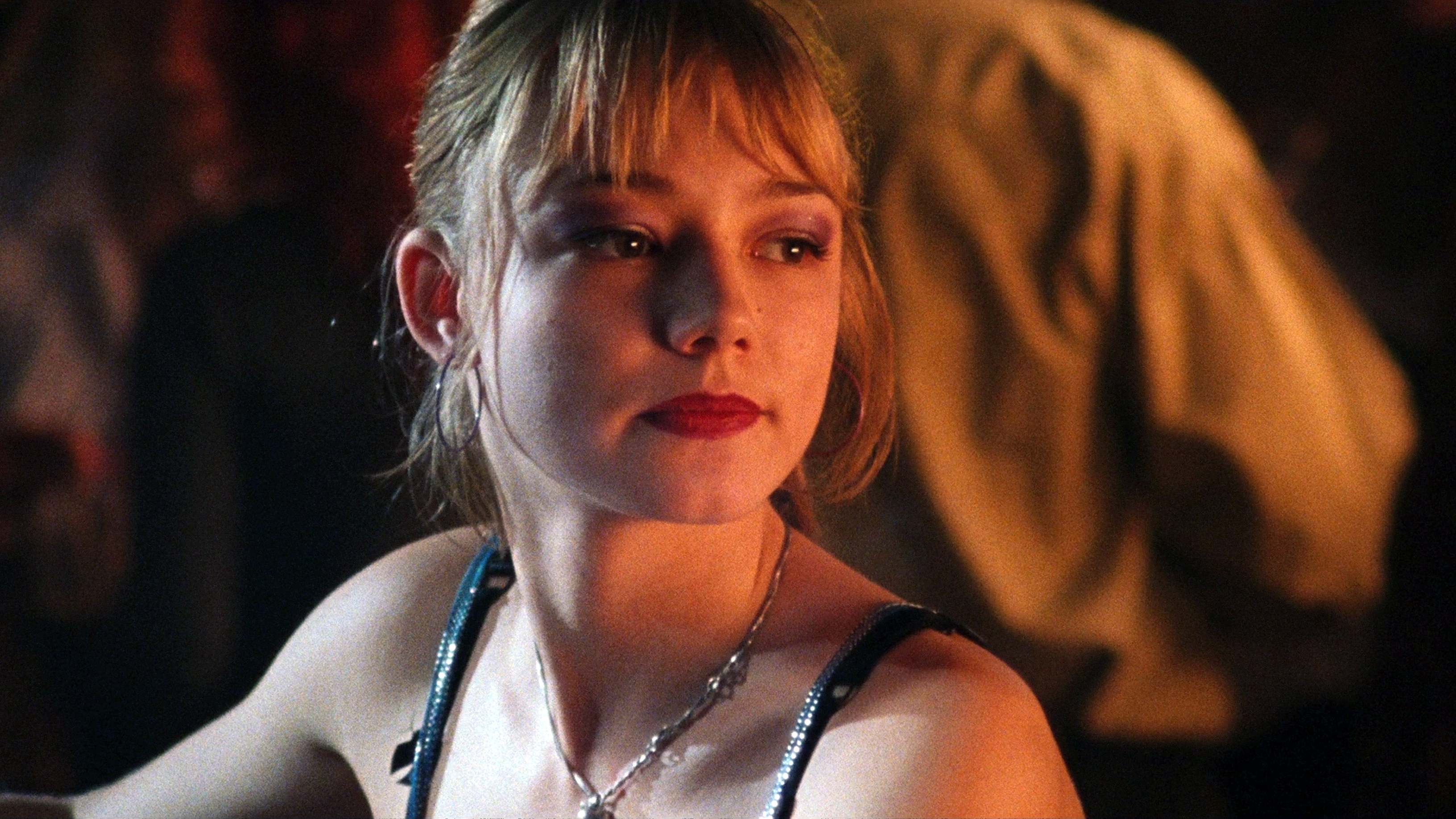
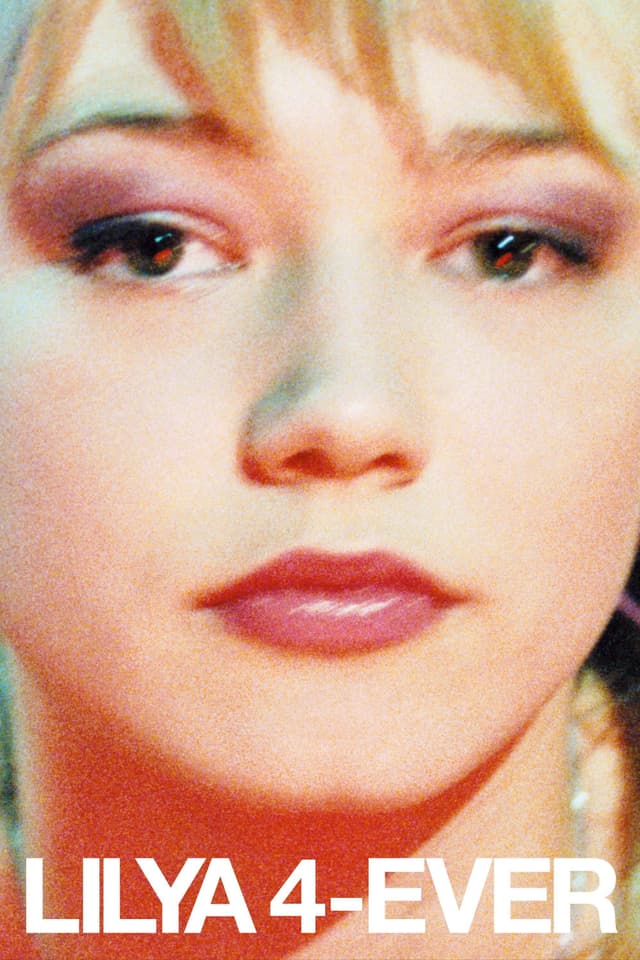
Sixteen-year-old Lilya (Oksana Akinshina), abandoned by her mother in a crumbling post-Soviet Estonian housing estate, befriends an even younger neighbor, Volodya, before being seduced by a stranger's promise of a new life in Sweden. The Stockholm dream turns into forced prostitution in a Malmö apartment, and Lukas Moodysson's third feature confronts the global trafficking economy through a single teenage girl's descent, ending on one of the most devastating images in 21st-century European cinema.
What Is the Budget of Lilya 4-Ever (2002)?
Lilya 4-Ever (Lilja 4-ever), Lukas Moodysson's third feature, was produced on a reported budget of approximately 30 million Swedish kronor, equivalent to roughly $2,700,000 at the 2001 to 2002 exchange rate. The figure has been cited in Swedish trade press around the film's release and aligns with the Memfis Film production model Moodysson and producer Lars Jönsson had established with their two prior collaborations, Show Me Love (Fucking Åmål, 1998) and Together (2000).
Financing was assembled through the Nordic public-funding model that supports the bulk of Swedish auteur cinema. Memfis Film led production with Lars Jönsson producing, and the cap table layered support from the Swedish Film Institute (Svenska Filminstitutet), the regional fund Film i Väst in Trollhättan, the public broadcaster Sveriges Television (SVT), the Danish co-production partner Zentropa Entertainments, and the Danish Film Institute (Det Danske Filminstitut). This Scandinavian co-production structure is the standard route for arthouse features in the $2,000,000 to $4,000,000 tier, blending soft money, broadcaster pre-sales, and regional rebates to close the budget without relying on theatrical recoupment.
Key Budget Allocation Categories
Public reporting on Lilya 4-Ever does not break the budget down line by line, but the production profile makes the dominant cost categories visible:
- Cast Built Around an Unknown Lead: Sixteen-year-old Russian actress Oksana Akinshina was cast in the title role on the strength of her debut in Sergei Bodrov Jr.'s Sisters (2001), with the rest of the principal cast (Artyom Bogucharsky as Volodya, Lyubov Agapova as Lilya's mother, Pavel Ponomaryov as Andrei) drawn from Russian and Baltic theatre and television. Above-the-line costs were kept low by avoiding name talent and casting age-appropriate performers in roles that would have been difficult to fill from the Swedish acting pool.
- Multi-Country Location Shoot: Principal photography ran across three countries: Paldiski in Estonia for the former Soviet housing estate scenes, Malmö in Sweden for the Stockholm-stand-in trafficking sequences, and Trollhättan in Sweden (the Film i Väst regional base, nicknamed "Trollywood") for studio interiors. Logistics for the cross-border shoot, including travel, accommodation, and equipment movement between the three units, were a significant share of below-the-line spend.
- Russian-Language Production: Roughly three quarters of the dialogue is in Russian rather than Swedish, requiring on-set interpreters, a Russian-speaking acting coach for Akinshina, and dialect supervisors to ensure consistency between the Estonian and Swedish-shot scenes. These specialist roles added cost on top of the standard Nordic crew rate card.
- Cinematography on 35mm: Ulf Brantås (Moodysson's regular DP through Show Me Love and Together) shot the film on 35mm with a handheld, naturalistic style. Stock, lab processing, and lighting packages for the Estonian housing-block exteriors and the closed-room Malmö sequences represented one of the larger fixed line items.
- Original Score by Nathan Larson: American composer Nathan Larson (former Shudder to Think guitarist, frequent Moodysson collaborator) wrote an original score that wraps around a heavy soundtrack of licensed European rock and electronic tracks, most prominently Rammstein's "Mein Herz Brennt" over the trafficking sequences. Music licensing for the Rammstein needle drop alone is widely understood to have been a notable line item; the band reportedly cleared the use on favorable terms after reading the script.
- Editorial and Post-Production: Three editors are credited (Michal Leszczylowski, Oleg Morgunov, Bernhard Winkler) reflecting a long post schedule and the multi-language assembly. Post was completed in Sweden through Memfis Film and Film i Väst facilities, with final mix and DI handled within the same Trollhättan infrastructure.
- Festival and Sales Delivery: Striking the world-premiere print for the 2002 Venice Film Festival competition, plus subtitled prints for Toronto, London, and the subsequent international festival circuit, were absorbed by Memfis Film and international sales agent Trust Film Sales. P&A spend in each release territory was carried by the local distributor (Sonet Film in Sweden, Newmarket Films in the US, Metrodome in the UK).
How Does Lilya 4-Ever's Budget Compare to Similar Films?
At approximately $2,700,000, Lilya 4-Ever sits squarely in the middle of the European arthouse drama tier, broadly comparable to other Nordic auteur features of the early 2000s and to international social-realist films dealing with trafficking, sex work, and post-Soviet collapse:
- Show Me Love (1998): Budget approximately $1,700,000 | Worldwide $3,300,000. Moodysson's debut, also produced by Lars Jönsson at Memfis Film, was made for a smaller budget and outgrossed Lilya 4-Ever theatrically. The two films share producer, DP (Ulf Brantås), and Scandinavian financing structure but address radically different subject matter.
- Together (2000): Budget approximately $2,500,000 | Worldwide $4,300,000. Moodysson's second feature, the 1970s commune comedy, was the immediate financial predecessor to Lilya 4-Ever and established the Memfis Film budget ceiling within which the trafficking drama was greenlit.
4 Months, 3 Weeks and 2 Days (2007): Budget approximately $800,000 | Worldwide $10,000,000. Cristian Mungiu's Palme d'Or winner is the closest thematic peer, a Romanian-language social-realist drama about female bodily exploitation under post-Soviet decay, made for less than a third of Lilya 4-Ever's budget and grossing roughly ten times more, illustrating how Cannes versus Venice premieres can shift commercial outcomes for tonally similar arthouse work.
- Fish Tank (2009): Budget approximately $3,000,000 | Worldwide $3,500,000. Andrea Arnold's social-realist drama about a teenage girl in an Essex housing estate is the closest stylistic peer in the British social-realist tradition, made on a comparable budget with a similar handheld observational approach and a non-professional teenage lead.
- The Whistleblower (2010): Budget approximately $10,500,000 | Worldwide $1,200,000. Larysa Kondracki's English-language Eastern European trafficking drama, with Rachel Weisz, sits in the more expensive star-driven tier; despite a budget nearly four times higher, it grossed roughly the same as Lilya 4-Ever, underscoring the commercial ceiling on this subject matter.
- Import/Export (2007): Budget approximately $4,000,000 | Worldwide $1,500,000. Ulrich Seidl's Austrian-Ukrainian drama about labour migration and sex work between East and West is the most direct continental peer to Lilya 4-Ever, made on a slightly larger budget within a similar European public-funding architecture.
Lilya 4-Ever Box Office Performance
Lilya 4-Ever world-premiered in competition at the 59th Venice International Film Festival on August 30, 2002, then opened in Sweden on August 23, 2002 through Sonet Film, in Norway on September 20, 2002, in Denmark on September 27, 2002, and reached the United States on April 18, 2003 on a limited Newmarket Films art-house release. The film opened to $33,731 in its US debut weekend and earned $184,023 across its entire US theatrical run. International grosses, led by strong performance in Sweden (roughly 270,000 admissions on opening month), Denmark, Norway, France, Italy, Germany, and the United Kingdom, totaled $823,724, bringing the worldwide cumulative to $1,007,747 per Box Office Mojo.
Box Office Breakdown
Lilya 4-ever

Against an estimated total investment of $4,200,000 to $4,700,000, the worldwide theatrical gross of $1,007,747 returned roughly $0.21 to $0.24 for every $1 invested at the theatrical window. Because much of the production budget was carried by Swedish Film Institute and Danish Film Institute grants, Sveriges Television and Zentropa broadcaster pre-sales, and Film i Väst regional rebates, the net commercial exposure for any single equity stakeholder was a fraction of the headline gap.
The film's commercial profile is best understood through admissions rather than gross. Sweden alone delivered approximately 270,000 admissions in the opening weeks, an exceptional result for a non-English-language drama on such a heavy subject. International cumulative ticket sales pushed the figure past 1,000,000 admissions across Nordic, Western European, and limited North American release. Home-video, broadcast, and ongoing curriculum and human-rights educational sales have continued to generate revenue and cultural impact more than two decades after release, making the film a long-tail success for its public-funder backers even as the theatrical accounting reads as a loss.
Lilya 4-Ever Production History
Lilya 4-Ever emerged from Lukas Moodysson's reaction to a 2000 Swedish news story about Danguole Rasalaite, a sixteen-year-old Lithuanian girl who had been trafficked to Sweden, forced into prostitution, and ultimately died after throwing herself from a Malmö motorway bridge in 2000. Moodysson read the case file, was unable to put it aside, and wrote the script in the months that followed. The closing dedication of the finished film, "in memory of the millions of children exploited by the sex industry," frames the project as direct human-rights cinema rather than fiction inspired by a single case.
Casting the lead took Moodysson and Lars Jönsson to Moscow and St. Petersburg, where Oksana Akinshina, then sixteen, was already a known quantity following her debut in Sergei Bodrov Jr.'s Sisters (2001). Moodysson cast her after a single audition. Akinshina's Russian dialogue carries roughly three quarters of the film's runtime, and the production engaged Russian acting coaches and on-set interpreters to support her work alongside the Swedish crew. Twelve-year-old Artyom Bogucharsky was cast as Volodya from the same Russian audition process.
Principal photography ran during late 2001 and early 2002 across three countries. The post-Soviet housing-estate sequences that open the film were shot in Paldiski, a former Soviet naval base in northwestern Estonia that had been largely depopulated after the Russian military withdrew in 1994 and offered the production a genuinely abandoned-looking landscape of brutalist apartment blocks. The Malmö-shot middle act stands in for an unnamed Swedish city (the film is deliberately non-specific about the destination, though the geography matches the Rasalaite case). Studio interiors and the closing rooftop scenes were completed in Trollhättan at the Film i Väst facility.
Ulf Brantås, returning from Show Me Love and Together, shot the film on 35mm with a deliberately raw handheld style that contrasts the brutalist greys of the housing estate with the artificially saturated reds and blues of the trafficking apartments. Moodysson and Brantås reportedly experimented with shooting some sequences as cinema verité before settling on the final hybrid approach. The Rammstein needle drop ("Mein Herz Brennt") that scores the most disturbing sequence was reportedly cleared after the band read the script and agreed to a favorable license fee, an arrangement Moodysson has discussed in subsequent interviews.
Post-production at Memfis Film and Film i Väst ran through spring and early summer 2002. Three editors are credited, reflecting the assembly of Swedish, Estonian, and Russian-language footage into a single 109-minute cut. The film was selected for the main competition at the 59th Venice International Film Festival, premiering on August 30, 2002, opening the Swedish theatrical run a week earlier on August 23, and entering the autumn festival circuit immediately afterward at Toronto, Vancouver, and the London Film Festival.
Awards and Recognition
Lilya 4-Ever swept the 2003 Guldbagge Awards, Sweden's national film prizes, winning five trophies including Best Film, Best Director (Lukas Moodysson), Best Screenplay (Moodysson), Best Actress (Oksana Akinshina), and Best Cinematography (Ulf Brantås). The five-award haul made it the most decorated Swedish film of its year and placed Moodysson, then thirty-three years old, alongside Bergman and Vinterberg in the modern Nordic auteur canon.
The film world-premiered in main competition at the 59th Venice International Film Festival in August 2002, competing for the Golden Lion. While the Lion went to Peter Mullan's The Magdalene Sisters, Lilya 4-Ever became one of the most discussed titles of the festival and went on to receive twin nominations at the 2003 European Film Awards (Best Film and Best Actress for Akinshina). Sweden submitted Lilya 4-Ever as its official entry for Best Foreign Language Film at the 75th Academy Awards, though it was not shortlisted.
The film additionally won awards or special mentions at the Chicago International Film Festival, the Stockholm International Film Festival, the Karlovy Vary International Film Festival, and the Mar del Plata International Film Festival. Akinshina's performance was cited in critics' year-end lists across Europe and in the major US film publications, and the film has been retrospectively included in multiple "best of the 2000s" rankings in Swedish, Scandinavian, and international critical surveys.
Critical Reception
Lilya 4-Ever holds an 84 percent positive score on Rotten Tomatoes from 70 critic reviews and an 83 out of 100 on Metacritic from 24 critic reviews, both placing it solidly in the universal-acclaim tier for a 2003 US art-house foreign-language release. Audience scores follow the same pattern, with a 91 percent Rotten Tomatoes audience approval rating from more than 10,000 ratings and a 7.8 average on IMDb from approximately 36,000 user ratings. CinemaScore does not poll arthouse foreign-language releases of this scale, so no audience grade is on file.
Ty Burr in the Boston Globe wrote that Moodysson "dives into the soul of a 16-year-old Estonian girl and tears you apart," a quote that became one of the film's most-cited US notices. Variety's Venice review called Akinshina's performance "shatteringly raw," and Roger Ebert awarded the film three and a half stars in his Chicago Sun-Times review, writing that it left him "drained and stunned" and citing it as one of the most difficult films he had ever recommended. A. O. Scott in the New York Times called it "a film of overwhelming sadness, anchored by a performance of astonishing emotional clarity from Akinshina."
The film's afterlife in academic and human-rights contexts has been as significant as its critical reception. Lilya 4-Ever has been used as teaching material in university courses on trafficking and migration in dozens of countries, and the Swedish government cited the film in policy discussions during the 2003 to 2005 expansion of anti-trafficking enforcement. Moodysson has subsequently been characterized in Scandinavian film criticism as Sweden's most important contemporary director after Bergman, with Lilya 4-Ever cited as the work that consolidated that reputation.
Frequently Asked Questions
How much did it cost to make Lilya 4-Ever (2002)?
Lilya 4-Ever was produced on a reported budget of approximately 30 million Swedish kronor, equivalent to roughly $2,700,000 at the 2001 to 2002 exchange rate. Financing was assembled through the standard Nordic public-funding model, with Memfis Film leading and additional support from the Swedish Film Institute, Film i Väst, Sveriges Television, Zentropa Entertainments, and the Danish Film Institute.
How much did Lilya 4-Ever (2002) earn at the box office?
Lilya 4-Ever grossed $1,007,747 worldwide per Box Office Mojo, comprising $184,023 from its limited US release through Newmarket Films and $823,724 from international territories led by Sweden, Denmark, Norway, France, Italy, Germany, and the United Kingdom. The Swedish opening alone delivered roughly 270,000 admissions, an exceptional result for a non-English-language drama on such heavy subject matter.
Was Lilya 4-Ever (2002) profitable?
Against an estimated total investment of roughly $4,200,000 to $4,700,000 including production budget and worldwide P&A, the theatrical gross of $1,007,747 returned approximately $0.21 to $0.24 for every $1 invested, an ROI of roughly negative 76 to negative 79 percent at the theatrical window. The film was financed largely through Swedish and Danish public funds and broadcaster pre-sales, so equity exposure for any single backer was a fraction of the headline gap, and home-video and curriculum windows have produced ongoing returns.
Who directed Lilya 4-Ever (2002)?
Lilya 4-Ever was written and directed by Lukas Moodysson, the Swedish filmmaker whose first two features, Show Me Love (Fucking Åmål, 1998) and Together (2000), had already made him the most internationally acclaimed Swedish director of his generation. Lilya 4-Ever, his third feature, marked a sharp tonal pivot from the warmth of his earlier work into uncompromising social-realist territory.
Is Lilya 4-Ever (2002) based on a true story?
The film was inspired by the 2000 case of Danguole Rasalaite, a sixteen-year-old Lithuanian girl who had been trafficked to Sweden, forced into prostitution, and died after throwing herself from a Malmö motorway bridge. Moodysson read the case file, was unable to put it down, and wrote the script in the following months. The film closes with a dedication to "the millions of children exploited by the sex industry."
Where was Lilya 4-Ever (2002) filmed?
Principal photography ran across three countries during late 2001 and early 2002. The post-Soviet housing estate sequences were shot in Paldiski, a former Soviet naval base in northwestern Estonia that had been largely depopulated after the Russian military withdrawal in 1994. The Swedish-set middle act was shot in Malmö, and studio interiors and final scenes were completed at the Film i Väst facility in Trollhättan, Sweden, nicknamed "Trollywood" for its concentration of Swedish film production.
Who starred in Lilya 4-Ever (2002)?
Sixteen-year-old Russian actress Oksana Akinshina played the title role of Lilya, in only her second feature role after Sergei Bodrov Jr.'s Sisters (2001). The principal cast also includes Artyom Bogucharsky as Volodya, Lyubov Agapova as Lilya's mother, Liliya Shinkaryova as Aunt Anna, Pavel Ponomaryov as Andrei, and Tomasz Neuman as Witek. Roughly three quarters of the dialogue is in Russian rather than Swedish.
Where did Lilya 4-Ever (2002) premiere?
Lilya 4-Ever world-premiered in main competition at the 59th Venice International Film Festival on August 30, 2002, competing for the Golden Lion. It opened theatrically in Sweden through Sonet Film one week earlier on August 23, then entered the autumn festival circuit at Toronto, Vancouver, and London. The US limited release through Newmarket Films followed on April 18, 2003.
What awards did Lilya 4-Ever (2002) win?
Lilya 4-Ever swept the 2003 Guldbagge Awards with five wins: Best Film, Best Director, Best Screenplay (all three for Moodysson), Best Actress (Akinshina), and Best Cinematography (Ulf Brantås). It received twin nominations at the 2003 European Film Awards (Best Film, Best Actress) and was Sweden's official entry for Best Foreign Language Film at the 75th Academy Awards. Additional awards followed at Chicago, Stockholm, Karlovy Vary, and Mar del Plata.
Where can you watch Lilya 4-Ever (2002) today?
Lilya 4-Ever is available on streaming platforms including MUBI and the Criterion Channel during their occasional Lukas Moodysson and Scandinavian arthouse programming windows, and on physical DVD and Blu-ray through several specialty labels including Memfis Film's own distribution and Tartan Video in the UK. The film also remains in active university and human-rights curriculum circulation more than two decades after release.
Filmmakers
Lilya 4-ever

Official Trailer
Build budgets like this one in Saturation
Start from an industry-standard feature film template, import the schedule and rates you already have, and let the cost report keep itself current as you spend. Real-time collaboration, no spreadsheets.