Kung Fury Budget
Updated
Synopsis
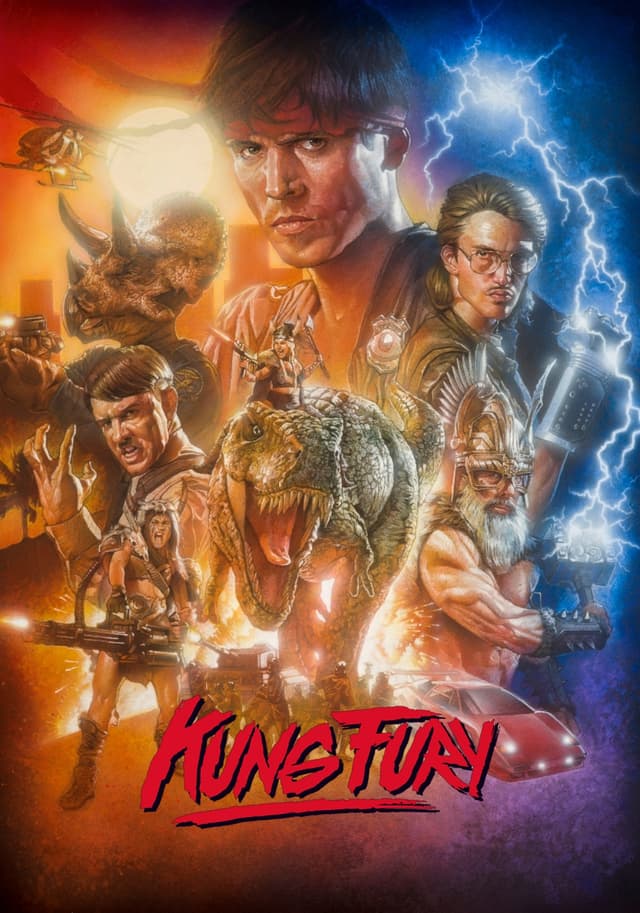
During an unfortunate series of events, a friend of Kung Fury is assassinated by the most dangerous kung fu master criminal of all time, Adolf Hitler, a.k.a Kung Führer. Kung Fury decides to travel back in time to Nazi Germany in order to kill Hitler and end the Nazi empire once and for all.
What is the budget of Kung Fury?
"Kung Fury," an action released in 2015, was directed by David Sandberg and stars David Sandberg, Jorma Taccone. The production budget was $630,019, placing it in the micro-budget range for action productions of its era.
Key Budget Allocation Categories
While specific budget breakdowns are not publicly available, typical cost drivers for an action production like this include:
- Stunts, Action Sequences & Visual Effects: Action films allocate a substantial portion of their budget to choreographing and executing practical stunts, pyrotechnics, and CGI-heavy sequences.
- Above-the-Line Talent (Cast & Director): A-list talent commands significant upfront fees plus backend participation.
- Production Design, Sets & Locations: Action films frequently require multiple international shooting locations, large-scale set construction, vehicle acquisitions and modifications, and specialized equipment , all of which drive production costs well above those of dialogue-driven genres.
- Production: David Sandberg is a Swedish filmmaker who had previously directed television commercials and music videos.
What were the major cost factors in Kung Fury?
Several factors contributed to the overall production costs of "Kung Fury."
- Stunts: Stunts, Action Sequences & Visual Effects is one of the primary cost drivers in action productions of this scale.
- Above-the-Line Talent (Cast: Above-the-Line Talent (Cast & Director) is one of the primary cost drivers in action productions of this scale.
- Production Design: Production Design, Sets & Locations is one of the primary cost drivers in action productions of this scale.
How Does Kung Fury's Budget Compare to Similar Films?
At $630,019, Kung Fury sits in the micro-budget range. Here is how it compares to productions with a similar budget:
- For a Few Dollars More (1965): Budget $600,000, Worldwide Gross $15,000,000
- In a Violent Nature (2024): Budget $600,000, Worldwide Gross $4,258,197
- Day for Night (1973): Budget $700,000, Worldwide Gross $850,000
- The Conformist (1971): Budget $750,000, Worldwide Gross $233,493
- The General (1926): Budget $750,000, Worldwide Gross $1,000,000
The median budget for wide-release action films in the 2010s ranges from $30 to 80M for mid-budget to $150M+ for tentpoles.
Kung Fury Production History
Due to a limited budget, Sandberg shot the majority of the film at his office in Umeå, Sweden, using digital effects to replicate the streets of Miami. As he could only afford one police uniform during the production of the trailer, he filmed the police precinct scene by shooting each extra separately and compositing them in the scene. The single-shot scene where Kung Fury dispatches dozens of Nazi soldiers was achieved by combining the primary take of Sandberg's moves with over 60 takes of individual extras attacking him.
The soundtrack score was composed by Swedish synthwave musicians Mitch Murder and Lost Years, with additional music by Patrik Öberg, Christoffer Ling, Highway Superstar, and Betamaxx. The official soundtrack album was released on vinyl record on 8 July 2015. Mitch Murder and Jörgen Elofsson also co wrote the original song "True Survivor" for the film, which was performed by David Hasselhoff.
Critical Reception
Kung Fury was met with positive reviews from critics. Tyler Richardson of Latino-Review gave the film an A, commenting that "What Black Dynamite got so perfect about Blaxploitation films, this does wonderfully for 80s cop movies." Jonny Bunning of Bloody Disgusting gave the film a score of three-and-a-half out of five skulls, saying that "Kung Fury is The Avengers if it had been made in the 90s."
Frequently Asked Questions
How much did it cost to make Kung Fury (2015)?
The production budget was $630,019, covering principal photography, visual effects, cast and crew salaries, locations, sets, post-production, and music. Marketing and distribution (P&A) costs are estimated at an additional $315,009 - $504,015, bringing the total studio investment to approximately $945,028 - $1,134,034.
How much did Kung Fury (2015) earn at the box office?
Box office figures are not publicly available.
Was Kung Fury (2015) profitable?
Insufficient data for a profitability assessment.
What were the biggest costs in producing Kung Fury?
The primary cost drivers were above-the-line talent (David Sandberg, Jorma Taccone, Leopold Nilsson); visual effects, practical stunts, and A-list talent compensation; international production across Sweden, United States of America.
How does Kung Fury's budget compare to similar action films?
At $630,019, Kung Fury is classified as a ultra-low-budget production. The median budget for wide-release action films in the 2010s ranges from $30 - 80M for mid-budget to $150M+ for tentpoles. Comparable budgets: For a Few Dollars More (1965, $600,000); In a Violent Nature (2024, $600,000); Day for Night (1973, $700,000).
Did Kung Fury (2015) go over budget?
There are no widely reported accounts of significant budget overruns for this production. However, studios rarely disclose precise budget overrun figures publicly. The reported production budget reflects the final estimated cost.
Who directed Kung Fury and who were the key crew members?
Directed by David Sandberg, written by David Sandberg, with music by Johan Bengtsson, Patrik Öberg, edited by Nils Moström.
Where was Kung Fury filmed?
Kung Fury was filmed in Sweden, United States of America. Due to a limited budget, Sandberg shot the majority of the film at his office in Umeå, Sweden, using digital effects to replicate the streets of Miami. As he could only afford one police uniform during the production of the trailer, he filmed the police precinct scene by shooting each extra separately and compositing them in the scene.
Filmmakers
Kung Fury

Official Trailer
Build budgets like this one in Saturation
Start from an industry-standard feature film template, import the schedule and rates you already have, and let the cost report keep itself current as you spend. Real-time collaboration, no spreadsheets.