Justice League vs. Teen Titans Budget
 Science FictionActionAnimation1h 18m
Updated
Synopsis
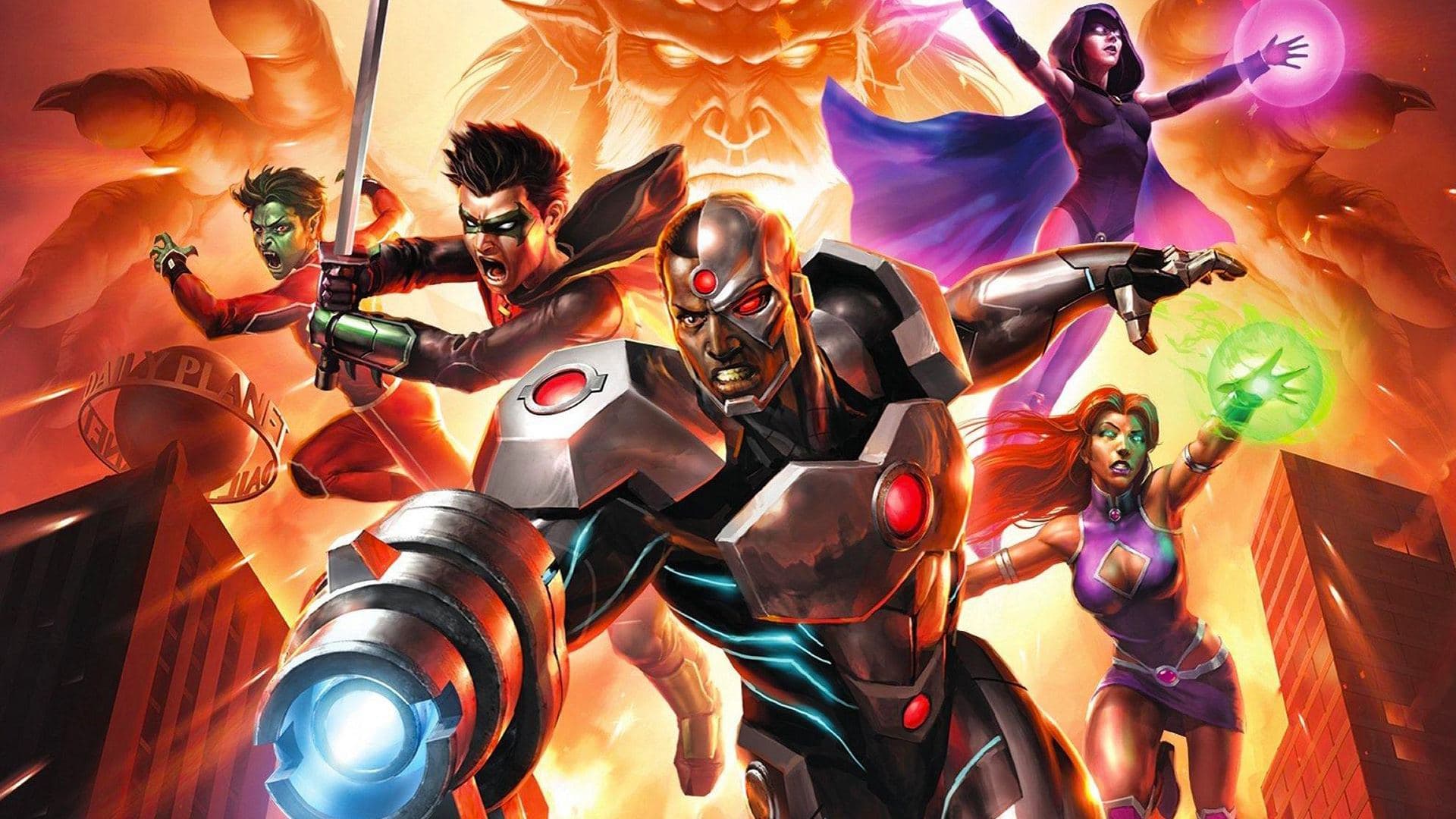
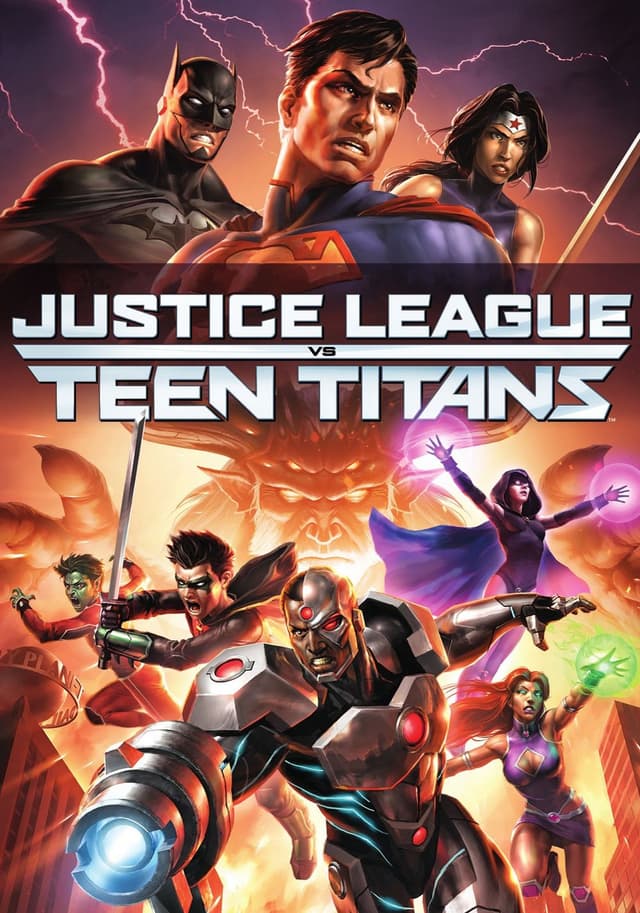
Robin is sent by Batman to work with the Teen Titans after his volatile behavior botches up a Justice League mission. The Titans must then step up to face the demon Trigon after he possesses the League and threatens to conquer the world.
What Is the Budget of Justice League vs. Teen Titans (2016)?
Justice League vs. Teen Titans (2016), directed by Sam Liu and produced by Warner Bros. Animation in partnership with DC Entertainment, was a direct-to-video animated feature released on Blu-ray, DVD, and digital on April 12, 2016. Warner Bros. Animation has never publicly disclosed budgets for the DC Universe Original Movies line, but trade reporting on the division consistently places individual film costs in the $3,000,000 to $5,000,000 range, with the more ambitious entries reaching $6,000,000 to $8,000,000 when they incorporate higher-frame-rate action sequences or expanded voice casts. Justice League vs. Teen Titans sits in the middle of that band given its 80-minute runtime, ensemble cast across two superhero teams, and demon-possession action set pieces.
The DC Universe Original Movies line is built around a deliberately disciplined cost structure. Each film amortizes a stable in-house production pipeline at Warner Bros. Animation, leans on the studio's long-standing voice-direction team led by Andrea Romano, and outsources frame production to overseas studios in South Korea. The result is a slate that prints money on physical and digital sales without ever needing a theatrical break-even, a model that has sustained roughly two DC animated features per year since 2007.
Key Budget Allocation Categories
The estimated $4,000,000 to $5,000,000 production budget for Justice League vs. Teen Titans was distributed across:
- Voice Cast: Returning DC Animated Movie Universe cast Jason O'Mara (Batman), Rosario Dawson (Wonder Woman), Shemar Moore (Cyborg), Jerry O'Connell (Superman), Christopher Gorham (Flash), and Matt Bomer (Aquaman) anchored the Justice League side. Stuart Allan voiced Damian Wayne as Robin, returning from Son of Batman, with Taissa Farmiga as Raven, Brandon Soo Hoo as Beast Boy, Jake T. Austin as Blue Beetle, and Kari Wahlgren as Starfire. Voice talent on the line is compensated through SAG-AFTRA animation scale, well below live-action feature rates.
- Animation Production: Production was handled by Warner Bros. Animation in Burbank with frame production outsourced to MOI Animation in South Korea, the studio's long-running animation partner. Outsourced cel animation is the single largest line item, accounting for roughly 45 to 55 percent of total spend on a typical DC animated film.
- Direction and Writing: Sam Liu directed, his eleventh DC animated feature, with screenplay credit to Bryan Q. Miller and Alan Burnett. The creative team operated within the DC Animated Movie Universe continuity established by The Flashpoint Paradox (2013), reducing development time compared with standalone projects.
- Music and Score: Frederik Wiedmann composed an orchestral score recorded with a session ensemble in Los Angeles. Music budgets on direct-to-video DC features typically run $150,000 to $250,000 inclusive of composer fees, orchestra session, and licensing.
- Post-Production: Editorial, color, and sound design were completed at Warner Bros. facilities in Burbank. Atomic Cartoons handled additional storyboarding support. Post-production for direct-to-video features compresses into roughly four to six months.
- Marketing and Distribution: Warner Home Video handles release directly, leveraging existing trade relationships with Walmart, Best Buy, Target, and digital retailers. Marketing spend for DC Universe Original Movies is a fraction of the production cost, typically under $1,000,000, focused on fan-press outreach, Comic-Con presentations, and digital advertising aimed at existing DC collectors.
How Does Justice League vs. Teen Titans' Budget Compare to Similar Films?
At an estimated $4,000,000 to $5,000,000, the film fits squarely within the DC Universe Original Movies budget envelope. The comparison set illustrates how direct-to-video animation operates on a different financial plane from theatrical animation:
- Batman: The Killing Joke (2016): Estimated budget approximately $3,500,000 | Estimated home-entertainment revenue $20,000,000+. The contemporaneous DC animated film generated stronger sales on the strength of the Alan Moore source material and a brief theatrical Fathom Events run.
- Justice League: The Flashpoint Paradox (2013): Estimated budget approximately $3,500,000 | Estimated home-entertainment revenue $15,000,000+. The launch title for the DC Animated Movie Universe established the continuity that Justice League vs. Teen Titans inherited and remains the highest-rated entry in the line.
- Teen Titans: The Judas Contract (2017): Estimated budget approximately $4,000,000 | Sales comparable to Justice League vs. Teen Titans. The direct follow-up doubled down on the Titans roster introduced in this film and grossed in the same tier on physical and digital release.
- Big Hero 6 (2014): Budget $165,000,000 | Worldwide $657,818,612. Disney's theatrical Big Hero 6 cost roughly 35 to 40 times what Justice League vs. Teen Titans cost, illustrating the gap between theatrical and direct-to-video animation economics.
- The LEGO Batman Movie (2017): Budget $80,000,000 | Worldwide $312,016,476. Warner Bros. Animation's theatrical LEGO Batman cost 16 to 20 times more than its direct-to-video DC slate films, the same studio operating on two entirely different financial models.
Justice League vs. Teen Titans Box Office Performance
Justice League vs. Teen Titans was a direct-to-video release with no theatrical run and therefore no box office gross. The film debuted on April 12, 2016 on Blu-ray, DVD, and digital, with a Best Buy steelbook exclusive that doubled as the collector tier. Home Media Magazine reported it as the top-selling Blu-ray title in its debut week, with Nielsen VideoScan placing it inside the top ten across all categories. Here is the financial breakdown:
Box Office Breakdown
Justice League vs. Teen Titans

Warner Bros. does not break out individual title revenue for the DC Universe Original Movies, but the line as a whole is consistently profitable on home-entertainment economics alone. Industry estimates from trade publications place lifetime physical-disc revenue for Justice League vs. Teen Titans in the $8,000,000 to $12,000,000 range across Blu-ray, DVD, and 4K reissues, with additional revenue from digital downloads, transactional VOD, and downstream licensing to streaming platforms including HBO Max and the DC Universe app.
The film's strongest commercial contribution was franchise momentum. By introducing the Teen Titans roster into the DC Animated Movie Universe, the film set up Teen Titans: The Judas Contract (2017) and the Suicide Squad: Hell to Pay (2018) crossovers, extending the slate with characters that had not previously carried DC animated features.
Justice League vs. Teen Titans Production History
Development on Justice League vs. Teen Titans began in early 2015 at Warner Bros. Animation in Burbank, where producer James Tucker and director Sam Liu were finalizing the DC Animated Movie Universe slate following Batman: Bad Blood (2016). Bryan Q. Miller, a veteran of Smallville and the Batgirl comics relaunch, was hired to write the screenplay, with story credit shared with Alan Burnett.
The creative team built the film around the premise of Damian Wayne, the surly Robin introduced in Son of Batman (2014), being parked with the Teen Titans as a course correction after he botches a Justice League mission. The narrative pivots when the demon Trigon, father of Titan Raven, possesses the League and the Titans must rescue them, a sequence that draws structurally from the New Teen Titans "Terror of Trigon" arc by Marv Wolfman and George Perez.
Voice recording took place at Salami Studios in Los Angeles under longtime DC animation casting and dialogue director Andrea Romano, who recorded the ensemble in mixed-group sessions over several weeks in mid-2015. Animation production was outsourced to MOI Animation in Seoul, South Korea, with character design overseen by Phil Bourassa and storyboarding handled at Warner's Burbank facility and at Atomic Cartoons in Vancouver, British Columbia. The film was completed in early 2016 and released theatrically in a one-night WonderCon screening in late March before the April 12, 2016 home video debut.
Awards and Recognition
Justice League vs. Teen Titans received nominations and wins at industry ceremonies specific to home entertainment and animation. Frederik Wiedmann earned recognition at the International Film Music Critics Association awards for his score work on Warner Bros. Animation projects across 2016, with this film cited in his portfolio. Voice director Andrea Romano was honored at the 44th Annie Awards ceremony for her career contributions to animated casting and dialogue direction, with Justice League vs. Teen Titans among the works cited.
The film was not nominated for the Annie Award for Best Animated Home Entertainment Production at the 2017 ceremony, where Batman: The Killing Joke represented the DC Universe Original Movies line. Reception at fan-press award ceremonies including the IGN Awards and ComicBook.com Golden Issue Awards was respectful but the film did not break into the top tier of the slate alongside The Flashpoint Paradox or Batman: Under the Red Hood.
Critical Reception
Justice League vs. Teen Titans received generally positive reviews from animation and superhero press, with critical consensus describing the film as a competent and entertaining bridge between the Damian Wayne Robin films and the broader DC Animated Movie Universe. The film holds a 7.0 out of 10 weighted user rating on IMDb across more than 19,000 user reviews, and a 75 percent audience score on Rotten Tomatoes. Critical reaction was more measured than fan reaction, with trade and animation outlets praising the action choreography and ensemble dynamics while flagging the film's reliance on continuity from Son of Batman and Batman vs. Robin.
IGN's Jesse Schedeen rated the film 7.7 out of 10, praising the introduction of the Titans roster and Taissa Farmiga's performance as Raven while noting that the brisk 80-minute runtime forced some character beats to land flat. Den of Geek called it "one of the better recent DC animated features" and singled out the Trigon possession sequence as a highlight. CBR.com noted the film "delivers the team-up action the title promises" but argued the Damian Wayne arc was the strongest element rather than the title bout.
Audiences responded warmly. The film holds an 80 percent or higher rating on most retail review platforms and was Best Buy's top-selling Blu-ray exclusive in the steelbook category for April 2016. Long-term reception has been positive, with the film frequently cited as the entry that made the Teen Titans roster viable for the DC Universe Original Movies line and paved the way for The Judas Contract the following year.
Frequently Asked Questions
How much did Justice League vs. Teen Titans (2016) cost to make?
Warner Bros. Animation has never publicly disclosed the budget. Industry estimates place the production cost between $4,000,000 and $5,000,000, consistent with the DC Universe Original Movies line, which typically runs $3,000,000 to $6,000,000 per direct-to-video feature.
Was Justice League vs. Teen Titans released in theaters?
No. The film was a direct-to-video release from Warner Bros. Animation, debuting on Blu-ray, DVD, and digital on April 12, 2016, following a one-night WonderCon premiere event in late March 2016. There was no traditional theatrical run.
How much did Justice League vs. Teen Titans earn?
Warner Bros. does not disclose individual title revenue for the DC Universe Original Movies line. Industry estimates place lifetime home-entertainment revenue between $10,000,000 and $15,000,000 across Blu-ray, DVD, 4K reissue, digital purchase and rental, and downstream streaming licensing.
Who directed Justice League vs. Teen Titans?
Sam Liu directed the film, his eleventh DC Universe Original Movie. Liu previously directed Superman vs. The Elite, All-Star Superman, and the Batman: The Dark Knight Returns two-parter.
Is Justice League vs. Teen Titans part of the DC Animated Movie Universe?
Yes. It is the seventh film in the DC Animated Movie Universe (DCAMU) continuity that began with Justice League: The Flashpoint Paradox (2013). The Damian Wayne Robin storyline continues from Son of Batman (2014) and Batman vs. Robin (2015), and the Titans roster carries forward into Teen Titans: The Judas Contract (2017).
Who voices Robin in Justice League vs. Teen Titans?
Stuart Allan voices Damian Wayne as Robin, reprising the role from Son of Batman and Batman vs. Robin. Jon Bernthal had previously voiced an alternate version of Damian in earlier projects, but Allan has been the consistent voice across the DC Animated Movie Universe.
Where was Justice League vs. Teen Titans animated?
Warner Bros. Animation in Burbank, California produced the film, with frame production outsourced to MOI Animation in Seoul, South Korea, the studio's long-running animation partner. Additional storyboarding was handled by Atomic Cartoons in Vancouver, British Columbia.
What did critics think of Justice League vs. Teen Titans?
Reviews were generally positive. IGN rated the film 7.7 out of 10, Den of Geek called it "one of the better recent DC animated features," and audience scores averaged 75 percent or higher on Rotten Tomatoes and IMDb across more than 19,000 user reviews. Critics praised the action and the Damian Wayne arc while noting that the film leans on prior DCAMU continuity.
Did Justice League vs. Teen Titans win any awards?
The film did not win Annie Awards or other major animation ceremonies. Composer Frederik Wiedmann and voice director Andrea Romano were recognized at industry events for their broader 2016 work, which included this film. The DCAMU line slot at the 2017 Annie Awards went to Batman: The Killing Joke.
How does Justice League vs. Teen Titans connect to other DC animated films?
It is a direct sequel to Batman vs. Robin (2015) and a prequel to Teen Titans: The Judas Contract (2017). The film introduces Beast Boy, Starfire, Raven, and Blue Beetle into the DC Animated Movie Universe alongside the established Justice League roster, setting up multi-film arcs that continue through Justice League Dark (2017) and Suicide Squad: Hell to Pay (2018).
Filmmakers
Justice League vs. Teen Titans

Official Trailer
Build budgets like this one in Saturation
Start from an industry-standard feature film template, import the schedule and rates you already have, and let the cost report keep itself current as you spend. Real-time collaboration, no spreadsheets.