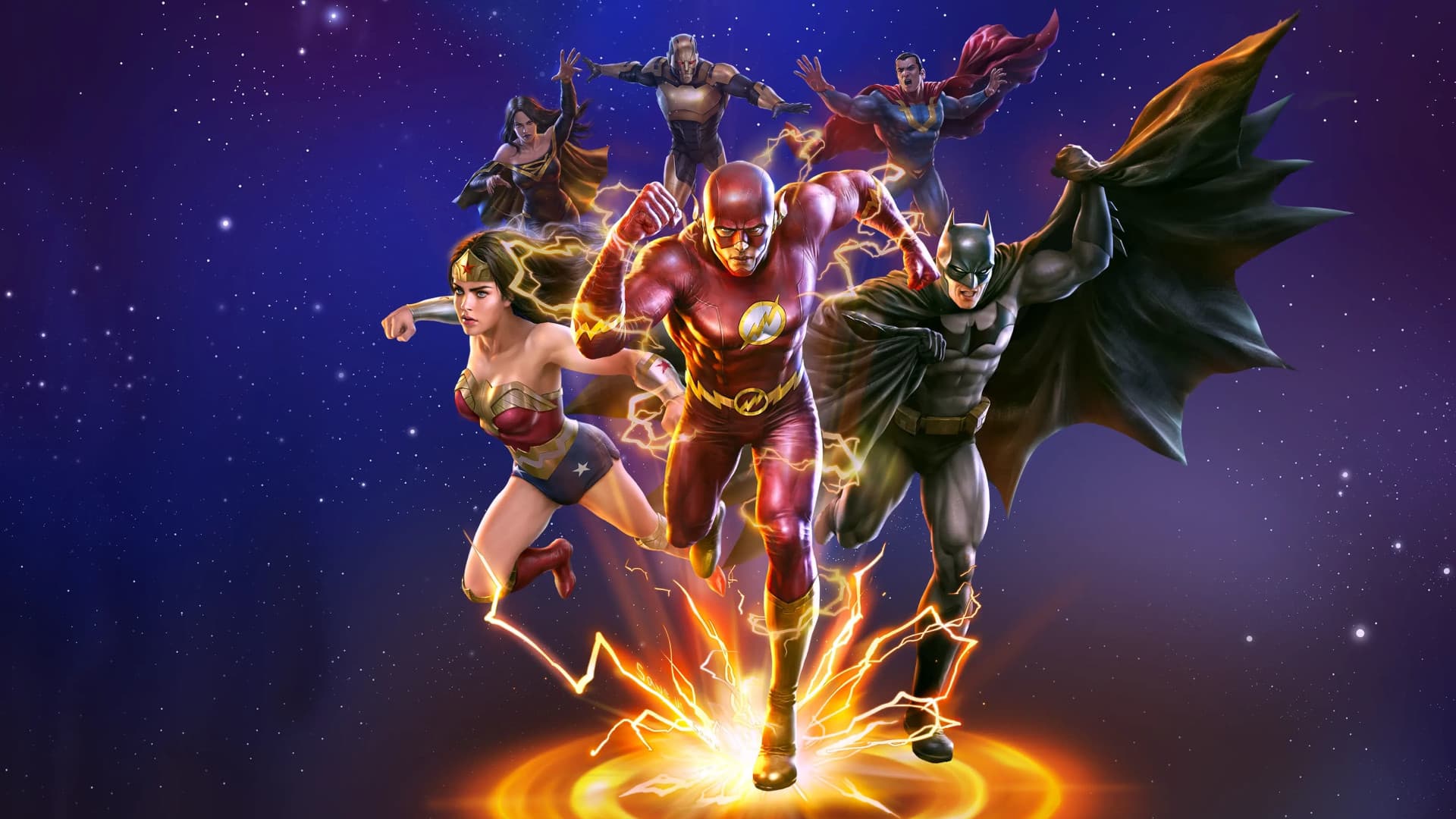
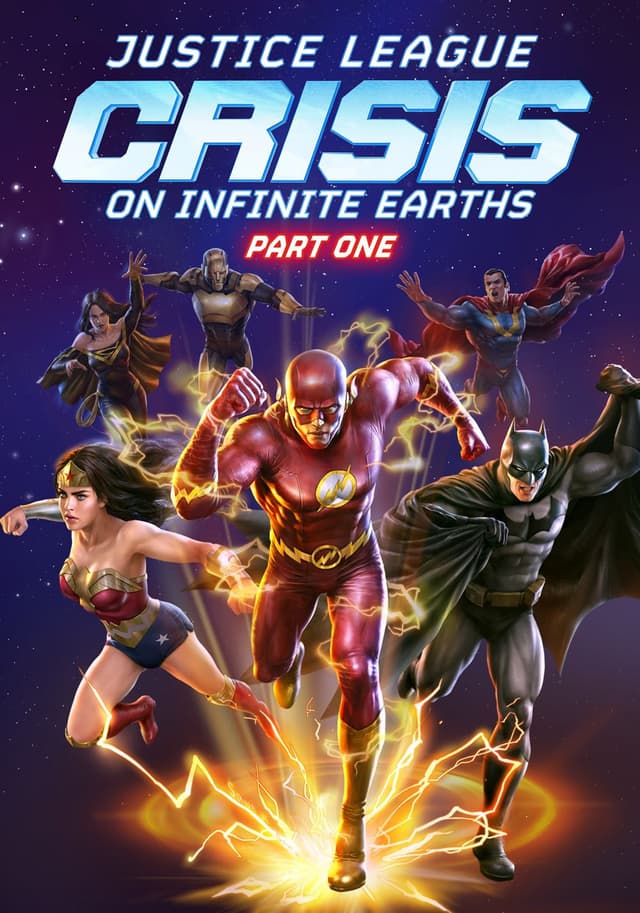
Justice League Crisis on Infinite Earths Part One Budget
 AnimationScience FictionAction1h 33m
Updated
Synopsis
A multiversal cataclysm called the Anti-Monitor begins erasing parallel Earths from existence, drawing heroes from across infinite realities into a desperate alliance. The Justice League, joined by counterparts from worlds being annihilated one by one, race to stop the all-consuming antimatter wave before every Earth in the multiverse is gone.
What Is the Budget of Justice League: Crisis on Infinite Earths Part One (2024)?
Justice League: Crisis on Infinite Earths Part One (2024), directed by Jeff Wamester and produced by Warner Bros. Animation in partnership with DC Entertainment, was a direct-to-video animated feature released digitally on January 9, 2024 and on Blu-ray and DVD on January 23, 2024. The film is the first of a three-part adaptation of the 1985 to 1986 12-issue Marv Wolfman and George Pérez DC Comics maxiseries Crisis on Infinite Earths, the most ambitious multiverse-crossover event in DC publishing history. Warner Bros. Animation has not publicly disclosed budgets for the DC Universe Original Movies line, but trade reporting places typical entries in the $3,500,000 to $5,000,000 range. Crisis on Infinite Earths Part One sits at the upper end of that band, with the three-part structure giving the combined adaptation a total runtime of approximately 4 hours 50 minutes across the three installments and a combined production budget of approximately $13,000,000 to $16,000,000.
The three-part structure was a deliberate decision by Warner Bros. Animation to give the seminal multiverse-crossover source material the runtime it deserved. Crisis on Infinite Earths involves more than 60 named characters across multiple Earths, the deaths of marquee DC heroes including Supergirl and the Barry Allen Flash, and the consolidation of the DC Multiverse into a single shared continuity, none of which could be properly addressed in a single 80-minute feature. The three-part adaptation was also positioned as the climax of the Tomorrowverse continuity that began with Superman: Man of Tomorrow (2020).
Key Budget Allocation Categories
The estimated $4,500,000 to $5,500,000 production budget for Part One covered:
- Voice Cast: Darren Criss returned as Superman, Stana Katic as Wonder Woman, Jensen Ackles as Batman (from the prior Batman: The Long Halloween two-parter), Matt Bomer as Barry Allen/Flash, and Meg Donnelly as Supergirl. The expanded multiverse-crossover cast included voice work for the Tomorrowverse counterparts plus alternate-Earth versions, with returning DC animated voice talent contributing across multiple characters.
- Animation Production: Production was handled by Warner Bros. Animation in Burbank with frame production outsourced to MOI Animation in South Korea. The expanded character roster and multiverse-spanning set pieces required additional layout, animation, and background-painting capacity compared with single-Earth DC animated features.
- Direction and Writing: Jeff Wamester directed Part One, building on his Green Lantern: Beware My Power (2022) Tomorrowverse work. Jim Krieg wrote the screenplay across all three parts, adapting the 12-issue Wolfman and Pérez source maxiseries into approximately 4 hours 50 minutes of animated content across the trilogy.
- Multiverse Character Design and Style Guide: The adaptation required design work for multiple alternate-Earth character variants, with character designers Phil Bourassa and Jose Lopez extending the Tomorrowverse style guide to cover Earth-2, Earth-3, Earth-X, and other key multiverse settings from the source material.
- Music and Score: Composer Kevin Riepl delivered an orchestral score consistent across all three parts. Music budgets on direct-to-video DC features typically run $150,000 to $250,000 per installment inclusive of composer fees, orchestra session, and licensing.
- Post-Production: Editorial, color, and sound design were completed at Warner Bros. facilities in Burbank. The line's standard post window of four to six months applied to each installment.
- Marketing and Three-Part Coordination: Warner Home Video coordinated bundled marketing across the three installments, with the January 9, 2024 Part One release supported by a pre-launch trailer rollout, virtual Comic-Con panel programming, and a tie-in to the broader Crisis on Infinite Earths comic-publishing anniversary.
How Does Justice League: Crisis on Infinite Earths Part One's Budget Compare to Similar Films?
At an estimated $4,500,000 to $5,500,000 per installment, the trilogy fits the upper end of the DC Universe Original Movies envelope. The comparison set illustrates how multi-part DC animated adaptations scale:
- Justice League: Crisis on Infinite Earths Part Two (2024): Estimated budget approximately $4,500,000 to $5,500,000. The middle installment of the same adaptation, released April 23, 2024, cost roughly the same as Part One.
- Justice League: Crisis on Infinite Earths Part Three (2024): Estimated budget approximately $4,500,000 to $5,500,000. The finale installment, released July 16, 2024, completed the three-part adaptation and concluded the Tomorrowverse continuity.
- Batman: The Long Halloween, Part One (2021) / Part Two (2021): Estimated budget approximately $4,000,000 to $5,000,000 each. The two-part Jeph Loeb and Tim Sale adaptation that established the multi-part DC animated template in the Tomorrowverse.
- Justice League Dark: Apokolips War (2020): Estimated budget approximately $4,000,000. The DC Animated Movie Universe finale offers a reference point for what a multiverse-spanning DC animated feature cost at the end of the prior continuity.
- The Dark Knight Returns, Part One (2012) / Part Two (2013): Estimated budget approximately $3,500,000 each. The earlier two-part adaptation of a Frank Miller Batman comic established the original multi-part DC animated template.
Justice League: Crisis on Infinite Earths Part One Box Office Performance
Justice League: Crisis on Infinite Earths Part One was released digitally on January 9, 2024 and on Blu-ray and DVD on January 23, 2024. Warner Home Video does not publicly disclose unit sales for its DC Universe Original Movies, but The Numbers placed Part One among the top-selling direct-to-video animated titles of January 2024. The three-part adaptation's bundled-marketing approach drove uplift on the entire trilogy across the Q2 2024 and Q3 2024 follow-on releases. Without a theatrical release, conventional box office figures do not apply:
Box Office Breakdown
Justice League Crisis on Infinite Earths Part One

The DC Universe Original Movies line as a whole has been continuously profitable since its 2007 launch, with the Crisis on Infinite Earths trilogy representing the most ambitious individual project in the line's history both in terms of source-material scope and per-feature budget. Warner Bros. Animation followed Part One with Part Two (April 23, 2024) and Part Three (July 16, 2024), completing the trilogy within a six-month release window that drove sustained DC animated catalog engagement across the first half of 2024.
The Tomorrowverse continuity that began with Superman: Man of Tomorrow (2020) formally concluded with Crisis on Infinite Earths Part Three. As of late 2025, Warner Bros. Animation is in early development on a new connected DC animated continuity, with the third connected line expected to launch in 2026 or 2027 with a similar continuity-restart structure to the Tomorrowverse and the prior DC Animated Movie Universe.
Justice League: Crisis on Infinite Earths Part One Production History
Development on a Crisis on Infinite Earths animated adaptation began at Warner Bros. Animation in 2021, weeks after the Tomorrowverse continuity launched with Superman: Man of Tomorrow (2020) and Justice Society: World War II (2021). The creative leadership at the line, including producer Butch Lukic and writer/story editor Jim Krieg, identified the 1985 to 1986 Crisis on Infinite Earths maxiseries as the seminal multiverse-crossover source material that would provide the Tomorrowverse with a definitive climax.
The three-part structure was decided in early 2022, with each installment planned to cover roughly four issues of the 12-issue source. Jim Krieg wrote the screenplay across all three parts, working with Lukic and the assembled directing team (Jeff Wamester for Part One, additional directors for Parts Two and Three) to map the maxiseries onto a combined 4 hour 50 minute runtime. The Wolfman and Pérez source material's combination of marquee character deaths (Supergirl in Issue #7, the Barry Allen Flash in Issue #8) and continuity consolidation required careful handling to land both the emotional beats and the multiverse-consolidation finale.
Production at Warner Bros. Animation in Burbank and MOI Animation in South Korea ran from 2022 through late 2023, with voice recording in Los Angeles supervised by Wes Gleason. The expanded voice cast included the Tomorrowverse principals (Darren Criss's Superman, Stana Katic's Wonder Woman, Jensen Ackles's Batman) plus voice work for the multi-Earth counterparts that the Crisis source material requires. Returning DC animated voice talent contributed across multiple multiverse-variant characters.
Jeff Wamester directed Part One on the strength of his Green Lantern: Beware My Power (2022) Tomorrowverse work. The visual approach built on the established Tomorrowverse style guide while introducing visual differentiation for the multiverse-variant Earths. Post-production extended into late 2023 ahead of the January 9, 2024 digital release and January 23, 2024 Blu-ray and DVD release.
Awards and Recognition
Justice League: Crisis on Infinite Earths Part One received no major awards recognition in the 2024 cycle. The film did not register at the Annie Awards, which prioritize theatrical animation and series work, and was not nominated at the Saturn Awards for genre filmmaking. The Behind the Voice Actors awards, which honor voice performance specifically, did not include the film among its 2024 animated-feature nominees, though several of the Tomorrowverse voice principals had been recognized in prior years.
Within the comics and animation press, the film drew positive year-end coverage as the start of the most ambitious DC animated adaptation in the line's history. ComicBook.com and CBR placed Part One on their early-2024 best-of DC animated lists, with both outlets highlighting Jim Krieg's screenplay structure and the three-part scope as meaningful escalations of the DC Universe Original Movies template.
Critical Reception
Justice League: Crisis on Infinite Earths Part One received generally favorable reviews. The film holds an approximately 78% approval rating on Rotten Tomatoes based on a small critic-review sample, with critical consensus praising the screenplay's ambitious scope and the voice cast's continuity. Audience scoring on Rotten Tomatoes sits at 73%. On Metacritic, the film did not aggregate scores in line with the platform's typical treatment of direct-to-video animated releases.
CBR's Brandon Zachary called the film "an ambitious, faithful adaptation that earns its three-part scope by giving the Wolfman and Pérez source material the runtime it needed for 40 years," and IGN's Jesse Schedeen wrote that "Part One sets up an enormous canvas that the Tomorrowverse has been quietly building toward since 2020." Den of Geek's John Saavedra praised "the screenplay's confidence in trusting viewers to follow a multi-Earth setup without holding their hand." ScreenRant's Liam McGuire highlighted the marquee-character introductions across the multiverse variants as the strongest single element.
Less favorable reviews focused on the multi-part structure's pacing challenges. ComicBook.com noted that newcomers unfamiliar with the prior Tomorrowverse entries might struggle with the assumed familiarity that Part One depends on, and ScreenRant's analysis suggested that the screenplay occasionally rushes character introductions to fit all of the source material's key beats into the four-hour-fifty-minute combined runtime. The mostly favorable reception established Part One as a confident foundation for the trilogy and supported the strong commercial performance across the Q1 2024 to Q3 2024 release window for the full adaptation.
Frequently Asked Questions
How much did Justice League: Crisis on Infinite Earths Part One cost to make?
Warner Bros. Animation has not publicly disclosed the budget. Industry estimates based on comparable DC Universe Original Movies place the cost at the upper end of the $3,500,000 to $5,000,000 line range, with Part One at approximately $4,500,000 to $5,500,000. The three-part adaptation totals approximately $13,000,000 to $16,000,000 across the trilogy.
Is Crisis on Infinite Earths Part One based on a comic?
Yes. The three-part adaptation is drawn from the 1985 to 1986 12-issue Marv Wolfman and George Pérez DC Comics maxiseries Crisis on Infinite Earths, the most ambitious multiverse-crossover event in DC publishing history. The maxiseries depicts the deaths of marquee DC heroes including Supergirl and the Barry Allen Flash and the consolidation of the DC Multiverse into a single shared continuity.
Why is Crisis on Infinite Earths a three-part film?
The three-part structure was a deliberate decision by Warner Bros. Animation to give the seminal multiverse-crossover source material the runtime it deserved. Crisis on Infinite Earths involves more than 60 named characters across multiple Earths and could not be properly adapted in a single 80-minute feature. The combined trilogy runs approximately 4 hours 50 minutes across the three installments.
Who directed Justice League: Crisis on Infinite Earths Part One?
Jeff Wamester directed Part One, building on his Green Lantern: Beware My Power (2022) Tomorrowverse work. Different directors handled Part Two and Part Three. Jim Krieg wrote the screenplay across all three parts.
Is Crisis on Infinite Earths the end of the Tomorrowverse?
Yes. The three-part Crisis on Infinite Earths adaptation formally concluded the Tomorrowverse continuity that began with Superman: Man of Tomorrow (2020). The Tomorrowverse continuity included Justice Society: World War II, Batman: The Long Halloween, Green Lantern: Beware My Power, Legion of Super-Heroes, Justice League: Warworld, and the three Crisis on Infinite Earths installments.
When was Justice League: Crisis on Infinite Earths Part One released?
Part One was released digitally on January 9, 2024 and on Blu-ray and DVD on January 23, 2024. Part Two followed on April 23, 2024 and Part Three on July 16, 2024, completing the trilogy within a six-month release window.
Who voices Superman in Crisis on Infinite Earths?
Darren Criss voices Superman, reprising the role he originated in Superman: Man of Tomorrow (2020) at the start of the Tomorrowverse continuity. Criss has voiced the Tomorrowverse Superman across multiple connected DC animated features.
Does Supergirl die in Crisis on Infinite Earths?
The 1985 to 1986 Marv Wolfman and George Pérez comics source material depicts the death of Supergirl in Issue #7 of the original 12-issue maxiseries. The animated three-part adaptation faithfully addresses the marquee character deaths from the source, with the trilogy structure giving each death the runtime it requires for emotional impact.
How long is Justice League: Crisis on Infinite Earths Part One?
Part One runs 86 minutes, with each installment of the trilogy running approximately 80 to 90 minutes. The combined three-part adaptation totals approximately 4 hours 50 minutes across the three installments.
What did critics think of Justice League: Crisis on Infinite Earths Part One?
The film received generally favorable reviews, with an approximately 78 percent approval rating on Rotten Tomatoes from a small critic-review sample. Critics praised Jim Krieg's screenplay structure and the three-part scope while noting that newcomers unfamiliar with prior Tomorrowverse entries might struggle with the assumed familiarity that Part One depends on.
Filmmakers
Justice League Crisis on Infinite Earths Part One

Official Trailer
Build budgets like this one in Saturation
Start from an industry-standard feature film template, import the schedule and rates you already have, and let the cost report keep itself current as you spend. Real-time collaboration, no spreadsheets.