JUNG_E Budget
Updated
Synopsis
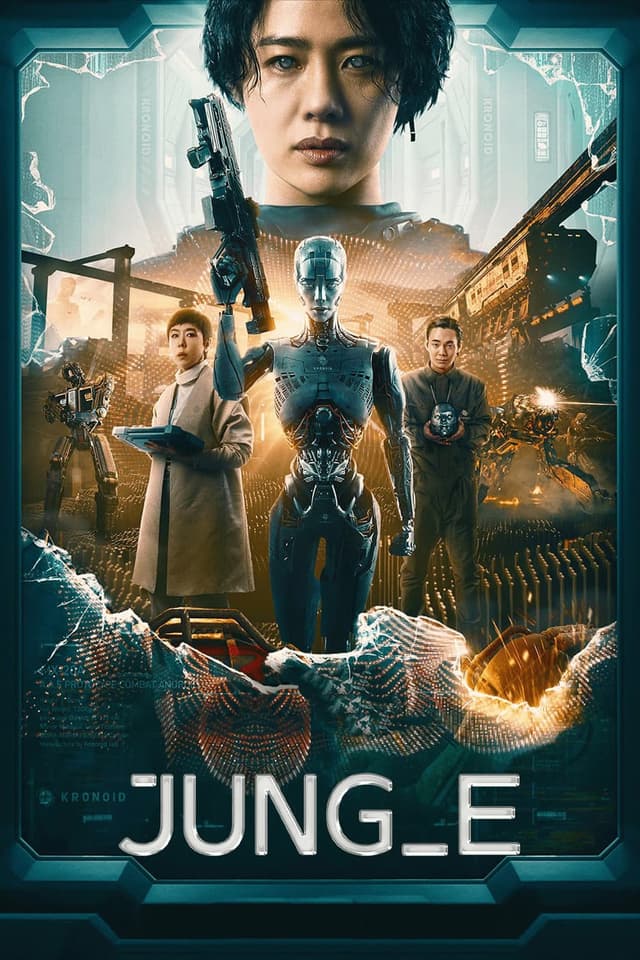
In the year 2135, climate change has rendered Earth uninhabitable and humanity has retreated to orbital shelters where a civil war rages between the Allied Forces and the Adrian Republic. Decades after legendary mercenary Captain Yun Jung-yi fell into a coma, her brain is cloned by a private military research lab to build an elite AI combat unit called JUNG_E, with her grown daughter Dr. Yun Seo-hyun leading the project. As the program approaches a final test, mother and daughter become locked in an ethical and emotional confrontation over what it means to bring the dead back as a machine.
What Is the Budget of JUNG_E (2023)?
JUNG_E (2023), written and directed by Yeon Sang-ho and released globally by Netflix, was produced on a reported budget of approximately ₩20 billion, equivalent to roughly $16,300,000 USD at the prevailing exchange rate during production. The figure was disclosed through Korean trade press coverage of the project and confirmed in interviews surrounding the film's launch. It made JUNG_E one of the more expensive Korean science fiction productions of its time, sitting well above the typical Korean studio film budget but well below Hollywood tentpole sci-fi spending.
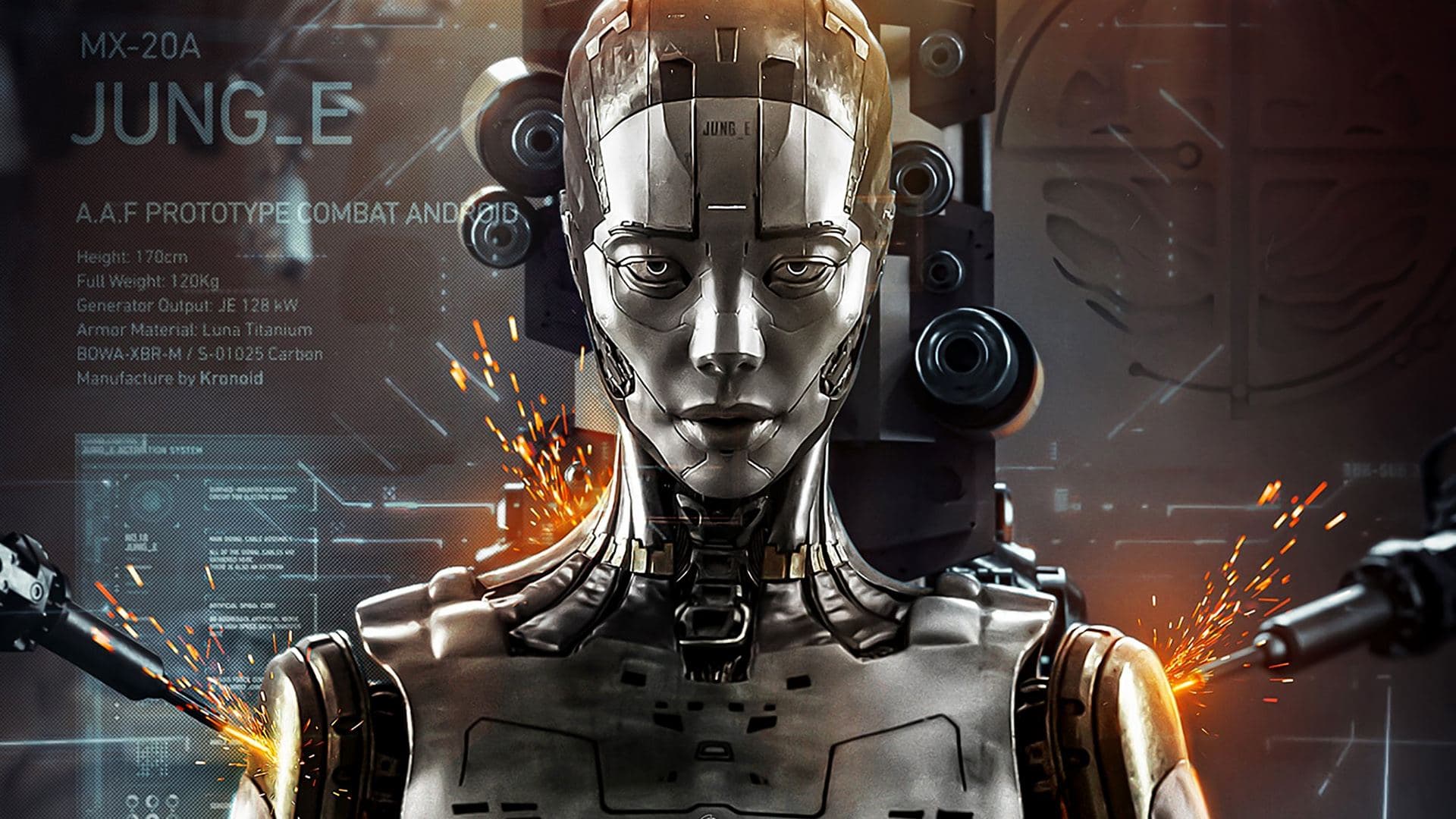
Production was financed and distributed by Netflix as part of its expanding Korean originals slate, with Climax Studio serving as the lead production company and Dexter Studios handling the heavy visual effects work that drives much of the film's futuristic 2135 setting. Yeon Sang-ho came to the project on the back of his international breakthroughs Train to Busan and Hellbound, giving Netflix confidence in a high-spend genre piece. The budget covered an extensive virtual production approach, large-scale soundstage builds, motion capture work for the JUNG_E combat AI, and a near total reliance on Korean post-production houses.
Key Budget Allocation Categories
Based on the production scale, visual effects load, and publicly known crew arrangements, the budget broke down across these areas:
- Visual Effects and Virtual Production: Dexter Studios, one of Korea's leading VFX houses, handled the bulk of the digital work, including the AI combat sequences, the JUNG_E robot variants, holographic interfaces, and the climate-ravaged Earth and orbital shelter environments. With nearly every scene requiring CGI augmentation and several entirely synthetic shots, VFX likely represented the single largest cost line on the production.
- Soundstage Construction and Set Design: Production designer Lee Mok-won built the AI research lab, hospital corridors, and combat training environments on Korean soundstages. The future-tech aesthetic required custom prop builds, modular set pieces that could be reconfigured for the multiple training scenarios, and practical screens that integrated with the virtual production pipeline.
- Above-the-Line Talent: Lead cast included Kang Soo-yeon, a major star of Korean cinema in her final film role, alongside Kim Hyun-joo and Ryu Kyung-soo. Writer-director Yeon Sang-ho commanded a substantial fee given his post-Train to Busan international profile, with combined above-the-line costs reflecting his dual creative role.
- Motion Capture and Stunt Coordination: The JUNG_E combat AI required motion capture performances for the various robot iterations, integrated with practical stunt work and wire choreography. Kim Hyun-joo performed her own physical work for many of the action sequences, supported by a stunt team specialized in the hybrid mocap-and-practical pipeline used widely in Korean genre productions.
- Music and Sound Design: Composer Kim Dong-wook delivered an orchestral and electronic hybrid score recorded in Korea, and the sound design layered in synthetic robotic vocalizations and futuristic ambient textures to support the year 2135 setting. Editor Yang Jin-mo, an Oscar nominee for Parasite, cut the film.
- Marketing and Netflix Launch: Netflix handled global marketing in-house, with a Korean press tour, posters and trailers cut for each major Netflix region, and a tribute campaign honoring Kang Soo-yeon ahead of release. As with all Netflix originals, marketing spend is folded into the platform's content budget rather than reported as a separate prints-and-advertising figure.
How Does JUNG_E's Budget Compare to Similar Films?
Without a Hollywood-scale spend, JUNG_E sits in an interesting middle ground between Korean genre cinema and Western sci-fi tentpoles. Relevant comparisons include:
- Train to Busan (2016): Budget $8,500,000 | Worldwide $98,500,000. Yeon Sang-ho's own breakout zombie thriller cost roughly half of JUNG_E and grossed nearly $100 million theatrically, illustrating how much more Netflix invested in his sci-fi follow-up and how the streaming model traded theatrical upside for guaranteed financing.
- Peninsula (2020): Budget $16,000,000 | Worldwide $42,000,000. The Train to Busan sequel, also directed by Yeon Sang-ho, was made for almost exactly the same budget as JUNG_E and demonstrates the price tag of large-scale Korean genre filmmaking at this scale.
- The Creator (2023): Budget $80,000,000 | Worldwide $104,300,000. Gareth Edwards' Disney sci-fi released the same year covered comparable themes of synthetic intelligence and human survival but at nearly five times the spend, highlighting just how much more Netflix could deliver per dollar in Korea.
- Ghost in the Shell (2017): Budget $110,000,000 | Worldwide $169,800,000. The Paramount adaptation of the Japanese cyberpunk classic shares thematic DNA with JUNG_E around consciousness, cloning, and AI but operated at nearly seven times the budget and still underperformed theatrically.
- Alita: Battle Angel (2019): Budget $170,000,000 | Worldwide $404,900,000. James Cameron and Robert Rodriguez's manga adaptation sits at the upper end of female-AI-warrior sci-fi spending and demonstrates the tentpole tier JUNG_E intentionally avoided.
- I, Robot (2004): Budget $120,000,000 | Worldwide $353,100,000. Will Smith's Asimov adaptation explored similar AI ethics terrain and shows how the genre commanded studio-level financing in the early 2000s, a budget tier that streaming-era projects like JUNG_E now reach only when produced outside the Hollywood system.
JUNG_E Box Office Performance
JUNG_E is a Netflix original and did not have a traditional theatrical release. The film debuted globally on Netflix on January 20, 2023, and was not given a qualifying theatrical window. Box Office Mojo and The Numbers do not list any reported theatrical revenue, which is standard for Netflix Korean originals of this period. Netflix instead reports viewership through its internal Top 10 charts and Tudum platform.
The full financial breakdown reflects the streaming-only release model:
Box Office Breakdown
JUNG_E

Without a theatrical gross, JUNG_E's return on investment cannot be calculated through conventional theatrical math. Netflix's model values the film for global subscriber acquisition and retention rather than per-title revenue.
On performance metrics Netflix does report, JUNG_E debuted at number one on the platform's global Top 10 non-English movies chart for the week of January 16 to 22, 2023, entering the Top 10 in 80 countries and recording 19 million hours viewed in its first week. It became one of the most-watched Korean original films in Netflix history at the time of release, validating the platform's strategy of investing in mid-budget Korean genre cinema as a global subscriber driver.
JUNG_E Production History
Development began at Climax Studio in Seoul, with Yeon Sang-ho writing the screenplay in parallel with his work on the Netflix series Hellbound. The director described the project in interviews as a personal story about a mother and daughter dressed in the trappings of a hard sci-fi action film, with the AI cloning premise serving as a vehicle for exploring grief, autonomy, and the ethics of bringing the dead back as machines. Yeon brought longtime collaborators including editor Yang Jin-mo onto the production.
Netflix attached as the financier and global distributor in 2021 as part of its substantial post-Squid Game investment in Korean originals. Dexter Studios, the visual effects house behind Along With the Gods and other major Korean tentpoles, came on as the lead VFX vendor. Climax Studio served as the production company, with Kim Yeon-ho producing.
Principal photography began in November 2021 and wrapped in January 2022. The shoot took place primarily at soundstages and production facilities around Seoul, South Korea, with virtually no location filming given the future-set, primarily interior nature of the script. The production used a virtual-production-adjacent approach with LED walls and pre-rendered backgrounds for several key sequences. Korea offers production incentives through the Korean Film Council though Netflix has not publicly confirmed which credits the project utilized.
Lead actress Kang Soo-yeon, one of the most decorated actresses in Korean cinema history and the first Korean actress to win Best Actress at the Venice Film Festival, completed her work on JUNG_E in late 2021. She died unexpectedly on May 7, 2022, following a cardiac arrest, making JUNG_E her final film role. The production added a dedication to her appearing at the end of the film, and Yeon Sang-ho dedicated extensive press coverage to her legacy. Post-production VFX work at Dexter Studios continued through 2022, with the film completing in time for its January 2023 Netflix premiere.
Awards and Recognition
JUNG_E received recognition from Korean film industry awards bodies, with much of the attention directed toward Kang Soo-yeon's posthumous performance. The Buil Film Awards honored Kang Soo-yeon with the Best Actress prize posthumously in 2023, recognizing her final screen work. The Blue Dragon Series Awards and other Korean industry ceremonies issued tribute presentations during their 2023 cycles.
The film was selected for international festival exposure, screening at the 23rd Florence Korea Film Fest in March 2023 and at additional Asian cinema showcases throughout the year. Yeon Sang-ho was nominated for technical and screenplay categories at several Korean award shows, and Dexter Studios received industry recognition for the visual effects work. While JUNG_E did not draw major Western awards attention, the film performed strongly within the Korean genre cinema awards landscape.
Critical Reception
JUNG_E received mixed reviews from international critics. The film holds a 50% approval rating on Rotten Tomatoes based on 24 reviews, with an average rating of 5.5 out of 10. On Metacritic, the film scored 53 out of 100 based on 5 reviews, indicating mixed or average reviews. Audiences responded more enthusiastically, particularly in Asian markets, where the film's strong streaming performance translated to favorable user scores on the Netflix platform.
Supporters praised the central performances and the emotional core of the mother-daughter relationship at the heart of the story. NME gave the film three stars out of five, highlighting the action sequences and Kim Hyun-joo's performance. RogerEbert.com and several Asian cinema outlets including Asian Movie Pulse credited Yeon Sang-ho with attempting a more intimate, character-driven sci-fi than the standard genre template, and reviewers consistently singled out Kang Soo-yeon's understated final performance as the film's emotional anchor.
Detractors argued that the screenplay leaned on familiar sci-fi tropes from Blade Runner and Ghost in the Shell without fully developing its own ideas. Critics writing for The Hollywood Reporter and Variety found the action sequences technically accomplished but emotionally inert, and several reviewers felt the film's worldbuilding and corporate satire beats were underdeveloped relative to its visual ambitions. The Boston Hassle and similar outlets criticized the pacing of the middle act and felt the climactic emotional payoff was telegraphed too early. Across favorable and unfavorable reviews, critics consistently acknowledged the technical achievement of the visual effects work and the poignancy of Kang Soo-yeon's posthumous performance.
Frequently Asked Questions
How much did it cost to make JUNG_E (2023)?
JUNG_E was produced on a reported budget of approximately ₩20 billion, equivalent to roughly $16.3 million USD. The figure was disclosed through Korean trade press coverage and made JUNG_E one of the more expensive Korean science fiction productions of its era, well above typical Korean studio film budgets but far below Hollywood tentpole sci-fi spending.
How much did JUNG_E earn at the box office?
JUNG_E is a Netflix original and did not have a traditional theatrical release. The film debuted globally on Netflix on January 20, 2023, with no qualifying theatrical window. Box Office Mojo and The Numbers do not list any reported theatrical revenue, which is standard for Netflix Korean originals.
Who directed JUNG_E?
JUNG_E was written and directed by Yeon Sang-ho, the Korean filmmaker behind Train to Busan, Peninsula, and the Netflix series Hellbound. JUNG_E was his first feature-length science fiction project after years of working in horror and zombie genres, and he developed it in parallel with his ongoing Netflix television work.
Is JUNG_E based on a book or true story?
No. JUNG_E is an original screenplay by Yeon Sang-ho, not based on a novel, manga, or true story. Yeon has described the project in interviews as a personal story about the mother-daughter relationship dressed in the trappings of a hard science fiction action film, with the AI cloning premise serving as a metaphor for grief and the ethics of resurrection.
Where was JUNG_E filmed?
Principal photography took place primarily at soundstages and production facilities in and around Seoul, South Korea, between November 2021 and January 2022. The future-set, largely interior nature of the script meant there was almost no location filming, with the production relying instead on built sets, LED walls, and pre-rendered backgrounds for the year 2135 environments.
Who are the cast members in JUNG_E?
The lead cast includes Kang Soo-yeon as Dr. Yun Seo-hyun, Kim Hyun-joo as Captain Yun Jung-yi and her AI clone JUNG_E, and Ryu Kyung-soo as the research lab director Kim Sang-Hoon. JUNG_E was Kang Soo-yeon's final film role; she completed her work in late 2021 and died in May 2022, before the film's release.
What did critics think of JUNG_E?
JUNG_E received mixed reviews. The film holds a 50% approval rating on Rotten Tomatoes based on 24 reviews, with an average rating of 5.5 out of 10, and a 53 out of 100 score on Metacritic based on 5 reviews. Critics praised the central performances and visual effects work but felt the screenplay leaned on familiar sci-fi tropes from Blade Runner and Ghost in the Shell.
When was JUNG_E released?
JUNG_E debuted globally on Netflix on January 20, 2023, with no separate theatrical release. The film topped the Netflix global non-English movies Top 10 chart for the week of January 16 to 22, 2023, entering the Top 10 in 80 countries and recording 19 million hours viewed in its first week.
Who composed the music for JUNG_E?
The score was composed by Kim Dong-wook, a frequent collaborator of director Yeon Sang-ho. Kim delivered an orchestral and electronic hybrid score recorded in Korea, with sound design layering synthetic robotic vocalizations and futuristic ambient textures to support the dystopian 2135 setting.
How was JUNG_E connected to Kang Soo-yeon?
JUNG_E was the final film of Kang Soo-yeon, one of the most decorated actresses in Korean cinema history and the first Korean actress to win Best Actress at the Venice Film Festival. She completed her work on the film in late 2021 and died on May 7, 2022, following a cardiac arrest. The film carries a dedication to her at the end of its closing credits.
Filmmakers
JUNG_E

Build budgets like this one in Saturation
Start from an industry-standard feature film template, import the schedule and rates you already have, and let the cost report keep itself current as you spend. Real-time collaboration, no spreadsheets.