Jìyì dàshī Budget
Updated
Synopsis
In near-future Hong Kong, a successful novelist undergoes a procedure to erase the painful memories of his failing marriage. When his memories return wrongly, he begins to recall fragments of a serial killer's mind, drawing him into a police investigation that may have already cost lives.
What Is the Budget of Battle of Memories (Jìyì dàshī 2017)?
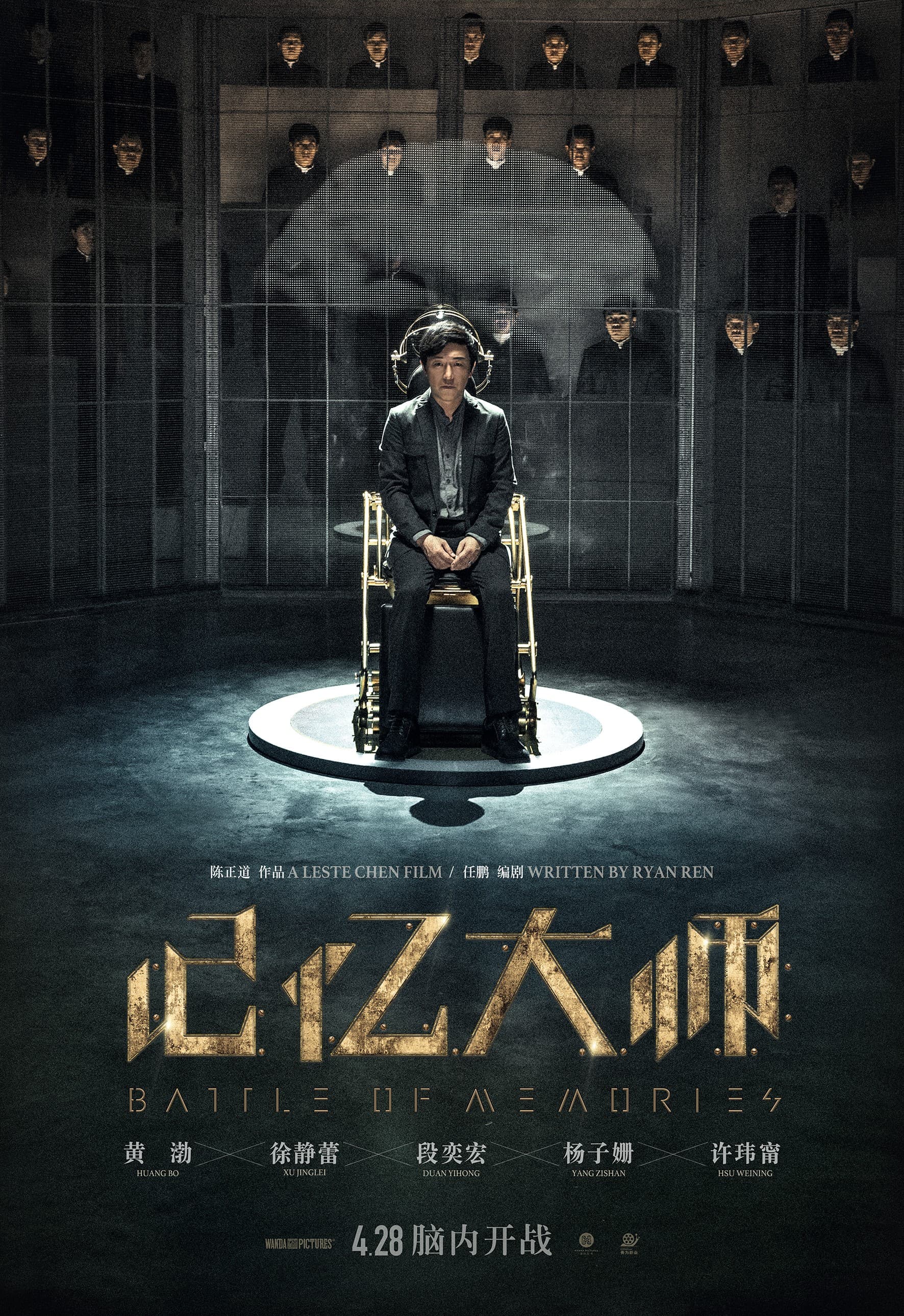
Battle of Memories (Chinese: 记忆大师, pinyin: Jìyì dàshī), directed by Taiwanese filmmaker Leste Chen and released in 2017, was produced on a reported budget of approximately 120,000,000 Chinese yuan, or roughly $18,000,000 USD at 2017 exchange rates. The film starred Huang Bo, Xu Jinglei, Duan Yihong, and Sandrine Pinna in a near-future sci-fi thriller about a memory-extraction procedure gone wrong. Wanda Pictures and Le Vision Pictures co-financed the production through a partnership designed to bring high-concept Chinese-language genre material to a wide commercial audience.
The budget reflected an upper-tier Chinese-language genre scale in 2017. Compared with comparable Chinese sci-fi thrillers of the period, which typically ran between 50,000,000 and 150,000,000 yuan, Battle of Memories landed in the upper middle of that range, with the bulk of the spend going to the cast package, the elaborate near-future Hong Kong production design, and the visual effects required for the memory-extraction sequences.
Key Budget Allocation Categories
Battle of Memories' reported $18,000,000 budget was distributed across the following core production areas:
- Above-the-Line Talent: Huang Bo, one of the highest-paid actors in mainland Chinese cinema at the time of production, commanded a star fee that absorbed a substantial share of the above-the-line budget. Xu Jinglei, Duan Yihong, and Sandrine Pinna filled out the principal cast at established Chinese A-list rates. Director Leste Chen, coming off the romantic thriller Say Yes! (2013) and the Taiwan-mainland coproduction sleeper Eternal Summer (2006), was paid at a feature-director rate appropriate to the genre.
- Production Design: Production designer Lin Mu created a stylized near-future Hong Kong palette that drew on the visual language of Blade Runner, Minority Report, and the Wong Kar-wai aesthetic of saturated neon and rain-soaked street geometry. The memory-clinic interior, with its glass-walled extraction pods and bioluminescent displays, required practical builds across multiple soundstages.
- Visual Effects: The film required extensive VFX for the memory-extraction sequences, in which characters revisit recovered memories as immersive subjective experiences. Beijing-based vendor Base FX handled the bulk of the principal effects work, with additional contributions from Korean and Taiwanese houses for the surveillance and memory-bank sequences.
- Hong Kong and Taipei Location Shoot: Principal photography mixed soundstage work with location shooting in Hong Kong and Taipei to capture the near-future urban texture, with additional scenes filmed in coastal Taiwan and Bangkok. The cross-territory shoot required significant logistics and travel costs for the principal cast and key crew.
- Score and Music: Composer Nathan Wang scored the film with an orchestral and electronic palette that emphasized the memory-loop structure of the narrative. Music licensing was minimal, with original composition carrying the bulk of the soundtrack.
- Marketing and Distribution: Wanda Pictures and Le Vision handled the Chinese domestic release through a coordinated marketing push that included star-driven publicity tours, social media campaigns, and a Beijing International Film Festival premiere slot. International sales were managed by Distribution Workshop and other regional agents.
How Does Battle of Memories' Budget Compare to Similar Films?
At a reported $18,000,000, Battle of Memories sits in the mid-range of upper-tier Chinese-language genre films of the late 2010s. The comparison set illustrates how its commercial outcome stacked up against budgetary peers:
- Mr. Six (2015): Budget $11,000,000 | Worldwide $138,000,000. The Hu Guan urban drama with Feng Xiaogang cost less than two-thirds of Battle of Memories and earned more than three times the worldwide gross, illustrating the upper ceiling of contained Chinese-language drama in the same era.
- The Mermaid (2016): Budget $60,000,000 | Worldwide $553,800,000. Stephen Chow's comedy cost more than three times Battle of Memories and earned 12 times the worldwide, illustrating the gap between mid-budget thrillers and broad-comedy Chinese box-office hits.
- Wolf Warrior 2 (2017): Budget $30,000,000 | Worldwide $874,000,000. Wu Jing's action blockbuster released the same year as Battle of Memories cost less than twice as much and earned nearly 20 times the worldwide gross, illustrating the ceiling Battle of Memories could not approach.
- Detective Chinatown 2 (2018): Budget $30,000,000 | Worldwide $544,000,000. The Chen Sicheng franchise sequel cost less than twice as much and earned more than 12 times the worldwide gross, demonstrating the commercial advantage of established franchise IP.
- Say Yes! (2013): Budget $5,000,000 | Worldwide $14,000,000. Leste Chen's previous Chinese-language commercial feature cost less than a third of Battle of Memories and earned a third of the gross, illustrating the director's upward budgetary trajectory.
Battle of Memories Box Office Performance
Battle of Memories opened in mainland China on April 28, 2017, into the Labor Day holiday window. The film performed strongly on its opening weekend, with mainland Chinese gross of approximately 288,000,000 yuan ($42,000,000 USD) by the end of its theatrical run, plus additional gross from Hong Kong, Taiwan, and Southeast Asian territories.
Against an estimated production budget of $18,000,000, the film cleared break-even on theatrical alone in its primary mainland market. Here is the financial breakdown:
Box Office Breakdown
Jìyì dàshī (2017)

Battle of Memories returned roughly $1.47 to $1.70 in worldwide gross for every $1 invested in production and marketing, placing it in the modestly profitable tier for mid-budget Chinese-language genre cinema. The mainland Chinese share of the gross was more than 95 percent, with international and overseas Chinese-language territories accounting for the remainder.
The film's success helped reinforce Wanda Pictures' commitment to upper-mid budget Chinese-language genre productions and established Leste Chen as a director capable of executing high-concept commercial material at scale. Streaming sales to Tencent Video and iQiyi extended the recoupment window beyond theatrical.
Battle of Memories Production History
Development began in 2015 at Wanda Pictures, with screenwriter Ren Pengyuan adapting an original story concept that built on the memory-removal premise familiar to international audiences from Eternal Sunshine of the Spotless Mind (2004) and Total Recall (1990), but reframing it as a serial-killer procedural rather than a romantic-melodramatic structure. Director Leste Chen attached in early 2016 on the strength of his work on Eternal Summer and Say Yes!, and the production assembled its principal cast across spring 2016.
Principal photography ran from May to September 2016, with the production splitting time between mainland Chinese soundstages in Beijing, Hong Kong location shooting for the near-future urban exteriors, and additional location work in Taipei and Bangkok. Production designer Lin Mu and cinematographer Charlie Lam (Hong Kong veteran of Drug War and Office) collaborated on the stylized neon-and-rain visual palette that defines the film's look.
Post-production ran through late 2016 and early 2017, with Beijing-based Base FX handling the bulk of the memory-extraction sequence visual effects. The film premiered at the Beijing International Film Festival in April 2017 ahead of its commercial wide release into the Chinese Labor Day holiday window on April 28, 2017.
The Chinese commercial release coincided with a strong year for Chinese-language genre cinema, and Battle of Memories opened directly against The Fate of the Furious (which had launched the previous week) and Wolf Warrior 2 (which would arrive later in the summer). Despite the competitive environment, the film held its theatrical window well across multiple weeks.
Awards and Recognition
Battle of Memories received modest awards recognition. The film earned three nominations at the 54th Golden Horse Awards (Taiwan's most prestigious film awards) in 2017, including Best Art Direction for Lin Mu, Best Visual Effects for Base FX, and Best Original Film Score for Nathan Wang. It won the Best Original Film Score category at the ceremony.
At the 18th Chinese Film Media Awards, the film received nominations for Best Film and Best Director (Leste Chen), and Huang Bo's lead performance earned recognition at the Shanghai Film Critics Association awards. Sandrine Pinna received a Best Supporting Actress nomination at the Hong Kong Film Awards, although she did not win.
Critical Reception
Battle of Memories received generally positive reviews in Chinese-language markets and mixed but respectful international reception. The film holds a 7.0 rating out of 10 on Douban based on over 350,000 user reviews, indicating broad audience appreciation, and a 6.6 rating on IMDb. International sample reviews on Rotten Tomatoes are limited because the film did not receive a wide English-language theatrical release.
South China Morning Post's Edmund Lee called the film "an ambitious sci-fi noir that pulls off most of its narrative gambles," and Variety's Maggie Lee praised the "polished mise-en-scène" and the "tight ensemble performances." Time Out Beijing wrote that the film "marks Leste Chen's confident transition into the upper tier of Chinese genre filmmaking" while flagging some narrative-clarity issues with the memory-loop structure.
The film has settled into the Chinese-language genre canon as a representative example of upper-mid-budget commercial science fiction, frequently compared with Chen Sicheng's Detective Chinatown series for its blend of genre conventions with Asian production design and casting. Its commercial success contributed to a broader industry willingness to greenlight Chinese-language sci-fi material in subsequent years.
Frequently Asked Questions
How much did it cost to make Battle of Memories (Jìyì dàshī 2017)?
The reported production budget was approximately 120,000,000 Chinese yuan, or roughly $18,000,000 USD at 2017 exchange rates. Wanda Pictures and Le Vision Pictures co-financed the production.
How much did Battle of Memories earn at the box office?
The film grossed approximately 288,000,000 yuan ($42,000,000 USD) in mainland China, with additional gross from Hong Kong, Taiwan, and Southeast Asian territories bringing the worldwide total to approximately $44,200,000. The film opened in mainland China on April 28, 2017.
Was Battle of Memories profitable?
Yes. Against an $18,000,000 production budget and an estimated $8,000,000 to $12,000,000 in marketing spend, the film returned approximately $1.47 to $1.70 in worldwide gross for every $1 invested. The film cleared break-even on theatrical in its primary mainland Chinese market.
Who directed Battle of Memories?
Taiwanese director Leste Chen directed the film. Chen had previously directed Eternal Summer (2006), The Heirloom (2005), and the romantic comedy Say Yes! (2013). Battle of Memories represented his upward budgetary trajectory into upper-tier Chinese-language commercial genre filmmaking.
What is Battle of Memories about?
The film follows a novelist in near-future Hong Kong who undergoes a procedure to erase painful memories of his failing marriage. When his memories return wrongly, he begins to recall fragments of a serial killer's mind, drawing him into a police investigation. The film blends sci-fi premise with serial-killer procedural in a stylized neon-and-rain visual palette.
Where was Battle of Memories filmed?
Principal photography took place from May to September 2016 across mainland Chinese soundstages in Beijing, Hong Kong location shooting, and additional work in Taipei and Bangkok. Production designer Lin Mu created the near-future urban palette, while Hong Kong cinematographer Charlie Lam handled the camera work.
Who stars in Battle of Memories?
Huang Bo stars as the novelist undergoing memory extraction. Xu Jinglei plays his wife, Duan Yihong plays the lead detective, Sandrine Pinna plays a key supporting role, and Yang Zishan and Wang Zhener round out the ensemble. Huang Bo was among the highest-paid mainland Chinese actors at the time of production.
How does it compare to other Chinese genre films of 2017?
Battle of Memories cost $18,000,000 and grossed $44,200,000 worldwide, compared with Wolf Warrior 2 (released the same year), which cost $30,000,000 and earned $874,000,000 worldwide. The Mermaid (2016) cost $60,000,000 and earned $553,800,000. Battle of Memories's mid-budget profitable run placed it in the upper tier of Chinese-language genre cinema without approaching blockbuster scale.
What did critics think of Battle of Memories?
The film received generally positive reviews in Chinese-language markets. It holds a 7.0 rating on Douban (more than 350,000 user reviews) and a 6.6 on IMDb. South China Morning Post's Edmund Lee called it "an ambitious sci-fi noir that pulls off most of its narrative gambles," and Variety praised the polished production design and ensemble performances.
Did Battle of Memories win any awards?
Yes. The film won Best Original Film Score (Nathan Wang) at the 54th Golden Horse Awards in 2017 and was nominated for Best Art Direction and Best Visual Effects. It also received Best Film and Best Director nominations at the 18th Chinese Film Media Awards and a Hong Kong Film Award nomination for Sandrine Pinna in Best Supporting Actress.
Filmmakers
Jìyì dàshī (2017)

Build budgets like this one in Saturation
Start from an industry-standard feature film template, import the schedule and rates you already have, and let the cost report keep itself current as you spend. Real-time collaboration, no spreadsheets.