Indigènes Budget
 DramaHistoryWar2h 8m
Updated
Synopsis
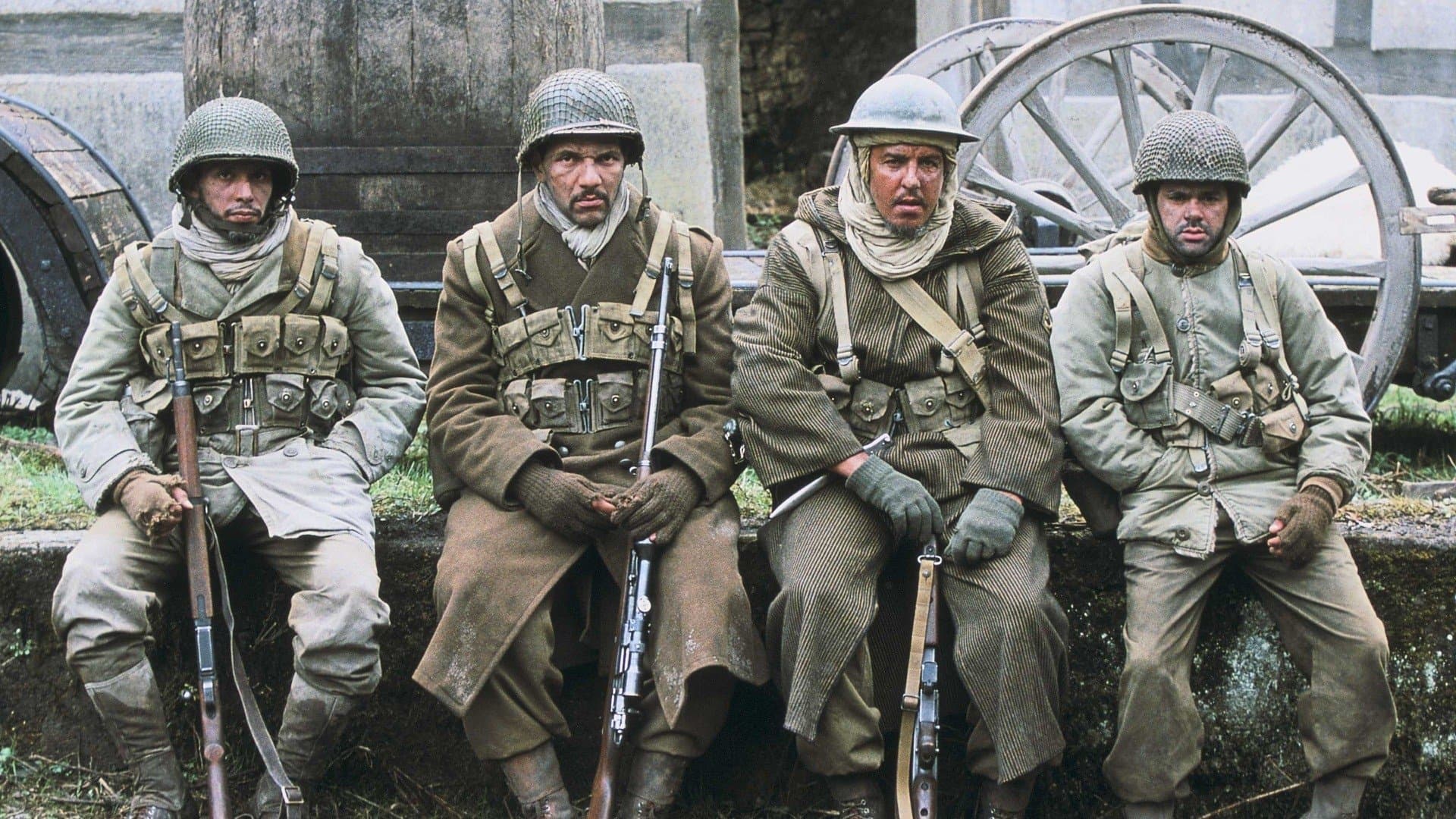
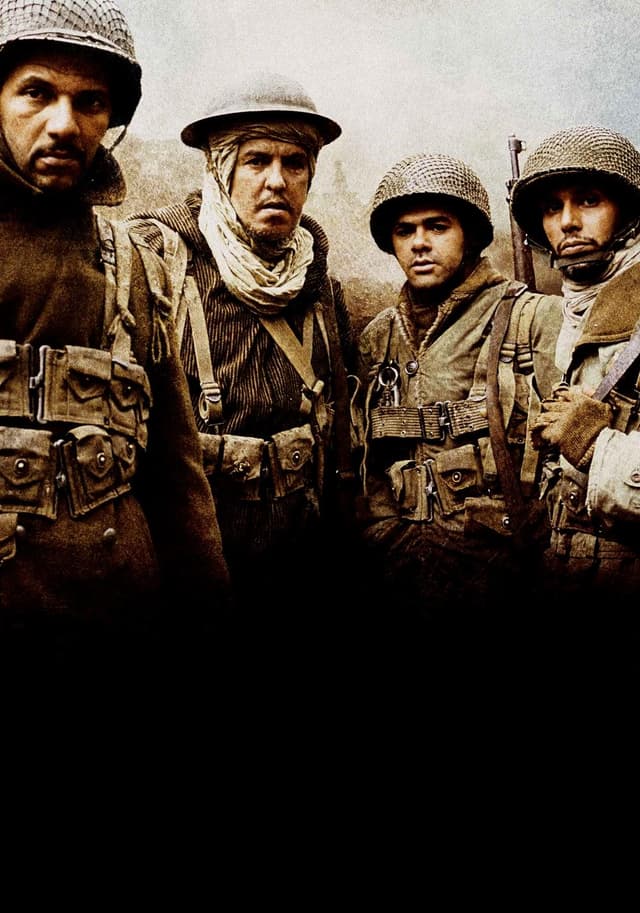
In 1943, four North African soldiers join the French army to liberate the motherland of their colonial rulers, fighting through Italy, Provence, and the Vosges only to be denied the equal treatment promised to them. Based on the true forgotten history of France's African and Maghrebi soldiers.
What Is the Budget of Indigènes (2006)?
Indigènes (released internationally as Days of Glory, 2006), directed by Rachid Bouchareb and distributed by Mars Distribution in France and IFC Films in North America, was produced on a reported budget of €14,000,000 (approximately $14,500,000). The film was financed by Tessalit Productions, Kiss Films, Tassili Films, Studio Canal, and the French Centre national du cinéma (CNC) alongside government funds from Belgium, Algeria, and Morocco.
The mid-budget figure reflected the production's ambitious multi-country World War II combat scale combined with its art-house creative DNA. Bouchareb's prior work on Little Senegal (2001) had built relationships with the French and North African film funding agencies that the larger Indigènes budget required.
Key Budget Allocation Categories
The €14,000,000 budget for Indigènes was distributed across several core production areas:
- Above-the-Line Talent: Jamel Debbouze (Amélie, Astérix and Obélix Mission Cleopatra), Sami Bouajila (The Adventures of Rabbi Jacob), Roschdy Zem (Will It Snow for Christmas), and Samy Naceri (Taxi) led the cast as the four North African soldiers, with Bernard Blancan as their French sergeant. The four leads collectively won Best Actor at the 2006 Cannes Film Festival.
- Multi-Country Location Shoot: Principal photography took place across Morocco (doubling for the North African theater of operations), Italy, France's Vosges mountains, and Belgium's Ardennes. The multi-country production required substantial logistics, lodging, transportation, and local crew base across four nations.
- Production Design and Period Construction: Dominique Douret's production design built period-specific 1943-1945 environments, including French Army camp installations, North African deployment staging, Italian campaign battlefield environments, and Vosges and Alsace village set pieces. Period set construction and dressing across multiple national environments represented one of the largest line items.
- Cinematography: Patrick Blossier shot the film on 35mm with a documentary-realist approach that emphasizes the soldiers' subjective perspective. The film's extensive combat coverage and multi-country location work required substantial production design and crew investment.
- Combat Sequences and Stunts: The film includes major combat set pieces including the Italian campaign mountain assault, the Provence landing, and the climactic Alsace village defense. Stunt coordination, weapons rigging, pyrotechnics, and military extras represented one of the production's largest single-line-item investments.
- Music Rights and Score: Khaled (the Algerian raï singer) and Armand Amar composed the score, blending North African musical traditions with orchestral war-film conventions. The score commission and music clearance for period songs added meaningfully to spend.
How Does Indigènes' Budget Compare to Similar Films?
At €14,000,000, Indigènes sat at the upper end of French government-backed art-house features and below the budget tier of Hollywood World War II films. The comparison set illustrates the budget context:
- A Very Long Engagement (2004): Budget €45,000,000 (approximately $47,000,000) | Worldwide $69,200,000. Jean-Pierre Jeunet's World War I French production was the prestige French wartime film immediately preceding Indigènes and cost roughly three times as much.
- Joyeux Noël (2005): Budget €20,000,000 (approximately $21,000,000) | Worldwide $17,800,000. Christian Carion's World War I trench truce film offered the closest contemporary French war-film budget peer.
- Saving Private Ryan (1998): Budget $70,000,000 | Worldwide $482,300,000. Steven Spielberg's World War II benchmark cost roughly five times as much as Indigènes, illustrating the Hollywood-versus-French-production financial gap.
- Letters from Iwo Jima (2006): Budget $19,000,000 | Worldwide $68,700,000. Clint Eastwood's simultaneous-year Japanese-perspective war film offered a contemporary peer for non-English-language war filmmaking.
Indigènes Box Office Performance
Indigènes premiered at the Cannes Film Festival on May 25, 2006, where the film's four lead actors collectively won Best Actor. It opened theatrically in France on September 27, 2006 to strong reception, ultimately grossing approximately €18,200,000 (approximately USD $23,500,000) in France alone, with worldwide gross including French-language markets in Algeria, Morocco, and Belgium reaching approximately $32,000,000. Here is the financial breakdown:
Box Office Breakdown
Indigènes

Indigènes returned approximately $1.12 to $1.31 in theatrical revenue for every $1 invested when measured against total estimated production and marketing spend, ranking it as a strong commercial performer for a French-language art-house war film. The French market drove the vast majority of the gross, with US art-house performance (IFC Films release) modest but well-received.
The film's commercial success was amplified by an extraordinary political consequence. Indigènes drew direct attention to the French government's decades-long policy of freezing pension payments for veterans from former French colonies, paying them a fraction of what white French veterans received. After then-President Jacques Chirac and his wife Bernadette Chirac attended a special private screening, the French government announced in 2006 that pension payments for North African and West African veterans would be raised to equal those of white French veterans. The film's direct policy impact is widely cited as one of the most consequential outcomes of any 21st-century film.
Indigènes Production History
Rachid Bouchareb, a French-Algerian filmmaker whose grandfather had served in the French Army during World War II, developed Indigènes over several years as a corrective to the systematic erasure of North African and West African soldiers from French wartime narrative. Bouchareb co-wrote the screenplay with Olivier Lorelle, drawing on archival research, surviving-veteran interviews, and the documented historical experience of the Free French Army's African divisions.
Casting prioritized French-Maghrebi actors who could carry both the film's political weight and its accessibility to French commercial audiences. Jamel Debbouze (a major French comedy star) signed on as star and executive producer, with Sami Bouajila, Roschdy Zem, and Samy Naceri completing the four-soldier ensemble. Bernard Blancan played the French sergeant whose own attitudes toward his African soldiers evolve over the campaign.
Principal photography ran across multiple countries in 2005 and early 2006: Morocco (doubling for North African deployment scenes), France (production base and Vosges combat sequences), Italy, and Belgium's Ardennes (for the final Alsace village defense). The multi-country shoot was financed through co-production agreements between France, Algeria, Morocco, and Belgium.
Awards and Recognition
Indigènes received substantial awards recognition. At the 2006 Cannes Film Festival, the film's four lead actors (Jamel Debbouze, Sami Bouajila, Roschdy Zem, Samy Naceri) collectively won Best Actor, a rare ensemble award. The film was nominated for the Academy Award for Best Foreign Language Film at the 79th Oscars (April 2007), losing to The Lives of Others.
The film also won three César Awards (the French equivalent of the Oscars) in 2007, including Best Original Screenplay (Rachid Bouchareb and Olivier Lorelle). It received the Lumière Award for Best French-Language Film, the European Film Award for Best Screenplay, and recognition at the Goyas, the Étoiles d'Or, the David di Donatello Awards, and multiple international critics groups. The film's direct impact on French government pension policy for colonial veterans is also widely cited as a unique form of recognition.
Critical Reception
Indigènes received widely positive reviews. The film holds a 96% approval rating on Rotten Tomatoes based on 67 critic reviews, with a critical consensus that praised the political conviction and ensemble performances. On Metacritic, the film scored 83 out of 100, indicating universal acclaim. No CinemaScore was issued because the film bypassed wide US theatrical release.
Critics broadly praised Rachid Bouchareb's direction, the four lead performances, and the screenplay's combination of conventional war-film narrative momentum with rigorous political consciousness. The New York Times' A.O. Scott called it "a stirring, mournful, ultimately devastating film about brotherhood, duty, and the brutal indifference of the state," while Variety's Derek Elley wrote that the film "delivers traditional war-movie spectacle alongside a quietly furious moral argument." Roger Ebert added the film to his Top 10 list for 2006, calling it "an important film about a forgotten chapter, told with conviction and great craft." The film's political and policy impact has only solidified its reputation in retrospective coverage.
Frequently Asked Questions
How much did Indigènes (Days of Glory) cost?
The film had a reported production budget of €14,000,000 (approximately $14,500,000). Financing came through Tessalit Productions, Kiss Films, Tassili Films, Studio Canal, and the French Centre National du Cinéma, alongside government film funds from Belgium, Algeria, and Morocco.
How much did Indigènes earn at the box office?
The film grossed approximately €18,200,000 (approximately $23,500,000) in France alone, with worldwide gross including Algeria, Morocco, Belgium, and US art-house performance reaching approximately $32,000,000. The film opened in France on September 27, 2006 and in the United States on December 6, 2006 (limited release via IFC Films).
Who directed Indigènes?
Rachid Bouchareb directed Indigènes. Bouchareb is a French-Algerian filmmaker whose grandfather had served in the French Army during World War II. He went on to direct Outside the Law (2010), Just Like a Woman (2012), Two Men in Town (2014), and Belleville Cop (2018).
Is Indigènes based on a true story?
Yes. The film is based on the documented true history of the approximately 233,000 North African and West African soldiers who served in the Free French Army during World War II, helping liberate France from German occupation. The specific four-soldier characters in the film are composites drawn from archival research and surviving-veteran interviews.
Why did Indigènes win Best Actor at Cannes?
At the 2006 Cannes Film Festival, the film's four lead actors (Jamel Debbouze, Sami Bouajila, Roschdy Zem, Samy Naceri) collectively won Best Actor, a rare ensemble award. The jury, headed by Wong Kar-wai, recognized the four performances as inseparable components of a unified ensemble portrait of the African and Maghrebi soldiers.
Was Indigènes nominated for an Oscar?
Yes. Indigènes was nominated for the Academy Award for Best Foreign Language Film at the 79th Oscars in April 2007, losing to Florian Henckel von Donnersmarck's The Lives of Others. Algeria submitted the film as its International Feature entry.
How did Indigènes change French government policy?
After French President Jacques Chirac and his wife Bernadette Chirac attended a special private screening of the film, the French government announced in 2006 that pension payments for North African and West African colonial veterans (who had been receiving a fraction of what white French veterans received for decades) would be raised to equal those of white French veterans. The film's direct policy impact is widely cited as one of the most consequential outcomes of any 21st-century film.
Where was Indigènes filmed?
Principal photography took place across Morocco (doubling for the North African deployment scenes), France (the Vosges combat sequences and the final Alsace village defense), Italy, and Belgium's Ardennes. The multi-country shoot was financed through co-production agreements between France, Algeria, Morocco, and Belgium.
What is the difference between Indigènes and Days of Glory?
Indigènes (French for "Natives") is the original French title. Days of Glory is the English-language international title under which the film was released in the United Kingdom, United States, and other English-speaking markets. It is the same film.
What did critics think of Indigènes?
Indigènes received widely positive reviews, holding a 96% approval rating on Rotten Tomatoes based on 67 critics and an 83 out of 100 score on Metacritic. Roger Ebert added the film to his Top 10 list for 2006, calling it "an important film about a forgotten chapter, told with conviction and great craft."
Filmmakers
Indigènes

Build budgets like this one in Saturation
Start from an industry-standard feature film template, import the schedule and rates you already have, and let the cost report keep itself current as you spend. Real-time collaboration, no spreadsheets.