Hope Budget
Updated
Synopsis
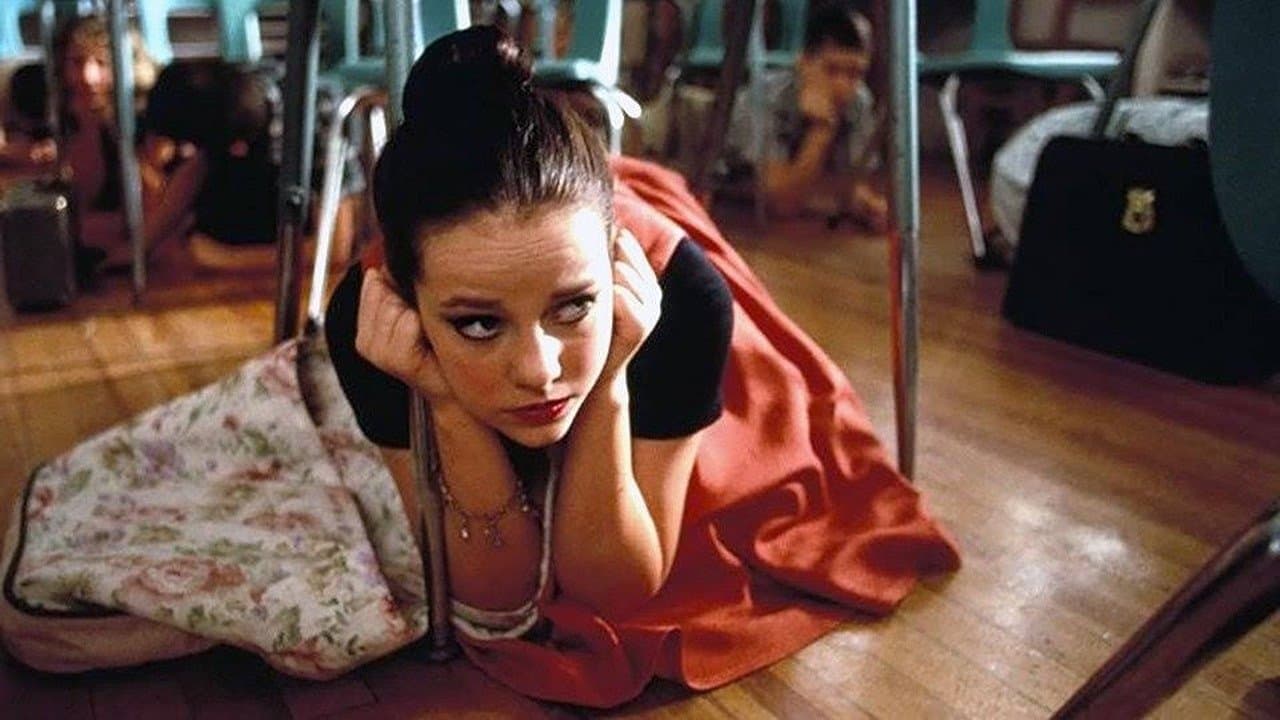
In 1962 small-town Texas, an 11-year-old girl named Hope navigates the disquiet of the Cuban Missile Crisis alongside her family and the rising stirrings of the Civil Rights Movement she half-understands. Across a single summer she learns what her mother and aunt have lost, what their Black housekeeper has endured, and how grown-ups in her town keep their fears packed under the manners of the era.
What Is the Budget of Hope (1997)?
Hope (1997), directed by Goldie Hawn and produced for TNT, was made within the late-1990s prestige cable telefilm budget tier that industry observers place in the $4,000,000 to $6,000,000 range. TNT during this period commissioned director-driven historical dramas at the upper end of the cable telefilm scale, with the budget supporting period production design, established theatrical-tier acting talent, and the kind of craft-driven production values the network used to differentiate its original films from the broadcast-network Sunday-night TV movie tier.
The economics reflected TNT's late-1990s strategy of using prestige original films as a brand differentiator. Cherry Alley Productions, Hawn's production company, packaged the film in association with Finnegan-Pinchuk Co. The project served as Goldie Hawn's directorial debut after a long acting and producing career, with the cable telefilm model offering creative latitude for a first-time director that would have been harder to access at theatrical scale. The film premiered on TNT on October 19, 1997.
Key Budget Allocation Categories
The estimated production budget was allocated across these core late-1990s prestige cable telefilm areas:
- Above-the-Line Talent: Christine Lahti, an Academy Award-winning actress for the short Lieberman in Love (1995) and a frequent stage and screen lead, anchored the cast at established prestige-television quotes. Catherine O'Hara (Home Alone, SCTV) brought a comedic-dramatic profile to the supporting cast, with Jena Malone (Bastard Out of Carolina) and J.T. Walsh as additional name-recognition supporting cast. Goldie Hawn's director fee through Cherry Alley Productions reflected her established profile.
- Texas Location Shoot: Principal photography took place across multiple Texas locations including Anderson, Thompsons, Houston, League City, and Manvel. The Texas locations covered both the contemporary scenes and the Depression-era flashback sequences, with the diverse landscape allowing the production to stage 1962-era exteriors authentically. Filming ran from late May 1997 through early July 1997.
- Period Production Design: The 1962 small-town Texas setting required period production design covering vehicles, costumes, signage, and interior dressing. The Depression-era flashback sequences added additional production design layers for the 1930s period. The substantial period commitment was a meaningful budget category for a cable telefilm of the era.
- Cinematography: Director of photography Ric Waite (Footloose, 48 Hrs., Class of 1984) shot the film with a warm, naturalistic small-town Texas palette. Waite's established theatrical-tier cinematography career brought theatrical-feature production values to the cable telefilm.
- Score and Sound: Dave Grusin composed the title theme and Steve Porcaro composed the underscore, with the music budget covering original composition, orchestral recording, and licensing of period-appropriate music from the 1962 setting. Grusin's theatrical-prestige scoring career (The Firm, On Golden Pond) brought additional craft prestige to the production.
- TNT Brand Differentiation: The film was positioned within TNT's late-1990s prestige original films strategy, with marketing and post-production resources directed toward awards eligibility (Emmy, Golden Globe) and critical conversation rather than ratings alone. The marketing spend reflected this positioning.
How Does Hope's Budget Compare to Similar Films?
Direct comparisons sit within the late-1990s prestige cable telefilm tier and the contemporary theatrical drama lane:
- Path to War (2002): HBO telefilm budget approximately $9,000,000. John Frankenheimer's LBJ drama is a higher-budget cable prestige comparison.
- Truman (1995): HBO telefilm budget approximately $7,000,000. The Gary Sinise-led presidential biopic is a comparable high-end cable prestige film of the era.
- A Civil Action (1998): Budget $60,000,000 | Worldwide $56,700,000. The contemporary Steven Zaillian theatrical legal drama operated at roughly ten times Hope's budget tier.
- Crazy in Alabama (1999): Budget $9,000,000 | Worldwide $2,000,000. Antonio Banderas' directorial debut is a comparable first-time-director Southern period drama released theatrically at a higher budget tier.
- The Long Walk Home (1990): Budget $9,500,000 | Worldwide $4,900,000. The Sissy Spacek and Whoopi Goldberg Civil Rights-era drama is a closer subject-matter comparison at a higher theatrical budget.
Hope Box Office Performance
Hope premiered on TNT on October 19, 1997 with no theatrical release. As a cable telefilm the commercial outcome was measured by ratings, awards eligibility, and brand differentiation value for TNT rather than by box office returns. The film delivered solid Nielsen ratings for TNT's Sunday-night original films block, though specific viewership figures are not publicly archived.
Box Office Breakdown
Hope

For TNT the commercial outcome was the awards-season prestige boost and brand differentiation value the film delivered, not a theatrical-style gross. The film received subsequent VHS and DVD home video releases through Turner Home Entertainment, generating an additional revenue tail through the late 1990s and 2000s. Television syndication and TNT and TBS rerun rotations extended the revenue further across the early 2000s.
The cable telefilm release model that Hope represented was central to TNT's late-1990s and early-2000s brand identity, with the network commissioning multiple director-driven original films alongside its theatrical syndication catalog. Hope's critical reception and awards profile (Golden Globe and Emmy nominations) validated the model for subsequent TNT investment.
Hope Production History
Development began at Cherry Alley Productions, Goldie Hawn's production company, with screenwriter Kerry Kennedy delivering a screenplay set against the 1962 Cuban Missile Crisis and the rising Civil Rights Movement. Hawn had spent the 1980s and 1990s as an established actor and producer (Private Benjamin, Death Becomes Her, The First Wives Club) and identified Hope as the right vehicle for her directorial debut, with the period subject matter offering both craft challenges and substantive thematic engagement.
Christine Lahti was cast as the protagonist's mother, with Catherine O'Hara, Jena Malone, and J.T. Walsh in supporting roles. The casting reflected Hawn's decision to anchor the film with established theatrical-tier acting talent rather than television leads, a strategic choice that elevated the cable telefilm's awards-season positioning. Cherry Alley Productions partnered with Finnegan-Pinchuk Co. on the production.
Principal photography began on May 29, 1997 and wrapped in early July 1997 across multiple Texas locations including Anderson, Thompsons, Houston, League City, and Manvel. Cinematographer Ric Waite (Footloose, 48 Hrs.) brought theatrical-feature craft to the production. Composer Dave Grusin delivered the title theme and Steve Porcaro composed the underscore, with the music supporting the period setting.
The film completed post-production in mid-1997 ahead of its October 19, 1997 TNT premiere. The premiere positioned the film within TNT's awards-eligibility window and as a Sunday-night original film highlight. Subsequent VHS and DVD releases through Turner Home Entertainment extended the film's commercial life. Goldie Hawn followed Hope with continued producing work but did not direct another feature film, making Hope her sole directorial credit.
Awards and Recognition
Hope received substantial awards recognition for a cable telefilm. Jena Malone received a Golden Globe nomination for Best Actress in a Miniseries or Television Film, recognizing her central performance as the 11-year-old protagonist. J.T. Walsh was nominated for a Primetime Emmy for Outstanding Supporting Actor in a Miniseries or Movie, his work appearing posthumously after his February 1998 death.
Goldie Hawn won the Lone Star Film & Television Award for Best TV Director, recognizing her directorial debut. Christine Lahti won the Lone Star Best TV Supporting Actress award. The Lone Star recognition reflected the Texas film community's embrace of the production. Hawn also received industry recognition through directing-focused panels and retrospectives.
Beyond the specific nominations Hope established Goldie Hawn's directorial credentials, though she did not subsequently direct another feature. The film's positioning as a director-driven prestige cable telefilm became a template for similar TNT original films through the early 2000s, with the project's critical reception validating the network's continued investment in the format.
Critical Reception
Hope received favorable reviews. Variety's reviewer praised the period craft, Christine Lahti's lead performance, and Jena Malone's breakthrough turn, while noting the screenplay's tendency to layer in multiple historical themes that occasionally crowded the central family-drama focus. The Los Angeles Times and The New York Times both ran positive reviews highlighting Goldie Hawn's control of the cable telefilm form on her directorial debut.
Critics consistently praised the ensemble work and the Texas location work. The Variety review specifically called out the cinematography by Ric Waite and the score by Dave Grusin as elevating the production above the standard cable telefilm tier. Jena Malone's performance received broader awards-season conversation, with critics framing her as one of the most promising young actors of the late 1990s. J.T. Walsh's supporting performance, his last completed work before his February 1998 death, received posthumous critical attention.
The IMDb rating of 6.4 out of 10 reflects sustained audience reception over decades of subsequent home video and television viewing. The film has continued to circulate on streaming and television rotations as a representative late-1990s TNT prestige telefilm. Hope's legacy as Goldie Hawn's sole directorial credit has shaped its continued visibility within retrospective conversations about directors who made limited feature contributions but whose single films sustained critical engagement.
Frequently Asked Questions
How much did it cost to make Hope (1997)?
The production budget has not been publicly disclosed. Industry observers place the figure in the $4,000,000 to $6,000,000 range, within the late-1990s prestige cable telefilm tier. TNT commissioned director-driven historical dramas at the upper end of the cable telefilm scale during this period to differentiate its original films from broadcast network Sunday-night TV movies.
Who directed Hope (1997)?
Goldie Hawn directed the film as her directorial debut. The cable telefilm format offered creative latitude for a first-time director that would have been harder to access at theatrical scale. Hope remains Hawn's sole feature directorial credit, with her subsequent career continuing in acting and producing.
Where was Hope (1997) filmed?
Principal photography took place across multiple Texas locations including Anderson, Thompsons, Houston, League City, and Manvel. The Texas locations covered both the contemporary 1962 scenes and the Depression-era flashback sequences, with filming running from May 29, 1997 through early July 1997.
When was Hope released?
The film premiered on TNT on October 19, 1997 as part of the network's Sunday-night original films block. There was no theatrical release. Subsequent VHS and DVD home video releases through Turner Home Entertainment, plus television syndication and TNT and TBS rerun rotations, extended the film's commercial life through the early 2000s.
Is Hope (1997) related to the 2014 Stiller film or other titles?
No. Hope (1997) is Goldie Hawn's TNT cable telefilm directorial debut, unrelated to other films with similar titles including the 2014 Lone Survivor Hope, the 2019 Maria Sodahl Hope, or any other production. The 1997 film is a standalone Cherry Alley Productions and Finnegan-Pinchuk Co. project.
Who stars in Hope (1997)?
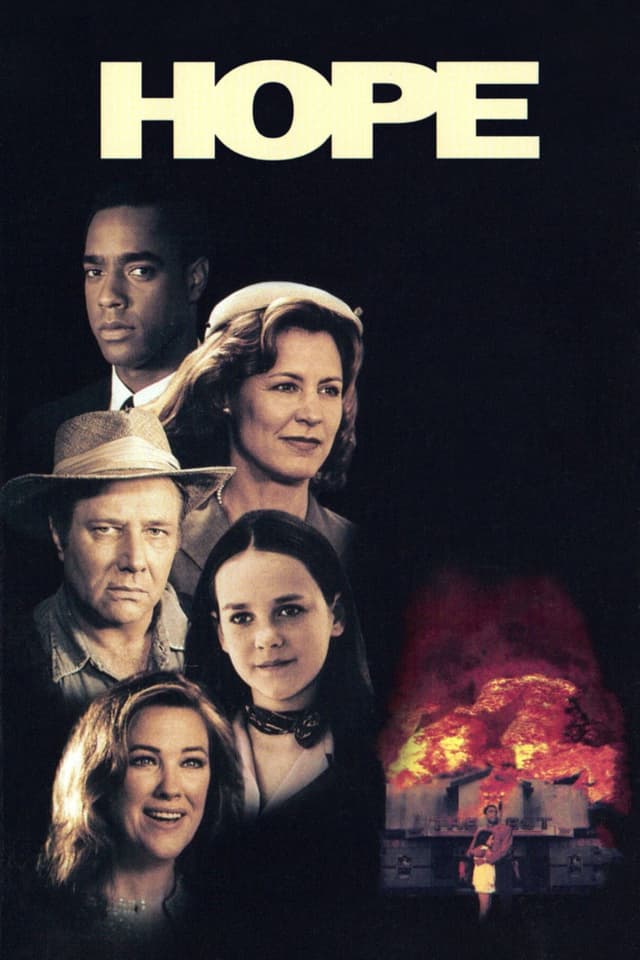
Christine Lahti stars as the protagonist's mother, with Jena Malone as the 11-year-old central character Hope. Catherine O'Hara, Jeffrey D. Sams, and J.T. Walsh appear in supporting roles. The film features J.T. Walsh in one of his last completed performances before his February 1998 death.
Did Hope (1997) win any awards?
Jena Malone received a Golden Globe nomination for Best Actress in a Miniseries or Television Film. J.T. Walsh received a Primetime Emmy nomination for Outstanding Supporting Actor in a Miniseries or Movie. Goldie Hawn won the Lone Star Film & Television Award for Best TV Director, and Christine Lahti won the Lone Star Best TV Supporting Actress award.
What is Hope about?
The film is set in small-town Texas in 1962 against the backdrop of the Cuban Missile Crisis and the rising Civil Rights Movement. The 11-year-old protagonist Hope (Jena Malone) navigates her family's emotional currents, her mother's and aunt's losses, and the experiences of their Black housekeeper across a single summer. The film engages with the era's paranoia and social transformation through a coming-of-age lens.
Who composed the music for Hope (1997)?
Dave Grusin composed the title theme and Steve Porcaro composed the underscore. Grusin's theatrical-prestige scoring career (The Firm, On Golden Pond, The Goonies) brought additional craft prestige to the cable telefilm production. Porcaro is a founding member of the band Toto.
What did critics think of Hope (1997)?
The film received favorable reviews from Variety, the Los Angeles Times, and The New York Times. Critics praised the period craft, Christine Lahti's lead performance, and Jena Malone's breakthrough turn, while noting the screenplay occasionally crowded multiple historical themes around the central family drama. The IMDb rating of 6.4 out of 10 reflects sustained audience reception over decades of subsequent viewing.
Filmmakers
Hope

Official Trailer
Build budgets like this one in Saturation
Start from an industry-standard feature film template, import the schedule and rates you already have, and let the cost report keep itself current as you spend. Real-time collaboration, no spreadsheets.