
Home Alone Budget
Updated
Synopsis
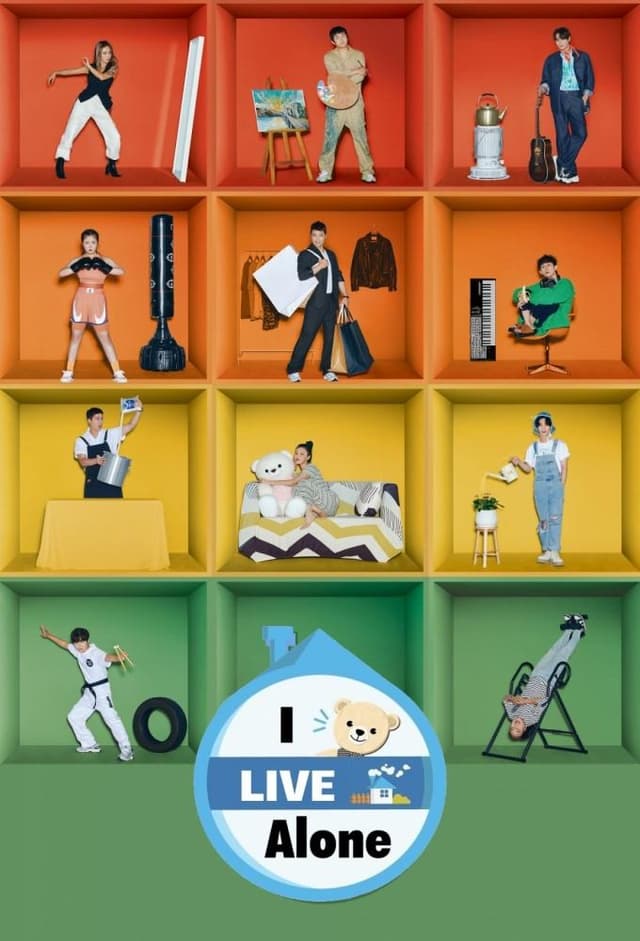
I Live Alone is a long-running South Korean variety-reality program that documents the daily lives of single Korean celebrity members of a self-formed group called the Rainbow Club. Following the format that became a defining template for Korean observational reality television, the show pairs documentary footage of each member's day-to-day life with a panel-style studio segment where members react to and discuss what we have just seen.
What Is the Budget of I Live Alone (2013)?
I Live Alone (Na Honja Sanda, 2013) is a long-running South Korean observational variety-reality program produced by Munhwa Broadcasting Corporation (MBC) and broadcast on MBC TV every Friday at 23:00 KST since March 22, 2013. As is standard for Korean broadcast variety, MBC does not publicly disclose specific per-episode budgets, but industry estimates for major-network Korean weekly variety in the 2010s and 2020s typically ranged from approximately 200,000,000 to 400,000,000 Korean won per episode, equivalent to roughly $170,000 to $340,000 in original-era exchange-rate terms. Across the show's 600-plus-episode run, the cumulative production cost is estimated to have exceeded $100,000,000 to $200,000,000.
The series operates within the standard Korean broadcast-variety economic model: an MBC license fee that covers production cost, supplemented by extensive product placement, episode-specific brand integrations, and downstream international streaming and broadcast sales. The Rainbow Club roster structure, in which celebrity members rotate in and out of the regular cast over time, has kept the program at the top of Korean weekly variety ratings for more than a decade.
Key Budget Allocation Categories
I Live Alone's per-episode production cost is distributed across several core areas typical of Korean broadcast variety:
- Above-the-Line Cast: The Rainbow Club roster (Kian84, Jun Hyun-moo, Lee Joo-seung, Code Kunst, Goo Sung-hwan, Kim Dae-ho, Park Ji-hyeon, Ahn Jae-hyun, Ok Ja-yeon, Joy, and the rotating member ecosystem) commands the largest line item. Korean variety hosts at this profile command top-tier weekly compensation, with each member negotiating individual contracts on a season-by-season basis.
- Multi-Crew Observational Production: Each weekly episode requires multiple production crews shooting simultaneously at multiple members' homes and locations. The crew count scales with the number of featured members in a given week, with cameras, sound, and field producers handling the documentary footage that is then assembled in studio.
- Studio Panel Production: The studio reaction segment requires a recurring multi-camera studio setup, lighting design, and the weekly time of all featured Rainbow Club members. This format-defining segment carries significant production overhead beyond the field shoots.
- Editing and Post-Production: Korean broadcast variety has historically operated on compressed delivery schedules, with the previous week's footage typically edited and integrated with studio panel reactions in less than a week. The editorial workload is substantial relative to the broadcast hour count.
- Brand Integration and Product Placement: The show's observational format provides natural opportunities for product placement and brand integration, with each episode typically including multiple paid placements. The production team coordinates branded segments alongside organic content.
- Music and Sound: The show's playful musical cues, comedy sound effects, and the opening theme "Handsome" by The Vaccines anchor the audio identity. Music licensing and original score for the studio reaction segments are recurring weekly costs.
How Does I Live Alone's Budget Compare to Similar Series?
At an estimated $170,000 to $340,000 per episode, I Live Alone sat in the standard Korean broadcast-variety band. Comparable productions illustrate the range:
- Infinite Challenge (2005-2018): Budget approximately $400,000 to $600,000 per episode on MBC. The Yoo Jae-suk landmark variety program ran at the top of the Korean broadcast-variety band and demonstrates the upper bound for the format.
- Running Man (2010-present): Budget approximately $200,000 to $350,000 per episode on SBS. The Yoo Jae-suk and Ji Suk-jin ensemble variety program operates in the same per-episode tier and is the closest contemporary peer.
- 2 Days & 1 Night (2007-present): Budget approximately $200,000 to $400,000 per episode on KBS. The travel-variety program offers the closest format peer to I Live Alone's observational variety model.
- My Little Old Boy (2016-present): Budget approximately $200,000 to $350,000 per episode on SBS. The Korean observational variety program in the same lineage as I Live Alone, focused on bachelor sons' lives observed by their mothers, occupies the same per-episode tier.
I Live Alone Season Performance and Ratings
I Live Alone premiered March 22, 2013, on MBC and has continued in active production through the 2020s, with more than 600 broadcast episodes documented in the Wikipedia series record. The show has remained one of MBC's highest-rated variety programs across its run:
- Per-Episode Budget: approximately $170,000 to $340,000 across the 600-plus-episode run
- Cumulative Total Series Investment: approximately $100,000,000 to $200,000,000 across more than 600 episodes (as of the most recent reporting)
- Original Broadcast Window: March 22, 2013 to present on MBC, weekly Fridays at 23:00 KST
- Korean Audience and Ratings: consistently among MBC's top-rated variety programs across the 2010s and 2020s, with episode ratings frequently in the 8 percent to 15 percent AGB Nielsen Korea nationwide range
- International Distribution: distributed internationally through Viki, Kocowa, and selected international streaming partners
- Streaming Availability: currently available on Viki, Kocowa, and MBC's own international digital platforms
The Rainbow Club format, in which celebrity members rotate in and out of the regular cast over time, has been credited as one of the show's primary durability mechanisms, allowing the program to refresh its on-screen ensemble without requiring a structural reformat. The show's longevity has made it a Korean broadcast variety staple alongside Running Man, 2 Days & 1 Night, and Infinite Challenge.
I Live Alone Production History
I Live Alone was developed by MBC variety producer Heo Hang and his team in late 2012 and early 2013 as part of MBC's strategy to capture the growing single-living demographic in South Korea. Heo cited Korean Statistics Korea data showing approximately 5,000,000 singles living alone in South Korea, with roughly one third of Korean entertainers reportedly unattached, as the demographic basis for the show's premise.
The show launched with a small founding Rainbow Club roster on March 22, 2013, with the format pairing observational footage of each member's day-to-day single-living life with a studio panel reaction segment. The combination of intimate documentary access and comedic studio commentary established a template that has been emulated across multiple subsequent Korean variety programs.
Across its 12-plus-year run, the show's member roster has rotated multiple times, with current and historical Rainbow Club members including Kian84, Jun Hyun-moo, Lee Joo-seung, Code Kunst, Goo Sung-hwan, Kim Dae-ho, Park Ji-hyeon, Ahn Jae-hyun, Ok Ja-yeon, Joy, and many others. The rotating cast structure has allowed the show to adapt to the evolving Korean celebrity ecosystem while maintaining format continuity.
Awards and Recognition
I Live Alone has won multiple major awards at the annual MBC Entertainment Awards across its run, including Best Variety Program, Variety Show Cast Awards for multiple Rainbow Club members, and Producer awards for Heo Hang. The show received the Top Excellence Variety Award at the 2017 MBC Entertainment Awards and has consistently appeared in MBC year-end retrospectives as the network's flagship variety property.
Rainbow Club members have won individual recognition across the run, with Kian84 receiving the Daesang (Grand Prize) at the 2022 MBC Entertainment Awards and multiple Best Newcomer and Excellence awards going to rotating cast members. The show is widely cited in Korean variety industry retrospectives as a defining example of the observational variety format that came to dominate Korean weekly variety television in the 2010s and 2020s.
Critical Reception
I Live Alone has consistently received positive reception in Korean trade and audience-press coverage across its long run. Korean media outlets including Sports DongA, OSEN, MyDaily, and TenAsia have routinely cited the program as a model of the observational variety format and as a successful approach to documenting the single-living celebrity ecosystem.
Critical objections occasionally cluster around the show's product-placement integration, the curated nature of the apparently candid documentary footage, and the rotating cast structure that has periodically been criticized for skewing toward certain demographics. The broad consensus among Korean variety critics has nonetheless been that the show is one of MBC's most successful long-running franchises and a defining contribution to the contemporary Korean observational variety canon.
Frequently Asked Questions
What is I Live Alone (2013)?
I Live Alone (Na Honja Sanda) is a long-running South Korean variety-reality program produced by MBC and broadcast every Friday at 23:00 KST since March 22, 2013. The show documents the daily lives of single Korean celebrity members of a self-formed group called the Rainbow Club, pairing observational documentary footage with a panel-style studio reaction segment.
How much does I Live Alone cost to produce?
MBC does not publicly disclose specific per-episode budgets, but industry estimates for major-network Korean weekly variety typically range from approximately 200,000,000 to 400,000,000 Korean won per episode, equivalent to roughly $170,000 to $340,000. Across the show's 600-plus-episode run, the cumulative production cost is estimated to have exceeded $100,000,000 to $200,000,000.
When did I Live Alone premiere?
The series premiered March 22, 2013, on MBC TV. It has remained in active weekly production through the 2020s with more than 600 broadcast episodes, making it one of MBC's longest-running and most successful variety programs.
Who are the current Rainbow Club members on I Live Alone?
Current and recent Rainbow Club members include Kian84, Jun Hyun-moo, Lee Joo-seung, Code Kunst, Goo Sung-hwan, Kim Dae-ho, Park Ji-hyeon, Ahn Jae-hyun, Ok Ja-yeon, and Joy, with the roster rotating periodically as members exit and new members join. The Rainbow Club concept refers to the show's self-formed group of single-living Korean celebrities.
Who created I Live Alone?
MBC variety producer Heo Hang developed the series with his team in late 2012 and early 2013 as part of MBC's strategy to capture the growing single-living demographic in South Korea. Heo continues to serve as the show's lead PD across its run.
Did I Live Alone win any major awards?
Yes. The show has won multiple major awards at the annual MBC Entertainment Awards across its run, including Best Variety Program, Variety Show Cast Awards for multiple Rainbow Club members, and the Top Excellence Variety Award at the 2017 MBC Entertainment Awards. Kian84 received the Daesang (Grand Prize) at the 2022 MBC Entertainment Awards.
How does I Live Alone compare to other Korean variety shows?
At an estimated $170,000 to $340,000 per episode, I Live Alone occupies roughly the same per-episode tier as Running Man (approximately $200,000 to $350,000), 2 Days & 1 Night ($200,000 to $400,000), and My Little Old Boy ($200,000 to $350,000). It runs at a lower per-episode budget than Infinite Challenge (approximately $400,000 to $600,000), which sat at the top of the Korean broadcast-variety band.
Is I Live Alone the same as the Home Alone film franchise?
No. I Live Alone (Na Honja Sanda) is a long-running South Korean variety-reality TV program produced by MBC, completely unrelated to the American Home Alone film franchise directed by Chris Columbus and starring Macaulay Culkin (released in 1990 and its sequels). The Korean series' English title is sometimes rendered as I Live Alone to distinguish it from the unrelated American films.
Where can I watch I Live Alone today?
The series is currently available on Viki and Kocowa in many international territories with English subtitles, and on MBC's own international digital platforms. The weekly broadcast is on MBC TV in South Korea every Friday at 23:00 KST.
What did critics think of I Live Alone?
The series has consistently received positive reception in Korean trade and audience-press coverage across its long run, with Korean media outlets including Sports DongA, OSEN, MyDaily, and TenAsia routinely citing it as a model of the observational variety format. Critical objections occasionally cluster around product-placement integration and the curated nature of the apparently candid documentary footage.
Filmmakers
Home Alone

Official Trailer
Build budgets like this one in Saturation
Start from an industry-standard feature film template, import the schedule and rates you already have, and let the cost report keep itself current as you spend. Real-time collaboration, no spreadsheets.