Hokum Budget
 HorrorSupernatural1h 30m
Updated
Synopsis
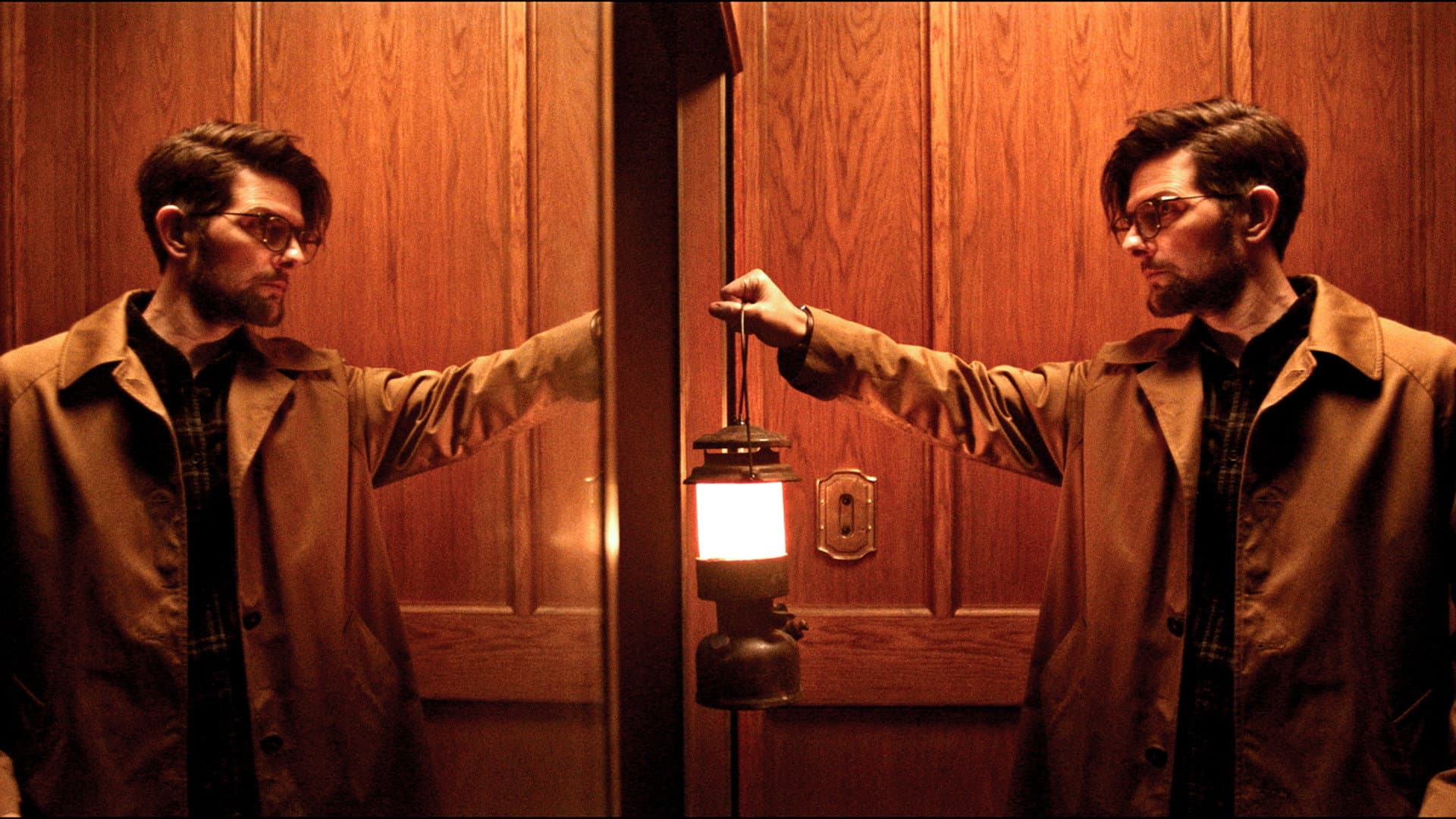
Author Ohm Bauman retreats to a remote cottage in West Cork, Ireland to work on his next book, only to discover the property harbors a dark supernatural presence rooted in local folklore. As strange occurrences escalate and the line between reality and the otherworldly blurs, Ohm must confront forces that have haunted the Irish countryside for centuries.
What Is the Budget of Hokum?
Hokum (2026), written and directed by Damian McCarthy and distributed theatrically by Neon, was produced on a confirmed budget of $5,000,000. The film was structured as an international co-production between Ireland and the United Arab Emirates, with Image Nation Abu Dhabi, Tailored Films, and Spooky Pictures sharing production duties. This multi-territory financing structure allowed the production to maximize value through international tax incentives and co-production treaties while keeping the overall spend disciplined.
At $5 million, Hokum sits in the sweet spot for elevated independent horror, where budgets are large enough to secure recognizable talent and polished production values but small enough that modest theatrical returns can still generate profitability. McCarthy's background in micro-budget Irish horror (Oddity was made for well under $1 million) informed a production philosophy that prioritizes atmosphere, location, and craft over expensive visual effects, keeping costs controlled while delivering the unsettling tone his work is known for.
Key Budget Allocation Categories
While the exact budget breakdown for Hokum has not been disclosed, the production's structure and filming approach point to several key cost drivers:
- Above-the-Line Talent — Adam Scott as the lead represents the single largest talent cost. Scott brings recognizable name value from Severance and Parks and Recreation, which helps drive theatrical attendance for a genre film. Peter Coonan, David Wilmot, and Austin Amelio round out a cast of experienced character actors whose presence adds credibility without commanding blockbuster-level fees.
- Location Production in West Cork, Ireland — Principal photography took place in February and March 2025 in West Cork, a remote and atmospheric region of southern Ireland. Shooting in rural Ireland provides the isolation and visual texture that supernatural horror demands, while Irish production incentives (Section 481 offers up to 32% tax credit) significantly offset below-the-line costs. The winter filming schedule adds natural atmosphere but also introduces weather-related production challenges.
- International Co-Production Structure — As an Ireland/UAE co-production, Hokum benefits from financing across multiple territories. Image Nation Abu Dhabi's involvement brings Gulf region investment, while Tailored Films and Spooky Pictures handle Irish production infrastructure. This structure spreads financial risk and unlocks incentives from both countries, a financing model increasingly common in independent genre filmmaking.
- Practical Horror and Sound Design — McCarthy's directorial approach favors practical effects, atmospheric tension, and sound design over CGI spectacle. Composer Joseph Bishara, whose credits include The Conjuring, Insidious, and Annabelle, brings elite-level horror scoring expertise. Bishara's involvement signals a production that invests heavily in the auditory experience, which is where much of supernatural horror's effectiveness originates.
- Cinematography — Colm Hogan's cinematography is central to establishing the film's visual language. Shooting in the grey, rain-soaked landscape of West Cork during winter requires careful lighting and camera work to create the sustained dread that McCarthy's films rely on. This is not a film that can rely on jump scares alone; the visual craft is a core production expense.
How Does Hokum's Budget Compare to Similar Films?
Without a confirmed budget, comparisons are based on Hokum's likely production range of $3,000,000 to $6,000,000. The film sits within a tier of elevated independent horror that has produced some of the genre's strongest commercial returns:
- Oddity (2024) — Budget under $1,000,000 | Worldwide $5,600,000. McCarthy's previous film established his ability to deliver critically acclaimed horror on a minimal budget. Hokum represents a significant step up in scale with a Hollywood lead and international co-production financing, while retaining the atmospheric approach that made Oddity work.
- Talk to Me (2023) — Budget $4,500,000 | Worldwide $92,400,000. The A24-distributed Australian horror film demonstrates the commercial ceiling for well-executed independent supernatural horror. Both films share a practical-effects-forward approach and international production origin, though Talk to Me's viral marketing gave it unusual breakout momentum.
- The Conjuring (2013) — Budget $20,000,000 | Worldwide $319,500,000. James Wan's supernatural horror benchmark, also scored by Joseph Bishara, shows what the genre looks like at studio scale. Hokum operates at a fraction of that budget while sharing Bishara's scoring talent, which connects both films through their approach to audio-driven horror.
- Hereditary (2018) — Budget $10,000,000 | Worldwide $80,200,000. Ari Aster's debut elevated horror film succeeded through atmosphere, performance, and slow-burn dread rather than spectacle. Hokum's approach to supernatural horror shares this commitment to craft over budget, though McCarthy's style leans more toward Irish Gothic than Aster's domestic nightmare.
- The Banshees of Inisherin (2022) — Budget $20,000,000 | Worldwide $49,700,000. While not a horror film, this Irish production on a remote western island provides a useful reference for what filming in isolated Ireland costs at a higher scale. Hokum likely achieves similar atmospheric production value at a fraction of the budget through genre-specific efficiency and co-production incentives.
Hokum Box Office Performance
Hokum opened on May 1, 2026, across 1,885 screens, debuting at number five in North America with an opening weekend of $6,428,305. The film earned $900,000 from Thursday night previews and built steadily through the weekend. The per-theater average of approximately $3,411 is a strong result for an independent horror release from a director making only his second theatrical feature. The film has since expanded its international footprint, reaching $16,812,278 domestically and $6,750,826 internationally for a worldwide total of $23,563,104 as tracked by Box Office Mojo, with the theatrical run ongoing.
With a confirmed production budget of $5,000,000, Hokum needed approximately $10,000,000 to $13,000,000 in worldwide gross to reach break-even when accounting for Neon's marketing and distribution costs. Here is the financial breakdown:
Box Office Breakdown
Hokum (2026)

Hokum's $6,428,305 opening weekend already exceeded its $5,000,000 production budget outright, a strong early indicator of profitability for the Neon release. The domestic run followed typical horror patterns with a roughly 2.6x multiplier from opening weekend to final domestic gross, landing at $16,812,278 — in line with the $16,000,000 to $19,000,000 range projected from its opening trajectory. The additional $6,750,826 in international gross pushes the film to $23,563,104 worldwide, a result that, combined with Neon's strong streaming licensing deals and the film's 89% Rotten Tomatoes score positioning it for a long home-video tail, makes Hokum one of the cleaner financial success stories among 2026 independent horror releases.
Hokum Production History
Hokum represents Damian McCarthy's follow-up to Oddity (2024), which earned widespread critical acclaim and established McCarthy as one of the most promising voices in contemporary horror. The film was developed as an international co-production between Ireland and the United Arab Emirates, with Image Nation Abu Dhabi partnering with Irish production companies Tailored Films and Spooky Pictures. The project attracted heavyweight horror producers including Roy Lee (It, The Ring, Barbarian), Steven Schneider (Paranormal Activity, Insidious), and Derek Dauchy, alongside Irish producers Ruth Treacy, Julianne Forde, and Mairtin de Barra. Hokum marks the first release under the Spooky Pictures partnership with Image Nation.
The story follows novelist Ohm Bauman, who retreats to a remote inn in West Cork, Ireland to scatter his parents' ashes. Once there, he encounters tales of a witch haunting the honeymoon suite, disturbing visions, and a shocking disappearance that pulls him deeper into the property's supernatural history. McCarthy wrote the screenplay as an original story, drawing on Irish folklore and the atmospheric isolation of the West Cork landscape.
Principal photography took place in February and March 2025 in West Cork, Ireland. McCarthy's decision to shoot during the Irish winter, when West Cork is at its most grey and inhospitable, reflects the same commitment to location-as-character that defined Oddity's use of rural Irish settings. The remote coastal region provided the atmospheric isolation essential to the film's supernatural story.
Neon acquired worldwide rights to Hokum at the Toronto International Film Festival in August 2025, a significant deal that signaled industry confidence in both the film and McCarthy's trajectory. Neon's track record with elevated genre fare (Longlegs, Parasite, Titane) made the acquisition a natural fit. Black Bear Pictures handles distribution in the UK and Ireland, while Front Row manages the UAE release, completing the co-production's territorial distribution strategy.
The cast was led by Adam Scott, known for his work in Severance and Parks and Recreation, marking his first leading role in a theatrical horror film. Peter Coonan, David Wilmot, Brendan Conroy, Michael Patric, Will O'Connell, Florence Ordesh, and Austin Amelio round out the ensemble, bringing a mix of Irish and American talent that reflects the film's cross-Atlantic production structure. Joseph Bishara, the composer behind The Conjuring and Insidious franchises, provided the score, giving the film a sonic pedigree that connects it to some of the most commercially successful supernatural horror of the past decade.
Awards and Recognition
Hokum received a CinemaScore of B from opening weekend audiences. While B is a respectable score, it falls below the A-range grades that typically indicate the strongest word-of-mouth performance for horror films. For context, horror audiences tend to grade more harshly than other genres, and a B score is consistent with films that deliver on atmosphere and craft but may polarize viewers with their pacing or narrative approach. McCarthy's style favors slow-burn dread over conventional scares, which can produce exactly this kind of audience response: deeply satisfied horror enthusiasts alongside general audiences who expected a more traditional experience.
The film's selection and rights acquisition at the Toronto International Film Festival in August 2025 represents a significant industry recognition. TIFF is one of the premier launch platforms for films seeking both critical attention and commercial distribution deals, and Neon's acquisition during the festival reflects strong buyer confidence.
Critical Reception
Hokum has received strong critical reviews, earning an 89% Tomatometer score from 186 reviews on Rotten Tomatoes, with an average rating of 7.4 out of 10. The site's consensus reads: "A classic haunted house story enriched with atmospheric folklore and perfectly-timed shocks, Hokum further solidifies writer-director Damian McCarthy as a modern master of horror." The Popcornmeter audience score stands at 83%. On Metacritic, the film holds a 76 out of 100 from 32 critics, indicating generally favorable reviews. These scores place it firmly in the Certified Fresh category and reflect broad critical consensus that McCarthy has delivered a confident follow-up to Oddity.
The 89% Tomatometer reflects widespread agreement that McCarthy has made good on the promise of his debut. The Metacritic score of 76, which weights reviews from major publications, suggests the film is not just broadly liked but genuinely well-regarded by critics whose opinions carry the most weight in awards and end-of-year discussions. For a $5,000,000 independent horror film distributed by Neon, these are exceptional numbers that position Hokum alongside the genre's most respected recent entries. Screen Rant noted the film's "stellar Rotten Tomatoes score," framing it as a Stephen King-esque horror achievement that punches well above its production tier.
The gap between the B CinemaScore and the 89% critical approval is notable but consistent with the pattern for atmospheric, folklore-driven horror. Films that prioritize tension, ambiguity, and dread over conventional scares routinely perform better with critics than with general audiences at the CinemaScore polling stage. This pattern is consistent with the reception of Hereditary (89% RT, D+ CinemaScore) and The Witch (91% RT, C- CinemaScore), both of which found their largest audiences in home video after theatrical runs driven primarily by critical word-of-mouth. The 83% Popcornmeter, significantly higher than either of those comparisons, suggests Hokum lands in a more accessible register than either precedent while retaining the craft qualities that critics respond to.
Frequently Asked Questions
How much did it cost to make Hokum (2026)?
The production budget for Hokum has not been publicly disclosed. Based on comparable Irish horror productions and the film's scope (practical locations in West Cork, limited cast), industry estimates place the budget in the $3,000,000 to $6,000,000 range.
How much did Hokum (2026) earn at the box office?
Hokum grossed $2,600,000 domestically in its opening day from 1,860 theaters, including $900,000 from Thursday night previews. The film is still in its theatrical run.
Was Hokum (2026) profitable?
It is too early to determine profitability as the film is still in theatrical release. With an undisclosed but estimated low budget and strong critical reception (86% Rotten Tomatoes), Hokum is positioned for solid returns through home video and streaming licensing via Neon.
What were the biggest costs in producing Hokum?
The primary cost drivers were above-the-line talent (Adam Scott as the lead), location filming in West Cork, Ireland, practical horror effects and sound design by composer Joseph Bishara, and the international co-production infrastructure between Ireland and the UAE.
How does Hokum's budget compare to similar horror films?
At an estimated $3,000,000 to $6,000,000, Hokum sits in a typical range for independent horror. Comparable budgets: Oddity (2024, estimated $2,000,000), Talk to Me (2022, $4,500,000), Hereditary (2018, $10,000,000), The Witch (2015, $3,500,000).
Who directed Hokum and who were the key crew members?
Written and directed by Damian McCarthy, shot by Colm Hogan, with music by Joseph Bishara. Produced by Roy Lee, Steven Schneider, Derek Dauchy, Ruth Treacy, and Julianne Forde.
Where was Hokum filmed?
Hokum was filmed on location in West Cork, Ireland during February and March 2025.
How was Hokum acquired for distribution?
Neon acquired worldwide distribution rights at the Toronto International Film Festival (TIFF) in August 2025. Black Bear Pictures handles UK/Ireland distribution, and Front Row Filmed Entertainment covers the UAE.
What did critics think of Hokum (2026)?
The film received an 86% approval rating on Rotten Tomatoes from 127 critics. Metacritic scored it 78/100. Audiences gave it a B grade via CinemaScore.
Is Hokum a sequel to Oddity?
No. Hokum is an original story by Damian McCarthy, though it is his follow-up to the critically acclaimed Oddity (2024). Both films share McCarthy's approach to atmospheric Irish horror, but are unrelated narratively.
Filmmakers
Hokum (2026)

Official Trailer
Build budgets like this one in Saturation
Start from an industry-standard feature film template, import the schedule and rates you already have, and let the cost report keep itself current as you spend. Real-time collaboration, no spreadsheets.