
High Fidelity Budget
Updated
Synopsis
After his girlfriend Laura walks out, Chicago independent record store owner Rob Gordon revisits his top-five all-time breakups in search of a unifying theory of his own emotional dysfunction. Surrounded by his Championship Vinyl employees Dick and Barry and narrating his fourth-wall-breaking diagnostic, Rob retraces the relationships that explain how he became the man Laura left.
What Is the Budget of High Fidelity (2000)?
High Fidelity, the Stephen Frears-directed adaptation of Nick Hornby's 1995 novel, was produced on a reported budget of $30,000,000. Touchstone Pictures, the Disney-owned adult-focused label, financed and distributed the film, with John Cusack producing through New Crime Productions and additionally co-writing the screenplay alongside D.V. DeVincentis, Steve Pink, and Scott Rosenberg.
The budget was modest by 2000 studio standards for a star-driven adult drama. Comparable Touchstone releases from the same period, such as The Sixth Sense (1999) at $40,000,000 and Bringing Out the Dead (1999) at $32,000,000, ran in a similar range. The High Fidelity production carried elevated music licensing costs relative to its peers, with the screenplay structured around dozens of song references that required real-world clearance.
Key Budget Allocation Categories
High Fidelity's reported $30,000,000 budget was distributed across several core production areas:
- Above-the-Line Talent: John Cusack, coming off Being John Malkovich (1999), commanded a fee in the $7,000,000 to $9,000,000 range and additionally took a producing credit through New Crime. The supporting ensemble of Iben Hjejle, Jack Black (in his breakout screen role), Todd Louiso, Catherine Zeta-Jones, Lisa Bonet, Joan Cusack, and Tim Robbins worked at studio scale rates appropriate to ensemble adult drama.
- Music Licensing: The single largest non-cast line-item was music clearance. The screenplay's "Top Five" lists and the Championship Vinyl record-store soundtrack required dozens of master and synchronization licenses spanning The Beta Band, Bob Dylan, Stevie Wonder, Velvet Underground, and dozens of independent and major-label catalog tracks. Music supervisor Kathy Nelson coordinated the clearance package.
- Chicago Location Shoot: The film relocated the source-novel's London setting to Chicago, which became a central character of the production. Principal photography took place over ten weeks across Wicker Park, Lincoln Park, and various Chicago neighborhoods. The Championship Vinyl record store was built as a practical interior on a Chicago stage.
- Production Design: Therese DePrez (Boys Don't Cry) designed the deliberately cluttered Championship Vinyl store as a character-driven space dressed with thousands of vinyl LPs, hand-lettered signage, and music memorabilia sourced from Chicago collectors. The set became iconic among the film's fanbase and was preserved for promotional and home-video documentary work.
- Cinematography and Editorial: Seamus McGarvey (Atonement, We Need to Talk About Kevin) shot the film on 35mm in a deliberately desaturated Chicago palette. Editor Mick Audsley shaped the breaking-the-fourth-wall direct-address structure that became a defining stylistic choice.
- Marketing and Soundtrack Tie-In: Hollywood Records released the Original Motion Picture Soundtrack with curated track selections rather than score, becoming a commercial product in its own right. Cross-promotion with Tower Records and independent record retailers supported the theatrical launch.
How Does High Fidelity's Budget Compare to Similar Films?
At $30,000,000, High Fidelity sat in the mid-range of mid-budget adult-skewing romantic comedies and music-driven dramas from the late 1990s and early 2000s:
- Almost Famous (2000): Budget $60,000,000 | Worldwide $47,383,689. Cameron Crowe's music-journalism period piece cost twice as much as High Fidelity and earned almost exactly the same domestically, illustrating the high failure rate of music-driven films with elevated period budgets.
- Good Will Hunting (1997): Budget $10,000,000 | Worldwide $225,933,435. The Matt Damon character study cost a third of High Fidelity and earned almost five times its worldwide gross, demonstrating the commercial ceiling for low-budget adult dramas with strong word of mouth.
- Sideways (2004): Budget $16,000,000 | Worldwide $109,706,931. Alexander Payne's wine-country comedy cost roughly half of High Fidelity and out-grossed it more than two-fold, demonstrating the commercial potential of adult dramas with strong critical reception and awards-season tailwind, a result High Fidelity did not match despite comparable craft.
- Jerry Maguire (1996): Budget $50,000,000 | Worldwide $273,552,592. Cameron Crowe's sports-romantic comedy cost two thirds more than High Fidelity and earned more than five times its gross, anchored by Tom Cruise as a more conventional studio movie star than John Cusack.
High Fidelity Box Office Performance
High Fidelity opened on March 31, 2000 in 1,029 United States theaters, finishing seventh on its opening weekend with $6,533,000. The film expanded to 1,326 theaters in week two and held steadily through April and May, closing its domestic run with $27,287,137. International performance was modest at approximately $19,800,000, for a worldwide total of approximately $47,100,000.
Against a reported production budget of $30,000,000, the film cleared the breakeven threshold by a slim margin after home video and ancillary revenue. Here is the financial breakdown:
Box Office Breakdown
High Fidelity

High Fidelity returned approximately $0.90 in worldwide theatrical revenue for every $1 invested in production and marketing, a soft theatrical result that recovered through strong home video and television performance. The DVD release in late 2000 became one of Touchstone's steadier catalog titles, with the film building a substantial cult following through the early 2000s.
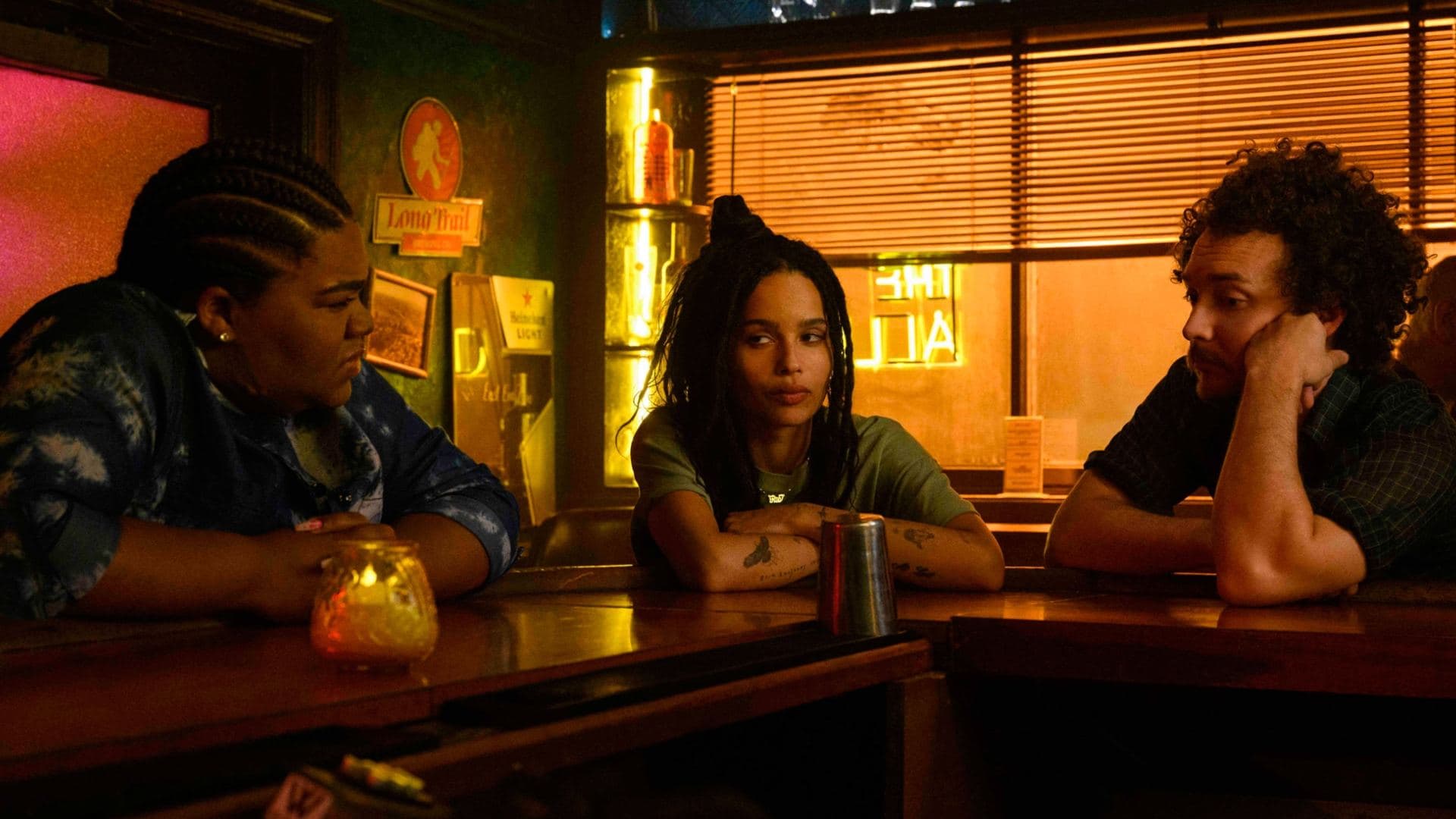
The 47/53 split between domestic ($27.3 million) and international ($19.8 million) was relatively balanced for an American urban-cultural property, helped by Nick Hornby's established overseas readership and the film's use of a London-rooted source novel even after the Chicago relocation. The 2020 Hulu television series adaptation starring Zoë Kravitz reaffirmed the property's catalog value across two decades.
High Fidelity Production History
John Cusack, D.V. DeVincentis, and Steve Pink optioned Nick Hornby's novel in 1998 through their New Crime Productions partnership, with screenwriter Scott Rosenberg joining the writing team to deliver the shooting draft. The trio had previously collaborated on Grosse Pointe Blank (1997), establishing a working relationship that translated directly into the High Fidelity writing-and-producing structure.
Stephen Frears attached as director in early 1999 on the strength of his ability to translate British source material into American settings. The decision to relocate the novel from London to Chicago was driven by Cusack's Chicago roots and Touchstone's desire for a North American urban-cultural anchor for marketing. Hornby endorsed the relocation, telling The Guardian that "the only thing that matters is the character's record collection, and Chicago has just as deep a record-store culture as London."
Principal photography took place from June to September 1999 in Chicago, Illinois, with location work in Wicker Park, Lincoln Park, and various neighborhoods. The Championship Vinyl record store was built as a practical interior on a Chicago stage to allow controlled lighting and camera movement.
Post-production ran through fall 1999 and early 2000 to accommodate the extensive music clearance work. The film premiered on March 28, 2000 ahead of its wide opening on March 31.
Awards and Recognition
John Cusack was nominated for the Golden Globe Award for Best Actor in a Motion Picture - Musical or Comedy at the 2001 ceremony, and the screenplay by D.V. DeVincentis, Steve Pink, John Cusack, and Scott Rosenberg was nominated for the Writers Guild of America Award for Best Adapted Screenplay.
Jack Black's breakout supporting performance as Barry, the Championship Vinyl employee, earned him the MTV Movie Award for Best Comedic Performance and broader industry attention that translated directly into Shallow Hal (2001) and Tenacious D's mainstream commercial breakout. The film itself received no Academy Award or BAFTA nominations.
Critical Reception
High Fidelity received broadly positive reviews. The film holds a 91% approval rating on Rotten Tomatoes based on 162 critic reviews, with a critical consensus that called it "a charming, sharp adaptation of Nick Hornby's novel anchored by one of John Cusack's strongest performances." On Metacritic, the film scored 79 out of 100, indicating generally favorable reviews. Audiences surveyed by CinemaScore gave the film a B, a respectable but not exceptional mark.
Critics broadly praised John Cusack's direct-address narration, Jack Black's breakout supporting performance, and Stephen Frears' confident handling of the source material. The New York Times' A.O. Scott wrote that the film "captures the specific tone of male emotional cluelessness with an honesty rare in studio romantic comedy," while Variety's Todd McCarthy called it "the rare adaptation that improves on its source by relocating it." Roger Ebert gave the film four stars and called Cusack's performance "the best of his career."
The film's critical reputation has continued to grow over the two decades since release, with multiple retrospectives citing it as one of the defining adult romantic comedies of the 2000s and a touchstone for music-saturated character drama. The 2020 Hulu series adaptation generated renewed critical attention for the original film and reaffirmed its place in the late-20th-century music-and-romance canon.
Frequently Asked Questions
How much did it cost to make High Fidelity (2000)?
The reported production budget was $30,000,000. Touchstone Pictures, the Disney-owned adult-focused label, financed and distributed the film, with John Cusack producing through New Crime Productions and Working Title Films providing additional financing.
How much did High Fidelity earn at the box office?
The film grossed $27,287,137 domestically in the United States and approximately $19,800,000 internationally, for a worldwide total of approximately $47,100,000. It opened to $6,533,000 in 1,029 United States theaters on March 31, 2000.
Who directed High Fidelity?
Stephen Frears directed the film, working from a screenplay by D.V. DeVincentis, Steve Pink, John Cusack, and Scott Rosenberg adapted from Nick Hornby's 1995 novel. Frears was attached on the strength of his ability to translate British source material into American settings.
Why is High Fidelity set in Chicago instead of London?
Nick Hornby's original novel is set in North London, but the film relocated the story to Chicago. The decision was driven by John Cusack's Chicago roots and Touchstone's desire for a North American urban-cultural anchor for marketing. Hornby endorsed the relocation, noting that "the only thing that matters is the character's record collection, and Chicago has just as deep a record-store culture as London."
Was High Fidelity a box office success?
High Fidelity was a soft theatrical performer that recovered through home video and television. Against a $30,000,000 production budget and an estimated $20,000,000 to $25,000,000 in marketing spend, the film returned approximately $0.90 in worldwide gross for every $1 invested, breaking even only after home video sales and catalog licensing.
Who stars in High Fidelity?
John Cusack stars as Rob Gordon, with Iben Hjejle as Laura, Jack Black in his breakout screen role as Barry, Todd Louiso as Dick, Catherine Zeta-Jones as Charlie, Lisa Bonet as Marie De Salle, Joan Cusack as Liz, and Tim Robbins as Ian Raymond.
Where was High Fidelity filmed?
Principal photography took place from June to September 1999 in Chicago, Illinois, with location work in Wicker Park, Lincoln Park, and various neighborhoods. The Championship Vinyl record store was built as a practical interior on a Chicago stage to allow controlled lighting and camera movement.
How does High Fidelity compare to similar films?
High Fidelity cost $30M and grossed $47M worldwide. Almost Famous (2000, $60M budget, $47M worldwide) cost twice as much for similar earnings. Good Will Hunting (1997, $10M budget, $226M worldwide) cost a third and earned five times more. Sideways (2004, $16M budget, $110M worldwide) cost roughly half and earned more than double.
Did High Fidelity win any awards?
John Cusack was nominated for the Golden Globe for Best Actor in a Musical or Comedy. The screenplay was nominated for the Writers Guild of America Award for Best Adapted Screenplay. Jack Black won the MTV Movie Award for Best Comedic Performance for his breakout role as Barry. The film received no Academy Award nominations.
What did critics think of High Fidelity?
High Fidelity received broadly positive reviews, holding a 91% approval rating on Rotten Tomatoes based on 162 critic reviews and a 79 out of 100 score on Metacritic. Roger Ebert gave it four stars and called Cusack's performance the best of his career. The New York Times' A.O. Scott praised the film's honest portrayal of male emotional cluelessness.
Filmmakers
High Fidelity

Official Trailer
Build budgets like this one in Saturation
Start from an industry-standard feature film template, import the schedule and rates you already have, and let the cost report keep itself current as you spend. Real-time collaboration, no spreadsheets.