Hannibal Budget
Updated
Synopsis
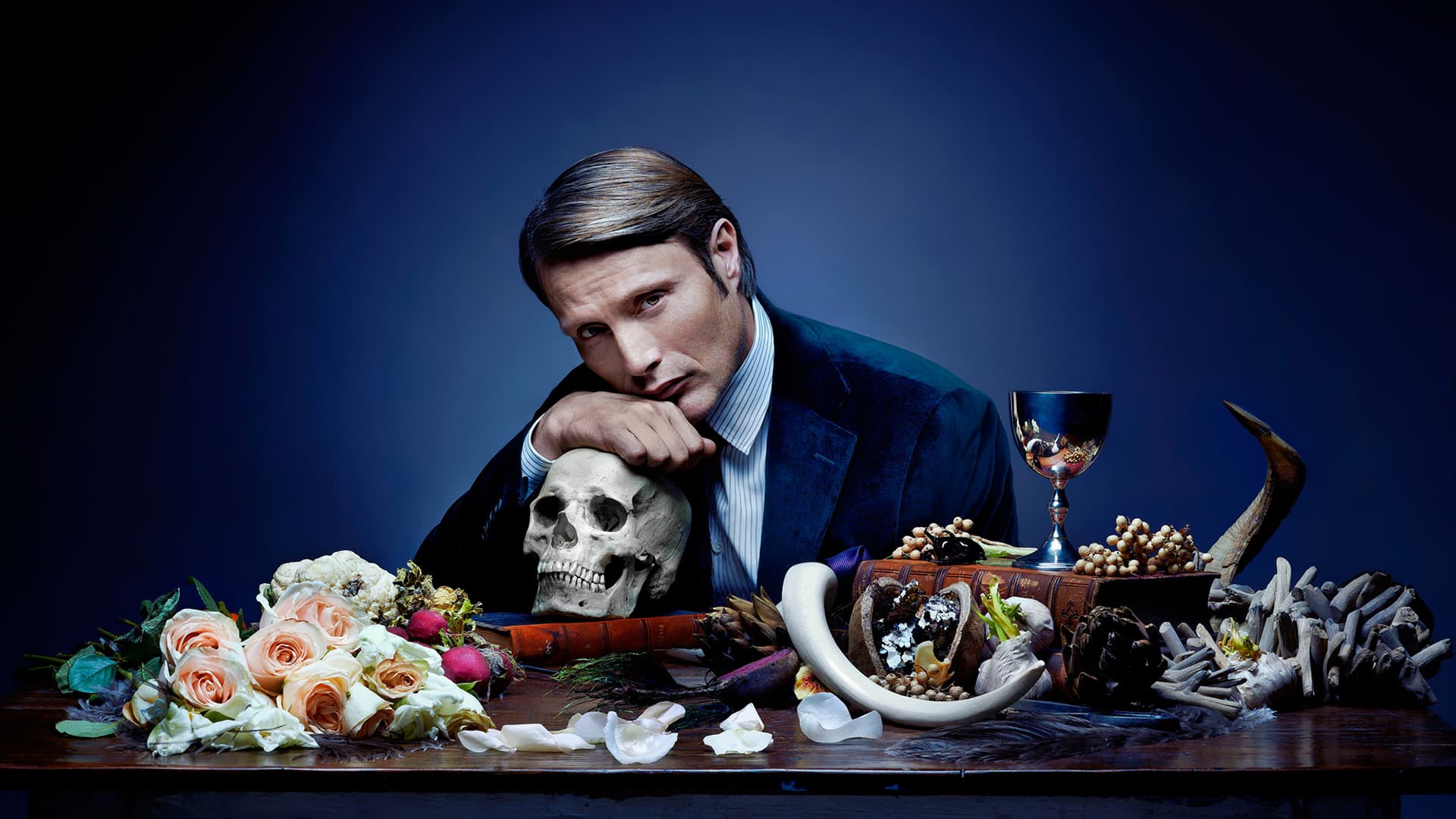
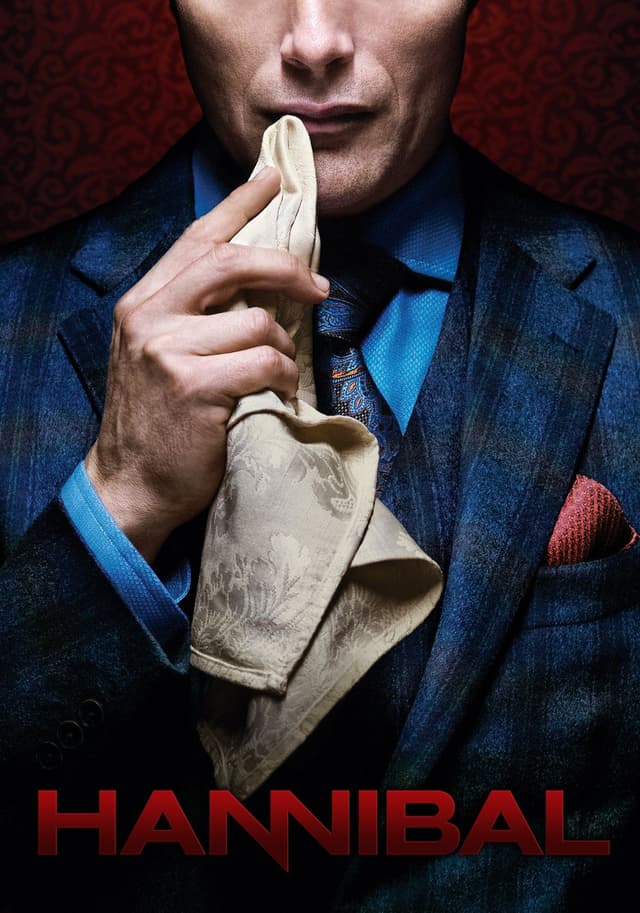
Hannibal (2013) is the NBC television series developed by Bryan Fuller that reimagines the early professional relationship between FBI criminal profiler Will Graham (Hugh Dancy) and psychiatrist Dr. Hannibal Lecter (Mads Mikkelsen), prior to the events of Thomas Harris's Red Dragon novel. Produced by Gaumont International Television and shot in Toronto and Italy, the series ran for three seasons and 39 episodes between April 2013 and August 2015, also starring Laurence Fishburne, Caroline Dhavernas, and Gillian Anderson.
What Is the Budget of Hannibal (2013)?
Hannibal (2013), the NBC television series created by Bryan Fuller and based on the Thomas Harris Red Dragon (1981) source novel, was made on an estimated per-episode budget of approximately $3,500,000 to $4,500,000 across its three-season run from April 2013 to August 2015. Specific NBC budgets were not publicly disclosed, but the series was widely reported as one of the most expensive scripted dramas in the network television tier of its era, with industry trade press placing the total three-season production spend at approximately $130,000,000 to $170,000,000 across 39 broadcast episodes.
Gaumont International Television produced the series for NBC as a fully-financed deficit deal, with Gaumont funding production costs against the network license fee and recouping through international distribution to AXN, Sky Living, and a network of pay-television buyers worldwide. The unusually high per-episode budget reflected the show's feature-film visual ambition under cinematographers James Hawkinson and David Greene, its Toronto-based production base, its A-list lead casting of Mads Mikkelsen and Hugh Dancy, and the heavy practical and digital effects required for the show's signature tableau-style murder sequences.
Key Budget Allocation Categories
Hannibal's estimated $3,500,000 to $4,500,000 per-episode budget broke down across the cost centres typical of a premium network drama, with several show-specific line items reflecting its operatic visual style and elaborate kill-sequence design:
- Above-the-Line Cast: Mads Mikkelsen, an established European film star coming off Casino Royale (2006), A Royal Affair (2012), and The Hunt (2012), commanded a premium against standard NBC drama rates. Hugh Dancy, Laurence Fishburne (returning to network drama after CSI), Caroline Dhavernas, Scott Thompson, Aaron Abrams, and the recurring guest cast of Eddie Izzard, Raul Esparza, Cynthia Nixon, Anna Chlumsky, Gillian Anderson, Michael Pitt, Joe Anderson, and Richard Armitage absorbed the largest single line item.
- Toronto Location Production: Principal photography took place in Toronto,
- Tableau Murder Sequence Design: Hannibal's signature visual element was its elaborate, painterly murder tableau sequences staged across the run. Each tableau required dedicated production-design pre-builds, prosthetics work by special-effects makeup teams including Francois Dagenais, multi-day setup, and substantial on-set lighting and camera work. Production designer Patti Podesta and her team built recurring practical sets including the Lecter dining room, the Lecter therapy office, and the FBI Behavioral Analysis Unit.
- Visual Effects and Color: The show's feature-grade color palette, lensed by James Hawkinson and David Greene, required extensive VFX integration for blood expansion, environmental enhancement, and dream-sequence imagery. Vendor work included Toronto-based VFX houses with episode-specific contributions for the recurring Wendigo creature visualization, sleepwalk and hallucination sequences, and tableau augmentation.
- Score and Music: Composer Brian Reitzell delivered an avant-garde, percussion-driven score using prepared piano, glass armonica, taiko drums, and original sound design that became a defining brand element. The music budget supported original composition, instrumental sourcing, source-music licensing for the recurring opera and classical placements (including Goldberg Variations and pieces by Gluck and Vivaldi), and a Lakeshore Records soundtrack release program across the three seasons.
- Production Design and Costume: Production designer Patti Podesta and costume designer Christopher Hargadon delivered the show's painterly visual identity, with the Lecter wardrobe of bespoke plaid suits and three-piece tweeds, the recurring dining-room set with custom porcelain, glassware, and silver, and dressed practical interiors that pushed art-direction spend well above standard NBC drama tariff.
- Food Styling: Janice Poon, the credited food stylist, designed the show's recurring elaborate dinner sequences with anatomically referenced human-organ-evoking plating that became one of the series's most discussed visual elements. The food-stylist line item was unusually substantial for a network drama and required pre-production research, custom prosthetic-food construction, and on-set continuity work.
How Does Hannibal's Budget Compare to Similar Series?
At an estimated $3,500,000 to $4,500,000 per episode, Hannibal sat at the upper end of NBC scripted drama budgets and was comparable in per-hour spend to premium cable contemporaries. The comparison set below illustrates how its production scale stacked up against peer prestige drama:
- Bates Motel (2013): Estimated per-episode budget approximately $2,500,000 to $3,500,000. A&E's Psycho-prequel drama, contemporaneous with Hannibal, cost noticeably less per hour despite a comparable horror-genre framework and similar premium-cable positioning. Bates Motel ran 50 episodes against Hannibal's 39.
- NBC Hannibal-adjacent Crossbones (2014): Estimated per-episode budget approximately $4,000,000 to $5,000,000. NBC's John Malcovich pirate drama, also from the network's 2013 to 2015 premium-drama push, was canceled after one season and represents the cost ceiling NBC was willing to absorb on auteur-driven genre programming in this window.
- Penny Dreadful (2014): Estimated per-episode budget approximately $4,500,000 to $5,500,000. Showtime's John Logan Victorian horror drama cost roughly twenty percent more per hour than Hannibal and ran 27 episodes across three seasons. The Showtime premium-cable license fee was substantially higher than NBC's, allowing Penny Dreadful to amortize the higher per-hour spend.
- The Following (2013): Estimated per-episode budget approximately $3,000,000 to $4,000,000. Fox's Kevin Williamson Kevin Bacon serial-killer drama, contemporaneous with Hannibal and competing for the same broadcast-network serial-killer audience, cost roughly twenty percent less per hour. The Following ran 45 episodes across three seasons.
- Game of Thrones Season 4 (2014): Estimated per-episode budget approximately $6,000,000. HBO's flagship drama cost roughly fifty percent more per hour than Hannibal and demonstrates the premium-cable scripted tariff to which Hannibal aspired in visual ambition while remaining anchored in the network broadcast tier.
- Red Dragon (2002): Budget $78,000,000 | Worldwide $209,196,298. Brett Ratner's Red Dragon feature adaptation, sourcing the same Thomas Harris novel from which Hannibal's third season was adapted, cost roughly the equivalent of 17 to 22 Hannibal episodes on a single 124-minute movie.
Hannibal Season Performance and Syndication
Hannibal premiered on NBC on April 4, 2013, to modest opening figures and steady but declining audiences across its three-season run. The show was a critical breakout but never converted into a ratings success, ranking below NBC's scripted-drama performance threshold throughout its life. The economic framework across the run breaks down as follows:
- Per-Episode Budget: approximately $3,500,000 to $4,500,000 across the three-season run
- Total Series Investment: approximately $130,000,000 to $170,000,000 across 39 episodes
- Network: NBC in the United States; AXN, Sky Living, and Channel 4 internationally; Gaumont International Television distribution worldwide
- Audience/Ratings: season one averaged approximately 3,000,000 live US viewers; season three settled in the 1,500,000 to 2,000,000 range, well below NBC's network-drama renewal threshold
- International Distribution: Gaumont sold the series to over 60 territories, with strong performance in the UK on Sky Living and across Western Europe; the series outperformed its US ratings internationally on a viewer-per-territory basis
- Library/Syndication Value: NBC and Gaumont have monetized the series through Amazon Prime Video catalog placement, Netflix windowing across multiple territories, and ongoing fan-base-driven streaming demand that has supported continuing renewal speculation through the late 2010s and into the 2020s
Hannibal's commercial logic was Gaumont-typical for a deficit-financed network drama: an NBC license fee that covered a portion of production cost, with international distribution and downstream streaming value compounding the recoupment. The show's cancellation in June 2015 after three seasons was widely reported as a function of underperforming linear ratings rather than international value, with Gaumont and Bryan Fuller publicly seeking a streaming partner for a fourth season for years afterward.
A potential fourth-season revival has been a continuing fan and industry conversation through Amazon Prime Video, Netflix, MGM+, and several other streamers. Mads Mikkelsen, Hugh Dancy, and Bryan Fuller have all publicly stated availability for a return to the property. As of 2026, no formal fourth-season order has been announced, but the property retains catalog value and ongoing renewal speculation that few canceled network dramas of its era have sustained.
Hannibal Production History
Hannibal was developed by Bryan Fuller, the creator of Pushing Daisies (2007) and Hannibal-comparable Wonderfalls (2004), for Gaumont International Television in 2011 and 2012. Gaumont held the television rights to the Thomas Harris Hannibal Lecter character, separately from the De Laurentiis-controlled film rights that produced Manhunter (1986), The Silence of the Lambs (1991), Hannibal (2001), Red Dragon (2002), and Hannibal Rising (2007). Fuller pitched the property as a prequel to Red Dragon, focusing on the early professional relationship between Will Graham and Hannibal Lecter prior to Lecter's exposure as the Chesapeake Ripper.
NBC, then in the middle of a creative reset under entertainment chairman Robert Greenblatt and entertainment president Jennifer Salke, picked up the series in 2012 with a direct-to-series 13-episode order. Casting Mads Mikkelsen as Lecter in early 2012 brought an established European film star into the central role, with Mikkelsen's Casino Royale (2006), Valhalla Rising (2009), and A Royal Affair (2012) credits providing the property with cinematic credibility. Hugh Dancy, an established British film and theater actor, was cast as Will Graham, with Laurence Fishburne returning to network television as FBI agent Jack Crawford after CSI: Crime Scene Investigation.
Principal photography for all three seasons took place in Toronto. Bryan Fuller wrote or co-wrote most of the season-arc episodes, with episode credits also going to Jesse Alexander, Steve Lightfoot, Don Mancini, Nick Antosca, Jeff Vlaming, and Helen Shang across the run. David Slade, James Foley, and Vincenzo Natali directed multiple episodes each, with Slade's pilot and early-season directorial work establishing the visual template that James Hawkinson and David Greene's cinematography sustained.
Season three (2015) divided the run between a European-set first arc adapting the Hannibal (1999) novel material, with location work in Florence, Italy, and a return to North America for the back half of the season adapting the Red Dragon (1981) material with Richard Armitage as Francis Dolarhyde. The Italian shoot pushed the season-three budget meaningfully above the season-one baseline. NBC announced cancellation in June 2015 between the broadcast of the season-three Italy arc and the Red Dragon arc, with Gaumont and Fuller continuing to develop the property for a potential streaming-era revival.
The unusually elaborate practical and digital work on Hannibal's murder tableau sequences became one of the defining production stories of mid-2010s scripted television. The show's production design under Patti Podesta, food styling under Janice Poon, costume design under Christopher Hargadon, and score by Brian Reitzell received industry recognition across the run and have continued to be referenced in subsequent prestige-drama production conversations.
Awards and Recognition
Hannibal received a steady stream of craft-category nominations across its three-season run and won several awards, with particular recognition for production design, costume design, makeup, and music. The Television Critics Association nominated the series for Outstanding Achievement in Drama and Outstanding New Program in 2013 and continued recognition across subsequent seasons. Mads Mikkelsen was nominated for the Saturn Award for Best Actor on Television in 2013, 2014, and 2015, winning in 2015 for his season-three performance.
The Costume Designers Guild Awards recognized Christopher Hargadon's costume work across the run, with multiple nominations and a 2014 win for Excellence in Contemporary Television. Brian Reitzell's score received steady recognition from the BMI Film, TV & Visual Media Awards. The Visual Effects Society Awards recognized the show's VFX work in supporting categories across the run. The Hollywood Makeup Artist and Hair Stylist Guild Awards nominated the show's prosthetics and makeup teams for multiple craft categories.
The series did not win major Primetime Emmy or Golden Globe awards, with the Emmy nominations confined largely to craft categories such as Outstanding Sound Editing. Industry observers attributed the limited top-line Emmy recognition to the show's network-broadcast positioning and the contemporaneous prestige-cable competition from Game of Thrones, Breaking Bad, True Detective, and Mad Men that absorbed the lead-actor and series recognition during the same window. Retrospective critical reappraisal has been highly favorable, with multiple "best of the decade" lists from The Atlantic, The Guardian, and The New York Times placing Hannibal in the top tier of 2010s scripted drama.
Critical Reception
Hannibal was widely praised on its 2013 NBC launch and retained a strong critical reputation through its three-season run. The show holds a 92% approval rating on Rotten Tomatoes for season one, a 100% rating for season two, and a 95% rating for season three, with critics consistently identifying the series as one of the most visually ambitious and stylistically distinctive dramas in network television history. The New York Times's Mike Hale called the show "a feverishly stylized horror fantasia that finds room for genuine character work within its operatic mise-en-scene."
The Atlantic's Sophie Gilbert wrote in 2014 that Hannibal "operates with the visual confidence of European art cinema while playing the long-form serial drama format with the patience of a chamber novel," and Vulture's Matt Zoller Seitz placed the series among "the most aesthetically uncompromised network dramas of the post-Lost television landscape." Variety's Brian Lowry was a comparative outlier, writing that the show's "artful gore" sometimes overwhelmed its narrative engine, but the broader critical consensus was strongly positive throughout the run.
Retrospective reappraisal has been overwhelmingly positive. The series has been cited in multiple decade-end "best of the 2010s" lists from The Guardian, The Atlantic, The A.V. Club, and Vulture as one of the defining scripted dramas of its era. The continuing fan-driven revival campaign through social media has sustained the property's cultural footprint years past its 2015 cancellation. Mads Mikkelsen's portrayal of Lecter is now widely cited alongside Anthony Hopkins's Oscar-winning interpretation in The Silence of the Lambs as one of the two definitive performances of the character.
Frequently Asked Questions
How much did each episode of Hannibal (2013) cost to produce?
Estimated per-episode budgets ranged from approximately $3,500,000 to $4,500,000 across the three-season run from April 2013 to August 2015. Specific NBC budgets were not publicly disclosed, but industry trade press placed the show among the most expensive scripted dramas in the network television tier of its era. Gaumont International Television produced the series as a fully-financed deficit deal, with NBC paying a portion of production cost through its license fee and Gaumont recouping through international distribution.
How many seasons and episodes of Hannibal were made?
Hannibal ran for three seasons and 39 episodes on NBC between April 4, 2013 and August 29, 2015. Season one and season two were 13 episodes each, and season three was 13 episodes, with the run divided between a European-set first arc adapting the Hannibal (1999) novel material and a North America-set back half adapting the Red Dragon (1981) novel material.
Who created Hannibal (2013)?
Bryan Fuller, creator of Pushing Daisies (2007) and Wonderfalls (2004), developed Hannibal for Gaumont International Television. Fuller pitched the property as a prequel to Thomas Harris's Red Dragon (1981), focusing on the early professional relationship between Will Graham and Hannibal Lecter prior to Lecter's exposure as the Chesapeake Ripper. Gaumont held the television rights to the Lecter character, separately from the De Laurentiis-controlled film rights.
Where was Hannibal filmed?
Principal photography for all three seasons took place in Toronto, Canada, with extensive use of practical-stage production at Showline Limelight Studios and various Toronto location work standing in for Baltimore and Washington, DC settings. Season three included a multi-week location shoot in Florence, Italy for the European-set first arc adapting the Hannibal (1999) novel material.
Why was Hannibal canceled after three seasons?
NBC canceled Hannibal in June 2015 between the broadcast of the season-three Italy arc and the Red Dragon arc, citing underperforming linear ratings. Season one had averaged approximately 3,000,000 US viewers, and season three settled in the 1,500,000 to 2,000,000 range, well below NBC's network-drama renewal threshold. Gaumont International Television and Bryan Fuller publicly sought a streaming partner for a fourth season for years afterward.
Will there be a Hannibal Season 4?
No fourth season has been formally ordered as of 2026. Bryan Fuller, Mads Mikkelsen, and Hugh Dancy have all publicly stated availability for a return to the property, and a continuing fan-driven revival campaign has sustained the conversation through social media. Amazon Prime Video, Netflix, MGM+, and several other streamers have been associated with renewal speculation across the late 2010s and into the 2020s without a formal order being placed.
Who plays Hannibal Lecter in the NBC series?
Mads Mikkelsen plays Dr. Hannibal Lecter across all three seasons. Mikkelsen, an established Danish film star, came to the project after Casino Royale (2006), Valhalla Rising (2009), and A Royal Affair (2012). His portrayal is now widely cited alongside Anthony Hopkins's Oscar-winning interpretation in The Silence of the Lambs (1991) as one of the two definitive performances of the character.
How does Hannibal compare to other prestige dramas?
At an estimated $3,500,000 to $4,500,000 per episode, Hannibal sat at the upper end of NBC scripted drama budgets and was comparable in per-hour spend to premium cable contemporaries. Penny Dreadful (2014) cost approximately $4,500,000 to $5,500,000 per episode. Bates Motel (2013) cost approximately $2,500,000 to $3,500,000 per episode. Game of Thrones season four (2014) cost approximately $6,000,000 per episode.
What is the relationship between Hannibal (2013) and the films?
Gaumont International Television held the television rights to the Thomas Harris Hannibal Lecter character, separately from the Dino De Laurentiis Company film rights that produced Manhunter (1986), The Silence of the Lambs (1991), Hannibal (2001), Red Dragon (2002), and Hannibal Rising (2007). The NBC series shares characters and source-novel material with the films but operates within an independent continuity. Season three's back half adapts the Red Dragon (1981) novel previously filmed as Manhunter (1986) and Red Dragon (2002).
What did critics think of Hannibal (2013)?
Hannibal was widely praised throughout its run, holding a 92% approval rating on Rotten Tomatoes for season one, 100% for season two, and 95% for season three. Critics consistently identified the series as one of the most visually ambitious and stylistically distinctive dramas in network television history. The Atlantic's Sophie Gilbert and The New York Times's Mike Hale praised the show's feature-grade cinematography, production design, and Mads Mikkelsen's lead performance. Retrospective decade-end "best of the 2010s" lists from The Guardian, The Atlantic, The A.V. Club, and Vulture have placed Hannibal in the top tier of 2010s scripted drama.
Filmmakers
Hannibal

Official Trailer
Build budgets like this one in Saturation
Start from an industry-standard feature film template, import the schedule and rates you already have, and let the cost report keep itself current as you spend. Real-time collaboration, no spreadsheets.