Green Book Budget
 DramaComedyHistory2h 10m
Updated
Synopsis
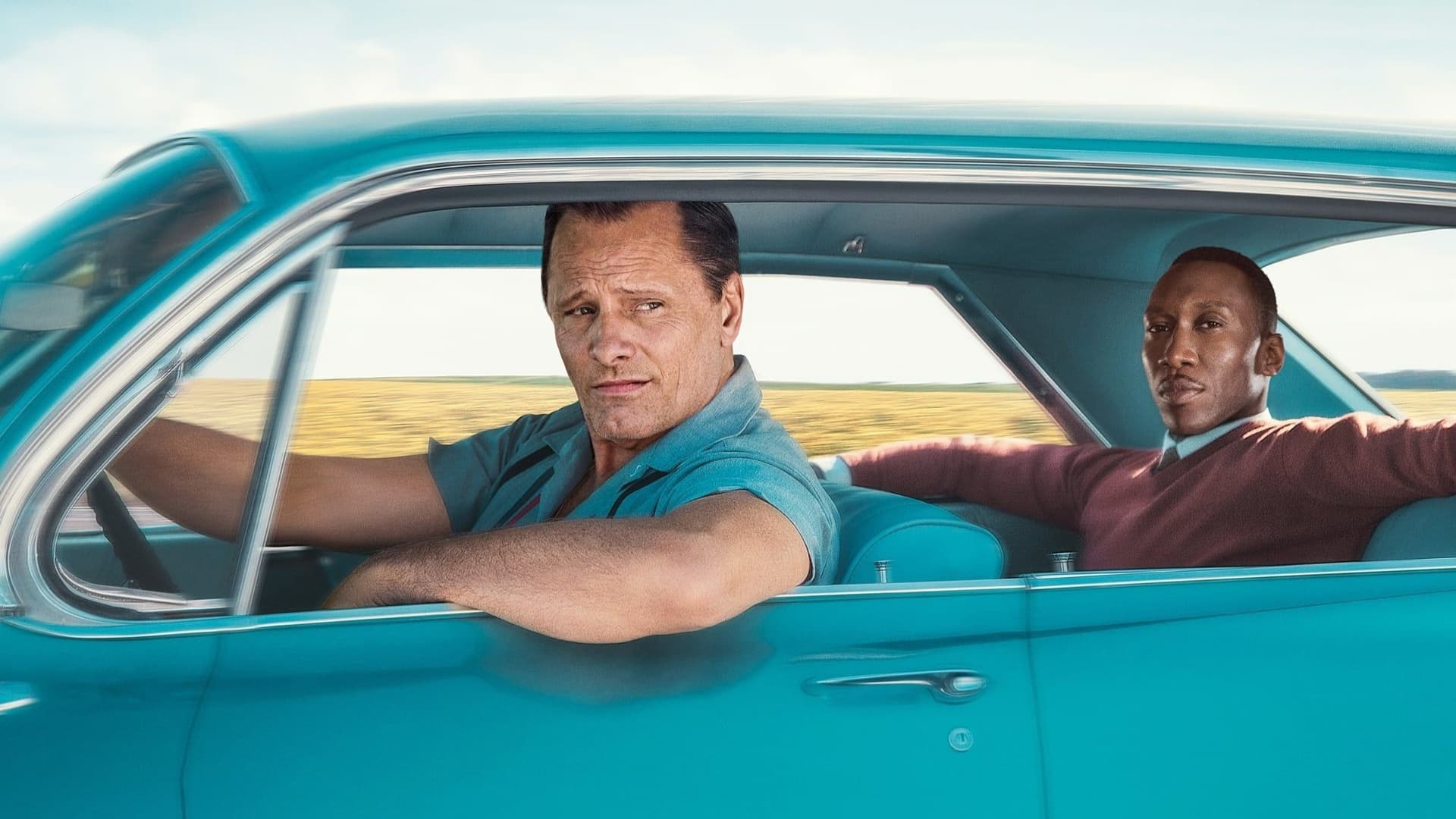
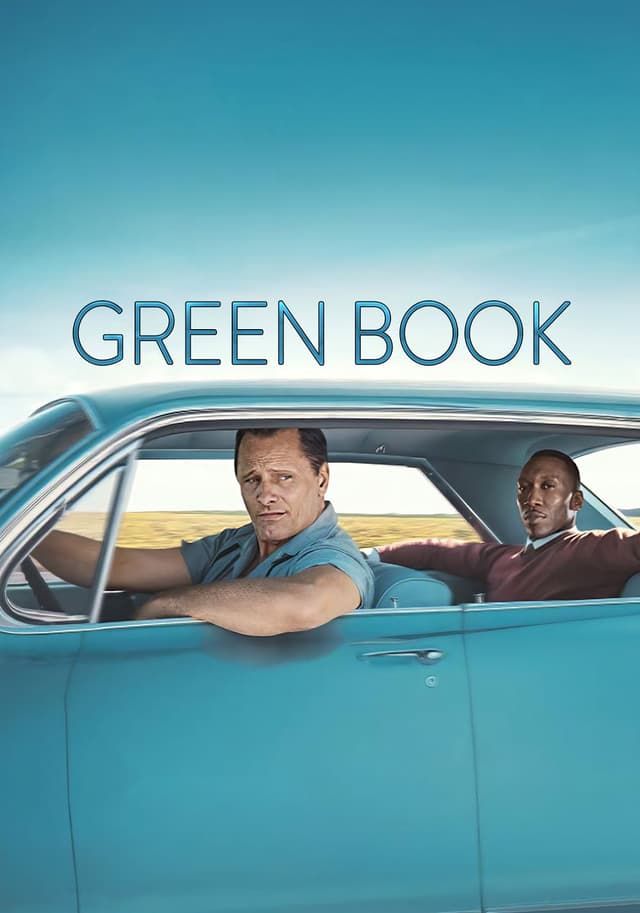
When Tony Lip, an Italian-American bouncer with a seventh-grade education, is hired to drive Dr. Don Shirley, a world-class African-American pianist on a concert tour from Manhattan to the Deep South, they must rely on the “Negro Motorist Green Book” to guide them to the few establishments that were then safe for Blacks. Confronted with racism, danger—as well as unexpected humanity and humor—they are forced to set aside differences to survive and thrive on the journey of a lifetime.
What Is the Budget of Green Book (2018)?
Green Book (2018) was produced on a budget of $23 million, financed primarily by Participant Media with additional support from DreamWorks Pictures, Innisfree Pictures, and Cinetic Media. The relatively modest production cost reflected a character-driven drama with no visual effects, no action sequences, and a deliberate focus on two performances and a road trip narrative set in the American South of 1962. Universal Pictures handled worldwide distribution.
The film's financial journey to the screen was anything but smooth. Originally developed at Focus Features, Green Book was ultimately rejected before Participant Media stepped in to finance it. Director Peter Farrelly, best known for the Farrelly Brothers comedies including There's Something About Mary (1998) and Dumb and Dumber (1994), was seen as a counterintuitive choice for a prestige drama. The script, written by Nick Vallelonga (the son of real-life subject Tony Lip), Brian Hayes Currie, and Farrelly himself, had been gestating for years before finding a production home.
From its $23 million base, Green Book generated $85.1 million domestically and $236.7 million internationally, for a worldwide total of $321.8 million. The film then won Best Picture at the 91st Academy Awards, which sent it back into theaters and drove additional streaming revenue, turning it into one of the most profitable prestige dramas of the decade.
Key Budget Allocation Categories
- Above-the-Line Talent: Viggo Mortensen and Mahershala Ali were the two principal stars, both established Academy Award-caliber performers. Mortensen, fresh from his Captain Fantastic (2016) nomination, gained 40 to 50 pounds for the role of Tony Lip and negotiated from a position of relative leverage. Ali came in as a recent Best Supporting Actor winner for Moonlight (2016), adding prestige credibility that helped attract distribution. Their combined fees, along with director Farrelly's deal, likely consumed $7 to $9 million of the $23 million budget.
- New Orleans Production: Principal photography commenced in New Orleans the week of November 30, 2017, with the city serving as the production base for the Deep South sequences. Louisiana's robust film tax credit program, which offers up to 25% of qualified in-state production expenditures, made New Orleans an economically attractive stand-in for the film's 1962 Southern settings. The state incentive likely reduced the effective location cost by $1.5 to $2 million compared to filming in the actual locations across Virginia, North Carolina, and Alabama.
- Period Production Design: Recreating the American South of 1962 required period-accurate automobiles, costumes, signage, and venue dressing across a range of locations including concert halls, hotels, roadside diners, and private residences. Production designer Tim Galvin sourced period vehicles, including the olive-green Cadillac DeVille that Tony Lip drives throughout the film, and coordinated with costume designer Betsy Heimann on the sartorial contrast between Tony's working-class Italian-American wardrobe and Don Shirley's impeccably tailored performance attire.
- Music and Performance Sequences: Composer Kris Bowers wrote the original score, blending jazz, classical, and soul influences to reflect Don Shirley's musical world. Mahershala Ali, who does not play piano, worked extensively with Bowers in pre-production to learn hand positions and the physical vocabulary of a concert pianist. Bowers then served as Ali's hand double during close-up piano performance shots. The music production, including original compositions, rights clearances for period recordings, and Ali's piano training, was a notable line item within the overall budget.
- Marketing and Awards Campaign: Participant Media allocated approximately $37.5 million for prints, advertising, and the awards campaign, a figure that exceeded the production budget itself. The Toronto People's Choice Award win in September 2018 became the centerpiece of the marketing strategy, and the studio pushed aggressively through the awards season, including a notable endorsement from Steven Spielberg, who reportedly watched the film five times and compared it to Butch Cassidy and the Sundance Kid.
How Does Green Book's Budget Compare to Similar Films?
Green Book occupies the prestige mid-budget tier where character-driven dramas achieve Best Picture contention without the franchise infrastructure of tentpole films. Its $23 million production cost positions it alongside other recent Best Picture winners that succeeded on small-scale storytelling and exceptional performances.
- Moonlight (2016): Budget $1.5M | Worldwide $65.3M: The film that gave Mahershala Ali his first Oscar win was made for a fraction of Green Book's cost. Moonlight's success on a micro-budget demonstrated that prestige drama audiences do not require production scale, but Green Book's broader commercial ambitions, including a wide theatrical release and a mainstream buddy-movie structure, justified a larger investment.
- The Shape of Water (2017): Budget $19.5M | Worldwide $195.2M: Guillermo del Toro's fantasy romance won Best Picture the year before Green Book on a comparable budget. Both films show that the Academy's Best Picture preferences in this era ran toward unconventional genre hybrids rather than traditional prestige epics, and that $20 to $25 million was sufficient to compete at the highest level if the filmmaking was distinctive.
- Ford v Ferrari (2019): Budget $97.6M | Worldwide $225.5M: Released the following year, this period drama about racing required nearly five times Green Book's budget due to its car-centric action sequences and period vehicles. Ford v Ferrari won Best Film Editing and Best Sound Editing but not Best Picture, illustrating how Green Book's lean production investment was actually an advantage in the storytelling context it chose.
- Driving Miss Daisy (1989): Budget $7.5M | Worldwide $145.8M: The obvious thematic predecessor, also a road-trip character study between a Black professional and a white companion, was made for $7.5 million nearly three decades earlier. Green Book spent three times as much but earned more than twice as much worldwide, reflecting both inflation and a more aggressive international distribution strategy.
Green Book Box Office Performance
Green Book opened in limited release on November 16, 2018, in 20 cities, earning $320,429 in its opening weekend, a soft start for a film being positioned as an awards contender. Universal expanded the release nationally on November 21, 2018, and the film built steadily through December and January as awards nominations accumulated. The domestic run closed at $85.1 million, a strong result for a drama without franchise elements or action spectacle.
International markets contributed $236.7 million to the worldwide total of $321.8 million, with Italy and Germany among the strongest overseas territories, likely reflecting the Italian-American dimension of Tony Lip's character and the European appetite for American civil rights narratives. The Academy Award Best Picture win in February 2019 triggered a theatrical re-release and drove the film back into the charts for additional weeks, while also accelerating its home video and streaming performance.
Universal Pictures and Participant Media spent an estimated $37.5 million on marketing and prints, bringing total investment to approximately $60.5 million. With theaters retaining approximately 50% of the worldwide gross, the studio's share of box office revenue was approximately $160.9 million against a $60.5 million investment, yielding a net theatrical return of roughly $100 million before home video and streaming rights sales, which were substantial given the Best Picture win.
Box Office Breakdown
Green Book

On its $23 million production budget, Green Book earned roughly $14 for every $1 invested in production costs. The higher marketing investment compared to production cost reflects the awards-season strategy that Participant Media pursued aggressively from the Toronto premiere through the Academy ceremony. The theatrical return alone recouped the total investment more than 2.5 times over, and streaming licensing deals post-Best Picture win provided significant additional revenue.
Green Book Production History
Green Book originated from Nick Vallelonga, the son of Tony Vallelonga, the Italian-American bouncer and driver who accompanied jazz pianist Don Shirley on his 1962 concert tour through the American South. Vallelonga had been developing the project for years, drawing on his father's personal recollections and on conversations he had with Don Shirley before Shirley's death in 2013. Shirley had reportedly given his blessing for the project, a claim that Shirley's family later disputed publicly. The screenplay, co-written with Brian Hayes Currie and director Peter Farrelly, used the Green Book of the title, the actual travel guide published for Black motorists navigating the segregated South, as both a narrative device and a historical anchor.
The project was initially set up at Focus Features before being passed over and subsequently acquired by Participant Media, the socially conscious production company founded by Jeff Skoll. Farrelly, whose directorial history was exclusively in broad comedy (There's Something About Mary, Me, Myself and Irene, The Three Stooges), attached himself to the material as a departure from his established brand. Viggo Mortensen, known for his physical transformations across roles including Aragorn in The Lord of the Rings trilogy and Nikolai in Eastern Promises, began negotiations in May 2017 and committed to gaining 40 to 50 pounds over months of deliberate eating to approximate Tony Lip's physical presence.
Principal photography commenced in New Orleans during the week of November 30, 2017. The production used Louisiana as its primary base, with the state's film tax incentive program reducing costs while providing locations that could double for Alabama, Georgia, and the Carolinas of 1962. Sebastian Maniscalco joined the cast in January 2018, and composer Kris Bowers began working with Mahershala Ali in intensive pre-production piano sessions that continued through production. Bowers served as Ali's hand double for close-ups during the Don Shirley Trio performance sequences.
The film premiered at the Toronto International Film Festival on September 11, 2018, winning the People's Choice Award, a historically reliable predictor of Best Picture success. Steven Spielberg watched the film five times and publicly endorsed it, comparing it to Butch Cassidy and the Sundance Kid as his favorite buddy film. Spielberg's support helped Participant Media secure the DreamWorks Pictures distribution arrangement with Universal. Green Book won Best Picture at the 91st Academy Awards on February 24, 2019, the fifth film in Academy history to win Best Picture without a Best Director nomination.
Awards and Recognition
Green Book won three Academy Awards at the 91st ceremony on February 24, 2019: Best Picture, Best Original Screenplay (Nick Vallelonga, Brian Hayes Currie, Peter Farrelly), and Best Supporting Actor (Mahershala Ali, for his portrayal of Don Shirley). The Best Picture win was notable as only the fifth time in Academy history that a film won the top prize without also winning or being nominated for Best Director. Peter Farrelly was not nominated in the directing category, making the win a validation of the film's writing and performances over its directorial craft.
Mahershala Ali's Supporting Actor win made him the first Black actor to win two Academy Awards in the acting categories. His first Oscar had come for Moonlight (2016), and his double win across consecutive years demonstrated a range from the quiet, tragic masculinity of Chiron's mentor in Moonlight to the formal, isolated dignity of Don Shirley. The win was also notable for highlighting the complexity of the real Don Shirley, a classical pianist who had studied at the Leningrad Conservatory and held multiple doctorates.
Beyond the Academy, Green Book won the Golden Globe Award for Best Motion Picture in the Musical or Comedy category, the National Board of Review award for Best Film of 2018, and the Toronto International Film Festival People's Choice Award. The film earned 58 wins and 172 nominations across the awards season. Critics who objected to the film's framing of its civil rights story through Tony Lip's perspective mounted a significant cultural conversation, but audience response remained enthusiastically positive throughout, reflected in the film's rare A+ CinemaScore.
Critical Reception
Green Book received generally favorable reviews on release, holding a 77% approval rating on Rotten Tomatoes from 362 professional reviews, with a weighted average of 7.2 out of 10. Metacritic recorded a score of 69 out of 100 based on 52 critics, indicating "generally favorable reviews." The CinemaScore of A+, awarded by opening-night audience surveys, reflects the unusually strong emotional response the film generated among general audiences throughout its run.
Critical praise centered on the two lead performances. Viggo Mortensen's physical transformation and comic timing as Tony Lip earned consistent acclaim, with reviewers noting his ability to make a character who begins as a blunt instrument of casual racism sympathetic without excusing his behavior. Mahershala Ali's portrayal of Don Shirley as a man of immense formal dignity navigating an America that rejected him simultaneously for his race and his refinement was widely described as the film's emotional core. Richard Brody of The New Yorker praised Ali's "subtle, multidimensional performance" while finding the film's broader framing politically comforting in ways that minimized its subject's actual historical complexity.
The most persistent critical objection to Green Book was the "white savior" framing, in which Tony Lip's perspective drives the story and his growth becomes the emotional engine of a film ostensibly about Don Shirley's experience of racial injustice in 1962 America. Don Shirley's surviving family members publicly disputed several elements of the screenplay and objected to the portrayal of Shirley's relationship with his family. These objections intensified after the Best Picture win. Director Farrelly and producer Vallelonga maintained that the film was based on documented conversations and Tony Lip's firsthand accounts, and that the story was always intended as a friendship narrative seen from both men's points of view. The critical debate reflects a genuine tension in the film's ambition: to use the conventions of a crowd-pleasing buddy road trip to approach the specific, painful history of American racial segregation.
Frequently Asked Questions
How much did it cost to make Green Book (2018)?
The production budget was $23,000,000, covering principal photography, cast and crew salaries, locations, sets, post-production, and music. Marketing and distribution (P&A) costs are estimated at an additional $11,500,000 - $18,400,000, bringing the total studio investment to approximately $34,500,000 - $41,400,000.
How much did Green Book (2018) earn at the box office?
Green Book grossed $85,080,171 domestic, $236,672,485 international, totaling $321,752,656 worldwide.
Was Green Book (2018) profitable?
Yes. Against a production budget of $23,000,000 and estimated total costs of ~$57,500,000, the film earned $321,752,656 theatrically - a 1299% ROI on production costs alone.
What were the biggest costs in producing Green Book?
The primary cost drivers were above-the-line talent (Viggo Mortensen, Mahershala Ali, Linda Cardellini); talent compensation, authentic period production design, and meticulous post-production.
How does Green Book's budget compare to similar drama films?
At $23,000,000, Green Book is classified as a low-budget production. The median budget for wide-release drama films in the 2010s ranges from $30 - 80M for mid-budget to $150M+ for tentpoles. Comparable budgets: The Secret World of Arrietty (2010, $23,000,000); Bad Santa (2003, $23,000,000); Chasing Liberty (2004, $23,000,000).
Did Green Book (2018) go over budget?
There are no widely reported accounts of significant budget overruns for this production. However, studios rarely disclose precise budget overrun figures publicly. The reported production budget reflects the final estimated cost.
What was the return on investment (ROI) for Green Book?
The theatrical ROI was 1298.9%, calculated as ($321,752,656 − $23,000,000) ÷ $23,000,000 × 100. This measures gross revenue against production budget only - it does not account for P&A or exhibitor shares.
What awards did Green Book (2018) win?
Won 3 Oscars. 58 wins & 124 nominations total.
Who directed Green Book and who were the key crew members?
Directed by Peter Farrelly, written by Nick Vallelonga, Brian Hayes Currie, Peter Farrelly, shot by Sean Porter, with music by Kris Bowers, edited by Patrick J. Don Vito.
Where was Green Book filmed?
Green Book was filmed in United States of America.
Filmmakers
Green Book

Official Trailer
Build budgets like this one in Saturation
Start from an industry-standard feature film template, import the schedule and rates you already have, and let the cost report keep itself current as you spend. Real-time collaboration, no spreadsheets.