Goon Budget
 ComedyDrama1h 32m
Updated
Synopsis
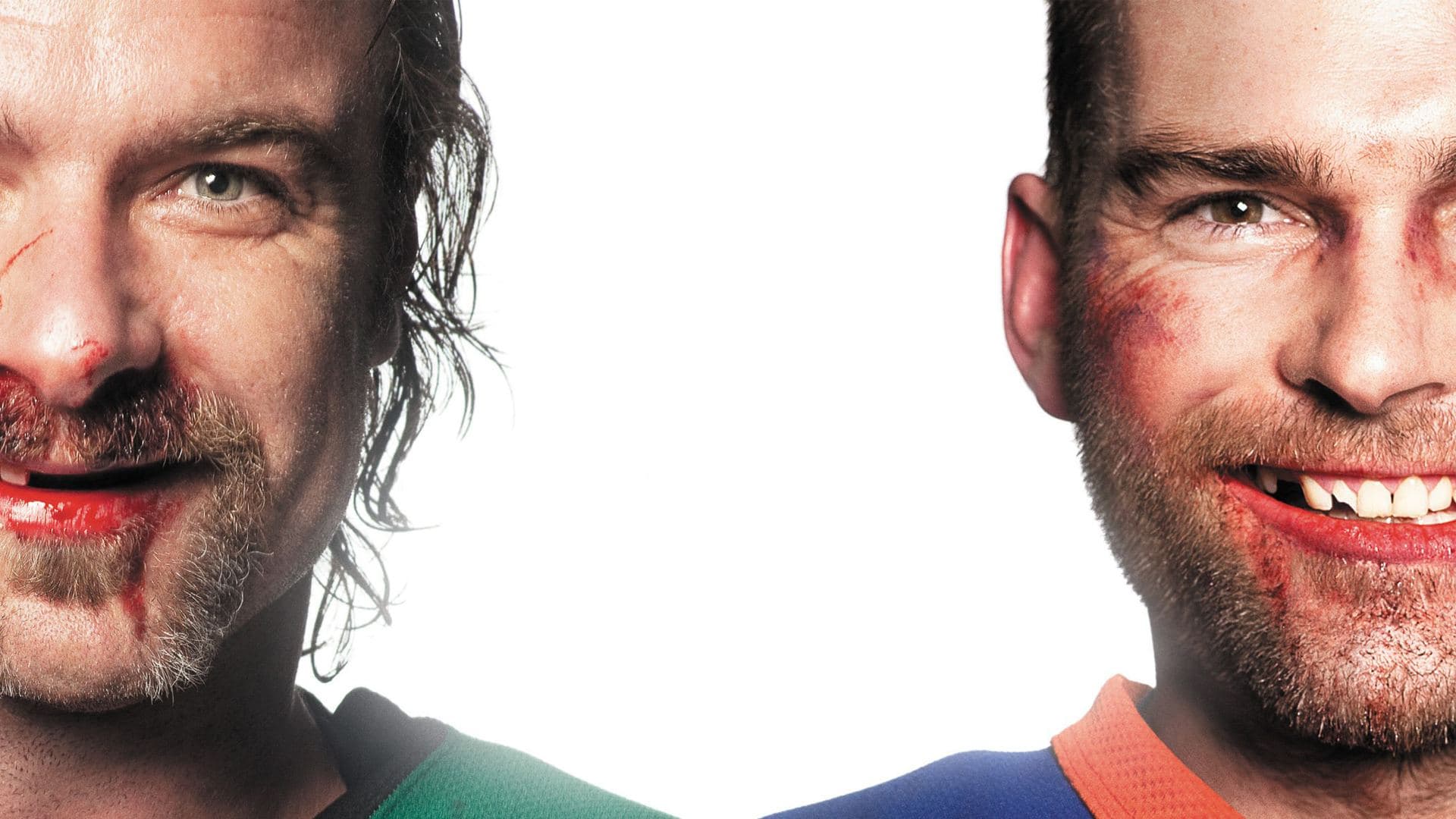
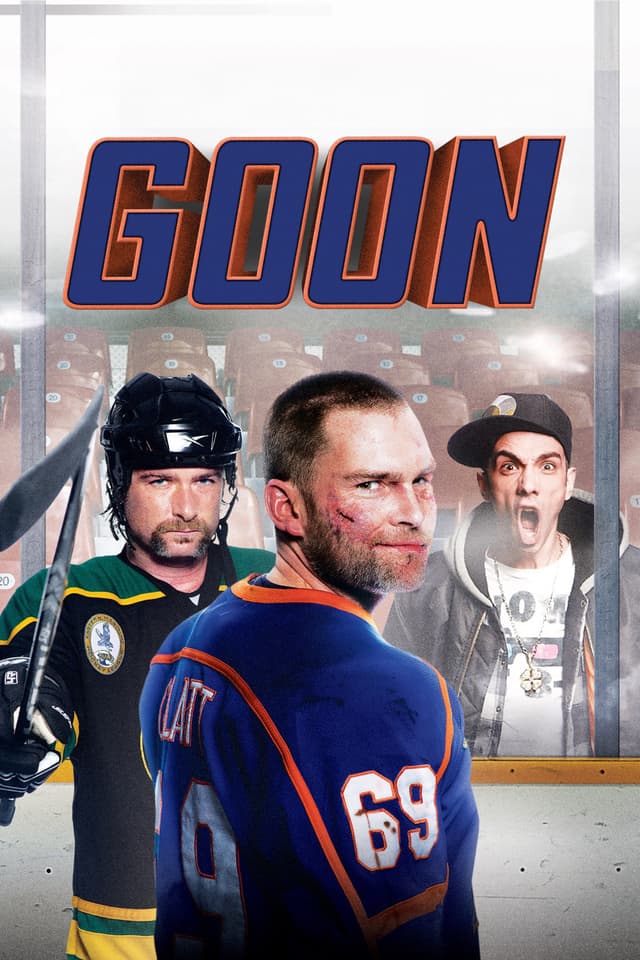
Doug Glatt, a sweet-natured but dim-witted Massachusetts bouncer with a gift for fighting, is recruited as the on-ice enforcer for a struggling Canadian minor-league hockey team, the Halifax Highlanders, where his job is to protect a talented but skittish star player and bring fans back into the seats. As Doug racks up wins through bone-shattering brawls, an inevitable showdown looms with Ross "The Boss" Rhea, the aging legend whose enforcer reign Doug is poised to inherit.
What Is the Budget of Goon (2011)?
Goon (2011), directed by Michael Dowse from a screenplay by Jay Baruchel and Evan Goldberg, was produced on a reported budget of approximately $12,000,000. The Canadian indie hockey comedy was financed by Alliance Films, No Trace Camping, and Caramel Film, with additional support from Telefilm Canada, the Canadian Film or Video Production Tax Credit, and Manitoba's provincial film incentives. That spend placed the project firmly in the mid-budget Canadian feature tier, large enough to support a recognizable American lead in Seann William Scott and a multi-city Manitoba shoot, but well below the cost of comparable American studio sports comedies.
The budget had to fund a fully practical hockey-rink production, with elaborately staged fight sequences requiring stunt coordination, fight choreography, and on-ice camera rigs. Producers Jesse Shapira, David Gross, and Don Carmody concentrated the spend on production design recreating the dingy minor-league world of the fictional Halifax Highlanders, on the prosthetics and stunt work that drive the film's bloody on-ice combat, and on a strong supporting ensemble that includes Liev Schreiber, Alison Pill, Marc-André Grondin, Eugene Levy, and Kim Coates.
Key Budget Allocation Categories
The $12 million budget broke down across the categories typical of a mid-budget Canadian sports comedy with significant practical action content:
- Above-the-Line Talent: Seann William Scott in the lead role of Doug Glatt, alongside Liev Schreiber as rival enforcer Ross Rhea, anchored the cast and represented the largest single line item. Director Michael Dowse, co-writers Jay Baruchel and Evan Goldberg, and the broader ensemble including Alison Pill, Eugene Levy, and Kim Coates rounded out the talent spend.
- Manitoba Production and Location Filming: Principal photography was carried out across Manitoba, primarily in Winnipeg, Portage la Prairie, and Brandon, with the production leveraging the province's film tax credit and crew base. Renting arenas, dressing them as multiple fictional minor-league venues, and coordinating winter exteriors accounted for a substantial portion of the below-the-line budget.
- Hockey Action and Stunt Work: The film's identity rests on its on-ice fight sequences, which required a dedicated fight choreographer, stunt skaters, professional hockey players cast as on-screen athletes, and protective rigging for the principal cast. Practical bloodwork, tooth prosthetics, and broken-bone gags drove a meaningful prosthetics and special-effects line.
- Production Design and Wardrobe: Production designer Patrick Banister built out the Halifax Highlanders dressing rooms, motels, dive bars, and bus interiors that define the minor-league texture of the film. Custom jerseys and authentic-feeling sponsor signage for fictional teams across the league required design, fabrication, and clearance.
- Cinematography and Camera Package: Cinematographer Bobby Shore captured the on-ice action with a mix of handheld coverage, on-skate operators, and rigged goal-mounted cameras. The specialty camera package, including high-speed coverage of the more violent moments, was a recurring cost across every game-day shoot.
- Music and Soundtrack Licensing: Composer Ramachandra Borcar delivered the original score, but the film also leans heavily on Canadian punk and rock needle drops to score its montage sequences, with festival-circuit-band licensing fees forming a discrete music budget alongside the original-score commission.
- Post-Production and Festival Delivery: Editing, color, sound design, and the festival-ready DCP delivery for the Toronto International Film Festival premiere required a complete post pipeline. Visual effects were minimal, used mostly for blood enhancement and minor environmental cleanup rather than spectacle.
- Marketing and Festival Launch: While Alliance Films and Magnet Releasing carried the bulk of P&A separately from the production budget, festival submission costs, premiere events at TIFF, and press support for the Canadian theatrical release sat within the producers' top-sheet planning.
How Does Goon's Budget Compare to Similar Films?
Placing Goon alongside other hockey films and adjacent sports comedies puts its scale into context:
- Slap Shot (1977): Budget $6,000,000 | Worldwide $28,000,000. George Roy Hill's Paul Newman vehicle is the foundational minor-league hockey comedy and the unmistakable spiritual ancestor of Goon, even if Goon's violence-first sensibility pushes further than the Hanson Brothers ever did. Adjusted for inflation, Slap Shot operated at a similar budgetary scale to Goon and remains the genre's commercial high-water mark.
- Miracle (2004): Budget $28,000,000 | Worldwide $64,400,000. Disney's Kurt Russell Olympic-hockey drama operated at more than twice Goon's budget and earned roughly nine times the worldwide gross, illustrating the gap between a studio sports drama with a Disney marketing machine and an indie Canadian comedy with a limited US rollout via Magnet Releasing.
- Mystery, Alaska (1999): Budget $28,000,000 | Worldwide $9,100,000. Jay Roach's Russell Crowe small-town-hockey ensemble cost more than twice Goon's budget and grossed only slightly more, demonstrating that even a higher-priced hockey movie with a major studio behind it can struggle to find a US theatrical audience.
- The Mighty Ducks (1992): Budget $14,000,000 | Worldwide $50,752,337. Stephen Herek's Emilio Estevez family-friendly hockey hit cost roughly the same as Goon and reached PG-rated audiences Goon's R-rated profile could not. The contrast underscores how Goon's blood-and-teeth aesthetic was always a niche-comedy play rather than a four-quadrant pitch.
- American Pie (1999): Budget $11,000,000 | Worldwide $235,500,000. Seann William Scott's breakout franchise cost roughly the same as Goon, and the worldwide return gap illustrates how an R-rated comedy with broad studio marketing reach generates a fundamentally different commercial outcome than an indie hockey film with regional distribution.
Goon Box Office Performance
Goon premiered at the Toronto International Film Festival on September 10, 2011, before opening theatrically in Canada through Alliance Films on February 24, 2012. Magnet Releasing handled the United States release, opening on March 30, 2012, in a limited theatrical footprint of approximately 230 screens at its peak. The film opened to $1,232,860 in its initial US weekend and never expanded beyond a niche release pattern aimed at sports comedy fans and Seann William Scott's established audience.
The financial breakdown:
Box Office Breakdown
Goon

At a worldwide theatrical gross of approximately $7 million against a $12 million production budget, Goon recovered roughly $0.58 for every $1 invested before accounting for marketing spend, registering as a clear theatrical underperformer in pure box-office terms. The film's $4,168,528 US domestic gross slightly outpaced the combined international total, an unusual split for a Canadian production but reflective of Magnet Releasing's targeted American comedy rollout.
Where Goon recovered ground was on home video and digital, where word-of-mouth among hockey fans, comedy audiences, and the Canadian diaspora built the title into a sustained catalog performer. Cable broadcasts, the eventual streaming-platform pickups, and strong DVD and Blu-ray sales gave the film a longer commercial tail than its theatrical numbers suggested, and ultimately justified the 2017 sequel Goon: Last of the Enforcers, directed by co-writer Jay Baruchel.
Goon Production History
Goon began with screenwriters Jay Baruchel and Evan Goldberg adapting Doug Smith and Adam Frattasio's memoir Goon: The True Story of an Unlikely Journey into Minor League Hockey, which chronicled Smith's career as a working-class enforcer in the late 1980s and early 1990s East Coast Hockey League. Baruchel, a lifelong Montreal Canadiens fan, championed the project for years and brought it to producers Jesse Shapira and David Gross at No Trace Camping, with Don Carmody joining as a Canadian-side producer and Alliance Films securing domestic distribution.
Director Michael Dowse, coming off the cult success of Fubar and Take Me Home Tonight, was attached to direct in 2010. Seann William Scott signed on as Doug Glatt after the producers cast against the actor's American Pie comic-bro reputation, with Liev Schreiber drawn to the rival-enforcer role of Ross Rhea as a chance to subvert his more dramatic typecasting. Alison Pill, Marc-André Grondin, Eugene Levy, and Kim Coates rounded out the supporting ensemble during a casting process that prioritized authentic Canadian hockey-fan credibility.
Principal photography took place across Manitoba in winter 2010 and into 2011, with the production basing itself in Winnipeg and shooting additional sequences in Portage la Prairie and Brandon, leveraging the province's film tax credit alongside the federal Canadian Film or Video Production Tax Credit. The Manitoba shoot allowed the production to use authentic-looking minor-league arenas and to film exterior scenes in the kind of frozen Canadian small-town environments the script demanded, with on-ice action choreographed by stunt coordinators and supplemented by professional hockey players cast as on-screen athletes.
Post-production was completed in Toronto and Montreal, with cinematographer Bobby Shore working closely with Dowse to lock the bloody, kinetic visual identity of the on-ice fights, and composer Ramachandra Borcar building an original score that complemented the film's heavy use of Canadian punk and rock needle drops. The finished cut premiered at the Toronto International Film Festival in September 2011 ahead of the Alliance Films theatrical rollout in Canada the following February.
Awards and Recognition
Goon was nominated for six Canadian Screen Awards (formerly the Genie Awards) at the 2013 ceremony, including Best Picture, Best Director for Michael Dowse, Best Adapted Screenplay for Jay Baruchel and Evan Goldberg, Best Cinematography for Bobby Shore, Best Editing, and Best Sound. The breadth of the nominations recognized the film as a technically polished mid-budget Canadian feature and confirmed its standing within the country's industry awards landscape, even if it did not convert the slate of nominations into a major prize haul.
On the festival circuit, the Toronto International Film Festival 2011 premiere generated the title's critical momentum and led to the Magnet Releasing US acquisition, while subsequent appearances at SXSW 2012 helped frame the film for the American comedy press. Within hockey-fan culture, Goon has since accumulated a sustained cult reputation, with annual rewatch traditions in the Canadian comedy community and recurring placement on best-hockey-movie lists from outlets including The Hockey News and ESPN.
Critical Reception
Goon received largely positive reviews from critics, holding an 81% approval rating on Rotten Tomatoes from more than 100 reviews and a 64 out of 100 score on Metacritic. The Rotten Tomatoes critics' consensus framed the film as a violent yet weirdly sweet underdog comedy, and Roger Ebert at the Chicago Sun-Times awarded the film three out of four stars, noting that the picture's charm derived from its protagonist being "a genial guy" rather than a conventional macho enforcer. Audiences responded warmly as well, with a 79% Rotten Tomatoes audience score reflecting strong word-of-mouth among comedy and hockey-fan viewers.
Manohla Dargis in The New York Times praised Seann William Scott for delivering "a sweetly affecting performance" that grounded the film's violence in a genuine emotional center, while Stephanie Zacharek in Movieline highlighted the chemistry between Scott and Liev Schreiber as the film's emotional spine. Several reviewers cited the climactic Doug Glatt versus Ross Rhea on-ice confrontation as one of the strongest action set pieces in any sports comedy of the decade, with the choreography drawing favorable comparisons to Slap Shot's legacy.
Detractors, including some mainstream critics outside the genre press, found the film's blood-and-teeth aesthetic gratuitous and questioned whether the sweet-natured protagonist registered as developed character work or as a comic conceit stretched thin. Even mixed reviews acknowledged the film's technical command of its hockey action, however, and Goon's cult standing has only grown in the years since release, fueled by streaming-era accessibility and the 2017 sequel directed by co-writer Jay Baruchel.
Frequently Asked Questions
How much did it cost to make Goon (2011)?
Goon's production budget was approximately $12,000,000. The Canadian indie hockey comedy was financed by Alliance Films, No Trace Camping, and Caramel Film, with additional support from Telefilm Canada and the Manitoba and federal Canadian Film or Video Production Tax Credits. The spend funded the multi-city Manitoba shoot, the practical on-ice fight choreography, and the supporting ensemble around Seann William Scott.
How much did Goon earn at the box office?
Goon grossed approximately $7,018,603 worldwide, with about $4,168,528 from US domestic theaters and the remainder from Canada and international markets. The film opened to $1,232,860 in its US debut weekend via Magnet Releasing on March 30, 2012, after a Canadian theatrical launch through Alliance Films on February 24, 2012.
Who directed Goon?
Canadian director Michael Dowse directed Goon, working from a screenplay by Jay Baruchel and Evan Goldberg. Dowse came to the project off the cult success of Fubar and Take Me Home Tonight and brought the kinetic, blood-and-teeth visual approach that defines the film's on-ice fight sequences.
Where was Goon filmed?
Goon was filmed primarily in Manitoba, Canada, with principal photography based in Winnipeg and additional sequences shot in Portage la Prairie and Brandon. The production leveraged Manitoba's provincial film tax credit alongside the federal Canadian Film or Video Production Tax Credit to make the mid-budget feature economically viable.
Is Goon based on a true story?
Yes. Jay Baruchel and Evan Goldberg adapted Doug Smith and Adam Frattasio's memoir Goon: The True Story of an Unlikely Journey into Minor League Hockey, which chronicled Smith's career as an enforcer in the late 1980s and early 1990s East Coast Hockey League. The film fictionalizes the protagonist as Doug Glatt and the team as the Halifax Highlanders.
Did Goon win any awards?
Goon was nominated for six Canadian Screen Awards (formerly the Genie Awards) at the 2013 ceremony, including Best Picture, Best Director for Michael Dowse, Best Adapted Screenplay, Best Cinematography, Best Editing, and Best Sound. The film premiered at the Toronto International Film Festival in 2011 and also screened at SXSW in 2012.
Did Goon get a sequel?
Yes. Goon: Last of the Enforcers was released in 2017, directed by co-writer Jay Baruchel in his directorial debut. Seann William Scott and Liev Schreiber reprised their roles as Doug Glatt and Ross Rhea, with Wyatt Russell joining the cast. The sequel built directly on the cult following the original earned through home video and streaming.
What did critics think of Goon?
Goon received largely positive reviews, holding an 81% Rotten Tomatoes approval rating from more than 100 reviews and a 64 on Metacritic. Roger Ebert awarded three out of four stars and praised the film's sweet-natured protagonist, while Manohla Dargis in The New York Times called Seann William Scott's performance sweetly affecting. Audiences gave the film a 79% Rotten Tomatoes audience score.
Who distributed Goon in the United States?
Magnet Releasing, the genre arm of Magnolia Pictures, distributed Goon in the United States, opening the film in limited release on March 30, 2012. In Canada, Alliance Films handled the theatrical release on February 24, 2012, after the September 2011 premiere at the Toronto International Film Festival.
Was Goon a box office success?
Goon did not recover its $12 million production budget in theatrical release, grossing approximately $7 million worldwide for a net theatrical loss before marketing costs. The film recovered ground through strong home video, cable, and streaming performance, building the sustained cult following that ultimately justified the 2017 sequel Goon: Last of the Enforcers.
Filmmakers
Goon

Official Trailer
Build budgets like this one in Saturation
Start from an industry-standard feature film template, import the schedule and rates you already have, and let the cost report keep itself current as you spend. Real-time collaboration, no spreadsheets.