Gone Budget
Updated
Synopsis
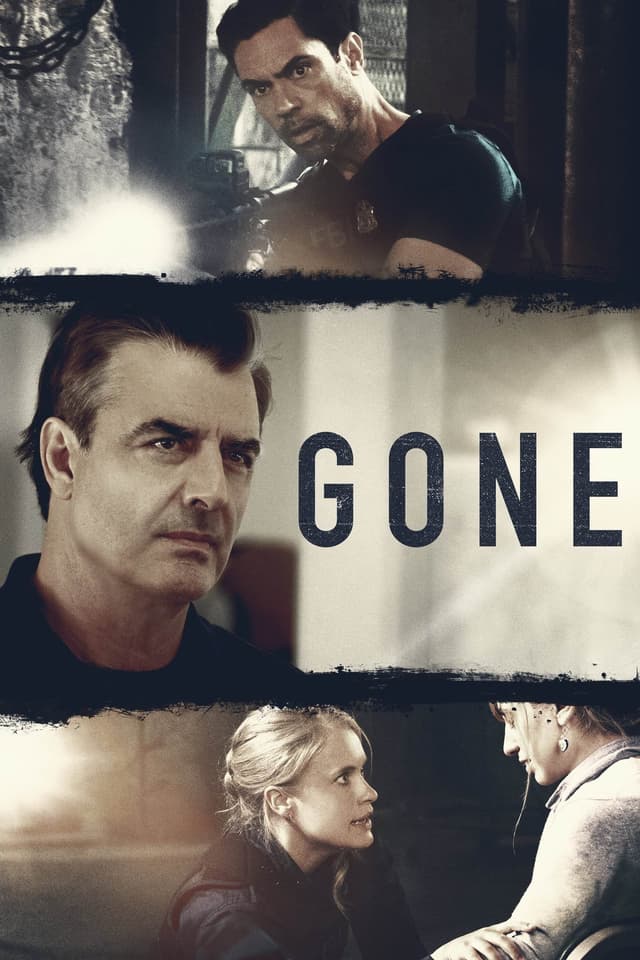
A young woman who escaped a serial killer's underground lair a year earlier comes home from a night shift to discover her sister has been abducted. Convinced that the same killer has returned and that the police will not take her seriously because of her psychiatric history, she goes hunting for her sister and the man who took her through the trails of Forest Park.
What Is the Budget of Gone (2012)?
Gone (2012), directed by Heitor Dhalia and distributed by Summit Entertainment (then a Lionsgate subsidiary), was produced on a reported budget of $19,000,000. The thriller starred Amanda Seyfried as Jill Conway, a young Portland woman who escaped a serial killer's underground lair a year earlier and who believes the killer has returned and abducted her sister. The film served as the English-language feature debut for Brazilian director Heitor Dhalia, following his work on Drained (2006) and Adrift (2009).
Financing came from Lakeshore Entertainment and Summit Entertainment, with shooting based in Portland, Oregon to take advantage of the state's film production incentive program. The $19,000,000 budget reflected the contained single-protagonist thriller structure, modest practical effects requirements, and the absence of large action set pieces. Summit positioned the film as a counter-programming February 2012 release aimed at a young female audience drawn by Amanda Seyfried's post-Mamma Mia and post-Letters to Juliet visibility.
Key Budget Allocation Categories
The $19,000,000 budget was distributed across the following areas:
- Above-the-Line Talent: Amanda Seyfried anchored the cast as Jill Conway, with Daniel Sunjata, Jennifer Carpenter, Sebastian Stan, Wes Bentley, and Joel David Moore in supporting roles. Seyfried, coming off Mamma Mia! (2008), Jennifer's Body (2009), Letters to Juliet (2010), and Red Riding Hood (2011), commanded the production's single largest above-the-line cost. The supporting cast was assembled at character-actor rates consistent with a $19,000,000 thriller.
- Director Fee: Heitor Dhalia commanded a feature-director rate appropriate to a first English-language project with established Brazilian-cinema credentials. Allison Burnett delivered the screenplay, having written the Hilary Swank vehicle Untraceable (2008) and other thriller scripts.
- Portland Production: Principal photography ran from June to August 2011 in Portland, Oregon, with substantial location work in Forest Park (the largest urban forested natural area in the United States) for the third-act hunt sequences. The film leveraged Oregon production tax incentives through the Oregon Production Investment Fund. Portland and Forest Park location work made up the principal photography backbone, with additional sequences shot at residential and commercial Portland-area locations.
- Forest Park Action Sequences: The third-act sequences in Forest Park required night shooting, dedicated stunt coordination, weather contingencies for the Oregon summer-night conditions, and extensive specialty lighting in the dense forest environment. The forest sequences carried the film's strongest production-budget exposure relative to the otherwise contained thriller scale.
- Practical Effects: The film relied on practical effects rather than computer-generated effects for the underground lair sequences, the abduction set pieces, and the climactic confrontation, with limited visual-effects work focused on cleanup and minor environmental enhancement. Practical-effects construction and the underground lair set build at the Portland production base accounted for the bulk of the visual-effects-adjacent budget.
- Editing and Score: Editor John Axelrad delivered the final cut. David Buckley composed the original score, blending atmospheric synthesizer textures with conventional thriller orchestral underscoring. The score budget was modest by tentpole-thriller standards, consistent with the film's contained scale.
How Does Gone's Budget Compare to Similar Films?
At $19,000,000, Gone sat at the typical lower-end studio thriller budget tier. The comparison set:
- The Call (2013): Budget $13,000,000 | Worldwide $68,575,328. The TriStar 911-operator thriller starring Halle Berry from a year later cost two-thirds of Gone's budget and earned more than three times the worldwide gross, illustrating how decisive concept and target-audience demand were in the lower-budget thriller category.
- Untraceable (2008): Budget $35,000,000 | Worldwide $52,777,925. The Screen Gems Hilary Swank thriller written by Allison Burnett (the same screenwriter as Gone) cost nearly twice as much and earned nearly three times the worldwide gross, suggesting that her screenplay material performed better at higher budget scales.
- Taken (2008): Budget $25,000,000 | Worldwide $226,830,568. The Pierre Morel and Liam Neeson abduction thriller cost only $6,000,000 more than Gone and grossed roughly 12x worldwide, illustrating the upper-end commercial ceiling that this subgenre could reach when the concept landed.
- Trespass (2011): Budget $35,000,000 | Worldwide $7,419,440. Joel Schumacher's home-invasion thriller starring Nicolas Cage and Nicole Kidman from the prior year cost nearly twice Gone's budget and earned less worldwide, marking another low-end commercial outcome in the category.
- The Roommate (2011): Budget $16,000,000 | Worldwide $52,196,222. The Screen Gems stalker thriller starring Leighton Meester and Minka Kelly cost roughly the same as Gone and earned 2.7x the worldwide gross, providing the closest budget-tier comparison and a benchmark for what young-female-targeted thriller releases could deliver in the early 2010s.
Gone Box Office Performance
Gone opened on February 24, 2012, in 2,186 theaters, finishing seventh at the domestic box office with $4,742,089 in its three-day opening weekend. The opening trailed the third-weekend hold of The Vow and the second weekend of Tyler Perry's Good Deeds, well below pre-release Summit tracking that had pegged the film in the $8,000,000 to $10,000,000 opening-weekend range. The film delivered a weak 2.5x multiple over its full domestic run, reflecting the D+ CinemaScore and the lack of word-of-mouth pickup.
Against a reported $19,000,000 production budget, here is the financial breakdown:
Box Office Breakdown
Gone

Gone returned approximately $0.45 to $0.50 in theatrical gross for every $1 invested when measured against total estimated production and marketing spend, placing it among the underperforming Summit Entertainment thrillers of 2012. The domestic share of $11,675,455 against international $7,923,755 produced a 60/40 split that was typical for the genre but well below the absolute volume that the project needed to clear breakeven. Home-entertainment licensing across 2012 and 2013, cable-window deals, and streaming-window licensing recovered modest additional revenue but never closed the theatrical shortfall.
The film's commercial failure contributed to the broader pullback from Amanda Seyfried-led genre material across the subsequent year, with her career pivoting toward Les Miserables (2012), Lovelace (2013), and ensemble work. Summit Entertainment, having been acquired by Lionsgate in January 2012, absorbed Gone's shortfall as part of the post-merger slate consolidation and refocused its thriller and young-female-targeted programming around the higher-performing Twilight Saga conclusion in November 2012.
Gone Production History
Development of Gone began at Lakeshore Entertainment in 2009 under a screenplay by Allison Burnett, who had previously written Untraceable (2008) and other thriller-genre material. Lakeshore brought the project to Summit Entertainment in 2010 as part of the studio's slate expansion ahead of the Twilight Saga conclusion. Heitor Dhalia was hired as director in early 2011 after Lakeshore producers Tom Rosenberg and Gary Lucchesi viewed his Brazilian-cinema work, particularly Adrift (2009), which had drawn international festival attention.
Casting Amanda Seyfried in the lead role positioned the project on her then-rising star wattage following Mamma Mia! (2008) and Letters to Juliet (2010). Seyfried committed in spring 2011 between her work on In Time (2011) and Les Miserables (2012). The supporting cast was assembled across spring 2011, including Daniel Sunjata (Rescue Me) as Detective Peter Hood, Jennifer Carpenter (Dexter) as Sharon Ames, Sebastian Stan as Detective Erica Lonsdale's partner Officer Billings, Wes Bentley (American Beauty) as Detective Powers, and Joel David Moore (Avatar) as Nick Massey.
Principal photography ran from June to August 2011 in Portland, Oregon, utilizing the Oregon Production Investment Fund. The production base was set up in Portland with location work across the city and substantial third-act sequences in Forest Park, the largest urban forested natural area in the United States. Forest Park night shooting required extensive specialty lighting, stunt coordination, and weather contingencies through the Oregon summer-night conditions. The film wrapped in August 2011 ahead of a February 24, 2012 theatrical release.
Awards and Recognition
Gone received no significant industry awards recognition. The film failed to register at the major industry ceremonies, the major United States critics' association awards, and the genre-specific awards bodies including the Saturn Awards for genre filmmaking. It also avoided Razzie nominations despite the commercial failure and the heavily negative critical reception, in part because the 2013 Razzies ceremony focused on more publicly maligned titles including That's My Boy, A Thousand Words, and the live-action Twilight Saga conclusion.
Heitor Dhalia's subsequent career pivoted away from English-language genre filmmaking, with the director returning to Brazilian-cinema work including Serra Pelada (2013) and additional Portuguese-language projects. The awards profile for the project has remained almost entirely absent, reflecting both its limited cultural footprint and the genre ceiling that affects most lower-budget mid-tier studio thrillers.
Critical Reception
Gone received heavily negative reviews. The film holds an 11% approval rating on Rotten Tomatoes based on 95 critic reviews, with a critical consensus calling it a derivative, formulaic, and inert thriller that wastes its star. On Metacritic, the film scored 31 out of 100, indicating generally unfavorable reviews. Audiences surveyed by CinemaScore gave the film a D+, well below the C floor most studio thrillers clear and signaling the sharpest possible audience rejection.
The Los Angeles Times' Kenneth Turan called the film "a thriller that forgets to thrill," noting that the central mystery's structure undermined any tension once the third act began. Roger Ebert gave the film one and a half of four stars, writing that "Seyfried deserves better material than this paint-by-numbers stalker plot." The Hollywood Reporter's Frank Scheck described the film as "competently shot but narratively bankrupt."
Several critics noted that Heitor Dhalia's Brazilian-cinema visual instincts were largely buried under the conventional United States studio-thriller framework, with Variety's Andrew Barker writing that "Dhalia's technical skill is undeniable but cannot rescue an inert screenplay that mistakes ambiguity for suspense." The film's reputation has settled into a textbook example of how a competent director and an established star can be undermined by weak source material in the saturated mid-budget thriller category of the early 2010s.
Frequently Asked Questions
How much did it cost to make Gone (2012)?
The reported production budget was $19,000,000. Lakeshore Entertainment and Summit Entertainment co-financed the production, with shooting based in Portland, Oregon to take advantage of the state's Production Investment Fund.
How much did Gone (2012) earn at the box office?
The film grossed $11,675,455 domestically and $7,923,755 internationally for a worldwide total of $19,599,210. It opened to $4,742,089 over the February 24 to 26, 2012 weekend, finishing seventh and well below pre-release Summit tracking that had pegged the film in the $8,000,000 to $10,000,000 opening-weekend range.
Was Gone (2012) a box office bomb?
Yes. Against a $19,000,000 production budget and an estimated $20,000,000 to $25,000,000 in marketing, the film returned approximately $0.45 to $0.50 in worldwide gross for every $1 invested, generating a loss of approximately $19,400,790 to $24,400,790 when measured against total estimated investment. The D+ CinemaScore signaled the sharpest possible audience rejection.
Who directed Gone (2012)?
Heitor Dhalia directed the film, his English-language feature debut. The Brazilian director had previously made Drained (2006) and Adrift (2009), both of which drew international festival attention. After Gone he returned to Brazilian-cinema work including Serra Pelada (2013).
Where was Gone (2012) filmed?
Principal photography ran from June to August 2011 in Portland, Oregon, utilizing the Oregon Production Investment Fund. The production base was set up in Portland with substantial third-act sequences shot in Forest Park, the largest urban forested natural area in the United States. Forest Park night shooting required extensive specialty lighting and stunt coordination.
Who stars in Gone (2012)?
Amanda Seyfried plays Jill Conway, a young woman who escaped a serial killer a year earlier and believes her sister has been abducted by the same person. Daniel Sunjata, Jennifer Carpenter, Sebastian Stan, Wes Bentley, and Joel David Moore appear in supporting roles. Seyfried committed to the project between her work on In Time (2011) and Les Miserables (2012).
Is Gone (2012) the same as the Ben Affleck film Gone Girl?
No. Gone (2012) is a separate Summit Entertainment thriller starring Amanda Seyfried, directed by Heitor Dhalia. Gone Girl (2014) is David Fincher's adaptation of the Gillian Flynn novel starring Ben Affleck and Rosamund Pike. The two films are unrelated despite the similar single-word titles.
What is Gone (2012) about?
Jill Conway, a young Portland woman who escaped a serial killer's underground lair a year earlier, comes home from a night shift to discover her sister has been abducted. Convinced that the same killer has returned and that the police will not take her seriously because of her psychiatric history, she goes hunting for her sister and the man who took her through the trails of Forest Park.
What did critics think of Gone (2012)?
The film received heavily negative reviews, with an 11% approval rating on Rotten Tomatoes based on 95 critic reviews and a Metacritic score of 31 out of 100. Audiences gave it a D+ CinemaScore. Critics widely panned the derivative thriller structure and the inert pacing, with several reviewers singling out that Amanda Seyfried deserved better material.
Did Gone (2012) win any awards?
No. The film received no significant industry awards recognition, no Saturn Award nominations for genre filmmaking, and no major critics' association nominations. It also avoided Razzie nominations despite the commercial failure, in part because the 2013 Razzies ceremony focused on more publicly maligned titles.
Filmmakers
Gone

Official Trailer
Build budgets like this one in Saturation
Start from an industry-standard feature film template, import the schedule and rates you already have, and let the cost report keep itself current as you spend. Real-time collaboration, no spreadsheets.