GOAT Budget
 AnimationComedyFamily1h 40m
Updated
Synopsis
A small goat with big dreams gets a once-in-a-lifetime shot to join the pros and play roarball, a high-intensity, co-ed, full-contact sport dominated by the fastest, fiercest animals in the world.
What Is the Budget of GOAT?
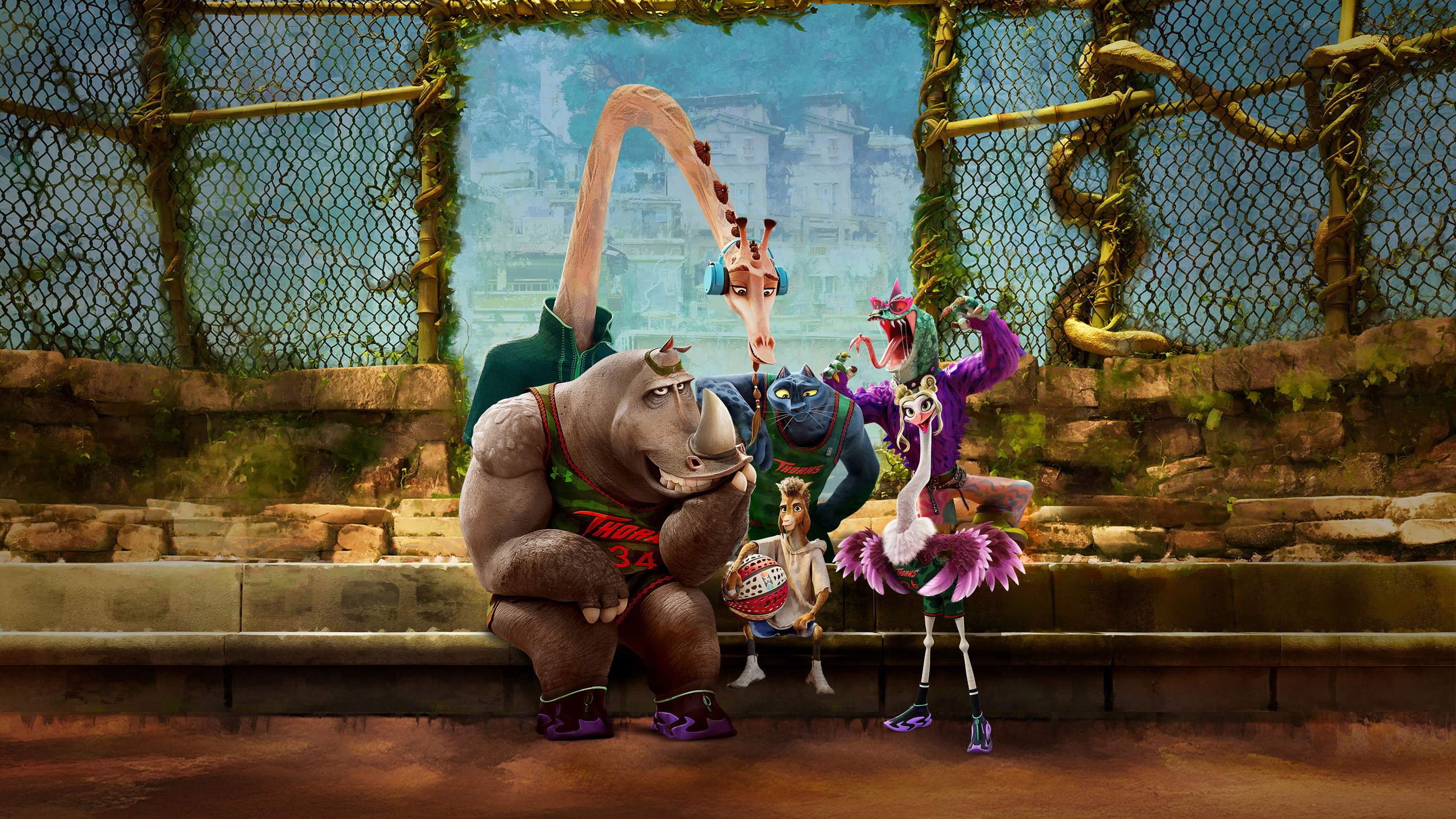
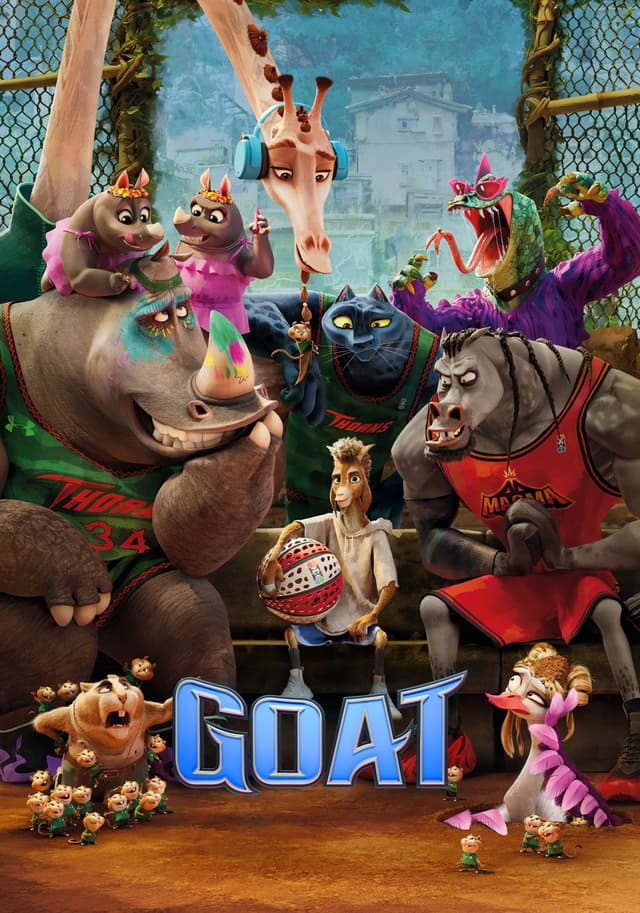
GOAT (2026) was produced on a budget of $90 million, a major animated family film from Sony Pictures Animation in partnership with Unanimous Media (Stephen Curry's production company), MACRO, and TSG Entertainment. Directed by Tyree Dillihay, the film follows a small goat named Will Harris who earns a shot to compete in roarball, a high-intensity co-ed contact sport dominated by much larger and faster animals.
Against its $90 million budget, GOAT grossed $190.5 million worldwide, a strong commercial result that validated Sony Pictures Animation's investment in original IP following the success of the Spider-Verse franchise. The film benefited from Stephen Curry's involvement both as a producer and voice cast member, tapping into his NBA fanbase as an additional marketing channel.
Key Budget Allocation Categories
- Animation Production: Sony Pictures Animation's proprietary pipeline, developed for the Spider-Verse films, was adapted for GOAT's character design vocabulary. The film required creating a large cast of anthropomorphized animal athletes with convincing athletic movement, demanding significant simulation and rigging work for the roarball sequences.
- Voice Cast: Caleb McLaughlin (Stranger Things) leads as Will Harris, with Gabrielle Union, Stephen Curry, Aaron Pierre (The Lion King 2024, Rebel Ridge), Nicola Coughlan (Bridgerton, Derry Girls), and David Harbour (Stranger Things) forming the main ensemble. Stephen Curry's dual role as producer and voice cast member at Mayor Lenny Williamson was a central marketing hook.
- Sports Animation and Roarball Design: The invented sport of roarball required the production to develop rules, physics, and visual grammar for a game that had to be legible and exciting to family audiences on first viewing. The roarball sequences were animated with the same kinetic energy that Sony Pictures Animation brought to the Spidey-Verse action choreography, representing a significant technical and creative investment.
- Score: Kris Bowers (Bridgerton, King Richard) composed the score, his ability to blend orchestral drama with contemporary musical sensibilities making him well-suited to a sports underdog story aimed at a broad family demographic.
- Unanimous Media and Stephen Curry Partnership: Unanimous Media's involvement brought authentic sports storytelling credibility and access to NBA marketing channels. Curry's production company relationship with Sony represented a continuation of the studio's strategy of partnering with sports and entertainment figures whose audiences extend beyond traditional animation demographics.
How Does GOAT's Budget Compare to Similar Films?
GOAT sits in the mid-range of major studio animated feature budgets, positioned below franchise sequels but above the efficiency tier of independent animation.
- The Bad Guys (2022): Budget $73M | Worldwide $250M. A DreamWorks Animation original with comparable budget efficiency; GOAT cost 23% more and performed at 76% of that film's gross.
- Spider-Man: Across the Spider-Verse (2023): Budget $150M | Worldwide $690M. Sony's franchise benchmark; GOAT is an original IP with nearly half the sequel's budget and a substantially smaller but respectable gross.
- Space Jam: A New Legacy (2021): Budget $163M | Worldwide $163M. The cautionary tale for sports-celebrity animated films; GOAT's more straightforward sports story at a lower budget avoided the tonal confusion that limited that film's performance.
- Wish (2023): Budget $200M | Worldwide $256M. Disney Animation's underperforming 100th anniversary film; GOAT at 45% of that budget achieved 74% of the gross, representing meaningfully better cost efficiency.
GOAT Box Office Performance
GOAT opened on February 11, 2026, in wide theatrical release through Sony Pictures. The film grossed $190,504,153 worldwide, with domestic performance leading international. The film performed especially well on Presidents Day weekend, with family audiences responding to the accessible underdog sports premise and the recognizable voice cast. Stephen Curry's NBA profile drove additional opening-weekend interest in sports-adjacent markets.
With a $90 million production budget and estimated P&A of $65 million for the wide release, total investment reached approximately $155 million. At a 50% studio share of worldwide gross, Sony recovered approximately $95.3 million from theatrical alone, clearing the total investment and establishing a healthy profit position before home video and streaming.
Box Office Breakdown
GOAT

GOAT earned roughly $2.12 for every $1 invested in production, a strong result for an original animated IP that required building audience familiarity with a new property. The film's performance confirmed Sony Pictures Animation's capability to produce commercially viable originals alongside its Spider-Verse franchise.
GOAT Production History
GOAT was developed at Sony Pictures Animation with Unanimous Media, Stephen Curry's production company that had previously co-produced Wish Dragon (2021) with Sony. Curry's basketball profile informed the development of roarball, the film's fictional sport, which was designed to capture the energy and physicality of modern basketball while being accessible to animal athletes of varying sizes and species. The underdog premise, a small goat competing against larger, faster animals, was designed as a universal sports story accessible to audiences with no prior knowledge of any real sport.
Director Tyree Dillihay, a Sony Pictures Animation veteran, shaped the film's visual identity in collaboration with the studio's character design and animation teams. The screenplay by Aaron Buchsbaum and Teddy Riley went through multiple story iterations to refine the roarball rules and the social dynamics of a world where animals coexist as athletic competitors. Pete Docter's broader Pixar influence had set audience expectations for animated sports stories with genuine emotional stakes, and the GOAT production responded to that context.
Casting followed Sony Pictures Animation's approach of blending established animated film voices with live-action performers whose profiles would extend the marketing reach. Caleb McLaughlin, coming off Stranger Things, brought youthful energy to Will Harris. Nicola Coughlan's involvement in Bridgerton gave the film European profile, while David Harbour's comic timing was deployed as the film's adult comedic anchor.
The film opened February 11, 2026, in wide release, benefiting from a relatively uncompetitive animated family film landscape in early 2026. The theatrical run performed ahead of tracking estimates, with the family audience segment responding more enthusiastically than the opening weekend projections had suggested.
Awards and Recognition
GOAT received attention in the animated feature category for the 2026 awards cycle, with Kris Bowers' score singled out by film music critics. The animation of the roarball sequences was recognized at industry events for the technical achievement of designing a new sport's visual grammar within the constraints of family-accessible storytelling. The Annie Awards noted the film's character design innovations in the animal-athlete category.
Critical Reception
Critics praised GOAT as an efficient, entertaining family film that delivered its underdog sports premise with genuine craft. The roarball sequences received consistent acclaim for their kinetic energy and clarity, and Caleb McLaughlin's vocal performance as Will Harris was cited as an emotional anchor that kept the film from feeling like a pure sports entertainment product.
Some reviewers noted that the plot follows predictable underdog sports movie conventions without subverting them, a criticism balanced by acknowledgment that the execution is skillful within the genre. The consensus positioned GOAT as a strong Sony Pictures Animation original: commercially savvy, technically accomplished, and emotionally satisfying without challenging the formal conventions of the animated sports film.
Frequently Asked Questions
How much did it cost to make GOAT (2026)?
The production budget was $90,000,000, covering principal photography, visual effects, cast and crew salaries, locations, sets, post-production, and music. Marketing and distribution (P&A) costs are estimated at an additional $45,000,000 - $72,000,000, bringing the total studio investment to approximately $135,000,000 - $162,000,000.
How much did GOAT (2026) earn at the box office?
GOAT grossed $39,631,196 domestic, $145,944,511 international, totaling $185,575,707 worldwide.
Was GOAT (2026) profitable?
The film did not break even theatrically, earning $185,575,707 against an estimated $225,000,000 needed. Ancillary revenue may have improved the picture.
What were the biggest costs in producing GOAT?
The primary cost drivers were above-the-line talent (Caleb McLaughlin, Gabrielle Union, Stephen Curry); multi-year animation production, celebrity voice talent, and original musical compositions.
How does GOAT's budget compare to similar animation films?
At $90,000,000, GOAT is classified as a mid-budget production. The median budget for wide-release animation films in the 2020s ranges from $30 - 80M for mid-budget to $150M+ for tentpoles. Comparable budgets: Bad Boys for Life (2020, $90,000,000); Contact (1997, $90,000,000); DC League of Super-Pets (2022, $90,000,000).
Did GOAT (2026) go over budget?
There are no widely reported accounts of significant budget overruns for this production. However, studios rarely disclose precise budget overrun figures publicly. The reported production budget reflects the final estimated cost.
What was the return on investment (ROI) for GOAT?
The theatrical ROI was 106.2%, calculated as ($185,575,707 − $90,000,000) ÷ $90,000,000 × 100. This measures gross revenue against production budget only - it does not account for P&A or exhibitor shares.
What awards did GOAT (2026) win?
N/A.
Who directed GOAT and who were the key crew members?
Directed by Tyree Dillihay, written by Aaron Buchsbaum, Teddy Riley, shot by John Clark, with music by Kris Bowers, edited by Clare Knight.
Where was GOAT filmed?
GOAT was filmed in United States of America.
Filmmakers
GOAT

Official Trailer
Build budgets like this one in Saturation
Start from an industry-standard feature film template, import the schedule and rates you already have, and let the cost report keep itself current as you spend. Real-time collaboration, no spreadsheets.