Ghostbusters Budget
 ComedyFantasy1h 47m
Updated
Synopsis
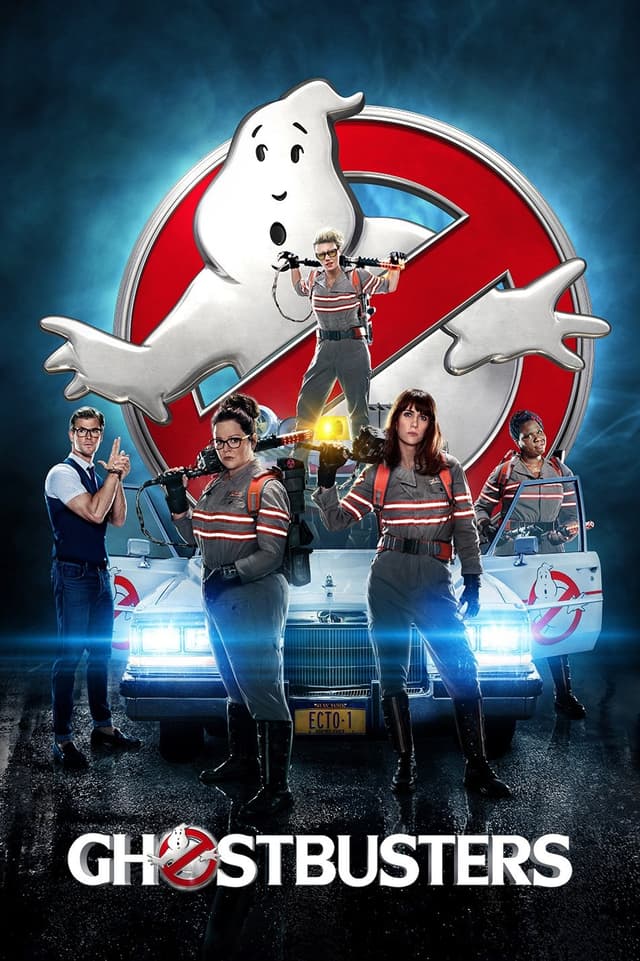
Thirty years after the original film, paranormal researchers Erin Gilbert and Abby Yates reunite with eccentric engineer Jillian Holtzmann and subway worker Patty Tolan to investigate a wave of supernatural activity in New York City. Armed with proton packs of their own design and aided by their dim-witted receptionist Kevin, the new Ghostbusters race to stop a vengeful occultist whose ritual threatens to crack open the barrier between the living and the dead.
What Is the Budget of Ghostbusters (2016)?
Ghostbusters (2016), directed by Paul Feig and distributed by Sony Pictures / Columbia Pictures, was produced on a reported budget of $144,000,000, with several industry sources placing the all-in negative cost closer to $150,000,000 once contingencies and reshoots were folded in. The reboot, which recast the original 1984 quartet with an all-female ensemble led by Melissa McCarthy, Kristen Wiig, Kate McKinnon, and Leslie Jones, represented one of the largest comedy budgets ever greenlit at the time of release. Sony viewed the project as the launch of a relaunched Ghostbusters cinematic universe, with an animated film, a sequel, and an extended franchise rollout already in development.
The budget reflected a heavy visual effects load, a Boston-based principal photography schedule, and above-the-line compensation for a high-profile ensemble plus director Paul Feig, who was coming off the back-to-back hits Bridesmaids, The Heat, and Spy. Sony also absorbed substantial marketing costs that pushed the total studio commitment well above the negative cost, with several outlets reporting the total all-in spend in the range of $250,000,000 to $260,000,000 once worldwide P&A was included.
Key Budget Allocation Categories
Ghostbusters' reported $144,000,000 production budget was distributed across several major cost centers:
- Above-the-Line Talent: Director Paul Feig commanded a top-tier comedy-director fee following the box office success of Bridesmaids ($288M worldwide), The Heat ($230M), and Spy ($236M). The principal ensemble of Melissa McCarthy, Kristen Wiig, Kate McKinnon, and Leslie Jones, paired with Chris Hemsworth in a heightened secretary role, accounted for a sizeable share of the budget, with each lead working at rates reflecting their post-Bridesmaids and post-Thor visibility.
- Visual Effects: Ghostbusters was a heavy VFX undertaking, with Sony Pictures Imageworks, MPC, and Iloura among the vendors delivering more than 1,000 effects shots. The work covered the full lineup of ghosts, proton stream interactions, the climactic Times Square sequence, and a stereoscopic 3D conversion released in select markets. Visual effects spending is widely estimated to have consumed between 30 and 40 percent of the production budget.
- Boston Production Base: Principal photography ran from June through September 2015 at the Massachusetts film hub, with stages anchored in the Boston area and location shooting across the city. Massachusetts production tax credits offered up to 25 percent on qualified spend, which Sony leveraged to offset above-the-line and below-the-line costs while still maintaining a New York City story setting through visual effects and second unit work.
- Practical Effects, Vehicles, and Gear: The film required new builds of the proton packs, the Ecto-1 (a 1982 Cadillac hearse-ambulance combination), the ghost trap, and a wide array of paranormal investigation gadgets, all designed by production designer Jefferson Sage in coordination with the film's prop department and a dedicated armorer team for the proton packs.
- Music and Score: Composer Theodore Shapiro, a longtime Feig collaborator, scored the film and incorporated motifs from Ray Parker Jr.'s 1984 theme. Music spend also covered Fall Out Boy and Missy Elliott's cover of the original Ghostbusters theme used in marketing and the closing credits, plus an extensive needle-drop budget for the soundtrack release.
- Reshoots and Pickups: Sony ordered a second round of photography in spring 2016 to refine the climax, add additional Hemsworth comedic beats, and tighten character relationships flagged in test screenings. The reshoots added incremental cost across cast availability, stage rental, and visual effects integration during the back half of post-production.
- Marketing and Cultural Defense Campaign: While not part of the $144,000,000 negative cost, Sony spent an estimated $100,000,000 to $120,000,000 on worldwide marketing, an unusually high figure for a comedy that was driven in part by the studio's need to counter sustained online backlash against the all-female reboot and to drive non-fan audiences into theaters.
How Does Ghostbusters' Budget Compare to Similar Films?
At $144,000,000, Ghostbusters sits among the most expensive comedy productions in modern Hollywood history. The comparison set illustrates where the reboot landed against franchise predecessors, contemporary Paul Feig comedies, and the later Ghostbusters legacy films:
- Ghostbusters (1984): Budget $30,000,000 | Worldwide $295,200,000. Ivan Reitman's original, adjusted for inflation, cost roughly $80,000,000 in 2016 dollars and grossed nearly ten times its negative cost worldwide, a ratio the 2016 reboot did not approach despite spending nearly five times more in nominal dollars.
- Ghostbusters II (1989): Budget $40,000,000 | Worldwide $215,400,000. The first sequel earned five times its budget worldwide and was seen as a soft underperformer at the time, yet still returned a far stronger budget-to-gross ratio than the 2016 reboot achieved.
- Ghostbusters: Afterlife (2021): Budget $75,000,000 | Worldwide $204,343,283. Jason Reitman's legacy sequel cost roughly half of the 2016 reboot and earned a comparable global gross, with a more disciplined budget and a clear creative reset that restored Sony's confidence in the property.
- Ghostbusters: Frozen Empire (2024): Budget $100,000,000 | Worldwide $202,038,000. The follow-up to Afterlife held its budget below the 2016 figure and again landed in the same gross range, confirming that the franchise's post-2016 reset operates at a substantially lower cost base.
- Spy (2015): Budget $65,000,000 | Worldwide $236,000,000. Paul Feig's previous collaboration with Melissa McCarthy cost less than half what Ghostbusters spent and out-grossed it worldwide on a vastly more efficient ratio, illustrating how aggressively the Ghostbusters budget expanded the typical Feig comedy cost envelope.
- Bridesmaids (2011): Budget $32,500,000 | Worldwide $288,400,000. Feig's breakout comedy returned nearly nine times its negative cost worldwide, the kind of ratio that originally made him an attractive choice for a major studio property and the benchmark Ghostbusters was expected, but failed, to match.
Ghostbusters Box Office Performance
Ghostbusters opened on July 15, 2016, in a crowded summer corridor that included The Secret Life of Pets and Star Trek Beyond, and finished second on its opening weekend with $46,018,755 domestic. That figure was below Sony's pre-release tracking expectations and fell short of the comparable opening for Paul Feig's Spy a year earlier on a much smaller budget. The film never gained the second-weekend momentum needed to bend its trajectory.
Against a reported production budget of $144,000,000 and a marketing spend widely estimated at $100,000,000 to $120,000,000, the film needed approximately $300,000,000 in worldwide gross to break even after the studio's share of theatrical rentals. Here is the financial breakdown:
Box Office Breakdown
Ghostbusters

Ghostbusters returned approximately $0.87 in theatrical revenue for every $1 invested when measured against total estimated production and marketing spend. The domestic share was $128,350,574 against an international share of $100,796,935, a 56/44 split that skewed unusually domestic for a tentpole reboot and signaled that the property did not travel as well overseas as Sony had projected.
Sony confirmed the financial outcome in writing during summer 2016, with then-chairman Tom Rothman quoted in Variety acknowledging that the film would lose money for the studio after marketing. Reports placed the net loss in the range of $70,000,000, factoring in home entertainment recoupment. The planned animated spin-off and the live-action sequel were shelved within months of release, and Sony eventually pivoted to the legacy-continuation strategy that produced Ghostbusters: Afterlife (2021) and Ghostbusters: Frozen Empire (2024).
Ghostbusters Production History
Development on a third Ghostbusters film stalled for more than two decades after Ghostbusters II (1989). Dan Aykroyd, Harold Ramis, and Ivan Reitman pursued various sequel concepts through the 1990s and 2000s, but the death of Harold Ramis in February 2014 ended the long-running effort to reunite the original cast. Sony moved quickly to reposition the property as a reboot, and Ivan Reitman exited the director role to take a producing credit alongside Amy Pascal.
Sony hired Paul Feig in August 2014 on the strength of his Bridesmaids, The Heat, and Spy track record. Feig and screenwriter Katie Dippold (The Heat) developed an original story that ignored the events of the 1984 and 1989 films and built a new continuity around four New York-based paranormal researchers. Casting was announced in January 2015: Melissa McCarthy as Abby Yates, Kristen Wiig as Erin Gilbert, Kate McKinnon as Jillian Holtzmann, and Leslie Jones as Patty Tolan, with Chris Hemsworth cast against type as the team's himbo receptionist Kevin Beckman.
Principal photography ran from June 18 to September 19, 2015 across Massachusetts, with stages anchored at Boston-area production facilities and extensive location shooting in Boston, Weymouth, and Sudbury standing in for New York City. Massachusetts' 25 percent production tax credit was a primary factor in the location decision, with second unit photography handling Times Square and select Manhattan exteriors. Cinematographer Robert Yeoman shot the film on Arri Alexa and Arri Alexa XT cameras.
Post-production stretched from fall 2015 through summer 2016 across multiple visual effects houses. Sony ordered additional photography in spring 2016 after early test screenings flagged pacing problems in the third act and a desire for more Chris Hemsworth comedy. The reshoots added cost and forced visual effects vendors to compress final delivery schedules. Composer Theodore Shapiro's score was recorded at Sony Scoring Stage in Culver City, with Fall Out Boy and Missy Elliott delivering a high-profile cover of the original Ray Parker Jr. theme for the closing credits and marketing campaign.
The pre-release marketing campaign was complicated by sustained online backlash. The first trailer, released in March 2016, became one of the most disliked videos in YouTube history at the time, with cultural commentary running well in advance of the film's actual reception. Sony devoted significant marketing capacity to countering the backlash narrative while still positioning the film as a four-quadrant comedy, an unusually defensive posture for a tentpole release.
Awards and Recognition
Ghostbusters received modest awards recognition. The film was nominated for the 2017 Visual Effects Society Award for Outstanding Effects Simulations in a Photoreal Feature for the Times Square sequence, and Kate McKinnon won the 2017 Critics' Choice Movie Award for Best Acting in an Action Movie for her performance as Holtzmann. McKinnon was widely cited as the breakout standout of the ensemble and earned additional nominations from the MTV Movie & TV Awards.
The film was also nominated at the 2017 Saturn Awards for Best Fantasy Film and Best Supporting Actress (McKinnon), though it did not win either. Theodore Shapiro's score and the Fall Out Boy / Missy Elliott theme song earned promotional attention without major industry recognition. The Razzies declined to nominate the film, with Razzie co-founder John J.B. Wilson noting publicly that the awards body did not view the film as deserving of inclusion despite the volume of online criticism it had attracted.
Critical Reception
Ghostbusters received mixed-to-positive reviews. The film holds a 74 percent approval rating on Rotten Tomatoes based on 354 critic reviews, with a critical consensus that called it a likable summer comedy with strong performances from its leads even if it never matched the original. On Metacritic, the film scored 60 out of 100, indicating generally favorable reviews. Audiences surveyed by CinemaScore gave the film a B+, a respectable mark for a four-quadrant comedy but below the A-range scores typical of a successful tentpole.
Critics praised Kate McKinnon's scene-stealing performance as Holtzmann, the chemistry between the four leads, and Chris Hemsworth's willingness to play against his Thor persona, but objected to the climax's visual effects-heavy set piece, the heavy-handed cameos from the original cast members, and a third act that surrendered character comedy for franchise spectacle. Manohla Dargis of The New York Times called it "amiable, scattershot, sometimes very funny, and visually unmemorable," while Peter Travers of Rolling Stone wrote that "Wiig, McCarthy, McKinnon and Jones blast away at the boy's club of summer movies and bust through to a comic dimension all their own."
The film became a cultural flashpoint extending well beyond its merits as a comedy. Leslie Jones was targeted by a coordinated harassment campaign on Twitter in the days after release, leading to the permanent suspension of right-wing commentator Milo Yiannopoulos from the platform and a wider conversation about social-media moderation that outlasted the film's theatrical run. The combination of commercial underperformance, online backlash, and prestige-press defense made Ghostbusters one of the most discussed films of 2016, even as its box office trajectory never recovered the ground its detractors had cost it in the months leading up to release.
Frequently Asked Questions
How much did it cost to make Ghostbusters (2016)?
The reported production budget was $144,000,000, with several industry sources placing the all-in negative cost closer to $150,000,000 once contingencies and reshoots were folded in. Sony Pictures financed the film through Columbia Pictures alongside Village Roadshow Pictures and LStar Capital.
How much did Ghostbusters (2016) earn at the box office?
The film grossed $128,350,574 domestically and $100,796,935 internationally, for a worldwide total of $229,147,509. It opened to $46,018,755 in the United States, finishing second on its July 15, 2016 opening weekend behind The Secret Life of Pets.
Was Ghostbusters (2016) a box office bomb?
It was a financial disappointment rather than a complete bomb. Against a $144,000,000 production budget and an estimated $100,000,000 to $120,000,000 in marketing spend, Sony reported a loss in the range of $70,000,000. The planned sequel and animated spin-off were shelved within months of release.
Who directed Ghostbusters (2016)?
Paul Feig directed the film, working from a screenplay he co-wrote with Katie Dippold. Feig was hired in August 2014 on the strength of his Bridesmaids, The Heat, and Spy track record at Sony and Fox.
Where was Ghostbusters (2016) filmed?
Principal photography took place from June 18 to September 19, 2015 across Massachusetts, with stages anchored at Boston-area production facilities and location shooting in Boston, Weymouth, and Sudbury standing in for New York City. Massachusetts' 25 percent production tax credit was a primary factor in the location decision. Second unit photography handled Times Square exteriors.
How does Ghostbusters (2016) compare to the original Ghostbusters?
The 2016 reboot cost roughly five times what the 1984 original spent in nominal dollars ($144,000,000 versus $30,000,000) and earned roughly 78 percent of the original's worldwide gross ($229,147,509 versus $295,200,000). On a budget-to-gross ratio, the original returned nearly ten times its negative cost worldwide while the reboot returned roughly 1.6 times its budget, a far weaker financial outcome.
Who stars in Ghostbusters (2016)?
The film stars Melissa McCarthy as Abby Yates, Kristen Wiig as Erin Gilbert, Kate McKinnon as Jillian Holtzmann, and Leslie Jones as Patty Tolan, with Chris Hemsworth as receptionist Kevin Beckman. The original cast members Bill Murray, Dan Aykroyd, Ernie Hudson, Sigourney Weaver, and Annie Potts appear in cameo roles as different characters.
Why did Sony reboot Ghostbusters instead of making a direct sequel?
A direct sequel had been in development for more than two decades but stalled repeatedly, and the February 2014 death of Harold Ramis ended the long-running effort to reunite the original cast. Sony moved quickly to reposition the property as a reboot under Paul Feig, with Ivan Reitman exiting the director role to take a producing credit alongside Amy Pascal.
What did critics think of Ghostbusters (2016)?
The film received mixed-to-positive reviews, with a 74 percent approval rating on Rotten Tomatoes (based on 354 critics) and a 60 out of 100 score on Metacritic. Audiences gave it a B+ CinemaScore. Critics praised Kate McKinnon's breakout performance and the chemistry of the four leads but objected to the visual effects-heavy climax and the heavy-handed original-cast cameos.
Did Ghostbusters (2016) win any awards?
Kate McKinnon won the 2017 Critics' Choice Movie Award for Best Acting in an Action Movie for her performance as Holtzmann. The film was nominated for the 2017 Visual Effects Society Award for Outstanding Effects Simulations and received Saturn Award nominations for Best Fantasy Film and Best Supporting Actress (McKinnon), though it did not win in those categories.
Filmmakers
Ghostbusters

Official Trailer
Build budgets like this one in Saturation
Start from an industry-standard feature film template, import the schedule and rates you already have, and let the cost report keep itself current as you spend. Real-time collaboration, no spreadsheets.