
Flashback Budget
Updated
Synopsis
When a stabbing throws Elsa Letellier, a forensic police officer in 2024 Lyon, into the past via her late father's mysterious watch, she wakes up in 1994 surrounded by uniformed officers, including her father Josselin alive and young, three months before he is murdered on her sixth birthday. Across a six-episode first season created by Clélia Constantine for TF1, Elsa weaves between decades to save her father from his fate, only to learn that altering the past has cost her her mother instead, setting up Season 2's parallel mission in 1996.
What Is the Budget of Flashback (2025)?
Flashback, the French time-travel police comedy created by Clélia Constantine and a writers room including Charlotte Robb, Louise Bezombes, Vinciane Mokry and Julie-Anna Grignon, has no publicly disclosed production budget. The series was produced by Itinéraire Productions in co-production with TF1, UGC Fiction and Auvergne-Rhône-Alpes Cinéma, with participation from the Auvergne-Rhône-Alpes region, the CNC (Centre national du cinéma et de l'image animée), Belgian broadcaster RTL TVI and Brussels-based Be-FILMS. French primetime drama financing is structured around broadcaster pre-buys, regional fund co-investment, CNC selective aid and SOFICA tax-shelter participation, and figures are rarely disclosed for individual TF1 titles.
Working from the production profile, a six-episode first season of 52-minute primetime drama, a Lyon-region shoot covering Villeurbanne, Écully, Chaponost, Meyzieu, Ternay, Lentilly and Les Halles, a 1990s period reconstruction inside Villeurbanne studios, 113 regional technicians, a 63-actor cast and over 300 local extras, a typical per-episode cost for a TF1 prime-access drama of this scale lands in the 1.1 million to 1.5 million euro range, which would place the total Season 1 budget at roughly 6.6 million to 9 million euros, or approximately $7.2 million to $9.8 million at 2024 exchange rates. The figure is an industry-standard estimate rather than a confirmed number.
Key Budget Allocation Categories
While the precise breakdown has not been released, the production approach points to a handful of dominant cost lines characteristic of a French primetime period-set drama:
- Above-the-Line Cast: Lead performers Constance Gay (Elsa Letellier) and Michaël Youn (Josselin Letellier, the father) anchor every episode and carry the dual-timeline structure. Youn is a recognized French TV name whose quote represents a meaningful share of the above-the-line spend, with the broader ensemble (Olivia Côte, Julien Pestel, Sam Karmann, Vanessa David, Malek Lamraoui) adding stable supporting costs across all six episodes.
- Lyon-Region Location Shoot: Principal photography mobilized 113 regional technicians across direction, casting, stunts, makeup, grip, electric, sound, production and design, plus 63 actors and more than 300 local extras. The Lyon, Villeurbanne, Écully, Chaponost, Meyzieu, Ternay and Lentilly footprint added permit, transport, accommodation and per-diem overhead that a Paris-bound shoot would have avoided, partly offset by Auvergne-Rhône-Alpes regional fund support.
- 1990s Period Reconstruction: Season 1 splits between 2024 and 1994 and Season 2 jumps to 1996, requiring period-correct vehicles, wardrobe, signage, set dressing, props and music clearances for both decades. The Saint-Just police-station exterior was paired with a 1990s station set rebuilt in Villeurbanne studios, an additional construction line that does not exist for contemporary-set procedurals.
- Visual Effects and Time-Travel Mechanics: The magical watch device, dimensional transitions, era-transition flourishes and integration of the same actor (Michaël Youn) across past and present required a compact but consistent VFX pipeline. Costs sit well below feature-film tentpole VFX budgets but represent a recurring per-episode line item that does not exist on a standard French procedural.
- Music and Original Score: Yannis Dumoutiers composed the original score for both seasons. Period music supervision and song clearances for 1994 and 1996 needle drops drive additional licensing spend that is unusual for a TF1 procedural and material on a series whose emotional engine is built around its decade-specific soundtrack moments.
- Production Design and Wardrobe: Dual-period production design across police stations, family homes, public-facing locations and crime scenes, paired with 1990s wardrobe across a 63-person cast and 300-plus extras, sits high in the budget hierarchy. Costume continuity between contemporary scenes (Elsa in 2024) and period scenes (Elsa, Josselin and Colette in 1994 or 1996) doubled the wardrobe workload relative to a single-period drama.
- Post-Production and Delivery: Six 52-minute episodes per season require sustained editorial, sound design, color and finishing time. Multi-territory delivery to TF1 in France, RTL TVI in Belgium and downstream international sales partners adds technical-conform and versioning costs at the end of the post pipeline.
- Broadcaster and Regional Co-Production Overhead: Co-production with TF1, UGC Fiction, Auvergne-Rhône-Alpes Cinéma, RTL TVI and Be-FILMS, plus CNC and regional fund participation, produced a multi-party financing stack that required legal, accounting and reporting overhead well beyond a single-financier production. This category is invisible on screen but a real share of every French primetime drama budget.
How Does Flashback's Budget Compare to Similar Films?
Without a confirmed figure, Flashback is anchored to the typical TF1 prime-access drama range of 1.1 million to 1.5 million euros per episode. The series sits in the same financial tier as other French primetime ensemble dramas and time-travel-adjacent television titles produced for European broadcasters:
- HPI (2021): Budget not publicly disclosed (estimated 1.3 to 1.5 million euros per episode) | Worldwide ratings dominance on TF1. The Audrey Fleurot procedural is the explicit ratings benchmark against which TF1 measured Flashback ("best Thursday fiction of the season after HPI"), and the two share the network's prime-access fiction slate alongside a similar production-design and ensemble-cast cost profile.
- Tropiques Criminels (2019): Budget not publicly disclosed (Martinique-set France 2 procedural) | Worldwide multi-season run on France Télévisions. The Sonia Rolland ensemble drama sits in the same French primetime cost tier with comparable location-shoot overhead, the closest non-TF1 procedural benchmark to Flashback's production scale.
- Astrid et Raphaëlle (2019): Budget not publicly disclosed (France 2 procedural) | Worldwide six-plus-season run. Another French ensemble police procedural with a dual-lead chemistry hook, sharing the same broadcaster economics and writer-room headcount as Flashback and providing the closest tonal cousin to Constance Gay and Michaël Youn's father/daughter dynamic.
- Life on Mars (2006): Budget approximately £700,000 per episode | Worldwide global format remake success. The BBC One time-travel cop drama is Flashback's clearest international structural precursor, a present-day detective transported into a 1970s police station, and provides the benchmark for how time-travel premises drive production design and music-clearance costs upward versus standard procedurals.
- Frequency (2016): Budget approximately $4,000,000 per episode | Worldwide single-season CW run. The American time-travel procedural (a father in 1996, a daughter in 2016, communicating via ham radio) is the closest American conceptual parallel to Flashback and shows the multiple by which a US network drama outspends a French TF1 equivalent on the same conceit.
- Lupin (2021): Budget approximately $5,000,000 per episode | Worldwide Netflix global Top 10 in 89 territories. The Omar Sy Netflix series represents the streamer-tier French production budget against which traditional TF1 dramas like Flashback compete for audience and talent, with Lupin spending roughly three to four times the per-episode cost of a TF1 prime-access drama of comparable scope.
Flashback Box Office Performance
Flashback was produced as a television series for primetime broadcast rather than theatrical release, so its commercial success is measured in linear-television ratings, time-shifted viewing and streaming pickups rather than box-office gross. The series premiered in Belgium on RTL TVI on February 19, 2025 and in France on TF1 on April 3, 2025, with two episodes per Thursday night at 21:10 over three consecutive weeks. The opening night drew 4.55 million viewers in France for a 24.7 percent market share, and TF1 reported a 4.3 million viewer average at J+7 with time-shifted viewing, peaking at 5.4 million on the launch, the best Thursday fiction of the 2024 to 2025 season after HPI.
Box Office Breakdown
Flashback

Without a confirmed budget or theatrical revenue figure, the standard "$X for every $1 invested" calculation cannot be performed. The relevant commercial benchmark is TF1's advertising sell-through against a 4.3 million viewer J+7 average and a 24.7 percent market share on launch night, audience figures that comfortably cleared the threshold for renewal and made Flashback the best-performing Thursday fiction on TF1 in the 2024 to 2025 season after HPI.
Season 2 launched on TF1 on April 9, 2026, drawing a 2.79 million viewer opening for a 16.8 percent market share and averaging 2.34 million viewers across six episodes. The softer numbers tracked the typical second-season pattern for French primetime dramas and remained within the renewable range, with the series's international footprint via RTL TVI in Belgium, Be-FILMS co-production rights and downstream sales handled outside the TF1 first-window economics.
Flashback Production History
Flashback originated in the writers room at Itinéraire Productions, where lead creator Clélia Constantine developed the project alongside co-writers Charlotte Robb, Louise Bezombes, Vinciane Mokry and Julie-Anna Grignon. The central concept, a 2024 forensic police officer transported back to 1994 via her late father's mysterious watch, set up a dual-timeline structure that combined a contemporary crime-of-the-week format with a serialized family-mystery arc built around the murder of Elsa's father on her sixth birthday in the 1990s.
TF1 committed to the project as the lead broadcaster, with UGC Fiction joining as co-producer and Auvergne-Rhône-Alpes Cinéma anchoring the regional production base in Lyon. RTL TVI in Belgium and Be-FILMS in Brussels rounded out the cross-border financing, with the CNC providing selective aid and the Auvergne-Rhône-Alpes region contributing through its regional fund. The financing stack secured the Lyon-region commitment and made the series eligible for French national and regional production support.
Constance Gay was cast as Elsa Letellier, the 2024 forensic police officer whose father's watch carries her back to 1994. Michaël Youn was cast as her father Josselin Letellier, the 1990s police officer Elsa meets in the past as the young version of the man whose murder she is trying to prevent. Supporting roles went to Olivia Côte as Colette, Julien Pestel as Benoit, Sam Karmann as Perroni, Vanessa David as Anouk and Malek Lamraoui as Nadir, with a 63-person actor pool covering recurring and guest parts across the six episodes.
Vincent Jamain and Stephen Cafiero shared directing duties across Season 1, with Yannis Dumoutiers composing the original score. Producers Anthony Lancret, Pierre Laugier and Lola Manaï oversaw the Lyon-region shoot, which mobilized 113 local technicians and more than 300 regional extras. Principal photography ranged across Lyon, Villeurbanne, Écully, Chaponost, Meyzieu, Ternay, Lentilly and Les Halles, with the Saint-Just police-station exterior paired with a 1990s station interior reconstructed inside Villeurbanne studios.
Filming for Season 1 took place during 2024 in the Lyon region. Production design rebuilt the 1990s squad room, family interiors and street-level signage to support the period flashbacks, with wardrobe, vehicles, soundtrack and prop choices anchoring the temporal split. The series premiered in Belgium on RTL TVI on February 19, 2025 and in France on TF1 on April 3, 2025. TF1 confirmed a second-season order on April 25, 2025, two days after the Season 1 finale, with the Season 2 shoot starting in September 2025 in the Lyon region for an April 9, 2026 premiere built around the parallel mystery of saving Elsa's mother in 1996.
Awards and Recognition
Flashback received the Special Jury Mention at the 2024 Festival de la Fiction in La Rochelle, the leading French television fiction festival and the most influential domestic showcase for new series premieres. The La Rochelle nod was the first major industry recognition for the project and arrived ahead of the public broadcast launch in 2025, signaling industry confidence in the concept and execution that TF1 went on to translate into prime-access scheduling.
The series has not yet been recognized in the international television prize circuit (International Emmy Awards, Series Mania, Canneseries main competition) and was not submitted into the Emmy season eligible for the 2025 to 2026 cycle. As a TF1 prime-access drama with primary distribution in French and Belgian linear television, its awards trajectory is concentrated in the domestic French circuit rather than the global English-language television academy ecosystem.
TF1 publicly cited the series among the best-performing new fictions of its 2024 to 2025 season slate, with the Thursday prime-access ratings result functioning as the network's most heavily marketed accolade. Recognition for the writing team led by Clélia Constantine, the Constance Gay and Michaël Youn lead chemistry, and Yannis Dumoutiers' score have appeared in trade press coverage at AlloCiné, Télé-Loisirs and Le Parisien rather than through formal prize wins beyond the La Rochelle Special Jury Mention.
Critical Reception
Flashback holds a 6.9 user average on IMDb based on aggregated user ratings, an above-average score for a French primetime procedural and a sign of strong audience response. Rotten Tomatoes and Metacritic do not systematically cover French-language television series, and CinemaScore does not survey television audiences, so the IMDb rating and the TF1 ratings result are the cleanest available critical and audience signals. The Season 1 launch episode carries a 6.8 average on IMDb at the per-episode level.
French trade press response was broadly positive. AlloCiné and Télé-Loisirs reviews praised the Constance Gay and Michaël Youn father/daughter chemistry, the dual-timeline construction and the production design across the 2024 and 1994 settings, with several critics calling out Yannis Dumoutiers' score and the period soundtrack choices as standouts. Le Parisien framed the series as a polished prime-access entry that successfully balanced procedural casework with the serialized family-mystery arc, fitting comfortably into TF1's established HPI-led Thursday fiction strategy.
Reservations clustered around the humor register, with some critics noting that the comic beats in the 1990s flashbacks "are not always very refined" and could lean heavily on period stereotypes. Audience response remained strong across the linear run, with Season 1 averaging 4.3 million viewers at J+7 and Season 2 averaging 2.34 million viewers, a softening trajectory that critics tied to the second-season standard for French primetime dramas rather than to any sharp loss of quality. The series's Special Jury Mention at the 2024 Festival de la Fiction in La Rochelle remained the most consistent industry signal of critical regard.
Frequently Asked Questions
How much did it cost to make Flashback (2025)?
The production budget for Flashback has not been publicly disclosed. Based on the series profile as a TF1 prime-access drama with six 52-minute episodes, a Lyon-region shoot mobilizing 113 technicians, 63 actors and over 300 extras, period reconstruction across 1994 and 2024, and a multi-party financing stack including Itinéraire Productions, TF1, UGC Fiction, Auvergne-Rhône-Alpes Cinéma, RTL TVI and Be-FILMS, the Season 1 budget likely fell in the $7,200,000 to $9,800,000 range, or roughly 1.1 to 1.5 million euros per episode.
Did Flashback (2025) make money?
Flashback is a primetime television series rather than a theatrical release, so commercial success is measured in ratings and renewal rather than box office. Season 1 averaged 4.3 million French viewers at J+7 and peaked at 5.4 million on launch night for a 24.7 percent market share, the best Thursday fiction on TF1 in the 2024 to 2025 season after HPI. TF1 ordered a Season 2 on April 25, 2025, two days after the Season 1 finale, the clearest available signal that the production recouped against its broadcaster license fee.
Who created Flashback (2025)?
Flashback was created and written by Clélia Constantine alongside co-writers Charlotte Robb, Louise Bezombes, Vinciane Mokry and Julie-Anna Grignon. Vincent Jamain and Stephen Cafiero shared directing duties across Season 1, with Yannis Dumoutiers composing the original score. Producers Anthony Lancret, Pierre Laugier and Lola Manaï oversaw the production for Itinéraire Productions in co-production with TF1, UGC Fiction, Auvergne-Rhône-Alpes Cinéma and Be-FILMS.
Who stars in Flashback (2025)?
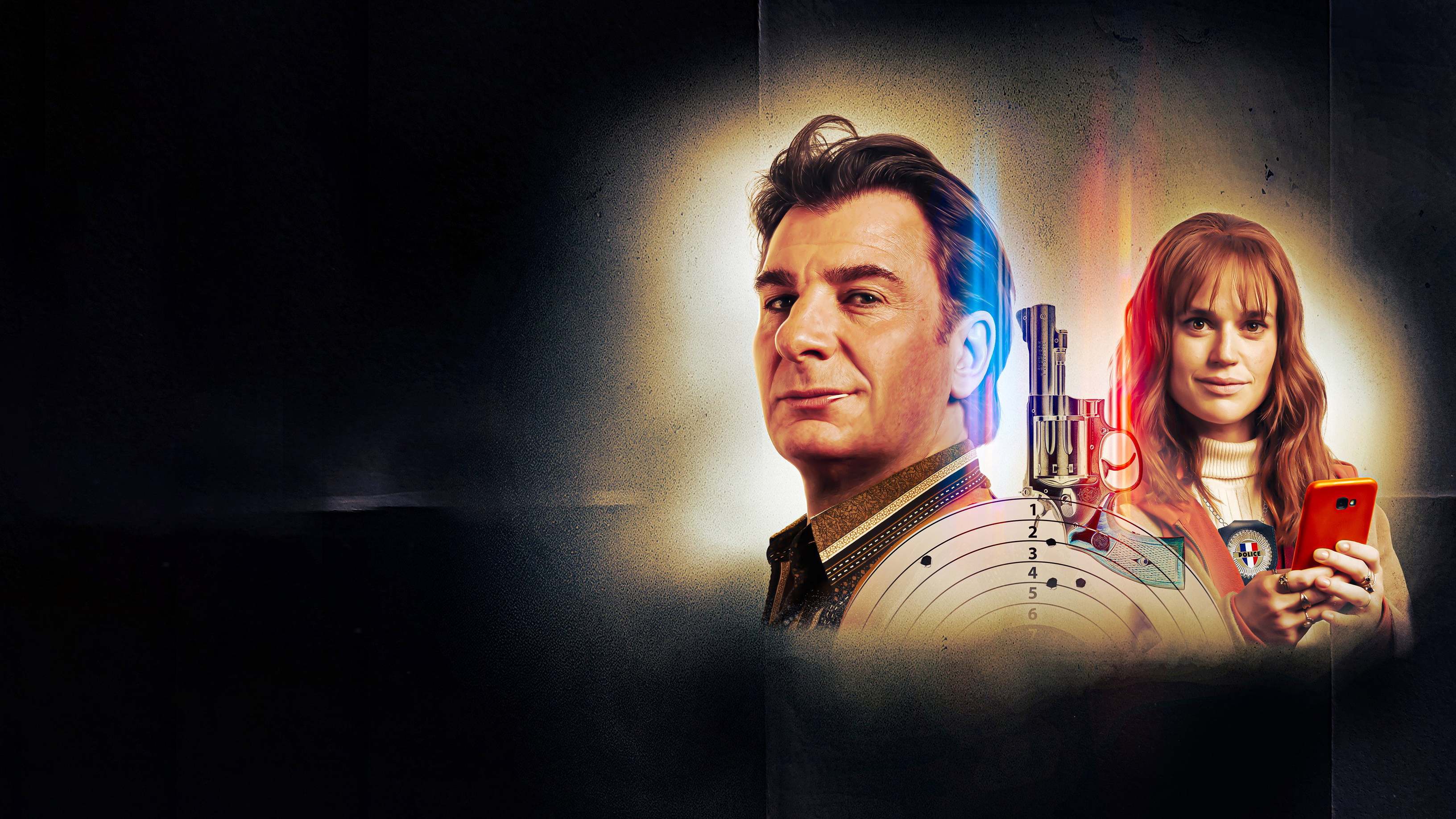
Constance Gay plays Elsa Letellier, a 2024 forensic police officer transported back to 1994. Michaël Youn plays her father Josselin Letellier, the 1990s police officer Elsa meets in the past as the young version of the man whose murder she is trying to prevent. The supporting cast includes Olivia Côte as Colette, Julien Pestel as Benoit, Sam Karmann as Perroni, Vanessa David as Anouk and Malek Lamraoui as Nadir.
Where was Flashback (2025) filmed?
Principal photography took place in the Auvergne-Rhône-Alpes region around Lyon, with location shoots in Lyon, Villeurbanne, Écully, Chaponost, Meyzieu, Ternay, Lentilly and Les Halles. The Saint-Just police-station exterior was paired with a 1990s squad-room interior reconstructed inside Villeurbanne studios. The production mobilized 113 regional technicians, 63 actors and over 300 local extras, with backing from Auvergne-Rhône-Alpes Cinéma and the Auvergne-Rhône-Alpes regional fund.
When did Flashback (2025) premiere?
Flashback premiered in Belgium on RTL TVI on February 19, 2025 and in France on TF1 on April 3, 2025. Season 1 ran six 52-minute episodes broadcast two per Thursday night at 21:10 from April 3 to April 17, 2025. Season 2 premiered on TF1 on April 9, 2026 and ran for six episodes through April 23, 2026, also in the Thursday prime-access slot.
How many episodes are there of Flashback (2025)?
Flashback has 12 episodes total across two seasons, with 6 episodes per season at 52 minutes each. Season 1 (2025) follows Elsa's mission to save her father in 1994. Season 2 (2026) shifts the timeline to 1996 and pivots the central mystery toward saving Elsa's mother, after Season 1 revealed that preventing her father's murder cost her her mother instead.
What awards has Flashback (2025) won?
Flashback won the Special Jury Mention at the 2024 Festival de la Fiction in La Rochelle, the leading French television fiction festival and the most influential domestic showcase for new series premieres. The recognition arrived ahead of the public broadcast launch in 2025 and signaled industry confidence in the project. The series has not yet been recognized in the major international television prize circuits including the International Emmy Awards, Series Mania or Canneseries main competition.
How were the ratings for Flashback (2025)?
Season 1 of Flashback opened to 4.55 million French viewers for a 24.7 percent market share on TF1 on April 3, 2025 and averaged 3.51 million viewers across its linear primetime run, climbing to 4.3 million at J+7 with time-shifted viewing and peaking at 5.4 million on the launch night. TF1 cited it as the best-performing Thursday fiction of the 2024 to 2025 season after HPI. Season 2 opened to 2.79 million viewers for a 16.8 percent share and averaged 2.34 million across its six episodes in April 2026.
Where can you watch Flashback (2025) today?
Flashback is available on TF1+ in France for catch-up streaming after its TF1 linear broadcast, and on RTL play in Belgium following its RTL TVI premiere window. International availability is handled through Be-FILMS and downstream sales partners on a territory-by-territory basis. The series is not currently available on Netflix, Amazon Prime Video or other global streaming platforms outside its broadcaster windows.
Filmmakers
Flashback

Official Trailer
Build budgets like this one in Saturation
Start from an industry-standard feature film template, import the schedule and rates you already have, and let the cost report keep itself current as you spend. Real-time collaboration, no spreadsheets.