
Flash of Genius Budget
 Drama1h 59m
Updated
Synopsis
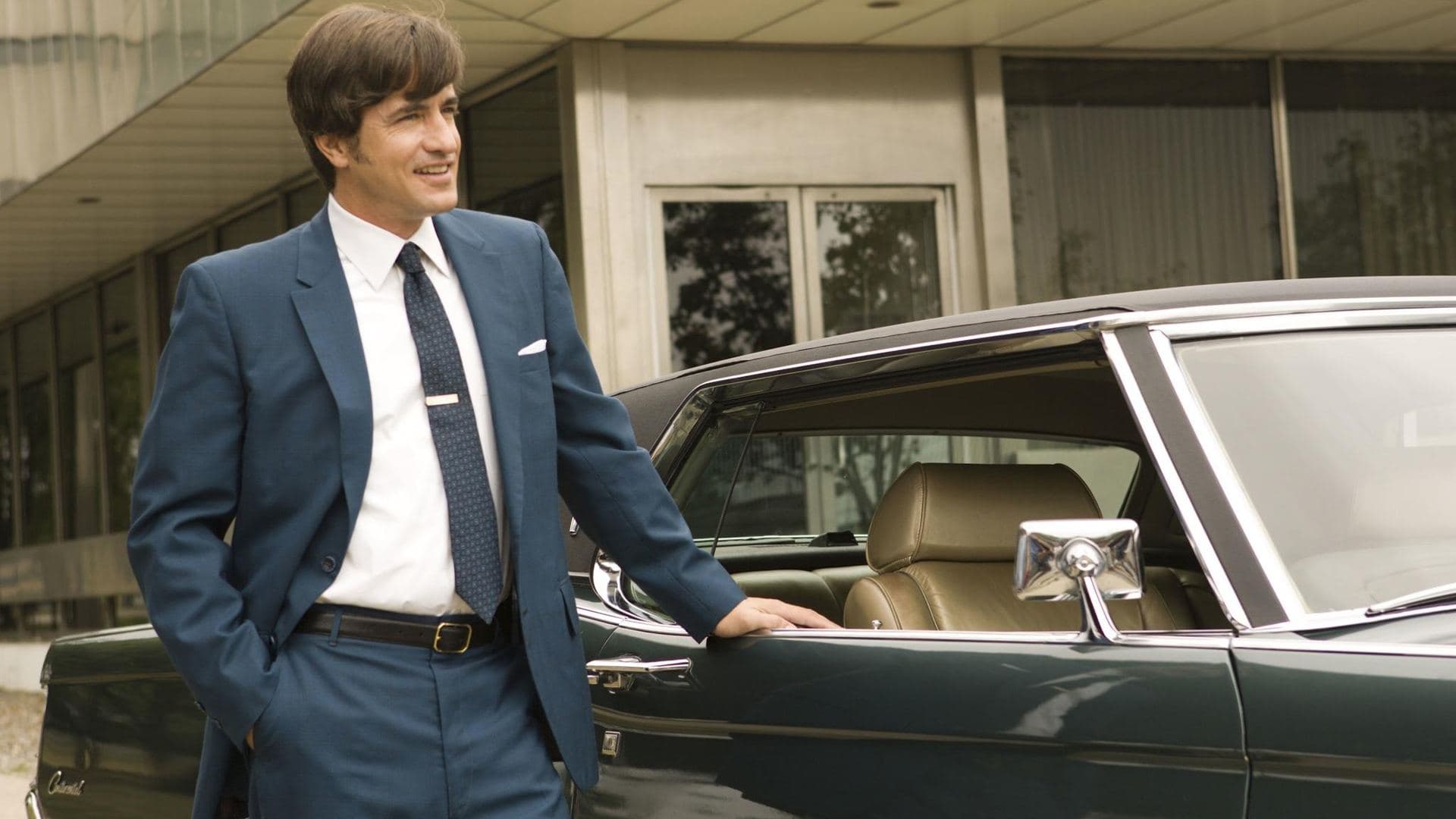
Based on the true story of Detroit engineer Robert Kearns, who invented the intermittent windshield wiper only to see Ford Motor Company replicate his design and refuse to credit him. Across more than a decade, he risks his career, marriage, and sanity to take the auto industry to court.
What Is the Budget of Flash of Genius (2008)?
Flash of Genius (2008), directed by Marc Abraham and adapted from John Seabrook's 1993 New Yorker article of the same name, was produced by Spyglass Entertainment, Strike Entertainment, and Beacon Pictures on a budget of $20,000,000. The film was distributed by Universal Pictures in the United States and by Focus Features International overseas, opening on October 3, 2008 as a counter-programming prestige fall release.
The budget reflected the practical needs of a contained mid-1960s through 1990s Detroit-set biographical legal drama. The production combined a prestige adult-targeting structural conceit with practical Detroit and Toronto location work, an A-list ensemble led by Greg Kinnear, and a 35- to 40-day shooting schedule. As a fall theatrical release through Universal, the film was conceived as a modest-scale awards contender rather than as a wide-audience commercial play.
Key Budget Allocation Categories
The $20,000,000 budget was distributed across these core production areas:
- Above-the-Line Talent: Greg Kinnear, an Academy Award nominee for As Good as It Gets (1997) and a reliable mid-budget prestige lead, headlined as Robert Kearns under a prestige-adult-drama rate. Lauren Graham (Gilmore Girls, Bad Santa) joined as Kearns's wife Phyllis. Dermot Mulroney joined as Kearns's friend Gil Previck, with Alan Alda as attorney Gregory Lawson. The supporting cast included Mitch Pileggi, Bill Smitrovich, Tim Kelleher, and Aaron Abrams. Director Marc Abraham, making his feature directorial debut after years as a producer (Air Force One, Children of Men), received standard fees on both sides of the camera.
- Detroit and Toronto Location Shoot: Principal photography took place across Detroit and Toronto, with the Toronto portion of the shoot taking advantage of the Ontario Film and Television Tax Credit. Detroit location work captured the actual Kearns family neighborhood, Ford Motor Company exterior locations, and the federal courthouses where the actual legal action took place. Toronto locations stood in for Detroit interiors and provided generic 1960s and 1970s American suburban-period settings.
- Production Design and Costume: Production designer Dan Davis built or redressed multiple period-specific locations covering roughly three decades from the mid-1960s through the early 1990s. Costume designer Susan Lyall dressed the principal cast across a period arc that required careful attention to mid-decade detail in the 1960s, 1970s, and 1980s.
- Cinematography: Dante Spinotti, the Academy Award nominee for L.A. Confidential and The Insider, shot the film with a controlled visual language. Camera and lighting packages were standard for a mid-budget prestige drama.
- Score and Music: Composer Aaron Zigman provided the score, supporting the film's emotional restraint with a classically-informed orchestral language. Additional music licensing for period radio and pop tracks added a moderate music line item.
- Visual Effects and Practical Effects: The film required minimal VFX work, with the bulk of effects coverage going to practical period dressing, vintage automobile preparation, and physical-effects support for the rain-sequence demonstrations of the windshield-wiper invention.
How Does Flash of Genius's Budget Compare to Similar Films?
At $20,000,000, the film sits in the mid-range of contemporary biographical legal drama. Its peers in subject matter and scale spent in a comparable bracket:
- Erin Brockovich (2000): Budget $51,000,000 | Worldwide $256,271,286. Steven Soderbergh's prestige legal drama is the closest tonal comparison and the upper-end reference at roughly 2.5 times the Flash of Genius budget, demonstrating the commercial gulf between a strong-craft biographical legal drama with a major star and a more contained alternative.
- Steve Jobs (2015): Budget $30,000,000 | Worldwide $34,394,706. Danny Boyle's prestige biographical drama is a useful 1.5-times-budget reference and demonstrates the commercial difficulty of theatrical biographical drama even with major prestige craft.
- The Social Network (2010): Budget $40,000,000 | Worldwide $224,920,315. David Fincher's biographical drama is the upper-end reference at roughly twice the Flash of Genius budget and a useful demonstration of the wide commercial range possible in the category.
- Captain Phillips (2013): Budget $55,000,000 | Worldwide $218,792,015. Paul Greengrass's biographical drama is a higher-budget star-led prestige reference at nearly three times the Flash of Genius cost.
- Tetris (2023): Budget approximately $80,000,000 | Worldwide n/a streaming (Apple TV+). Jon S. Baird's streaming-era biographical drama is a useful contemporary platform reference at four times the Flash of Genius budget.
Flash of Genius Box Office Performance
Flash of Genius opened in wide US release on October 3, 2008 against the dual headwinds of the September 2008 financial crisis (which affected discretionary entertainment spending broadly) and a crowded prestige-drama fall release schedule. The opening weekend grossed $2,331,170 across 1,098 screens, placing the film 12th at the domestic box office that weekend.
Against a $20,000,000 production budget, the film required approximately $40,000,000 to $50,000,000 in worldwide gross to reach profitability when accounting for marketing and distribution costs. The film fell well short of that target:
Box Office Breakdown
Flash of Genius

The domestic gross was $4,418,996 against an international gross of $353,608, an approximately 93/7 split heavily favoring North America that reflected the inherently US-centric biographical subject matter. The film was a clear theatrical underperformer, attributed in subsequent trade reporting to the financial-crisis-distracted October 2008 release window, the limited international interest in an Americana-focused biographical narrative, and competition from higher-profile fall prestige releases including Body of Lies, Eagle Eye, and Beverly Hills Chihuahua.
The film recouped meaningful incremental revenue through DVD and Blu-ray home-entertainment sales in 2009 and 2010, plus television-licensing income through cable broadcast windows. The combined downstream revenue likely closed some of the theatrical loss but did not bring the film to break-even before all marketing and distribution costs were absorbed.
Flash of Genius Production History
John Seabrook's 1993 New Yorker article about Robert Kearns and his decade-long legal battle against Ford Motor Company was optioned in the mid-1990s and developed through multiple producing teams before landing at Spyglass Entertainment and Strike Entertainment in 2005. Producer Marc Abraham, who had spent more than a decade producing major Hollywood features at Beacon Pictures (Air Force One, Bring It On, Children of Men), attached as director, making his feature directorial debut on the project.
The screenplay was credited to Philip Railsback after several earlier drafts, with the script focusing tightly on the personal cost to Kearns of pursuing his legal action rather than on the technical detail of patent law or windshield-wiper engineering. Greg Kinnear was cast in the title role in 2007, with Lauren Graham, Dermot Mulroney, and Alan Alda joining the principal cast through that year.
Principal photography took place in late 2007 and early 2008 across Detroit and Toronto locations. The Toronto portion of the shoot took advantage of the Ontario Film and Television Tax Credit and the broader Canada production incentive structure, with Toronto interiors and suburban streets standing in for 1960s and 1970s Detroit-area settings. Detroit location work captured the actual Kearns family neighborhood and Ford Motor Company exterior locations.
The Kearns family (Robert Kearns having died in 2005) cooperated with the production, providing access to family documents, photographs, and personal effects to support production-design authenticity. Post-production wrapped through summer 2008 ahead of an October 3, 2008 theatrical release through Universal Pictures.
Awards and Recognition
Flash of Genius received select awards recognition. Greg Kinnear was nominated for the Satellite Award for Best Actor in a Motion Picture, Drama at the 2008 Satellite Awards. The film also received recognition at the Heartland Film Festival's Truly Moving Picture Award and additional independent-circuit honors, though it did not penetrate the major Academy Award or Golden Globe categories.
The film's legacy is as a well-crafted, modestly-received entry in the biographical legal-drama category rather than as an awards-circuit player. Greg Kinnear's performance was widely cited in 2008 year-end critics' roundups as one of the year's most underrated lead performances, with his commitment to the difficult, increasingly obsessed Kearns characterization praised by multiple reviewers.
Critical Reception
Flash of Genius received mixed-to-positive reviews from critics. The film holds a 60% approval rating on Rotten Tomatoes based on 130 reviews, with a critical consensus calling Kinnear's performance the film's defining strength but noting the conventional biographical structure. On Metacritic, the film scored 56 out of 100, indicating mixed or average reviews. Audiences surveyed by CinemaScore gave the film a B+, a modest gap above the critical reception.
Critics singled out Greg Kinnear's committed central performance as the film's strongest element, with Roger Ebert giving the film three stars and writing that "Kinnear plays Kearns as a man who knows he is right and cannot tolerate the world's indifference to that fact." The New York Times's A.O. Scott called it "a sturdy, sometimes affecting portrait of an inventor consumed by his own principle," while Variety's Justin Chang noted Marc Abraham's "restrained directorial debut" and the "warm, period-appropriate texture" of the production.
More critical reviewers including The New Yorker's David Denby noted that the film "trades the wider David-versus-Goliath narrative for a tight personal-cost story, with some loss of stakes in the bargain." IndieWire and Slate praised the production while noting its lack of formal ambition beyond conventional biographical-drama structure. Audience response on Netflix, Letterboxd, and other contemporary platforms has been warmer than the critical reception, with the film attracting steady recommendation engagement particularly among adult viewers drawn to mid-budget prestige adult drama.
Frequently Asked Questions
How much did it cost to make Flash of Genius (2008)?
The reported production budget was $20,000,000. The film was produced by Spyglass Entertainment, Strike Entertainment, and Beacon Pictures, with Universal Pictures distributing in the United States and Focus Features International handling overseas distribution.
How much did Flash of Genius earn at the box office?
The film grossed $4,418,996 domestically and $353,608 internationally for a worldwide total of $4,772,604. It opened on October 3, 2008 against the headwinds of the September 2008 financial crisis and a crowded prestige-drama fall release schedule. The opening weekend grossed $2,331,170 across 1,098 screens.
Is Flash of Genius a true story?
Yes. The film is based on the true story of Detroit engineer Robert Kearns (1927 to 2005), who invented the intermittent windshield wiper in the early 1960s and then spent more than a decade pursuing legal action against Ford Motor Company and Chrysler for patent infringement. The screenplay adapts John Seabrook's 1993 New Yorker article of the same name.
Who directed Flash of Genius?
Marc Abraham directed the film, making his feature directorial debut. Abraham had previously spent more than a decade producing major Hollywood features at Beacon Pictures, including Air Force One (1997), Bring It On (2000), Children of Men (2006), and Spy Game (2001).
Who stars in Flash of Genius?
Greg Kinnear plays Robert Kearns in the title role. Lauren Graham plays his wife Phyllis, Dermot Mulroney plays his friend Gil Previck, and Alan Alda plays attorney Gregory Lawson. Supporting cast includes Mitch Pileggi, Bill Smitrovich, Tim Kelleher, and Aaron Abrams.
Where was Flash of Genius filmed?
Principal photography took place in late 2007 and early 2008 across Detroit and Toronto locations. The Toronto portion took advantage of the Ontario Film and Television Tax Credit and the broader Canadian production incentive structure. Detroit location work captured the actual Kearns family neighborhood and Ford Motor Company exteriors.
What did critics think of Flash of Genius?
The film received mixed-to-positive reviews with a 60% approval rating on Rotten Tomatoes based on 130 reviews and a 56 out of 100 score on Metacritic. Critics singled out Greg Kinnear's committed central performance as the film's strongest element. Roger Ebert gave the film three stars.
Was Flash of Genius profitable?
No. Against a $20,000,000 production budget and an estimated $15,000,000 to $20,000,000 in marketing spend, the $4,772,604 worldwide theatrical gross produced an approximate $30,000,000 to $35,000,000 theatrical loss. The film recouped some incremental revenue through DVD and television-licensing windows but did not reach break-even.
Did Flash of Genius win any awards?
The film received select awards recognition, including a Satellite Award nomination for Greg Kinnear for Best Actor in a Motion Picture, Drama. It did not penetrate the major Academy Award or Golden Globe categories.
Who was Robert Kearns?
Robert Kearns (1927 to 2005) was a Detroit engineer and Ford Motor Company employee who invented the intermittent windshield wiper in the early 1960s. After Ford and Chrysler replicated his design without licensing it from him, he spent more than a decade pursuing patent-infringement litigation, eventually winning settlements totaling more than $30,000,000 from both companies in the 1990s. His story is considered a landmark American case study in inventor rights and patent law.
Filmmakers
Flash of Genius

Official Trailer
Build budgets like this one in Saturation
Start from an industry-standard feature film template, import the schedule and rates you already have, and let the cost report keep itself current as you spend. Real-time collaboration, no spreadsheets.