Final Destination Budget
 Horror1h 38m
Updated
Synopsis
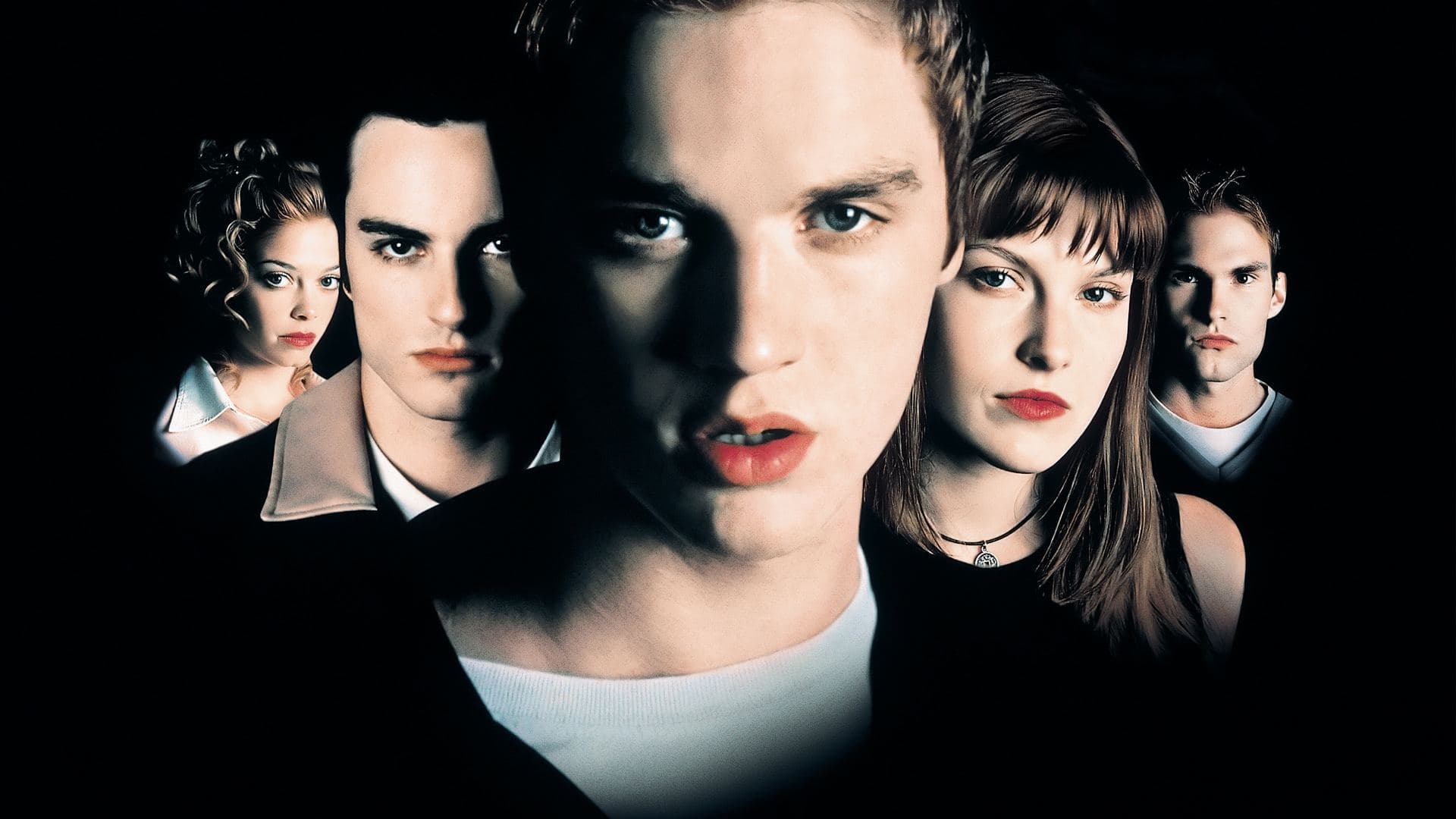
Alex Browning, is embarking on a trip to Paris. Alex experiences a premonition — he sees the plane explode moments after leaving the ground. Alex insists that everyone get off the plane and 7 people including Alex, are forced to disembark. All watch as the plane actually explodes in a fireball. He and the other survivors have briefly cheated death, but will not be able to evade their fate for very long. One by one, these fugitives from fate fall victim to the grim reaper.
What Is the Budget of Final Destination?
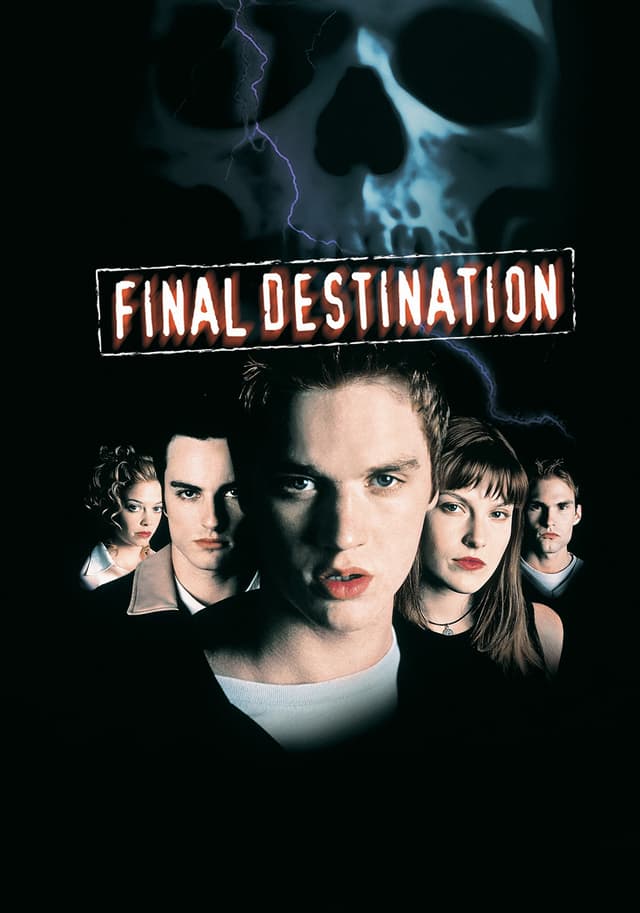
Final Destination (2000) was produced on a budget of $23 million by New Line Cinema, the studio that had built its reputation on the Nightmare on Elm Street and Teenage Mutant Ninja Turtles franchises and would go on to produce the Lord of the Rings trilogy. The $23 million figure was a substantial commitment for a horror film in 2000, reflecting New Line's confidence in the concept and the pedigree of the creative team attached to it: writers and directors James Wong and Glen Morgan, both veterans of The X-Files television series, brought an intellectual seriousness to the genre that justified a budget above typical horror fare.
The concept originated with Jeffrey Reddick, who wrote the initial treatment as an X-Files spec script after being inspired by a real incident in which a woman switched flights based on her mother's premonition and the plane she would have been on crashed. Reddick pitched it to his contacts at New Line Cinema, who purchased the treatment and hired him to develop it into a feature. After the success of Scream (1996) reshaped studio expectations for horror, New Line requested Reddick age down the surviving characters from adults to teenagers, positioning the film to attract the young audience that had made Scream a phenomenon. Wong and Morgan then substantially rewrote the screenplay, rejecting the traditional slasher format in favor of an unseen antagonist: Death itself, operating through invisible cause-and-effect chains.
The $23 million budget supported a technically demanding production that required a custom hydraulic gimbal, a 10-foot miniature Boeing 747 used for the airplane explosion sequence, and filming across multiple Canadian and American locations. New Line's investment was vindicated when the film grossed $112.9 million worldwide, spawning a franchise of five sequels that collectively grossed more than $600 million at the global box office.
Key Budget Allocation Categories
- Above-the-Line Cast: Devon Sawa led the film as Alex Browning, the teenager who foresees the plane explosion. Sawa had recently appeared in Idle Hands (1999) and was not yet a major box office draw, which kept his fee within range for a $23 million production. Ali Larter, fresh from Varsity Blues (1999), played Clear Rivers, and Seann William Scott, cast before his breakthrough in American Pie (1999), played Billy Hitchcock. Tony Todd, the Candyman franchise star, was cast specifically for his deep voice as the mortician William Bludworth. The cast was assembled to project young-audience appeal combined with genre credibility, rather than expensive star salaries.
- Technical Effects and the Hydraulic Gimbal: The centerpiece of the production's technical achievement was a three-ton hydraulic gimbal weighing approximately 45,000 pounds, built to house 89 extras inside a full-scale aircraft interior set. The rig could tilt up to 45 degrees side-to-side and 60 degrees front-to-back to simulate catastrophic turbulence. Director James Wong estimated that approximately 40 of those extras experienced motion sickness during filming. This single piece of equipment represented a major line item in the budget, and its construction was central to making the airplane disaster sequence feel physically credible rather than relying entirely on visual effects.
- Miniature and Practical Effects for the Plane Explosion: The Boeing 747 miniature used for the exterior explosion sequence measured approximately 10 feet long and 7 feet wide, with machined metal landing gear for physical authenticity. The crew launched it 40 feet into the air and filmed the explosion at frame rates between 120 and 300 frames per second using multiple cameras to capture the event from every angle. The train collision sequence that kills Carter and Terry required a replica car to be severed in half before filming, with all sheet metal removed for actor safety. All on-set fatality sequences used lifecasts of the actual actors rather than fully digital stand-ins.
- Multi-Location Production in Canada and the United States: Principal photography split between Long Island for the plane sequences and Victoria, British Columbia, for the majority of the film, including the death scenes, memorial sequence, forest sequences, and scenes set in Paris. Toronto provided supplementary filming days. Vancouver International Airport substituted for JFK Airport in the New York narrative. Filming in British Columbia offered favorable production incentives compared to comparable American locations, and the region's versatility in standing in for multiple settings reduced the logistical cost of moving the production.
- Production Design and Visual Philosophy: Production designer John Willet developed a "skewing" technique throughout the film, subtly tilting set perspectives and framings to create low-level psychological unease without obvious distortion. Sets were built in two versions for the pre-crash and post-crash portions of the film, with color palettes intentionally shifting from "bright and rich" to "washed out and faded" as Death's design progresses. Cinematographer Robert McLachlan executed this visual grammar under Wong's direction, earning a Canadian Society of Cinematographers nomination for his work.
How Does Final Destination's Budget Compare to Similar Films?
At $23 million, Final Destination sits at the upper end of late-1990s and early-2000s horror budgets, above the micro-budget end of the genre but well below mainstream studio tentpoles. Its worldwide gross of $112.9 million represented a nearly 4x return on production cost, confirming the economic thesis that elevated horror concepts with recognizable television talent can outperform on a contained budget. The comparison set below illustrates where Final Destination fits within the genre landscape of its era.
- Scream (1996): Budget $15M | Worldwide $173M. Wes Craven's meta-slasher directly shaped Final Destination's development: New Line requested Reddick age his characters down after Scream demonstrated the teenage horror audience. Scream cost $8 million less than Final Destination and grossed $60 million more worldwide, establishing the financial benchmark the New Line team was chasing.
- The Sixth Sense (1999): Budget $40M | Worldwide $672M. M. Night Shyamalan's supernatural thriller was released just eight months before Final Destination and reset studio expectations for horror-adjacent films built around a single conceptual twist. Final Destination pursued a similar audience on less than 60% of The Sixth Sense's budget, and while its gross was far more modest, it proved the concept could work without A-list stars.
- Hollow Man (2000): Budget $95M | Worldwide $190M. Released the same summer as Final Destination, Paul Verhoeven's invisible-man horror film spent four times as much on production and returned roughly 1.7x its budget worldwide, compared to Final Destination's 4.9x return. The comparison illustrates how high-concept horror did not require blockbuster budgets to deliver strong returns for studios.
- Final Destination 2 (2003): Budget $26M | Worldwide $90M. The immediate sequel cost only $3 million more than the original but grossed $22 million less worldwide, suggesting that the novelty of the premise was a significant driver of the first film's commercial performance. Subsequent entries in the franchise continued to be produced on comparable budgets while grossing progressively higher amounts internationally as the series developed a dedicated global fanbase.
Final Destination Box Office Performance
Final Destination opened on March 17, 2000, across 2,587 theaters in North America, earning $10,015,822 in its opening weekend. The film debuted at number three behind Erin Brockovich and Mission to Mars, a solid start for a mid-budget horror film without franchise brand recognition. New Line Cinema distributed the film domestically, where it ultimately earned $53,331,147. International markets added $59,549,147, bringing the worldwide total to $112,880,294.
Against a $23 million production budget, Final Destination was a clear commercial success. Estimating print-and-advertising costs at approximately $20 million for a wide North American release with international distribution, total investment would have been roughly $43 million. Because theaters retain approximately 50% of gross receipts, New Line's share of the worldwide box office was approximately $56.4 million, covering the full investment with room to spare before home video and cable licensing revenues are counted. The film's commercial performance directly triggered the commissioning of Final Destination 2 (2003), which opened the door to a five-film franchise.
Box Office Breakdown
Final Destination

For every dollar invested in Final Destination's $23 million production, the film returned approximately $4.91 in worldwide gross, or roughly $2.45 in studio rental receipts after the theatrical split. When P&A is factored in, New Line's actual cash return from theatrical alone was tighter, but home video sales in the DVD boom era of the early 2000s and eventual cable licensing substantially improved the long-term economics. The franchise value created by this first film's performance made its true return on investment far higher than theatrical gross alone suggests.
Final Destination Production History
Final Destination began as a speculative script for The X-Files television series. Jeffrey Reddick, an employee at New Line Cinema, wrote the treatment during a flight home to Kentucky, inspired by a real incident he had read about in which a woman switched flights after her mother warned her against it and the original plane crashed. Reddick asked himself what would have happened if that woman had been fated to die on that flight: would Death simply reassign the order? That question became the engine of the story. A colleague suggested Reddick develop it into a feature film rather than a TV spec, and New Line purchased his treatment and hired him to write a full screenplay. Following the commercial success of Scream, New Line requested Reddick rewrite the adult survivors as teenagers to target the same audience. The resulting script came to the attention of James Wong and Glen Morgan, who had been X-Files writers and producers throughout the series' early seasons.
Wong and Morgan agreed to direct and substantially rewrite the script. Their key creative decision was to reject the slasher film convention of a human or supernatural killer in favor of Death itself as the antagonist. Wong explained their goal: to do for planes and air travel what Jaws did for sharks and swimming. The two writers rebuilt the screenplay around the concept of Death's invisible design, using chain-reaction cause-and-effect sequences to kill characters who had cheated their fated moment on Flight 180. This structural innovation distinguished the film from the genre films it superficially resembled and gave it the intellectual premise that has sustained five sequels.
Casting began with the supporting roles and worked inward toward the lead. Tony Todd was cast as William Bludworth, the mortician, specifically because of the unsettling quality of his deep voice; director Morgan felt Todd's vocal presence would enhance the film's eerie atmosphere without requiring the character to appear frequently. Kerr Smith joined from Dawson's Creek, requiring the production to work around his television schedule. Seann William Scott was cast before American Pie made him famous. Devon Sawa, the last principal role cast, read the script on an airplane and found himself genuinely anxious inspecting the engines, a response the filmmakers took as confirmation they had cast correctly. Ali Larter, who had recently appeared in Varsity Blues, was cast as Clear Rivers. Morgan's spouse, Kristen Cloke, played the teacher Valerie Lewton.
Principal photography took place largely in Victoria, British Columbia, which stood in for the film's New York and Paris settings, with supplementary days in Toronto, San Francisco, and on Long Island for the airplane sequences. Vancouver International Airport served as JFK Airport in the narrative. The 45,000-pound hydraulic gimbal built for the aircraft interior sequences proved one of the most logistically demanding elements of the shoot, as it required 89 extras to occupy the set while it tilted to extreme angles. Post-production emphasized the visual skewing technique developed by production designer John Willet, with cinematographer Robert McLachlan executing the deliberate tonal shift from the film's opening brightness to its washed-out, fatalistic second half. Final Destination premiered on March 17, 2000, and its opening weekend performance immediately prompted New Line to develop the sequel.
Awards and Recognition
Final Destination won two Saturn Awards from the Academy of Science Fiction, Fantasy, and Horror Films at the 2001 ceremony: Best Horror Film and Best Performance by a Younger Actor for Devon Sawa. The Saturn Awards are the genre's primary industry awards and represent the highest recognition Final Destination received from organized awards bodies. The wins for both the film itself and its lead actor signaled that the genre community recognized the film as an above-average entry in the horror field despite its mixed mainstream critical reception.
Ali Larter received a Young Hollywood Award for Breakthrough Performance by a Female for her role as Clear Rivers. Cinematographer Robert McLachlan received a nomination from the Canadian Society of Cinematographers for his work on the film. Devon Sawa and Ali Larter were nominated at the 7th Blockbuster Entertainment Awards but did not win, losing to actors from Scream 3. The airplane explosion sequence was later featured on multiple "best fictional plane crashes" lists compiled by aviation and cinema publications.
The more durable form of recognition for Final Destination has been the franchise it spawned. Four direct sequels were produced between 2003 and 2011, each built on the same structural premise of characters cheating death and being hunted by an invisible correction to the natural order. A fifth entry, Final Destination Bloodlines, is in development as of 2025. The original film's cultural footprint is visible in the frequency with which its premise is referenced in other films, television series, and popular discourse about premonitions and fate, a measure of influence that no awards campaign fully captures.
Critical Reception
Final Destination holds a 51% approval rating on Rotten Tomatoes from 164 reviews, with a 68% audience score from general viewers. Metacritic assigned it a score of 39 out of 100, indicating "generally unfavorable" reviews from mainstream critics. CinemaScore audiences gave it a B minus, reflecting moderate satisfaction among the opening weekend crowd. The split between critics and audiences was pronounced: many critics found the film's performances thin and its execution derivative, while general audiences responded to the concept's novelty and the film's relentless momentum.
The Rotten Tomatoes critical consensus states: "Despite a panel of X-Files' alums at the helm and a promising premise, flighty performances and poor execution keep Final Destination from ever taking off." Negative reviews were consistent in their complaints. Several critics called the film "dramatically flat," "crude and witless," and "a waste of a decent premise," with the gap between the intellectual ambition of the Death-as-antagonist concept and the quality of the character writing drawing the most sustained criticism.
Positive reviews focused on the film's kinetic execution and genuine tension. Roger Ebert awarded three out of four stars, writing that the film would "inspire the obligatory sequels" and comparing it favorably to the original Scream as a genre film with enough craft to justify its existence. Peter Bradshaw of the Guardian described it as "pure shlock, pure and simple. But it's unadulterated, unashamed, and delivered with a certain hard-ball intensity." John Beifuss of the Commercial Appeal praised its ability to "milk the suspense unmercifully." Mick LaSalle noted the film was "playful and energized enough to keep an audience guessing." Devon Sawa's performance as the increasingly desperate Alex Browning was consistently the performance critics singled out for credibility, even in otherwise negative reviews. The consensus that ultimately emerged was that Final Destination's concept was stronger than its execution, a judgment the franchise has spent five sequels attempting to disprove.
Frequently Asked Questions
How much did it cost to make Final Destination (2000)?
The production budget was $23,000,000, covering principal photography, cast and crew salaries, locations, sets, post-production, and music. Marketing and distribution (P&A) costs are estimated at an additional $11,500,000 - $18,400,000, bringing the total studio investment to approximately $34,500,000 - $41,400,000.
How much did Final Destination (2000) earn at the box office?
Final Destination grossed $53,331,147 domestic, $59,549,147 international, totaling $112,880,294 worldwide.
Was Final Destination (2000) profitable?
Yes. Against a production budget of $23,000,000 and estimated total costs of ~$57,500,000, the film earned $112,880,294 theatrically - a 391% ROI on production costs alone.
What were the biggest costs in producing Final Destination?
The primary cost drivers were above-the-line talent (Devon Sawa, Ali Larter, Kerr Smith); practical creature effects, atmospheric cinematography, and psychologically engineered sound design.
How does Final Destination's budget compare to similar horror films?
At $23,000,000, Final Destination is classified as a low-budget production. The median budget for wide-release horror films in the 2000s ranges from $30 - 80M for mid-budget to $150M+ for tentpoles. Comparable budgets: The Secret World of Arrietty (2010, $23,000,000); Bad Santa (2003, $23,000,000); Chasing Liberty (2004, $23,000,000).
Did Final Destination (2000) go over budget?
There are no widely reported accounts of significant budget overruns for this production. However, studios rarely disclose precise budget overrun figures publicly. The reported production budget reflects the final estimated cost.
What was the return on investment (ROI) for Final Destination?
The theatrical ROI was 390.8%, calculated as ($112,880,294 − $23,000,000) ÷ $23,000,000 × 100. This measures gross revenue against production budget only - it does not account for P&A or exhibitor shares.
What awards did Final Destination (2000) win?
3 wins & 5 nominations total.
Who directed Final Destination and who were the key crew members?
Directed by James Wong, written by James Wong, Jeffrey Reddick, Glen Morgan, shot by Robert McLachlan, with music by Shirley Walker, Adam Hamilton, edited by James Coblentz.
Where was Final Destination filmed?
Final Destination was filmed in United States of America.
Filmmakers
Final Destination

Official Trailer
Build budgets like this one in Saturation
Start from an industry-standard feature film template, import the schedule and rates you already have, and let the cost report keep itself current as you spend. Real-time collaboration, no spreadsheets.