Saturation
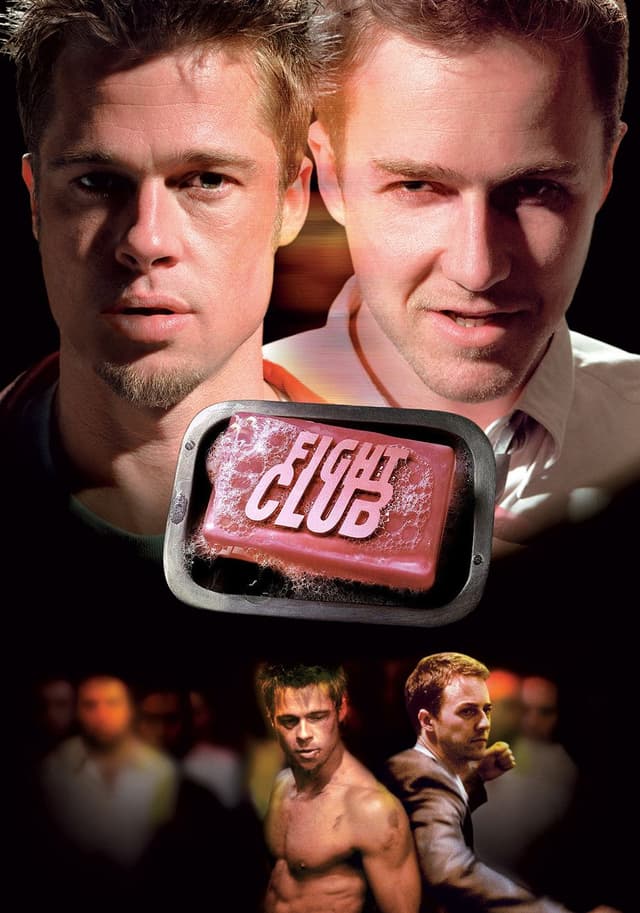
Fight Club movie poster

Fight Club

RDrama, Thriller
Budget$63M
Domestic Box Office$37.0M
Worldwide Box Office$100.9M

Synopsis

A nameless first person narrator (Edward Norton) attends support groups in attempt to subdue his emotional state and relieve his insomniac state. When he meets Marla (Helena Bonham Carter), another fake attendee of support groups, his life seems to become a little more bearable. However when he associates himself with Tyler (Brad Pitt) he is dragged into an underground fight club and soap making scheme. Together the two men spiral out of control and engage in competitive rivalry for love and power.

Production Budget Analysis

What was the production budget for Fight Club?

Directed by David Fincher, with Edward Norton, Brad Pitt, Helena Bonham Carter leading the cast, Fight Club was produced by Fox 2000 Pictures with a confirmed budget of $63,000,000, placing it in the mid-budget category for drama films.

With a $63,000,000 budget, Fight Club sits in the mid-range of studio releases. Marketing costs for a wide release at this level typically add $30–60 million, putting the break-even point near $157,500,000.

Budget Comparison — Similar Productions

• The Matrix (1999): Budget $63,000,000 | Gross $463,517,383 → ROI: 636% • Jurassic Park (1993): Budget $63,000,000 | Gross $920,100,000 → ROI: 1360% • Detective Chinatown 2 (2018): Budget $63,000,000 | Gross $544,185,156 → ROI: 764% • 28 Years Later: The Bone Temple (2026): Budget $63,000,000 | Gross $58,586,229 → ROI: -7% • 3000 Miles to Graceland (2001): Budget $62,000,000 | Gross $18,720,175 → ROI: -70%

Key Budget Allocation Categories

▸ Above-the-Line Talent Drama films live or die on the strength of their performances. Securing award-caliber actors and experienced directors represents the single largest budget line item, often consuming 30–40% of the total production budget.

▸ Location Filming & Period Production Design Authentic locations — whether contemporary or historical — require scouting, permits, travel, lodging, and often significant dressing to match the story's time period. Period dramas add the cost of era-accurate props, vehicles, and set decoration.

▸ Post-Production, Color Grading & Score The editorial process for dramas is typically longer than genre films, with careful attention to pacing and tone. Color grading, a nuanced musical score, and detailed sound mixing are critical to achieving the emotional resonance that defines the genre.

Key Production Personnel

CAST: Edward Norton, Brad Pitt, Helena Bonham Carter, Meat Loaf, Jared Leto Key roles: Edward Norton as Narrator; Brad Pitt as Tyler Durden; Helena Bonham Carter as Marla Singer; Meat Loaf as Robert Paulson

DIRECTOR: David Fincher CINEMATOGRAPHY: Jeff Cronenweth MUSIC: John King, Michael Simpson EDITING: James Haygood PRODUCTION: Fox 2000 Pictures, Regency Enterprises, Linson Entertainment, 20th Century Fox, Taurus Film FILMED IN: Germany, United States of America

Box Office Performance

Fight Club earned $37,030,102 domestically and $63,823,651 internationally, for a worldwide total of $100,853,753. Revenue was split 37% domestic / 63% international.

Break-Even Analysis

Using the industry-standard 2.5x multiplier (P&A + exhibitor shares of 40–50% + distribution fees), Fight Club needed approximately $157,500,000 to break even. The film fell $56,646,247 short in theatrical revenue. Ancillary streams (home media, streaming, TV) may have bridged the gap.

Return on Investment (ROI)

Revenue: $100,853,753 Budget: $63,000,000 Net: $37,853,753 ROI: 60.1%

Profitability Assessment

VERDICT: Modestly Profitable

Fight Club earned $100,853,753 against a $63,000,000 budget (60% ROI). Full profitability was likely achieved through ancillary revenue streams.

INDUSTRY IMPACT

Fight Club was one of the most controversial and talked-about films of the 1990s. The film was perceived as the forerunner of a new mood in American political life. Like other 1999 films Magnolia, Being John Malkovich and Three Kings, Fight Club was recognized as an innovator in cinematic form and style, since it exploited new developments in filmmaking technology. After Fight Clubs theatrical release, it became more popular via word of mouth, and the positive reception of the DVD established it as a cult film that David Ansen of Newsweek conjectured would enjoy "perennial" fame. The film's success also heightened Palahniuk's profile to global renown.

Following Fight Clubs release, several fight clubs were reported to have started in the United States. A "Gentleman's Fight Club" was started in Menlo Park, California, in 2000 and had members mostly from the tech industry. Teens and preteens in Texas, New Jersey, Washington state and Alaska also initiated fight clubs and posted videos of their fights online, leading authorities to break up the clubs. In 2006, an unwilling participant from a local high school was injured at a fight club in Arlington, Texas and the DVD sales of the fight led to the arrest of six teenagers. An unsanctioned fight club was also started at Princeton University, where matches were held on campus. The film was suspected of influencing Luke Helder, a college student who planted pipe bombs in mailboxes in 2002.

PRODUCTION NOTES

▸ Writing

When Uhls first encountered the novel, it was in the form of a manuscript, though it already had a publisher. In his interview he stated that he read it just for enjoyment and was blown away by it. He started working on a draft of the adapted screenplay, which excluded a voice-over because the industry perceived the technique as "hackneyed and trite" at the time. When Fincher joined the film, he thought that the film should have a voice-over, believing that the film's humor came from the Narrator's voice. He described the film without a voice-over as seemingly "sad and pathetic". Fincher and Uhls revised the script for six to seven months and by 1997 had a third draft that reordered the story and left out several major elements. When Pitt was cast, he was concerned that his character, Tyler Durden, was too one-dimensional. Fincher sought the advice of writer-director Cameron Crowe, who suggested giving the character more ambiguity. Fincher also hired screenwriter Andrew Kevin Walker for assistance. He invited Pitt and Norton to help revise the script and the group drafted five revisions in the course of a year. Palahniuk's novel also contained homoerotic overtones, which Fincher included in the film to make audiences uncomfortable and accentuate the surprise of the twists. The bathroom scene where Tyler Durden bathes next to the Narrator is an example of the overtones; the line, "I'm wondering if another woman is really the answer we need," was meant to suggest personal responsibility rather than homosexuality.

The Narrator finds redemption at the end of the film by rejecting Tyler Durden's dialectic, a path that diverged from the novel's ending in which the Narrator is placed in a mental institution. Norton drew parallels between redemption in the film and redemption in The Graduate, indicating that the protagonists of both films find a middle ground between two divisions of self.

▸ Casting

Producer Ross Bell met with actor Russell Crowe to discuss his candidacy for the role of Tyler Durden. Producer Art Linson, who joined the project late, met with Brad Pitt regarding the same role. Linson was the senior producer of the two, so the studio sought to cast Pitt instead of Crowe. Other studios were approaching Norton for leading roles in developing films like; he was cast in Runaway Jury, but the film did not reach production. 20th Century Fox offered Norton $2.5 million for Fight Club. He could not accept the offer immediately because he still owed Paramount Pictures a film; he had signed a contractual obligation with Paramount to appear in one of the studio's future films for a smaller salary. Norton later satisfied the obligation with his role in the 2003 film The Italian Job. The actors prepared by taking lessons in boxing, taekwondo, grappling, and soapmaking. Pitt voluntarily visited a dentist to have pieces of his front teeth chipped off so his character would not have perfect teeth. The pieces were restored after filming concluded.

Fincher's first choice for the role of Marla Singer was Janeane Garofalo. While Fincher initially stated that she turned it down because she objected to the film's sexual content, in an interview in 2020, Garofalo revealed that she did accept the role, but was dropped because Norton believed she was poorly suited to it. Fincher pitched the role to Julia Louis-Dreyfus. The filmmakers considered Courtney Love and Winona Ryder as early candidates. Love claimed that she was cast as Marla Singer, but was fired after she rejected Pitt's pitch for a film about her late husband, Kurt Cobain. The studio wanted to cast Reese Witherspoon, but Fincher felt she was too young. Finally, Fincher chose to cast Helena Bonham Carter based on her performance in the 1997 film The Wings of the Dove.

▸ Filming & Locations

Studio executives Mechanic and Ziskin planned an initial budget of $23 million to finance the film, The final production budget was $63–65 million. Makeup artist Julie Pearce, who had worked for Fincher on the 1997 film The Game, studied mixed martial arts and pay-per-view boxing to portray the fighters accurately. She designed an extra's ear to have cartilage missing, inspired by the boxing match in which Mike Tyson bit off part of Evander Holyfield's ear. Makeup artists devised two methods to create sweat on cue: spraying mineral water over a coat of Vaseline and using the unadulterated water for "wet sweat". Meat Loaf, who plays a fight club member who has "bitch tits", wore a 90-pound (40 kg) fat harness that gave him large breasts.

Filming lasted 138 days from July to December 1998, during which Fincher shot more than 1,500 rolls of film, three times the average for a Hollywood film. while the interior was built on a sound stage at the studio's location. The interior was given a decayed look to illustrate the deconstructed world of the characters.

[Filming] Studio executives Mechanic and Ziskin planned an initial budget of $23 million to finance the film, The final production budget was $63–65 million. Makeup artist Julie Pearce, who had worked for Fincher on the 1997 film The Game, studied mixed martial arts and pay-per-view boxing to portray the fighters accurately. She designed an extra's ear to have cartilage missing, inspired by the boxing match in which Mike Tyson bit off part of Evander Holyfield's ear. Makeup artists devised two methods to create sweat on cue: spraying mineral water over a coat of Vaseline and using the unadulterated water for "wet sweat".

▸ Visual Effects & Design

Fincher hired visual effects supervisor Kevin Tod Haug, who worked for him on The Game, to create visual effects for Fight Club. Haug assigned the visual effects artists and experts to different facilities that each addressed different types of visual effects: CG modeling, animation, compositing and scanning. Haug explained, "We selected the best people for each aspect of the effects work, then coordinated their efforts. In this way, we never had to play to a facility's weakness." Fincher visualized the Narrator's perspective through a "mind's eye" view and structured a myopic framework for the film audiences. Fincher also used previsualized footage of challenging main-unit and visual effects shots as a problem-solving tool to avoid making mistakes during the actual filming. The film's title sequence is a 90-second visual effects composition that depicts the inside of the Narrator's brain at a microscopic level; the camera pulls back to the outside, starting at his fear center and following the thought processes initiated by his fear impulse. The sequence, designed in part by Fincher, was budgeted separately from the rest of the film at first, but the sequence was awarded by the studio in January 1999. and the design was detailed using renderings by medical illustrator Katherine Jones. The pullback sequence from within the brain to the outside of the skull included neurons, action potentials and a hair follicle.

AWARDS & RECOGNITION

Summary: Nominated for 1 Oscar. 12 wins & 38 nominations total

Awards Won: ★ Total Film Magazine Award ★ Jupiter Award ★ Empire Awards, UK for best british actress ★ Online Film & Television Association Award ★ Online Film Critics Society Awards

Nominations: ○ Academy Award for Best Sound Editing (72nd Academy Awards)

Additional Recognition: Fight Club was nominated for the 2000 Academy Award for Best Sound Editing, but it lost to The Matrix. Bonham Carter won the 2000 Empire Award for Best British Actress. The Online Film Critics Society also nominated Fight Club for Best Film, Best Director, Best Actor (Norton), Best Editing and Best Adapted Screenplay (Uhls). Though the film won none of the awards, the organization listed Fight Club as one of the top ten films of 1999. The soundtrack was nominated for a BRIT Award, losing to Notting Hill.

CRITICAL RECEPTION

Cineastes Gary Crowdus summarized the critical reception at the time, "Many critics praised Fight Club, hailing it as one of the most exciting, original and thought-provoking films of the year." He wrote of the negative opinion, "While Fight Club had numerous critical champions, the film's critical attackers were far more vocal, a negative chorus which became hysterical about what they felt to be the excessively graphic scenes of fisticuffs ... They felt such scenes served only as a mindless glamorization of brutality, a morally irresponsible portrayal, which they feared might encourage impressionable young male viewers to set up their own real-life fight clubs in order to beat each other senseless." When Fight Club premiered at the 56th Venice International Film Festival, the film was fiercely debated by critics. A newspaper reported, "Many loved and hated it in equal measures." Some critics expressed concern that the film would incite copycat behavior, such as that seen after A Clockwork Orange debuted in Britain nearly three decades previously. Upon the film's theatrical release, The Times reported the reaction, "It touched a nerve in the male psyche that was debated in newspapers across the world." Although the film's makers called Fight Club "an accurate portrayal of men in the 1990s," some critics called it "irresponsible and appalling." Writing for The Australian, Christopher Goodwin stated, "Fight Club is shaping up to be the most contentious mainstream Hollywood meditation on violence since Stanley Kubrick's A Clockwork Orange."

Janet Maslin, reviewing for The New York Times, praised Fincher's direction and editing of the film. She wrote that Fight Club carried a message of "contemporary manhood" and that, if not watched closely, the film could be misconstrued as an endorsement of violence and nihilism.

SAG Feature Film template
AFI template
Amazon template
Podcast template
Digital Content template
BET template
Commercial Bid template
Disney Films template
New Jersey Tax Credit template
Short Film template
Malta Film Incentive template
BBC Television template
New York Tax Credit template
Marvel Studios template
Feature Film template
Photography template
Netflix Productions template
hotdocs template
Paramount template
HBO Series template
UK Channel 4 template
Georgia Film Tax Credit template
Unscripted template
California Tax Credit template
Documentary template
CBS Television template
Music Video template
Events template
Post Production template
Canada Productions Telefilm template
Screen Australia template
Dreamworks template
Discovery Networks template
SAG Feature Film template
AFI template
Amazon template
Podcast template
Digital Content template
BET template
Commercial Bid template
Disney Films template
New Jersey Tax Credit template
Short Film template
Malta Film Incentive template
BBC Television template
New York Tax Credit template
Marvel Studios template
Feature Film template
Photography template
Netflix Productions template
hotdocs template
Paramount template
HBO Series template
UK Channel 4 template
Georgia Film Tax Credit template
Unscripted template
California Tax Credit template
Documentary template
CBS Television template
Music Video template
Events template
Post Production template
Canada Productions Telefilm template
Screen Australia template
Dreamworks template
Discovery Networks template
SAG Feature Film template
AFI template
Amazon template
Podcast template
Digital Content template
BET template
Commercial Bid template
Disney Films template
New Jersey Tax Credit template
Short Film template
Malta Film Incentive template
BBC Television template
New York Tax Credit template
Marvel Studios template
Feature Film template
Photography template
Netflix Productions template
hotdocs template
Paramount template
HBO Series template
UK Channel 4 template
Georgia Film Tax Credit template
Unscripted template
California Tax Credit template
Documentary template
CBS Television template
Music Video template
Events template
Post Production template
Canada Productions Telefilm template
Screen Australia template
Dreamworks template
Discovery Networks template
UK Channel 4 template
Amazon template
BET template
Canada Productions Telefilm template
BBC Television template
California Tax Credit template
Documentary template
Dreamworks template
Commercial Bid template
HBO Series template
Photography template
Short Film template
Discovery Networks template
Netflix Productions template
Disney Films template
Georgia Film Tax Credit template
Screen Australia template
Digital Content template
New York Tax Credit template
New Jersey Tax Credit template
Feature Film template
hotdocs template
Podcast template
SAG Feature Film template
Music Video template
AFI template
Malta Film Incentive template
Paramount template
Unscripted template
CBS Television template
Marvel Studios template
Post Production template
Events template
UK Channel 4 template
Amazon template
BET template
Canada Productions Telefilm template
BBC Television template
California Tax Credit template
Documentary template
Dreamworks template
Commercial Bid template
HBO Series template
Photography template
Short Film template
Discovery Networks template
Netflix Productions template
Disney Films template
Georgia Film Tax Credit template
Screen Australia template
Digital Content template
New York Tax Credit template
New Jersey Tax Credit template
Feature Film template
hotdocs template
Podcast template
SAG Feature Film template
Music Video template
AFI template
Malta Film Incentive template
Paramount template
Unscripted template
CBS Television template
Marvel Studios template
Post Production template
Events template
UK Channel 4 template
Amazon template
BET template
Canada Productions Telefilm template
BBC Television template
California Tax Credit template
Documentary template
Dreamworks template
Commercial Bid template
HBO Series template
Photography template
Short Film template
Discovery Networks template
Netflix Productions template
Disney Films template
Georgia Film Tax Credit template
Screen Australia template
Digital Content template
New York Tax Credit template
New Jersey Tax Credit template
Feature Film template
hotdocs template
Podcast template
SAG Feature Film template
Music Video template
AFI template
Malta Film Incentive template
Paramount template
Unscripted template
CBS Television template
Marvel Studios template
Post Production template
Events template
Discovery Networks template
AFI template
Events template
BBC Television template
Unscripted template
Paramount template
BET template
Music Video template
Digital Content template
Short Film template
California Tax Credit template
Screen Australia template
Feature Film template
CBS Television template
Canada Productions Telefilm template
Podcast template
Commercial Bid template
Marvel Studios template
Amazon template
Malta Film Incentive template
Georgia Film Tax Credit template
Netflix Productions template
hotdocs template
Photography template
UK Channel 4 template
Post Production template
Disney Films template
New Jersey Tax Credit template
HBO Series template
Dreamworks template
New York Tax Credit template
SAG Feature Film template
Documentary template
Discovery Networks template
AFI template
Events template
BBC Television template
Unscripted template
Paramount template
BET template
Music Video template
Digital Content template
Short Film template
California Tax Credit template
Screen Australia template
Feature Film template
CBS Television template
Canada Productions Telefilm template
Podcast template
Commercial Bid template
Marvel Studios template
Amazon template
Malta Film Incentive template
Georgia Film Tax Credit template
Netflix Productions template
hotdocs template
Photography template
UK Channel 4 template
Post Production template
Disney Films template
New Jersey Tax Credit template
HBO Series template
Dreamworks template
New York Tax Credit template
SAG Feature Film template
Documentary template
Discovery Networks template
AFI template
Events template
BBC Television template
Unscripted template
Paramount template
BET template
Music Video template
Digital Content template
Short Film template
California Tax Credit template
Screen Australia template
Feature Film template
CBS Television template
Canada Productions Telefilm template
Podcast template
Commercial Bid template
Marvel Studios template
Amazon template
Malta Film Incentive template
Georgia Film Tax Credit template
Netflix Productions template
hotdocs template
Photography template
UK Channel 4 template
Post Production template
Disney Films template
New Jersey Tax Credit template
HBO Series template
Dreamworks template
New York Tax Credit template
SAG Feature Film template
Documentary template

Budget Templates

Build your own production budget

Create professional budgets with industry-standard feature film templates. Real-time collaboration, no spreadsheets.

Start Budgeting Free