Fanny and Alexander Budget
Updated
Synopsis
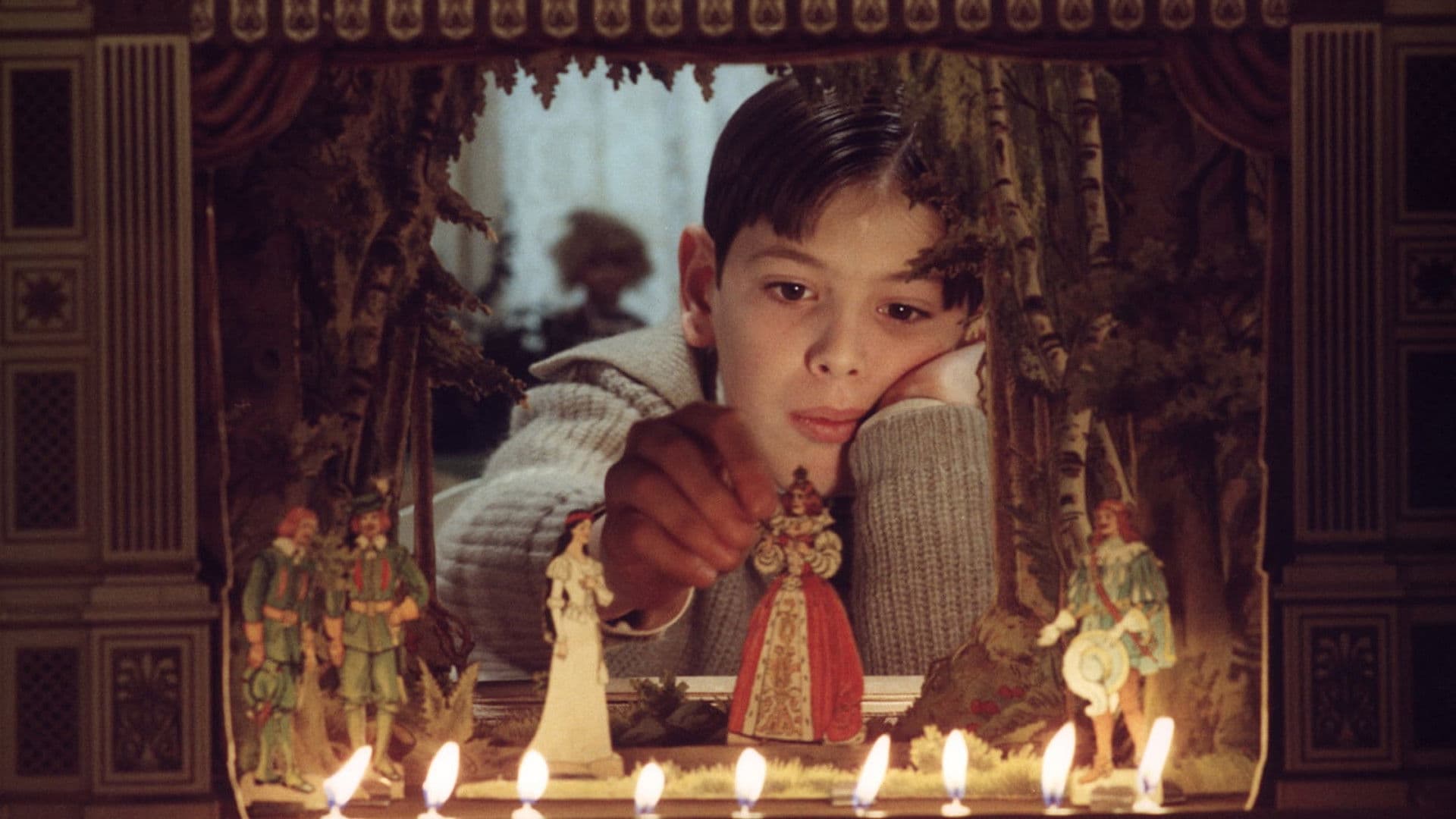
Fanny and Alexander (1984) follows the wealthy Ekdahl family in the Swedish provincial city of Uppsala in 1907 as they celebrate Christmas, mourn the sudden death of theatre-director patriarch Oscar Ekdahl, and absorb the shock of widow Emilie's ill-fated remarriage to the austere bishop Vergérus, whose puritanical household imprisons young Fanny and Alexander. Ingmar Bergman's monumental late-period family drama was released in a 188-minute theatrical cut in 1982 and a 312-minute television miniseries version in 1983 and 1984, and won four Academy Awards including Best Foreign Language Film.
What Is the Budget of Fanny and Alexander (1984)?
Fanny and Alexander (1984), Ingmar Bergman's monumental late-period family drama, was produced on a reported budget of approximately $6,000,000 (40,000,000 Swedish kronor in 1981 to 1982 currency), making it the most expensive Swedish film ever produced at the time of its completion. Bergman, who had originally conceived the project as a five-hour Sveriges Television television miniseries, secured co-financing from producer Jörn Donner of the Swedish Film Institute, French co-producer Gaumont, and the German broadcaster Tobis (formerly RFA1), to assemble the budget. The theatrical version released in Sweden in December 1982 was a 188-minute cut. The full 312-minute television version premiered on Swedish television in late 1983 and was internationally released in the form of a four-episode miniseries across 1984. The slug year 1984 here refers to the international theatrical and television release.
The investment represented an extraordinary commitment to a single project: $6,000,000 was roughly six times the budget of a typical Swedish film of the period, and roughly twice the budget of Bergman's previous most expensive work, Cries and Whispers (1972). Filming took 250 days across 1981 to 1982 at locations in Uppsala and on the Swedish Film Institute soundstages in Stockholm. The production benefited from West German television co-financing structured around the eventual longer television version, which gave Bergman the budget to deliver both the 188-minute theatrical cut and the full 312-minute version.
Key Budget Allocation Categories
Fanny and Alexander's $6,000,000 budget was distributed across several core production areas, with the period-recreation requirements pushing several cost lines significantly above standard Swedish film economics:
- Above-the-Line Talent: Bergman as writer and director commanded the highest single line item, with a deferred-payment structure tied to the production's long-tail revenue. The ensemble cast of approximately 60 speaking roles included Allan Edwall, Ewa Fröling, Erland Josephson, Jarl Kulle, Bertil Guve (as Alexander), Pernilla Allwin (as Fanny), Jan Malmsjö as Bishop Vergérus, and Gunn Wållgren. Bergman recruited largely from his repertory company at the Royal Dramatic Theatre in Stockholm.
- Period Production Design: Anna Asp's production design recreated the Ekdahl family's 1907 Uppsala mansion, the bishop's austere palace, the cinematographer Isak Jacobi's antique shop and Jewish-quarter rooms, and the Ekdahl theatre interiors. The period accuracy and scale of the constructed sets pushed production design to the single largest line item below cast.
- Costume and Hair: Marik Vos-Lundh's costume design produced approximately 1,200 individual costumes for the speaking-role and background cast across 1907 Edwardian Swedish bourgeois dress, ecclesiastical robes, theatrical performance costumes, and Jewish-community dress. Period hair and make-up across a 250-day shoot absorbed proportionally heavy weekly costs.
- Cinematography: Sven Nykvist, Bergman's longtime cinematographer, shot the film in 35mm anamorphic with a deliberately warm, candlelit, often firelight-only palette. The lighting and grip package, designed to support practical-source lighting across the elaborate period sets, was substantially larger than a standard Swedish film of the period.
- Locations and Stage Construction: Practical exterior shooting took place in Uppsala (the Ekdahl mansion exteriors), with interior soundstages built at the Swedish Film Institute studio in Stockholm. The 250-day production schedule allowed Bergman to stage scenes with unusual deliberation, which compounded location-and-stage rental costs.
- Music: Daniel Bell's score combined existing Schumann and Britten compositions with Bergman's extensive use of classical Swedish folk material. The music budget covered orchestral recording, licensing of classical repertoire, and Bergman's rights to the Britten compositions used in the bishop's house sequences.
- Dual-Format Post-Production: The production was edited in two forms: a 188-minute theatrical cut and a 312-minute four-episode television miniseries. Each version required its own picture edit, sound mix, and delivery master, effectively doubling post-production costs compared with a single-format film.
- Co-Production Coordination: The Swedish Film Institute, Gaumont (France), Tobis (West Germany), and Sveriges Television co-production structure required complex financial coordination, multi-territory delivery, and rights tracking. The administrative overhead of the four-way co-production was a recurring cost across the 18-month production window.
How Does Fanny and Alexander's Budget Compare to Similar Films?
At a reported $6,000,000, Fanny and Alexander was an exceptional outlier in early-1980s European arthouse production. The comparison set illustrates its scale:
- Cries and Whispers (1972): Budget approximately $300,000 | Worldwide approximately $3,000,000. Bergman's previous most expensive film cost roughly one-twentieth of Fanny and Alexander, illustrating how Fanny and Alexander's scale represented a generational leap in Bergman's production economics.
- Once Upon a Time in America (1984): Budget $30,000,000 | Worldwide $25,000,000. Sergio Leone's contemporaneous American-set epic cost five times Fanny and Alexander on a similar 1907-to-mid-century period premise, illustrating the gap between European arthouse and Hollywood-financed period production in the early 1980s.
- My Life as a Dog (1985): Budget approximately $1,500,000 | Worldwide approximately $13,000,000. Lasse Hallström's subsequent Swedish-language family drama cost one-quarter of Fanny and Alexander, illustrating the standard Swedish film budget band Fanny and Alexander operated above.
- The Tin Drum (1979): Budget approximately $6,000,000 | Worldwide approximately $14,000,000. Volker Schlöndorff's German-Polish-French-Yugoslav co-production reached Fanny and Alexander's budget exactly, with a similar multi-country co-financing structure and similar period-recreation requirements. The Tin Drum won the 1979 Best Foreign Language Film Oscar.
- Heimat (1984): Total budget approximately $5,000,000 | West German broadcast plus international cinema release. Edgar Reitz's 15-hour television miniseries reached comparable total spend for a comparable multi-part long-form prestige format, illustrating one alternative cost framework for the long-form European arthouse project.
Fanny and Alexander Box Office Performance
Fanny and Alexander opened theatrically in Sweden on 17 December 1982 in the 188-minute Bergman theatrical cut. The film's US theatrical release through Embassy Pictures began on 8 June 1983 in New York, expanding gradually across 1983 to 1984. The 312-minute television version aired on Sveriges Television in late 1983 (in four episodes) and was internationally released in the form of a four-episode miniseries or as a single 312-minute theatrical event presentation across 1984. The financial breakdown:
Box Office Breakdown
Fanny and Alexander

Fanny and Alexander's long-tail revenue came primarily from Criterion Collection home-video releases, broadcast licensing, repertory theatrical re-releases, and library catalogue value within the Sveriges Television and Swedish Film Institute archives. The film's critical canonisation, four Academy Award wins (Best Foreign Language Film, Best Cinematography, Best Art Direction, Best Costume Design), and recurring inclusion on greatest-films-of-all-time lists have positioned the production as a permanent revenue-generating library asset.
In 2018, the Sight and Sound critics poll ranked Fanny and Alexander as one of the top 100 films ever made, and the 2022 poll maintained this ranking. The Criterion Collection's 2011 Blu-ray box set release of both the theatrical cut and the five-hour television version has been a steady catalogue performer in the prestige home-video segment.
Fanny and Alexander Production History
Ingmar Bergman announced in 1980 that Fanny and Alexander would be his final theatrical feature, a decision driven by his ongoing recovery from the 1976 Swedish tax-evasion case that had forced him into a five-year self-imposed exile to West Germany. Bergman conceived the project initially as a five-hour Sveriges Television miniseries and developed the screenplay during 1980 to 1981 at Fårö, his island home on the Swedish Baltic coast. Producer Jörn Donner of the Swedish Film Institute structured the unusual four-way co-production with Gaumont (France) and Tobis (West Germany) to assemble the unprecedented $6,000,000 budget.
Pre-production ran across the second half of 1981, with Anna Asp's production design constructing the Ekdahl mansion interiors, the bishop's palace, and Isak Jacobi's antique shop on Swedish Film Institute soundstages. Bergman cast extensively from his Royal Dramatic Theatre repertory, including Allan Edwall (Oscar Ekdahl), Ewa Fröling (Emilie Ekdahl), Jan Malmsjö (Bishop Vergérus), Gunn Wållgren (Helena Ekdahl), Erland Josephson (Isak Jacobi), and Jarl Kulle (Gustav Adolf Ekdahl). The two child leads, Bertil Guve (Alexander) and Pernilla Allwin (Fanny), were cast after a national casting search.
Principal photography began on 7 September 1981 and ran for 250 working days across Uppsala and Stockholm Film Institute soundstages, wrapping in March 1982. The shoot was marked by Bergman's deliberate pace and emotional weight: Bergman has described the production as both his most demanding and his most rewarding. Sven Nykvist, his longtime cinematographer, designed the film's warm candlelight-and-firelight visual palette. Editing ran across 1982 with editor Sylvia Ingemarsson producing both the 188-minute theatrical cut and the 312-minute television miniseries from the same coverage.
The theatrical version premiered in Sweden on 17 December 1982 and was released internationally across 1983. The television version aired on Sveriges Television in late 1983 in four episodes, and was internationally distributed in television form across 1984. At the 56th Academy Awards on 9 April 1984, Fanny and Alexander won four Oscars: Best Foreign Language Film, Best Cinematography (Sven Nykvist), Best Art Direction (Anna Asp, Susanne Lingheim), and Best Costume Design (Marik Vos-Lundh), making it the most successful Swedish film at the Academy Awards in history.
Awards and Recognition
Fanny and Alexander won four Academy Awards at the 56th ceremony on 9 April 1984: Best Foreign Language Film, Best Cinematography (Sven Nykvist), Best Art Direction (Anna Asp, Susanne Lingheim), and Best Costume Design (Marik Vos-Lundh). The film was nominated for two additional Oscars: Best Director (Ingmar Bergman) and Best Original Screenplay (Ingmar Bergman). It remains the most decorated Swedish-language film in Academy Award history.
The film won the Golden Globe Award for Best Foreign Language Film at the 41st Golden Globe Awards in January 1984. It was nominated for the Palme d'Or at the 1983 Cannes Film Festival in its theatrical cut form, although Bergman ultimately withdrew the film from competition. At the BAFTA Awards, the film won Best Foreign Language Film. At the Guldbagge Awards (Sweden's top film honours), Fanny and Alexander won Best Film, Best Director, and Best Cinematography.
Retrospective canonisation has been substantial. The film has appeared on multiple "greatest films of all time" critics polls including the Sight and Sound poll (top 100 in 2002, 2012, and 2022), the New York Times list of the 1,000 Best Movies Ever Made, and Roger Ebert's Great Movies series. The Criterion Collection released both the theatrical and television versions on home video in 2011, with the box set winning the 2012 Cinema Eye Honour for Best Production of a Reissue.
Critical Reception
Fanny and Alexander received universal critical acclaim on its 1982 Sweden release and its 1983 international release. The film holds an aggregate score of 100 out of 100 on Metacritic based on contemporary reviews and a 100% approval rating on Rotten Tomatoes based on 47 critic reviews, with a critical consensus describing it as Bergman's "magnum opus, a richly imagined family chronicle balancing magic, terror, and unfettered joy."
Roger Ebert in the Chicago Sun-Times in 1983 gave the film four stars out of four and called it "warmer and more humanist than anything Bergman has previously made." Vincent Canby in The New York Times described the film as "Bergman at his most overflowing, his most lavish, his most generous." Pauline Kael in The New Yorker, often a Bergman skeptic, praised the production as "the kind of film that proves cinema is still capable of greatness." Pauline Kael additionally highlighted the production design and Nykvist's candlelit cinematography as definitional accomplishments of European arthouse craft.
Retrospective coverage has been overwhelmingly positive. The Guardian's 2020 ranking of the best films of the 1980s placed Fanny and Alexander in the top 10. The British Film Institute's 2022 Sight and Sound critics poll ranked the film in the top 100 ever made. The film's continued presence in the canonical European arthouse syllabus has anchored its reputation as Bergman's farewell masterpiece, with its blend of Dickensian family chronicle, ghostly fantasy, and theatrical metaphor cited as the synthesis of Bergman's entire career.
Frequently Asked Questions
How much did it cost to make Fanny and Alexander?
The reported production budget was $6,000,000 (40,000,000 Swedish kronor in 1981 to 1982 currency), making it the most expensive Swedish film ever produced at the time of its completion. Co-financing came from the Swedish Film Institute (producer Jörn Donner), French co-producer Gaumont, West German broadcaster Tobis, and Sveriges Television.
Is Fanny and Alexander a film or a TV miniseries?
Both. Ingmar Bergman conceived the project as a five-hour Sveriges Television miniseries and produced it in two versions: a 188-minute theatrical cut, which premiered in Sweden on 17 December 1982 and was released internationally across 1983, and a 312-minute four-episode television miniseries, which aired on Sveriges Television in late 1983 and was internationally distributed in television form across 1984.
How long is Fanny and Alexander?
The theatrical version is 188 minutes (3 hours 8 minutes). The television version is 312 minutes (5 hours 12 minutes), aired as four episodes of approximately 78 minutes each. Both versions were edited from the same principal photography coverage by editor Sylvia Ingemarsson and were created as deliberate alternatives rather than a long cut and a short cut.
How many Academy Awards did Fanny and Alexander win?
Fanny and Alexander won four Oscars at the 56th Academy Awards on 9 April 1984: Best Foreign Language Film, Best Cinematography (Sven Nykvist), Best Art Direction (Anna Asp and Susanne Lingheim), and Best Costume Design (Marik Vos-Lundh). It was nominated for two additional Oscars: Best Director and Best Original Screenplay (both Ingmar Bergman).
Where was Fanny and Alexander filmed?
Principal photography took place in Uppsala, Sweden (the Ekdahl mansion exteriors), and at the Swedish Film Institute soundstages in Stockholm. Production designer Anna Asp constructed the Ekdahl mansion interiors, the bishop's palace, and Isak Jacobi's antique shop as full-scale studio sets. Filming ran for 250 working days from 7 September 1981 to March 1982.
Who stars in Fanny and Alexander?
Bertil Guve plays Alexander Ekdahl and Pernilla Allwin plays Fanny Ekdahl, the two child leads. The adult ensemble includes Ewa Fröling as Emilie Ekdahl, Allan Edwall as Oscar Ekdahl, Jan Malmsjö as Bishop Vergérus, Gunn Wållgren as Helena Ekdahl, Erland Josephson as Isak Jacobi, and Jarl Kulle as Gustav Adolf Ekdahl. Bergman cast extensively from his Royal Dramatic Theatre repertory.
Was Fanny and Alexander Bergman's last film?
It was Bergman's final theatrical feature, though he continued to write and direct for Swedish television and the stage until his death in 2007. Subsequent works including After the Rehearsal (1984), Saraband (2003), and several stage productions at the Royal Dramatic Theatre kept Bergman active as a filmmaker, but Fanny and Alexander was the last project he made in feature theatrical form.
How does Fanny and Alexander compare to other Bergman films?
At $6,000,000, Fanny and Alexander cost roughly twenty times more than Cries and Whispers (1972), Bergman's previous most expensive film, and represented a generational leap in scale. The production design, costume design, and 250-day shoot schedule placed it in a different cost band than Bergman's earlier intimate chamber dramas such as Persona (1966) and Scenes from a Marriage (1973).
Where can I watch Fanny and Alexander?
The Criterion Collection released both the theatrical cut and the five-hour television version on Blu-ray in 2011, and the set has remained in print. The film streams on the Criterion Channel in North America. In Sweden, the television version is available on SVT Play. Repertory theatrical screenings continue at arthouse cinemas worldwide, often presenting the full television version as a single five-hour event.
What is Fanny and Alexander about?
The film follows the wealthy Ekdahl family in the Swedish provincial city of Uppsala in 1907 as they celebrate Christmas, mourn the sudden death of theatre-director patriarch Oscar Ekdahl, and absorb the shock of widow Emilie's ill-fated remarriage to the austere bishop Vergérus, whose puritanical household imprisons young Fanny and Alexander. The narrative blends realist family chronicle, ghostly fantasy, and theatrical metaphor.
Filmmakers
Fanny and Alexander

Official Trailer
Build budgets like this one in Saturation
Start from an industry-standard feature film template, import the schedule and rates you already have, and let the cost report keep itself current as you spend. Real-time collaboration, no spreadsheets.