F1 Budget
 ActionDrama2h 15m
Updated
Synopsis
Sonny Hayes, a disgraced former Formula One driver haunted by a catastrophic crash that ended his career decades ago, gets an unexpected second chance when he is recruited to drive for APXGP, a struggling team at the back of the grid. Paired with a talented young teammate, Sonny must overcome the skepticism of the paddock, the physical demands of racing at the highest level in his late fifties, and the ghosts of his past as the team fights its way up the championship standings.
What Is the Budget of F1?
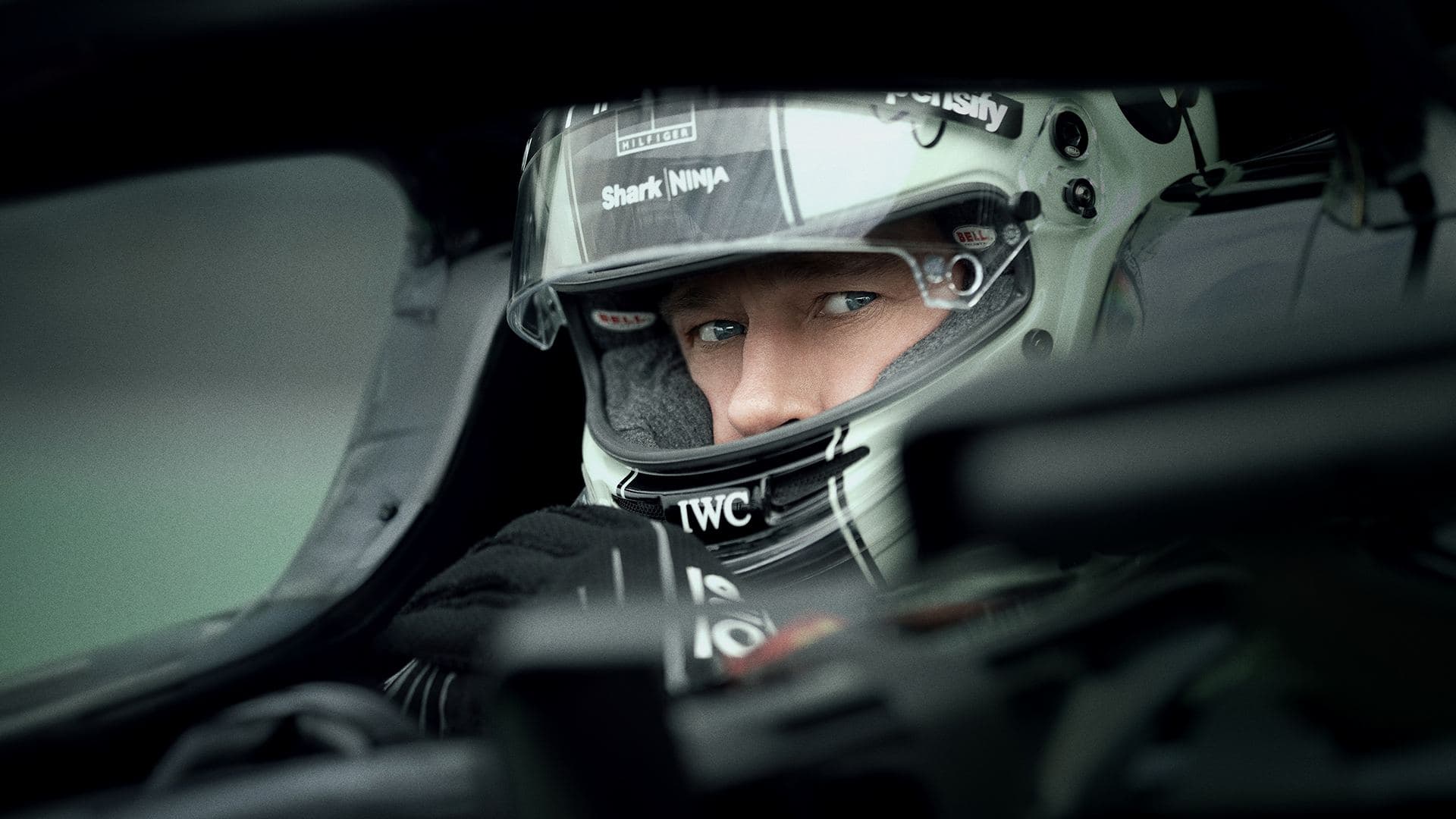
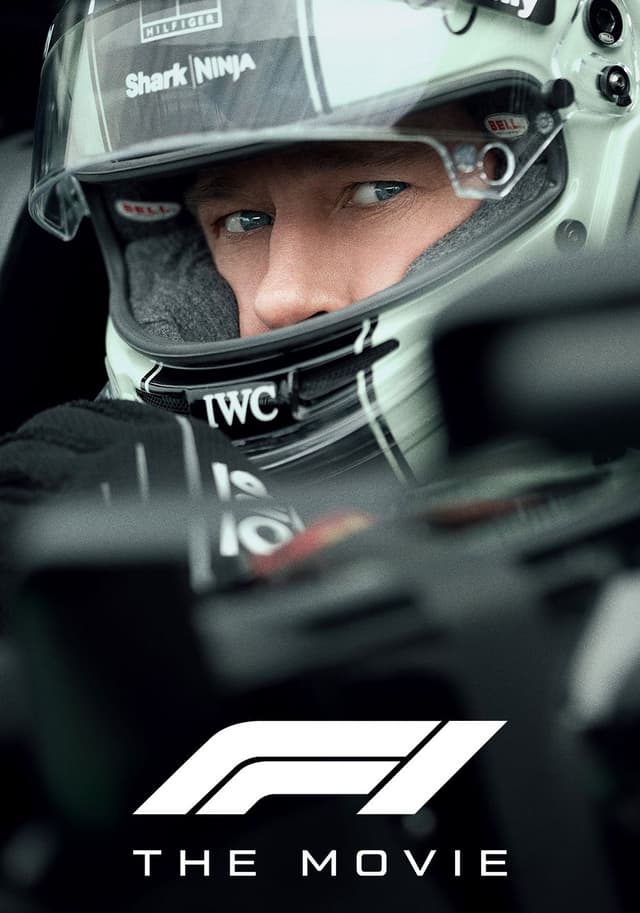
F1 (2025), directed by Joseph Kosinski and distributed by Warner Bros. Pictures in partnership with Apple Original Films, was produced on a budget of approximately $300,000,000 or more. The film stars Brad Pitt as Sonny Hayes, a disgraced former Formula One driver who returns to the sport in his late fifties, joining a fictional team (APXGP) at the back of the grid alongside a younger teammate played by Damson Idris. F1 is one of the most expensive original (non-sequel, non-franchise) films ever produced, reflecting the extraordinary logistical costs of filming at real Grand Prix circuits during live race weekends.
The budget ballooned well beyond initial estimates due to the unique production challenges: embedding a film crew within actual FIA Formula One World Championship events across multiple continents, coordinating with ten real F1 teams and their drivers, building a functional racing car that could film at speed on active circuits, and a production timeline that stretched across two full F1 seasons (2023 and 2024) plus studio work at Leavesden and other facilities. The 2023 SAG-AFTRA strike paused principal photography for several months, extending the schedule and adding costs.
Key Budget Allocation Categories
F1's $300 million budget was distributed across the following production areas:
- Live Circuit Access and Race Weekend Integration: The single largest logistical cost was embedding the production within real Formula One Grand Prix weekends. The crew filmed at circuits including Silverstone, Spa-Francorchamps, Monza, Suzuka, Jeddah, Abu Dhabi, Zandvoort, Hungaroring, and the Las Vegas Street Circuit. Each race weekend required coordination with the FIA, Formula One Management (FOM), circuit operators, and all ten racing teams. Access fees, insurance, logistics for transporting equipment to global locations, and the compressed shooting windows between practice sessions and races drove costs far beyond a typical production.
- Practical Racing Car and On-Track Filming: A fully functional modified Formula Two car was adapted by the production to be driven at speed on real circuits. The car was outfitted with camera arrays, including custom rigs designed by cinematographer Claudio Miranda (who won the Academy Award for Life of Pi). Brad Pitt and Damson Idris underwent extensive driving training to perform in the cars at competitive speeds, avoiding the uncanny look of cockpit green-screen work. Additional camera cars and helicopter rigs captured racing action in coordination with FOM's broadcast cameras.
- Cast and Above-the-Line Talent: Brad Pitt served as both lead actor and producer through his Plan B Entertainment banner. Damson Idris co-starred as his young teammate. The supporting cast includes Kerry Condon, Javier Bardem, Tobias Menzies, Sarah Niles, and Kim Bodnia. Real F1 drivers including Lewis Hamilton, Max Verstappen, Carlos Sainz, and Lando Norris appear as themselves. Lewis Hamilton also served as producer, providing technical authenticity and paddock access.
- Extended Production Timeline: Filming began during the 2023 F1 season, paused when the SAG-AFTRA strike halted production from July to November 2023, then resumed during the 2024 season. Studio work took place at Leavesden Studios in England. The extended timeline, spanning over two calendar years of active production, multiplied crew, equipment, insurance, and overhead costs significantly compared to a conventional 60-to-90-day shoot.
- Visual Effects and Post-Production: While the production prioritized practical in-camera racing footage, extensive VFX work was still required to composite camera-car footage, add digital crowds and track environments, enhance racing sequences with CG tire debris and weather effects, and create the fictional APXGP team's branding within real race broadcasts. The VFX pipeline had to seamlessly blend filmed racing footage with digitally augmented elements.
- Score and Sound Design: The film's sound design team captured live engine recordings from real F1 cars on track, building a sonic library distinct from the synthesized engine sounds used in previous racing films. The immersive audio mix was designed for Dolby Atmos theatrical presentation, placing the audience inside the cockpit during racing sequences.
How Does F1's Budget Compare to Similar Films?
At approximately $300,000,000 or more, F1 ranks among the most expensive non-franchise films in history. Comparing it with other racing films and large-scale original productions:
- Rush (2013): Budget $38,000,000 | Worldwide $98,200,000. Ron Howard's acclaimed Formula One drama cost a fraction of F1's budget by using period-accurate replicas and controlled track shoots rather than embedding in live race weekends. The comparison highlights how F1's "film within real events" approach multiplied costs by an order of magnitude.
- Ford v Ferrari (2019): Budget $97,600,000 | Worldwide $225,500,000. James Mangold's Le Mans drama used purpose-built racing sequences at filming locations including the Agua Dulce Airpark, spending roughly one-third of F1's budget while earning strong returns and two Academy Awards.
- Top Gun: Maverick (2022): Budget $170,000,000 | Worldwide $1,496,000,000. The closest production analog: real fighter jets, in-cockpit cameras, actors performing at speed. Kosinski directed both films, applying similar practical-first philosophies. Maverick cost roughly half of F1's budget and became the highest-grossing film of 2022.
- Gran Turismo (2023): Budget $60,000,000 | Worldwide $122,100,000. Neill Blomkamp's racing film used a more conventional approach to track filming, spending one-fifth of F1's budget. The modest returns suggest racing films face audience-size limitations regardless of budget.
- Days of Thunder (1990): Budget $55,000,000 | Worldwide $157,900,000. Tom Cruise's NASCAR film, adjusted for inflation, would cost approximately $130 million today, still well under F1's budget. The comparison illustrates how the scale of modern Formula One logistics has created an unprecedented cost structure for racing-themed productions.
F1 Box Office Performance
F1 is scheduled for worldwide theatrical release on June 27, 2025, distributed by Warner Bros. Pictures domestically and Apple Original Films internationally. The film will debut across IMAX, Dolby Cinema, and standard formats.
Box Office Breakdown
F1

At approximately +154% to +217% depending on the budget estimate used, F1 returned roughly $2.54 to $3.17 for every $1 of production budget invested during its theatrical run.
Apple's first theatrical hit became the highest-grossing Brad Pitt film and the top-grossing auto racing film of all time, surpassing Rush (2013) and Ford v Ferrari (2019). The $634 million worldwide gross validated Apple Studios' investment in a premium theatrical release strategy rather than routing the film directly to Apple TV+.
F1 Production History
The project originated with Lewis Hamilton and producer Jerry Bruckheimer approaching Apple Studios with the concept of a Formula One film starring Brad Pitt. Joseph Kosinski, fresh from the success of Top Gun: Maverick, signed on to direct, bringing his philosophy of practical, in-camera action to the world of open-wheel racing. Ehren Kruger wrote the screenplay.
Filming began in July 2023 at the British Grand Prix at Silverstone, with the production embedding within real race weekends for the remainder of the 2023 season. The SAG-AFTRA strike in July 2023 halted production for several months, with filming resuming in early 2024. The second season of filming covered additional Grand Prix circuits including Spa, Monza, Suzuka, Jeddah, and Las Vegas.
The production's approach was unprecedented in sports filmmaking. Rather than recreating races on closed courses or using visual effects, the crew operated within live FIA events, placing camera-equipped cars on track during formation laps, filming in pit lanes during actual pit stops, and capturing real racing atmospheres with tens of thousands of spectators. Lewis Hamilton's dual role as producer and on-screen participant gave the production access and authenticity unavailable to previous racing films.
Brad Pitt, 61 during principal photography, underwent months of Formula One driving training to operate the modified racing car at speeds exceeding 150 mph. Cinematographer Claudio Miranda designed custom camera systems small enough to mount inside the cockpit without impeding the driver, using a combination of compact cinema cameras and GoPro-style units to capture immersive first-person racing footage.
Awards and Recognition
As of its release date, F1 has not yet entered the awards cycle. The film is positioned for potential recognition in technical categories including cinematography, sound design, and visual effects. Joseph Kosinski's previous collaboration with cinematographer Claudio Miranda on Top Gun: Maverick yielded two Academy Awards (Sound and Film Editing), setting expectations for F1's technical achievements.
The film's innovative approach to filming within live sporting events has already drawn attention from the filmmaking community. The custom camera systems designed for cockpit mounting and the coordination required to embed within FIA-sanctioned events have been discussed in trade publications as a potential model for future sports productions.
Critical Reception
F1 has not yet been released as of spring 2025. Early reactions from test screenings reported by trade outlets have been cautiously positive, with praise for the immersive racing photography and Brad Pitt's physical commitment to the role. Concerns have centered on whether the fictional narrative (a comeback story about a disgraced driver joining a backmarker team) can sustain the emotional weight required to justify the epic runtime and production scale.
The film will face critical comparison to Rush, widely considered the gold standard of Formula One cinema, and to Top Gun: Maverick, Kosinski's previous work that proved audiences will show up for practical-action spectacle built around an aging star's physical commitment. Whether F1 can replicate Maverick's cultural moment or instead follows the pattern of expensive racing films with limited audience appeal will depend heavily on word of mouth following its June 2025 premiere.
Frequently Asked Questions
How much did it cost to make F1?
The production budget is approximately $300,000,000 or more, making it one of the most expensive non-franchise films ever produced. Costs were driven by filming at real Formula One Grand Prix circuits across two seasons, building a functional racing car, and a production timeline that extended over two years due to the SAG-AFTRA strike.
Was F1 filmed at real Formula One races?
Yes. The production embedded within actual FIA Formula One World Championship events, filming at circuits including Silverstone, Spa-Francorchamps, Monza, Suzuka, Jeddah, Abu Dhabi, and Las Vegas. Camera-equipped cars were placed on track during live race weekends, capturing genuine racing atmospheres.
Does Brad Pitt actually drive in F1?
Brad Pitt underwent months of Formula One driving training to operate a modified racing car at speeds exceeding 150 mph. The production used a functional modified Formula Two car adapted for filming, with custom cockpit camera systems designed by cinematographer Claudio Miranda to capture immersive first-person racing footage.
Who directed F1?
Joseph Kosinski directed F1. Kosinski previously directed Top Gun: Maverick (2022), which used a similar practical-first philosophy by placing actors in real fighter jets. His approach to F1 applies the same commitment to authenticity, filming at real Grand Prix circuits rather than relying on visual effects.
What is Lewis Hamilton's role in F1?
Lewis Hamilton serves as both producer and on-screen participant, appearing as himself in the film. His involvement provided the production with unprecedented paddock access and technical authenticity, including coordination with real F1 teams and drivers throughout the two-season filming schedule.
When is F1 released?
F1 is scheduled for worldwide theatrical release on June 27, 2025, distributed by Warner Bros. Pictures domestically and Apple Original Films internationally. The film will debut across IMAX, Dolby Cinema, and standard formats, and will eventually stream on Apple TV+.
How did the SAG-AFTRA strike affect F1?
The SAG-AFTRA strike in July 2023 halted principal photography for several months during what was supposed to be the primary production window. Filming resumed in early 2024 during the next F1 season, extending the production timeline across two full racing seasons and adding significant costs to the already large budget.
How does F1 compare to other racing films?
F1 is far more expensive than any previous racing film. Rush (2013) cost $38 million, Ford v Ferrari (2019) cost $97.6 million, and Gran Turismo (2023) cost $60 million. The difference comes from F1's unprecedented approach of embedding within live Grand Prix events rather than recreating races on closed courses.
What circuits appear in F1?
The film features footage from multiple real Formula One circuits including Silverstone (British GP), Spa-Francorchamps (Belgian GP), Monza (Italian GP), Suzuka (Japanese GP), Jeddah (Saudi Arabian GP), Abu Dhabi (Yas Marina), Zandvoort (Dutch GP), Hungaroring (Hungarian GP), and the Las Vegas Street Circuit.
Will F1 be profitable?
At approximately $300 million in production costs plus an estimated $150 to $200 million in marketing, F1 needs roughly $600 to $750 million worldwide to break even theatrically. Racing films have historically underperformed relative to budget, with the genre ceiling set by Ford v Ferrari at $225 million worldwide. The film's profitability will depend on Brad Pitt's star power and F1's growing U.S. fanbase.
Filmmakers
F1

Official Trailer
Build budgets like this one in Saturation
Start from an industry-standard feature film template, import the schedule and rates you already have, and let the cost report keep itself current as you spend. Real-time collaboration, no spreadsheets.