Exit 8 Budget
 HorrorMystery95 minutes
Updated
Synopsis
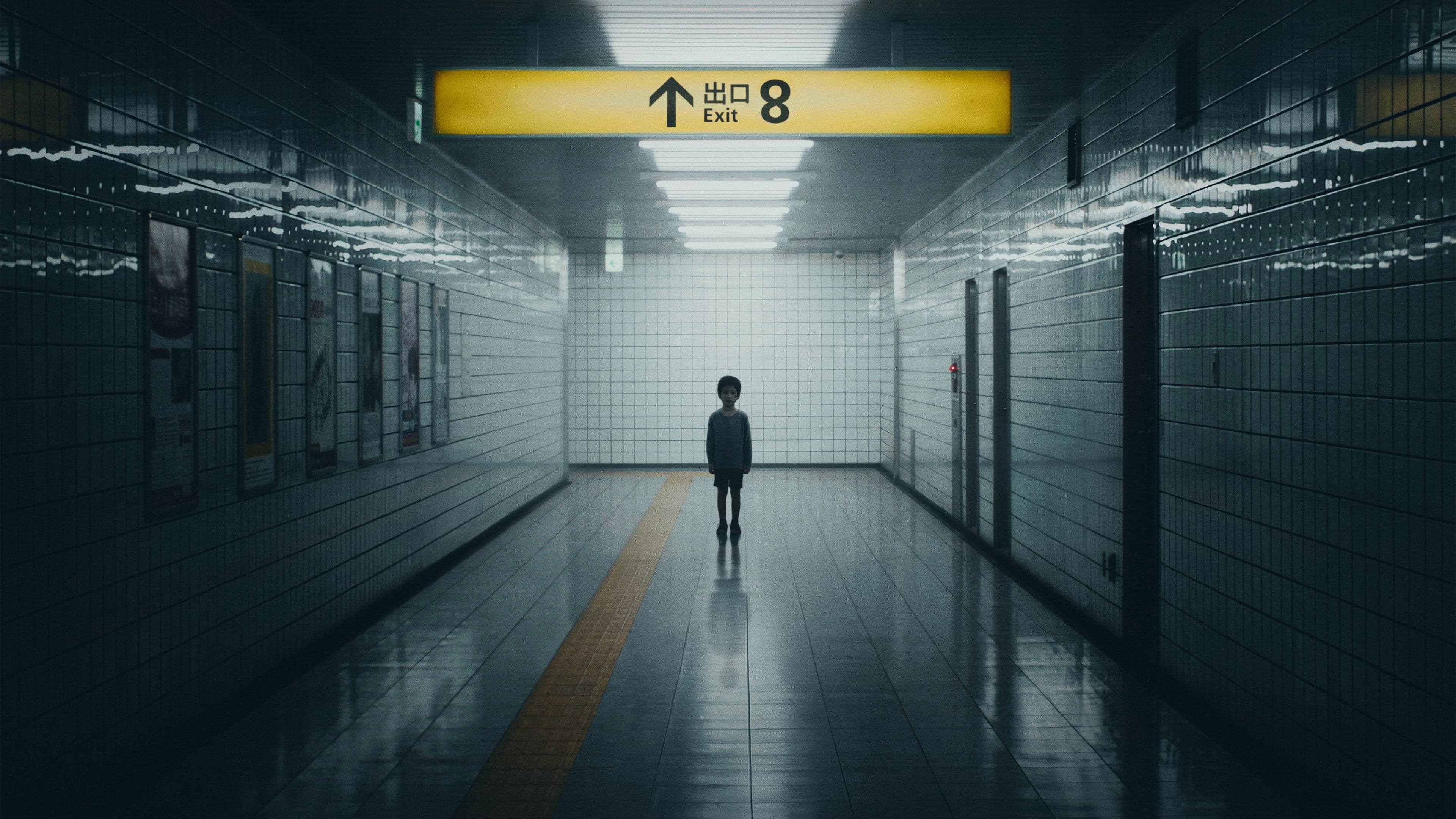
A man trapped in an endless sterile subway passageway sets out to find Exit 8. The rules of his quest are simple: do not overlook anything out of the ordinary. If you discover an anomaly, turn back immediately. If you don’t, carry on. Then leave from Exit 8. But even a single oversight will send him back to the beginning. Will he ever reach his goal and escape this infinite corridor?
What Is the Budget of Exit 8?
Exit 8, the Japanese psychological horror film adapted from KOTAKE CREATE's 2023 viral indie video game, was produced by Story Inc. and AOI Pro. with an estimated budget in the $2 to $5 million range, consistent with mid-tier Japanese film productions of its scope. The film's production budget has not been publicly disclosed, but its single-location underground passage set, contained cast, and domestic Japanese production model suggest a lean production relative to its outsized commercial and critical impact.
The film earned $42 million worldwide, with approximately 5.2 billion yen ($35 million) from the Japanese domestic market alone. Distributed by Toho in Japan and Neon in North America, Exit 8 became one of the most critically acclaimed video game adaptations ever made, holding a 92% score on Rotten Tomatoes and a 70/100 on Metacritic, both records for the genre.
Key Budget Allocation Categories
- Kazunari Ninomiya as Lead: Ninomiya, a member of Japanese idol group Arashi and one of Japan's most commercially valuable film stars following his acclaimed work in Letters from Iwo Jima (2006) and other films, represents the film's primary above-the-line cost. His attachment guaranteed domestic Japanese commercial viability and provided the acting anchor the film's demanding repetitive structure required.
- Underground Passage Set Construction: The film was shot on a purpose-built replica of a Tokyo underground passage, constructed to allow the precise camera movement and spatial control that the repetitive loop narrative demanded. This single location, built to cinematic specifications rather than adapted from an existing facility, was the primary below-the-line investment.
- Music by Yasutaka Nakata and Shohei Amimori: Nakata, one of Japan's most prominent electronic music producers known for his work with Kyary Pamyu Pamyu and Perfume, composed the film's score alongside Amimori. The score won Best Music at the Sitges Film Festival and was a key component of the film's atmospheric achievement.
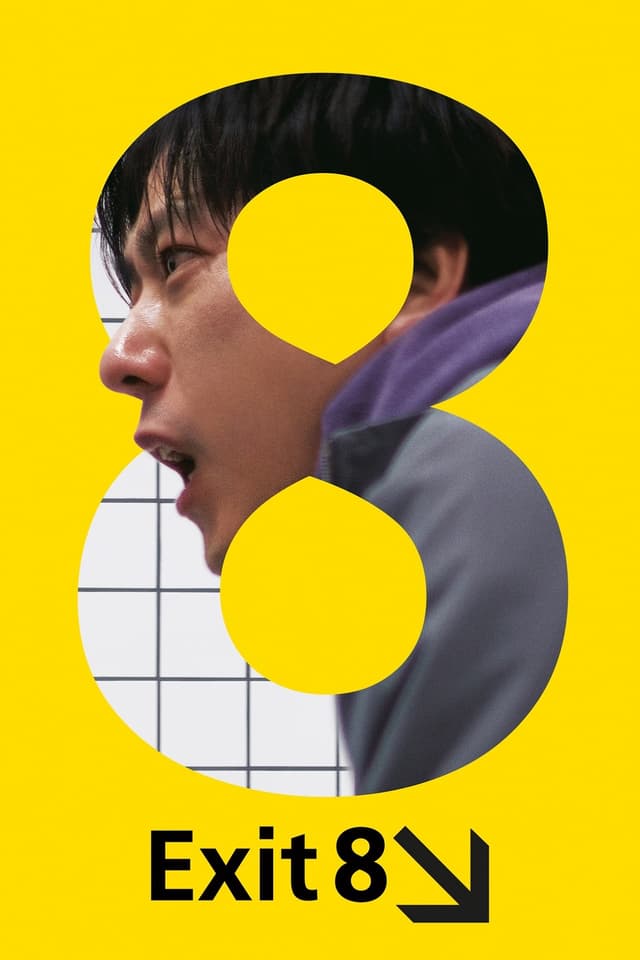
- Post-Production and International Distribution: The film screened at Cannes in the Directors' Fortnight section, won Best Poster Design, and secured international distribution through Neon for North American release. The international festival strategy required subtitling, localization, and festival marketing investment that extended the film's reach beyond the Japanese domestic market.
How Does Exit 8's Budget Compare to Similar Films?
Exit 8 represents one of the most commercially successful and critically acclaimed low-budget video game adaptations in film history, occupying a category of its own in Japanese genre cinema.
- Ringu (1998): Budget $1.2M | Japan gross $1.83M -- The precedent for Japanese horror films that generate outsized international impact from minimal budgets. Exit 8 follows this model with even stronger critical reception and a broader international distribution footprint.
- One Cut of the Dead (2017): Budget $25,000 | Worldwide $35M -- The extreme end of low-budget Japanese genre film commercial surprise, demonstrating that cultural momentum and critical enthusiasm can drive remarkable returns at minimal production cost.
- Detention (2019): A Taiwanese horror film adapted from a video game of the same name that achieved strong regional success, the most direct structural analog to Exit 8's adaptation model. Exit 8's global reach and critical recognition significantly exceed Detention's.
- The Resident Evil films: Budget $33M to $65M each | Combined worldwide $1.2B -- The Western template for video game adaptation franchises, demonstrating the commercial ceiling when adaptation is combined with major studio investment. Exit 8 achieves critical success that consistently eluded the Resident Evil series.
Exit 8 Box Office Performance
Exit 8 premiered at the Cannes Film Festival's Directors' Fortnight section on May 19, 2025, where it won Best Poster Design, before releasing in Japan on August 29, 2025. The film became a significant domestic hit in Japan, earning approximately 5.2 billion yen, or roughly $35 million, from Japanese audiences. South Korea contributed approximately $3 million to the international total, and France added $736,075. In North America, distributed by Neon, the film opened on April 10, 2026, earning $1.44 million in its opening weekend and $3.26 million domestic total.
The worldwide total of $42 million, achieved predominantly through Japanese domestic performance, represents an extraordinary commercial result for a contained single-location horror film with an estimated production budget of $2 to $5 million. Japan accounted for approximately 77% of the worldwide gross, confirming the film's primary commercial market while the Neon distribution deal extended its critical profile internationally.
- Production Budget: Not publicly disclosed (estimated $2 to $5 million)
- Japan Gross: ~$35 million (5.2 billion yen)
- South Korea Gross: ~$3 million
- North America Gross: $3.26 million
- Worldwide Gross: $42 million
Exit 8 earned an estimated $8 to $21 for every $1 invested in production, making it among the highest-ROI horror films released in 2025 in terms of production budget versus worldwide gross. The film's unique position as both a critical success and a commercially viable Japanese domestic release demonstrates the sustainable model for high-quality Japanese genre filmmaking.
Exit 8 Production History
Exit 8 began with the 2023 viral success of the original Japanese indie horror video game, created solo by developer KOTAKE CREATE and released on the PC gaming platform Steam. The game's central mechanic, in which a player navigates a looping underground passage and must exit by identifying anomalies that break the loop, became a global sensation through streaming platforms, generating millions of views on YouTube and Twitch. The game's design, which distilled psychological horror to its most elemental form, attracted immediate attention from Japanese filmmakers.
Director Genki Kawamura, known in Japan as both a film producer (Your Name, Weathering with You, The Witch's Hand) and a novelist, chose Exit 8 as a directorial project. Working with writer Kentaro Hirase, Kawamura expanded the game's loop mechanic into a feature narrative that retained the original's psychological horror while adding character depth, emotional stakes, and a formal film structure. The decision to build a full-scale replica of a Tokyo underground passage on a studio set, rather than adapting an existing location, was central to achieving the precise spatial control the film's repetitive structure demanded.
Kazunari Ninomiya, one of Japan's most commercially reliable film leads, was cast as the primary protagonist. The film screened at the Cannes Film Festival's Directors' Fortnight section on May 19, 2025, where it won Best Poster Design, giving it the international festival credibility needed to attract quality distribution partners outside Japan. Toho handled Japanese theatrical distribution beginning August 29, 2025, and Neon acquired North American rights for a theatrical release beginning April 10, 2026.
Composers Yasutaka Nakata and Shohei Amimori created the score, with Nakata's electronic music background informing the film's disorienting sonic texture. Their work won Best Music at the Sitges Film Festival. Cinematographer Keisuke Imamura's precise camerawork within the single-set environment drew specific praise from critics. The film's 92% Rotten Tomatoes score upon North American release set a record for video game adaptations and was accompanied by the critics' consensus describing it as "an unsettling maze navigated with finesse."
Awards and Recognition
Exit 8 received significant festival and industry recognition. At the Cannes Film Festival (Directors' Fortnight), the film won Best Poster Design. At the Sitges Film Festival, it won Best Music for Yasutaka Nakata and Shohei Amimori's score. Yamato Kochi won the Japan Academy Film Prize for Newcomer of the Year for his performance. The film achieved the distinction of being the highest-rated video game adaptation on both Rotten Tomatoes (92%) and Metacritic (70), a record in the genre. These recognitions collectively established Exit 8 as a landmark in Japanese genre cinema and in the emerging category of serious video game adaptations.
Critical Reception
Exit 8 received exceptional critical acclaim, earning a 92% positive rating on Rotten Tomatoes from 145 critics and a 70 out of 100 on Metacritic, described as "generally favorable." The audience Popcornmeter score of 86% confirmed the film resonated strongly with viewers who sought it out. Both scores set records for video game adaptations.
The Rotten Tomatoes critics' consensus described the film as "an unsettling maze navigated with finesse by director Genki Kawamura, Exit 8 is a video game adaptation rendered with existential dread and stylistic sophistication." Critics consistently praised Kawamura's ability to translate a video game's spatial and mechanical horror into cinematic language without reducing its effectiveness: the repetition that powers the game's dread is translated into formal film technique rather than literalized as simple gameplay footage. Kazunari Ninomiya's physical and psychological performance received specific praise for sustaining audience engagement across the film's looping structure. The score by Yasutaka Nakata and Shohei Amimori was identified as essential to the film's atmospheric achievement, creating sonic texture that amplified the existential dread of the narrative. Cinematographer Keisuke Imamura's controlled visual approach within the single set environment demonstrated the creative possibilities of spatial constraint.
Frequently Asked Questions
What is Exit 8 (2025) about?
Exit 8 is a Japanese psychological horror film in which a commuter becomes trapped in an underground subway passageway that loops infinitely, with the only way out being to spot subtle anomalies in each repetition. The film adapts the 2023 indie video game The Exit 8 by Kotake Create, which became a global word-of-mouth hit on Steam.
Is Exit 8 based on a video game?
Yes. The film adapts The Exit 8, a 2023 walking-simulator horror game developed by solo Japanese developer Kotake Create. The game sold over one million copies on Steam and Nintendo Switch by mid-2024, prompting Toho to fast-track the live-action adaptation.
Who directed Exit 8 (2025)?
Genki Kawamura directed the film, marking a high-profile project for the producer-turned-filmmaker. Kawamura previously produced Your Name (2016), which grossed over $380,000,000 worldwide, and wrote and directed A Hundred Flowers (2022), the Tokyo International Film Festival best-picture winner.
What is the budget for Exit 8?
The production budget has not been publicly disclosed by Toho. Mid-tier Japanese live-action genre productions with a single primary set typically operate in the $3,000,000 to $8,000,000 range, with significantly lower marketing spend than American equivalents.
How much did Exit 8 earn at the box office?
The film opened in Japan on August 29, 2025, and earned approximately $11,400,000 at the Japanese box office in its initial theatrical run. The film also screened in the Cannes Midnight Screenings section in May 2025, expanding its international visibility.
Who stars in Exit 8 (2025)?
Kazunari Ninomiya, formerly of the J-pop group Arashi, stars as the trapped commuter referred to only as the man. Yamato Kochi appears as the looping walking man figure familiar to players of the video game. The casting deliberately uses a small ensemble to match the source material.
Where was Exit 8 filmed?
Principal photography took place at Toho Studios in Tokyo, with the underground subway corridor reconstructed as a closed soundstage set. The single-corridor design allowed for highly controlled cinematography across the dozens of looping repetitions required by the screenplay.
Did Exit 8 play at Cannes?
Yes. The film world premiered in the Cannes Midnight Screenings section on May 18, 2025. The Midnight Screenings slot historically programs genre and horror titles aimed at international distributors, and Exit 8 attracted strong interest from Asian and European acquisitions teams.
What did critics think of Exit 8?
Reviews from the Cannes premiere and Japanese theatrical release were largely positive, praising the disciplined visual design and Ninomiya's sustained solo performance. Critics noted that the looping conceit risked monotony but credited Kawamura with maintaining tension through subtle escalation rather than horror set pieces.
How does Exit 8 compare to other Japanese horror films?
Exit 8 sits in the tradition of restrained psychological J-horror including Pulse (2001), Dark Water (2002), and One Cut of the Dead (2017, $25,000 budget, $30,000,000 worldwide). It departs from the recent J-horror revival of Sadako vs. Kayako (2016) by prioritizing dread over jump scares, in keeping with the source video game.
Official Trailer
Build budgets like this one in Saturation
Start from an industry-standard feature film template, import the schedule and rates you already have, and let the cost report keep itself current as you spend. Real-time collaboration, no spreadsheets.