
Ex Machina Budget
 DramaScience Fiction1h 48m
Updated
Synopsis
A young programmer is selected to participate in a ground-breaking experiment in synthetic intelligence by evaluating the human qualities of a highly advanced humanoid AI. Over seven days at the secluded mountain compound of his reclusive tech-billionaire boss, Caleb confronts the limits of what he can know, who he can trust, and what consciousness really is.
What Is the Budget of Ex Machina (2015)?
Ex Machina (2015), the directorial debut of novelist and screenwriter Alex Garland, was produced on a reported budget of $15,000,000, an exceptionally lean figure for a visual-effects-driven science fiction feature. The film was financed by Film4 and DNA Films (Andrew Macdonald and Allon Reich), with Universal Pictures International handling distribution across most of the world and A24 acquiring United States rights. The constrained budget reflected Garland's deliberate decision to build the film around a near-single location, a tightly limited cast of four speaking roles, and a chamber-piece structure that treated artificial intelligence as a philosophical interrogation rather than an action spectacle.
The financial discipline was central to the project's creative identity. Rather than spreading capital across globe-trotting set pieces, Garland and producers Macdonald and Reich concentrated spend on a small set of expensive elements: a roughly 800-shot visual effects program executed by Double Negative to render Alicia Vikander's Ava as a transparent humanoid robot, a remote Norwegian shooting block at the Juvet Landscape Hotel, and stage work at Pinewood for the bunker interiors. The film ultimately grossed $37,395,524 worldwide and won the Academy Award for Best Visual Effects, an extraordinary return on a $15,000,000 outlay that has since become a reference point for what disciplined indie science fiction can achieve.
Key Budget Allocation Categories
Ex Machina's reported $15,000,000 budget was distributed across several core production areas:
- Above-the-Line Talent: Alex Garland, transitioning from his screenwriting work on 28 Days Later, Sunshine, and Dredd, took a first-time-director rate. Lead cast Domhnall Gleeson, Oscar Isaac, and Alicia Vikander were all on the cusp of major studio franchises, Gleeson and Isaac with Star Wars: The Force Awakens, Vikander with The Man from U.N.C.L.E. and her Oscar-winning turn in The Danish Girl, meaning their fees were modest by post-2015 standards. The compact four-role cast (with Sonoya Mizuno as the silent android Kyoko) was a structural cost saving as much as a creative choice.
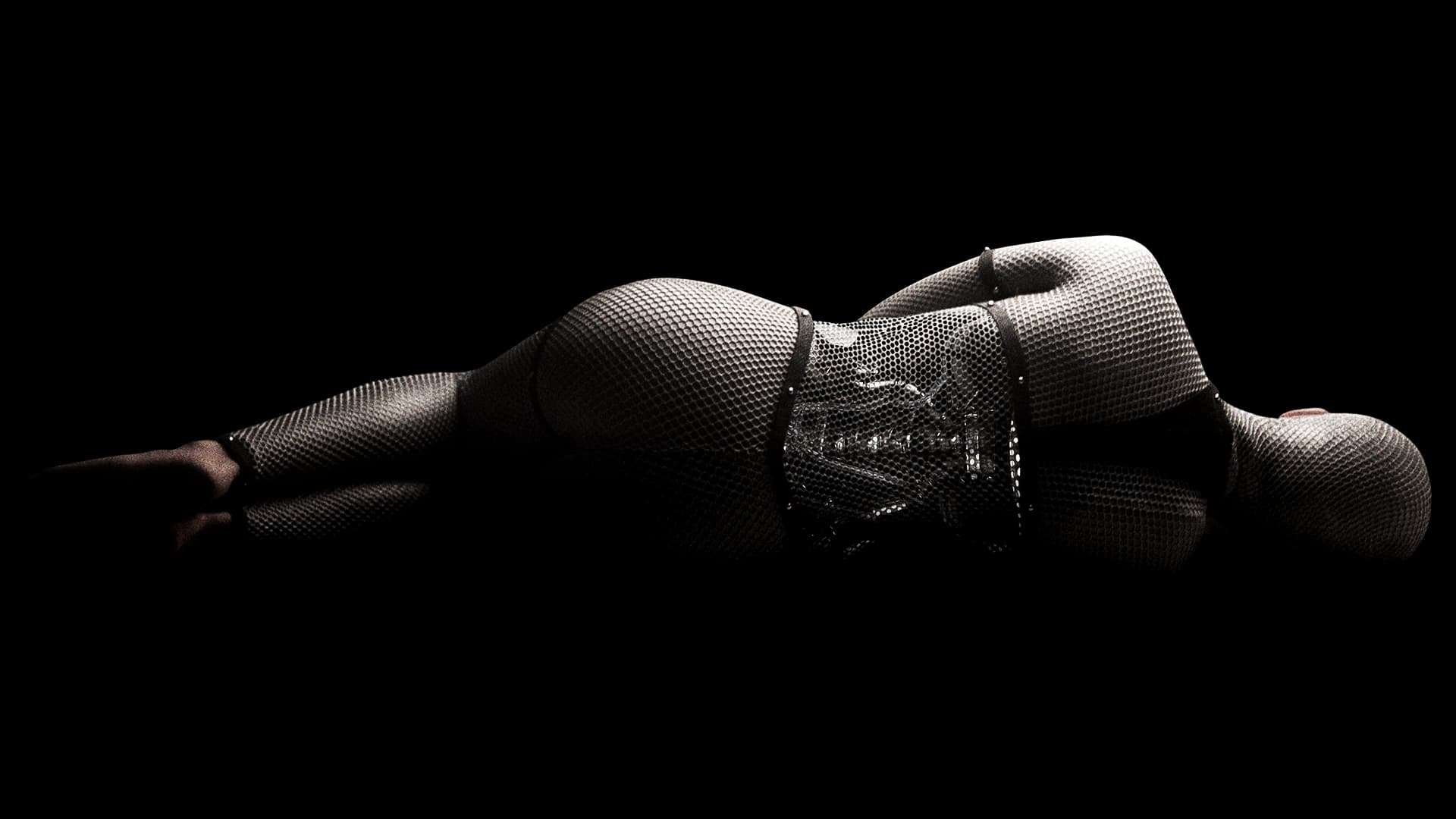
- Visual Effects: Roughly 800 VFX shots, supervised by Andrew Whitehurst at Double Negative, rendered Vikander's Ava as a transparent body with visible internal mechanics. The work combined performance-capture markers on Vikander, body extensions, and shot-by-shot compositing of the see-through torso, hips, and limbs. The Oscar-winning execution required approximately one year of post-production effects work and consumed the largest single allocation in the budget.
- Norway Location Shoot: A roughly two-week production block in Valldalen, Norway at the Juvet Landscape Hotel and the surrounding Jostedalsbreen glacier region supplied the exterior establishing shots of Nathan's remote research compound. The remote terrain required helicopter access, specialist mountain crew, and weather contingency days, adding meaningful incremental cost compared with the Pinewood-based interior shoot.
- Pinewood Stage Build: Production designer Mark Digby built the bunker interiors, including the glass-walled Ava observation room and the modernist corridors, on stages at Pinewood Studios outside London. The sets were designed to support extensive in-camera reflections and lighting that would later be matched in CG, reducing the need for full digital environment replacement.
- Score and Sound Design: Ben Salisbury and Geoff Barrow (of Portishead) composed an electronic-acoustic score that became one of the film's defining elements. The soundtrack budget covered original composition, ensemble recording, and the licensing of the Oliver Cheatham track Get Down Saturday Night used in the film's iconic dance sequence.
- Cinematography: Director of photography Rob Hardy shot the film on Arri Alexa cameras at 4K, lighting the high-reflectivity bunker interiors with concealed sources designed to make the glass and metal surfaces read naturally on camera. Hardy's work earned a BAFTA nomination and absorbed a meaningful share of the camera-and-lighting line item.
- Post-Production and Editing: Editor Mark Day spent approximately a year cutting alongside the VFX schedule, with picture lock contingent on Double Negative's delivery of the Ava shots. The extended post timeline added carrying costs for the production company and supervisory crew that ran well beyond the brief principal photography period.
How Does Ex Machina's Budget Compare to Similar Films?
At $15,000,000, Ex Machina sits at the low end of the artificial intelligence and contained science fiction comparison set. Its budget was a fraction of the studio AI thrillers released in the same era, and its return on investment outperformed nearly all of them:
- Her (2013): Budget $23,000,000 | Worldwide $48,300,000. Spike Jonze's operating-system romance spent half again as much as Ex Machina and earned only slightly more worldwide, with both films relying on intimate two-handed performances rather than spectacle to interrogate the human-AI relationship.
- Annihilation (2018): Budget $40,000,000 | Worldwide $43,072,575. Garland's sophomore feature spent nearly three times the Ex Machina budget on a wider canvas of mutated biology and was sold to Netflix internationally after Paramount lost confidence, earning only marginally more theatrically and demonstrating the difficulty of scaling Garland's ideas-first approach upward.
- Blade Runner 2049 (2017): Budget $150,000,000 | Worldwide $267,668,555. Denis Villeneuve's sequel spent ten times the Ex Machina budget on a globe-spanning replicant epic and underperformed financial expectations, framing Ex Machina's lean approach as a stronger commercial blueprint for AI cinema.
- Arrival (2016): Budget $47,000,000 | Worldwide $203,388,186. Villeneuve's first-contact drama, structurally closer to Ex Machina in its emphasis on language and consciousness, cost three times as much and earned more than five times the worldwide gross, the closest commercial peak any cerebral science fiction film of the decade reached.
- Men (2022): Budget $20,000,000 | Worldwide $11,400,000. Garland's third feature again leaned on a contained location and small cast, but the more allegorical horror framing failed to convert outside the Ex Machina core audience, reinforcing how unusual the original's commercial reception was within Garland's filmography.
- Civil War (2024): Budget $50,000,000 | Worldwide $127,000,000. Garland's biggest production to date, an A24-funded war drama, cost more than three times Ex Machina and demonstrated the studio's growing willingness to underwrite his work at scale on the back of Ex Machina's critical and commercial blueprint.
Ex Machina Box Office Performance
Ex Machina opened in the United Kingdom on January 21, 2015 through Universal Pictures International. A24 held the US release for a platform rollout beginning April 10, 2015, opening at four theaters with a per-screen average that ranked among the strongest of the year. The film expanded steadily over several weeks of word of mouth before settling into a long theatrical tail that ultimately made it one of A24's most successful platform releases to that point.
Against a $15,000,000 production budget, the film needed approximately $30,000,000 to $35,000,000 in worldwide gross to reach profitability when accounting for marketing and distribution costs. Here is the financial breakdown:
Box Office Breakdown
Ex Machina

Ex Machina returned approximately $1.25 to $1.50 in theatrical revenue for every $1 invested when measured against total estimated production and marketing spend, a strong result for an indie science fiction title and one that vastly outperformed most studio AI thrillers of the same period. The domestic share of the gross was $25,442,958 against an international share of $11,952,566, a 68/32 split heavily weighted toward North America that reflected A24's patient platform release and the film's strong cultural penetration among US critics and award voters.
Subsequent ancillary revenue from home video, streaming licensing across multiple windows, and ongoing catalog presence on Netflix, Amazon, and other platforms has compounded the theatrical return many times over in the years since. The film also functioned as a high-leverage marketing asset for Garland, DNA Films, and A24, with Ex Machina's critical and awards profile directly enabling the larger budgets attached to Garland's Annihilation, Men, and Civil War.
Ex Machina Production History
Alex Garland wrote Ex Machina in 2012 as his first project intended for self-direction, after roughly a decade as a novelist (The Beach) and screenwriter for Danny Boyle (28 Days Later, Sunshine) and Pete Travis (Dredd, on which Garland exerted significant creative control). The script, which Garland has said was drafted in roughly six weeks, was financed in 2013 by Film4 and DNA Films, with Andrew Macdonald and Allon Reich producing on the strength of their long working relationship with Garland.
Principal photography ran from July to September 2013 across two principal locations. Interior bunker sequences were shot at Pinewood Studios outside London in the United Kingdom, taking advantage of the UK film production tax relief that has underwritten the vast majority of mid-budget British genre filmmaking since the early 2010s. Exterior establishing photography was captured at the Juvet Landscape Hotel in Valldalen, Norway, using the hotel's minimalist Jensen & Skodvin architecture as the visible face of Nathan Bateman's isolated compound. The Norway block ran roughly two weeks and required helicopter logistics, specialist mountain crew, and contingency for the country's notoriously variable summer weather.
Casting fell into place with unusual speed. Oscar Isaac signed on first as the reclusive tech billionaire Nathan Bateman, Domhnall Gleeson followed as the programmer Caleb Smith, and Alicia Vikander was cast as the android Ava on the strength of her work in A Royal Affair and her training as a Royal Swedish Ballet dancer (which informed the precise physicality of Ava's performance). The three leads, all relatively early in their international careers, became one of the most decorated casts of the decade in the subsequent twenty-four months, with Vikander winning the Best Supporting Actress Oscar for The Danish Girl the same season Ex Machina was campaigning.
Post-production extended through most of 2014 as Double Negative executed the approximately 800 visual effects shots required to render Ava's transparent body. VFX supervisor Andrew Whitehurst combined on-set performance capture with body extensions and frame-by-frame compositing, with picture lock contingent on the Ava shots reaching final quality. Ben Salisbury and Geoff Barrow composed the score in parallel, recording an electronic-acoustic palette that complemented the film's glass-and-metal architecture. The film premiered at the BFI Southbank in December 2014 ahead of its January 2015 UK theatrical release.
Awards and Recognition
Ex Machina received two Academy Award nominations and won one. Andrew Whitehurst, Paul Norris, Mark Ardington, and Sara Bennett of Double Negative won the Oscar for Best Visual Effects, a major upset over Star Wars: The Force Awakens, Mad Max: Fury Road, The Martian, and The Revenant, the first time in modern Academy history that a sub-$20,000,000 film won the category over multiple $100,000,000-plus blockbusters. Alex Garland was also nominated for Best Original Screenplay, losing to Tom McCarthy and Josh Singer for Spotlight.
The British Academy of Film and Television Arts (BAFTA) nominated the film in five categories at the 2016 ceremony, including Outstanding British Film, Best Original Screenplay (Garland), Best Supporting Actress (Vikander), Best Cinematography (Rob Hardy), and Best Special Visual Effects, which it won. The film also won the Hugo Award for Best Dramatic Presentation, Long Form at the 2016 Hugo Awards, beating out The Martian, Mad Max: Fury Road, and Star Wars: The Force Awakens, an even rarer feat that confirmed Ex Machina's standing within the science fiction community. Sara Bennett's Oscar win made her one of the very few women to win the Visual Effects category, and her acceptance moment became a widely circulated cultural reference point.
Critical Reception
Ex Machina received broad critical acclaim. The film holds a 92% approval rating on Rotten Tomatoes based on 290 critic reviews, with the consensus describing it as a "visually polished" and "uncommonly engaging" science fiction feature that "leans heavier on ideas than effects." On Metacritic, the film scored 78 out of 100, indicating generally favorable reviews. Audience scores held up over time, with an 86% Popcornmeter score on Rotten Tomatoes that has remained stable across a decade of streaming availability.
Critics singled out the central performances, with Alicia Vikander's Ava drawing particular attention for its choreographed physicality and emotional ambiguity, and Oscar Isaac's Nathan praised for the menacing charisma that turned the character into one of the decade's defining tech-bro villains. Manohla Dargis of The New York Times wrote that the film "raises interesting questions about consciousness, dignity, gender and power that elevate it well above what any synopsis suggests," while Justin Chang of Variety called it "a smart, scary, refreshingly grown-up film that, despite its slow burn and lack of action-movie pyrotechnics, ranks as one of the most engaging sci-fi pictures of recent vintage."
The film's cultural footprint expanded well beyond its initial theatrical run. The Oscar Isaac dance sequence to Get Down Saturday Night became one of the most replayed moments of the decade in online film culture, and the film's thematic questions about consent, embodiment, and the gendered design of consumer AI have only grown more relevant in the subsequent decade of large language model and humanoid robotics development. Ex Machina is now widely cited as the definitive AI feature of the 2010s and as the project that established Alex Garland as a major directorial voice.
Frequently Asked Questions
How much did it cost to make Ex Machina (2015)?
The reported production budget was $15,000,000. The film was financed by Film4 Productions and DNA Films (producers Andrew Macdonald and Allon Reich), with Universal Pictures International distributing internationally and A24 acquiring United States rights.
How much did Ex Machina earn at the box office?
The film grossed $25,442,958 domestically and $11,952,566 internationally, for a worldwide total of $37,395,524. A24 platformed the US release starting April 10, 2015 at four theaters before expanding nationwide over the spring.
Was Ex Machina profitable?
Yes. Against a $15,000,000 production budget and an estimated $10,000,000 to $15,000,000 in marketing spend, the film returned approximately $1.25 to $1.50 in worldwide gross for every $1 invested. It is widely regarded as one of the most financially efficient science fiction films of the 2010s, and subsequent home video, streaming, and catalog revenue has compounded the theatrical return many times over.
Who directed Ex Machina?
Alex Garland directed the film from his own screenplay, his directorial debut after roughly a decade as a novelist (The Beach) and screenwriter for Danny Boyle (28 Days Later, Sunshine) and Pete Travis (Dredd). Garland would go on to direct Annihilation (2018), Men (2022), and Civil War (2024).
Where was Ex Machina filmed?
Principal photography ran from July to September 2013. Interior bunker sequences were shot on stages at Pinewood Studios outside London, and exterior establishing photography was captured at the Juvet Landscape Hotel in Valldalen, Norway, using the hotel's Jensen & Skodvin architecture as the visible face of Nathan Bateman's remote compound.
Did Ex Machina win an Oscar?
Yes. Andrew Whitehurst, Paul Norris, Mark Ardington, and Sara Bennett of Double Negative won the Academy Award for Best Visual Effects at the 88th Academy Awards in 2016, an upset over Star Wars: The Force Awakens, Mad Max: Fury Road, The Martian, and The Revenant. Alex Garland was also nominated for Best Original Screenplay. It was the first time in modern Academy history that a sub-$20,000,000 film won Best Visual Effects over multiple $100,000,000-plus blockbusters.
Who composed the Ex Machina score?
Ben Salisbury and Geoff Barrow composed the electronic-acoustic score. Barrow is also a founding member of the Bristol band Portishead. The pair would go on to score Alex Garland's subsequent features Annihilation, Men, and the FX series Devs.
Who did the visual effects for Ex Machina?
Double Negative (DNEG) executed the approximately 800 visual effects shots, supervised by Andrew Whitehurst. The work combined on-set performance capture with body extensions and frame-by-frame compositing to render Alicia Vikander's Ava as a transparent humanoid with visible internal mechanics. The team won the Academy Award for Best Visual Effects.
How does Ex Machina compare to other AI films?
Ex Machina cost less than Her (2013) at $23,000,000, less than half of Annihilation (2018) at $40,000,000, and one tenth of Blade Runner 2049 (2017) at $150,000,000. Despite the smaller scale, it outperformed Annihilation worldwide and won the Visual Effects Oscar over far larger productions, making it the most financially efficient AI thriller of the 2010s.
What did critics think of Ex Machina?
The film received broad critical acclaim, with a 92% approval rating on Rotten Tomatoes (based on 290 critics) and a 78 out of 100 score on Metacritic. Critics praised Alicia Vikander's choreographed physicality as Ava, Oscar Isaac's tech-bro menace as Nathan, and Alex Garland's ideas-first approach to artificial intelligence as a philosophical interrogation rather than an action spectacle.
Filmmakers
Ex Machina

Official Trailer
Build budgets like this one in Saturation
Start from an industry-standard feature film template, import the schedule and rates you already have, and let the cost report keep itself current as you spend. Real-time collaboration, no spreadsheets.