Envy Budget
Updated
Synopsis
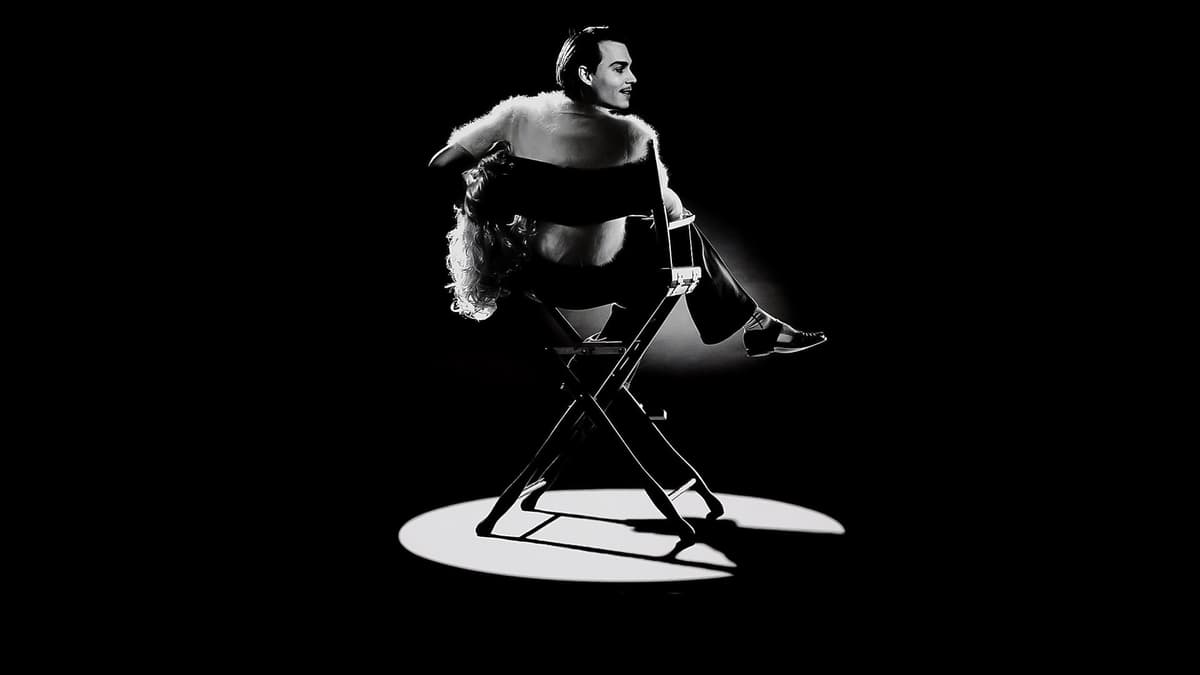
Envy (2004) follows suburban neighbors and lifelong best friends Tim Dingman (Ben Stiller) and Nick Vanderpark (Jack Black), whose friendship implodes after Nick invents Vapoorize, a spray that makes dog feces vanish, and becomes spectacularly rich while Tim remains stuck in his middle-management life next door. The Barry Levinson-directed DreamWorks comedy pairs two of the era's most bankable comedy leads against a high-concept envy-and-friendship premise that escalates into property destruction, accidental homicide, and a Christopher Walken-led road-trip detour.
What Is the Budget of Envy (2004)?
Envy (2004), directed by Barry Levinson and distributed by DreamWorks Pictures, was produced on a reported budget of $40,000,000. The high-concept comedy paired Ben Stiller and Jack Black as suburban neighbors whose friendship implodes after one of them strikes it rich by inventing a spray that makes dog feces disappear. DreamWorks financed the production through its in-house theatrical slate, with Castle Rock Entertainment co-producing under its longstanding Warner-adjacent comedy mandate.
The budget reflected the cost of pairing two of the most bankable comedy leads of the early 2000s. Stiller was coming off Meet the Parents (2000), Zoolander (2001), and Along Came Polly (2004), while Black had just headlined School of Rock (2003). The financial math assumed Envy would clear roughly $90,000,000 worldwide to break even after marketing, a target it missed by more than $75,000,000 and that made it one of the most decisive comedy bombs of the year.
Key Budget Allocation Categories
Envy's reported $40,000,000 budget was distributed across several core production areas:
- Above-the-Line Talent: Ben Stiller and Jack Black commanded matching star-comedy fees in the $10,000,000-plus range typical for paired comedy leads of their stature. Director Barry Levinson (Rain Man, Wag the Dog, Good Morning Vietnam) drew a feature-director rate consistent with his Oscar-winning track record. Supporting players Christopher Walken, Rachel Weisz, and Amy Poehler filled out the ensemble at established character-actor rates.
- Suburban Set Construction: The script required side-by-side suburban houses that escalated in opulence as Jack Black's character grew rich, including a full white-on-white mansion with horse-stable annex. Production designer Stefania Cella built the practical exteriors and dressed interiors on backlot locations to allow controlled lighting and camera moves across the dual-house comedic geography.
- Practical Effects and Animal Work: Multiple sequences involved a white horse named Corky and the running gag of the vanishing-feces spray, requiring practical creature handling, prop builds, and effects rigging to land the visual punchlines. The horse was tracked across the shoot and required a recurring animal-wrangler line item.
- Cinematography and Camera: Cinematographer Tim Maurice-Jones (Lock, Stock and Two Smoking Barrels) shot in widescreen anamorphic, with the production using extensive day-exterior lighting setups across the suburban locations to maintain the bright, hyperreal comic tone Levinson called for in the visual approach.
- Music and Score: Mark Mothersbaugh of Devo (Rushmore, The Royal Tenenbaums) composed an orchestral comedy score with quirky percussion textures, plus the production licensed multiple period needle drops to score Jack Black's nouveau-riche montages.
- Post-Production and Reshoots: The film sat on the DreamWorks shelf for nearly two years after wrapping in 2002, with reshoots and re-edits prompted by mixed test screenings. The extended post timeline and reshoot block added carrying costs and incremental production fees before the April 2004 theatrical release.
How Does Envy's Budget Compare to Similar Films?
At $40,000,000, Envy sat in the upper mid-range of paired-star studio comedies of the early 2000s. The comparison set illustrates how its commercial outcome diverged from peers with similar leads:
- Anchorman: The Legend of Ron Burgundy (2004): Budget $26,000,000 | Worldwide $90,649,798. Will Ferrell's breakout DreamWorks comedy, released two months after Envy, cost roughly 65% as much and out-grossed it by more than six times.
- School of Rock (2003): Budget $35,000,000 | Worldwide $131,282,949. Jack Black's previous lead vehicle cost less and earned nearly ten times Envy's worldwide gross, signaling that audiences would pay to see Black, but not in this material.
- Along Came Polly (2004): Budget $42,000,000 | Worldwide $171,963,386. Ben Stiller's January 2004 romantic comedy, released three months before Envy, cost roughly the same and earned more than eleven times its worldwide gross.
- Duplex (2003): Budget $40,000,000 | Worldwide $19,990,015. Ben Stiller's previous Danny DeVito-directed comedy bomb, released the prior fall, cost the same and earned only marginally more, foreshadowing the Envy result.
- The Cat in the Hat (2003): Budget $109,000,000 | Worldwide $134,232,505. Mike Myers' DreamWorks family disaster from the same window cost nearly three times Envy and earned less than ten times its gross, illustrating the era's broader comedy-budget recalibration.
Envy Box Office Performance
Envy opened on April 30, 2004 to $6,144,096 across 2,759 theaters, a soft opening weekend that placed it sixth for the frame behind Mean Girls (which won the weekend), Man on Fire, 13 Going on 30, Laws of Attraction, and Kill Bill: Volume 2. The per-theater average of approximately $2,227 was a clear early signal that Stiller and Black together could not move tickets in this material. Here is the financial breakdown:
Box Office Breakdown
Envy

Envy returned approximately $0.22 in theatrical revenue for every $1 invested when measured against total estimated production and marketing spend, ranking it among the most decisive paired-star comedy bombs of the 2000s. The domestic share of the gross was $13,562,325 against an international share of just $931,711, a 94/6 split that indicated DreamWorks effectively wrote off international distribution after the soft domestic opening.
DreamWorks had shelved the film for nearly two years after a 2002 wrap, dumping it into a competitive April 2004 corridor rather than positioning it for a marquee summer or holiday slot. The studio cited testing and creative-pacing issues for the delay, but the contemporaneous trade press read the move as a clear signal that DreamWorks had lost confidence in the picture well before release.
Envy Production History
Steve Adams wrote the original Envy screenplay in the mid-1990s, with the project bouncing around several studios before DreamWorks acquired it as a vehicle for Barry Levinson in 2001. Levinson, who had directed Rain Man (1988), Bugsy (1991), Wag the Dog (1997), and Bandits (2001) for DreamWorks and its Castle Rock partners, was attached as both director and producer, with Castle Rock's Andrew Bergman and Levinson Productions co-producing.
Casting Ben Stiller and Jack Black as the two suburban neighbors locked in the central friendship was the project's defining production choice. Both actors had worked with Levinson-adjacent material in the late 1990s, and the pairing was framed by trade press as a bet on the era's two most ascendant comedy stars headlining a high-concept premise together. Christopher Walken joined as the wandering vagrant J-Man, with Rachel Weisz and Amy Poehler completing the ensemble.
Principal photography took place in 2002 in Los Angeles and the surrounding southern California suburbs, with the suburban side-by-side house exteriors built on backlot and ranch locations. The shoot wrapped in summer 2002 with an initial target release in early 2003.
DreamWorks shelved Envy after mixed test screenings, with the studio cycling the film through additional editing, recutting, and reshoot work across 2002 and 2003. The eventual April 30, 2004 release date placed the film nearly two years after the original wrap, with the marketing campaign emphasizing the Stiller and Black pairing rather than the high-concept feces-spray premise that audiences ultimately found difficult to engage with.
Awards and Recognition
Envy received no significant awards recognition. The film did not register at the Academy Awards, Golden Globes, BAFTAs, or any of the major guild ceremonies, and it picked up no nominations from comedy-specific bodies such as the MTV Movie Awards.
At the 25th Golden Raspberry Awards covering the 2004 calendar year, Envy received no Razzie nominations despite its commercial collapse and mixed reviews, because the slot was dominated by Catwoman (which swept the major Razzie categories) and by Alone in the Dark. The absence of Razzie recognition has helped Envy fade quietly from public conversation, with the film now most often cited as a footnote in surveys of paired-star comedy bombs and in retrospectives of Barry Levinson's post-2000 directorial decline.
Critical Reception
Envy received broadly negative reviews. The film holds a 7% approval rating on Rotten Tomatoes based on 121 critic reviews, with a Metacritic score of 36 out of 100, indicating generally unfavorable reviews. Audiences surveyed by CinemaScore gave the film a C+, a result that placed Envy in the bottom quartile of major studio comedies released in 2004.
Critics broadly objected to the central premise (a comedy built around a spray that vanishes dog feces) and to the pacing of the suburban-friendship dynamics. Roger Ebert wrote that the film "wants to be a satire of envy but never finds a satirical angle," awarding it one and a half stars. Variety's Todd McCarthy described the picture as "a high-concept comedy whose concept is the only thing high about it." The Hollywood Reporter's Kirk Honeycutt called the film "tonally inert, with two of the most reliable comedy leads of their era visibly stranded by material that gives them nothing to play."
Defenders of the film, including some retrospective reappraisals, have pointed to Christopher Walken's J-Man as a standout supporting performance and to Levinson's suburban-comedy production design as a craft strength. Envy is now most often cited in surveys of the 2000s paired-star comedy era as a structural counterexample to Anchorman, School of Rock, and Along Came Polly, showing how a premise mismatch could neutralize even the era's most bankable comedy leads.
Frequently Asked Questions
How much did Envy (2004) cost to make?
Envy was produced on a reported budget of $40,000,000. DreamWorks Pictures financed the production in partnership with Castle Rock Entertainment and Baltimore Spring Creek Productions, with the budget reflecting paired comedy-star fees for Ben Stiller and Jack Black and a Barry Levinson-directed studio production schedule.
How much did Envy earn at the box office?
The film grossed $13,562,325 domestically and $931,711 internationally, for a worldwide total of $14,494,036. It opened to $6,144,096 in the United States across 2,759 theaters on April 30, 2004, finishing sixth for the weekend behind Mean Girls, Man on Fire, 13 Going on 30, Laws of Attraction, and Kill Bill: Volume 2.
Was Envy a box office bomb?
Yes. Against a $40,000,000 production budget and an estimated $25,000,000 to $35,000,000 in marketing spend, Envy returned approximately $0.22 in worldwide gross for every $1 invested. It is widely cited as one of the most decisive paired-star comedy bombs of the 2000s alongside Duplex (2003) and The Cat in the Hat (2003).
Who directed Envy?
Barry Levinson directed Envy from a screenplay by Steve Adams. Levinson had previously directed Rain Man (1988), Bugsy (1991), Wag the Dog (1997), and Bandits (2001), with Envy widely cited in retrospectives as a marker of his post-2000 commercial decline.
Why was Envy delayed until 2004?
DreamWorks shelved Envy for nearly two years after its 2002 wrap, citing mixed test screenings and pacing issues. The studio cycled the film through additional editing and reshoot work across 2002 and 2003 before settling on an April 30, 2004 release date in a competitive spring corridor.
Who stars in Envy (2004)?
Ben Stiller and Jack Black star as suburban neighbors Tim Dingman and Nick Vanderpark, with Christopher Walken as the wandering vagrant J-Man and Rachel Weisz and Amy Poehler as their respective wives. The cast was the project's primary commercial bet, pairing two of the early-2000s comedy stars who had headlined Meet the Parents and School of Rock.
What is the premise of Envy?
Suburban neighbor Nick Vanderpark (Jack Black) invents Vapoorize, a spray that makes dog feces vanish, becomes spectacularly rich, and watches his friendship with best friend Tim Dingman (Ben Stiller) implode as envy escalates into property destruction, accidental homicide, and a Christopher Walken-led road-trip detour.
How does Envy compare to Anchorman or School of Rock?
Envy cost $40,000,000 against Anchorman's $26,000,000 (Worldwide $90,649,798) and School of Rock's $35,000,000 (Worldwide $131,282,949), both released in the same window. Envy earned roughly one-sixth of Anchorman's gross and one-ninth of School of Rock's, illustrating that even bankable leads could not save a premise mismatch.
What did critics think of Envy?
Critics broadly panned the film, with a 7% approval rating on Rotten Tomatoes based on 121 reviews and a Metacritic score of 36 out of 100. Roger Ebert called it a satire that "never finds a satirical angle." Audiences gave it a C+ CinemaScore. The film is now most often cited as a structural counterexample to its more successful comedy peers of the era.
Did Envy win any awards?
No. Envy received no significant awards recognition. The film picked up no nominations from the major industry ceremonies and no Razzie nominations despite its commercial collapse, with the 25th Golden Raspberry Awards dominated instead by Catwoman and Alone in the Dark.
Filmmakers
Envy

Official Trailer
Build budgets like this one in Saturation
Start from an industry-standard feature film template, import the schedule and rates you already have, and let the cost report keep itself current as you spend. Real-time collaboration, no spreadsheets.