Earwig and the Witch Budget
 AnimationFantasyFamily1h 23m
Updated
Synopsis
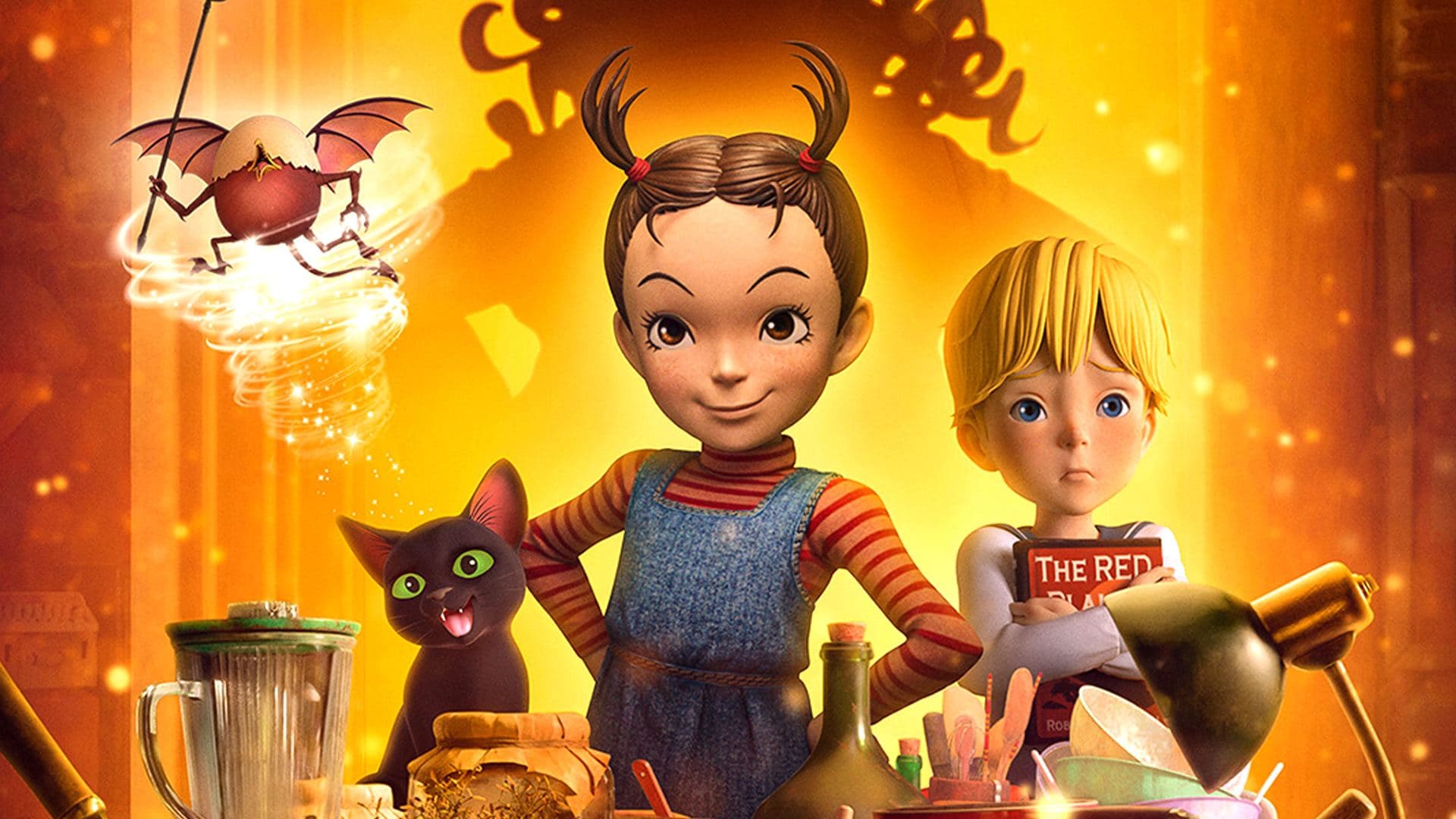
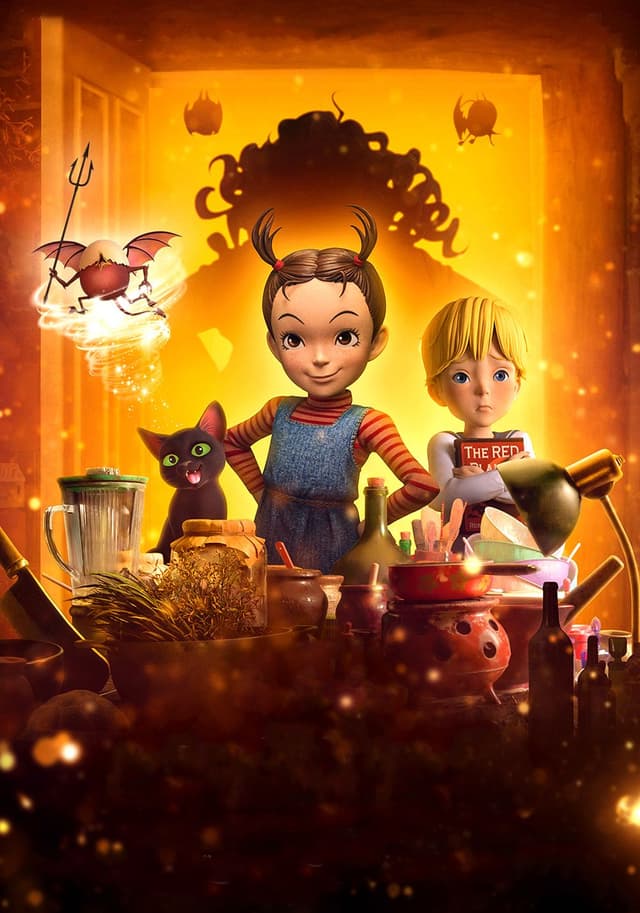
A headstrong orphan named Earwig is adopted by a selfish witch and her mysterious housemate, forcing her to navigate magic, household drudgery, and the secrets of her own past. Goro Miyazaki's adaptation of Diana Wynne Jones's novel marks Studio Ghibli's first fully 3D CG-animated feature.
What Is the Budget of Earwig and the Witch (2021)?
Earwig and the Witch (2021), directed by Goro Miyazaki and produced by Studio Ghibli, was made on an undisclosed budget that Japanese industry trade press estimated in the $10,000,000 to $15,000,000 range. The figure is notably modest for a Ghibli theatrical feature and reflects the production's status as the studio's first fully 3D CG-animated film, a deliberate departure from the hand-drawn tradition that has defined Ghibli since its 1985 founding. Producer Toshio Suzuki publicly framed the project as both a creative experiment and a workflow test for future Ghibli productions, including Hayao Miyazaki's subsequent The Boy and the Heron.
Japanese broadcaster NHK co-produced the film, originally commissioning it as a television movie for Japanese audiences before the international theatrical and streaming rollout was added. GKIDS acquired North American rights and HBO Max secured U.S. streaming rights, with the film functioning as Ghibli's first day-and-date streaming release in the U.S. market. The CG production pipeline drew on the technical team at Studio Ponoc and external Japanese CG houses to compensate for Ghibli's lack of in-house 3D infrastructure.
Key Budget Allocation Categories
The estimated production cost was distributed across these areas:
- CG Animation Pipeline: Building a 3D CG production infrastructure from scratch within Studio Ghibli accounted for the single largest budget category. The team had to integrate Toon Boom and Maya workflows, develop a stylized cel-shaded render pipeline that approximated the Ghibli hand-drawn aesthetic, and train animators previously trained in 2D techniques on 3D rigging, motion capture cleanup, and camera composition.
- Production Period: The film was produced over approximately three years, from 2017 through late 2020, considerably longer than Ghibli's typical 2D production schedules accounting for the CG learning curve and the studio's decision to absorb pipeline development costs internally.
- Above-the-Line Talent: Director Goro Miyazaki, the son of Hayao Miyazaki, was paid as a Ghibli staff director rather than at external feature-director rates. Producer Toshio Suzuki and executive producer Hayao Miyazaki participated as creative consultants, with Hayao receiving a "planning" credit reflecting his light involvement in shaping the adaptation.
- Voice Cast: The Japanese voice cast featured Shinobu Terajima, Etsushi Toyokawa, Gaku Hamada, and child actor Kokoro Hirasawa as Earwig. The English-language dub for the GKIDS and HBO Max releases featured Richard E. Grant, Kacey Musgraves, Vanessa Marshall, Dan Stevens, and Taylor Henderson.
- Music: Country music star Kacey Musgraves contributed an original song "Don't Disturb Me" and provided the voice of the band Earwig's mother performed in. Composer Satoshi Takebe scored the film, with the Earwig's mother's band tracks composed by Shini Otomo and performed by Sherina Munaf with rock arrangements by Tatsuya Nishiwaki.
- Marketing and Distribution: NHK absorbed the Japanese broadcast launch costs. GKIDS handled North American theatrical and Blu-ray distribution alongside HBO Max's streaming campaign.
How Does Earwig and the Witch's Budget Compare to Similar Films?
Earwig and the Witch's estimated budget places it well below both Ghibli's recent hand-drawn theatrical features and Western 3D CG animated peers:
- When Marnie Was There (2014): Budget approximately $24,000,000 | Worldwide $40,170,200. Studio Ghibli's prior Hiromasa Yonebayashi feature illustrates the studio's established 2D theatrical economics.
- Mary and the Witch's Flower (2017): Budget approximately $24,000,000 | Worldwide $43,069,001. Studio Ponoc's spiritual successor, founded by ex-Ghibli staff, offers the closest peer in 2D adaptation of a British witch novel.
- From Up on Poppy Hill (2011): Budget approximately $22,000,000 | Worldwide $61,037,844. Goro Miyazaki's 2D Ghibli predecessor as director provides the same-helmer comparison point.
- Soul (2020): Budget approximately $150,000,000 | Worldwide $121,712,994. Pixar's contemporaneous Disney+ release illustrates the budget gap between Ghibli's CG experiment and U.S. CG features.
- Wolfwalkers (2020): Budget approximately $10,000,000 | Apple TV+ exclusive. Cartoon Saloon's Irish 2D Oscar nominee operated at a roughly comparable budget level with substantially better critical reception.
Earwig and the Witch Box Office Performance
Earwig and the Witch premiered on Japanese broadcaster NHK on December 30, 2020 as a television movie, ahead of a theatrical release in Japan on August 27, 2021 (delayed from a planned April 2021 date by COVID-19). The Japanese theatrical run grossed approximately $1,800,000 across a limited release. GKIDS released the film theatrically in the United States on February 5, 2021 in a single-day fan event, followed by a wider theatrical and HBO Max release later in the year.
Total reported theatrical gross worldwide was approximately $2,100,000, with the bulk of revenue arriving through Japanese NHK broadcast license fees, HBO Max U.S. streaming rights, and GKIDS's home video deal. The financial breakdown:
Box Office Breakdown
Earwig and the Witch

The theatrical performance was modest by Ghibli standards, where prior releases routinely cleared $40,000,000 to $300,000,000 worldwide. The film's primary commercial purpose was as a workflow proof-of-concept for Ghibli's CG infrastructure investment, rather than as a theatrical profit driver.
Earwig and the Witch Production History
Development on Earwig and the Witch began in 2017 when producer Toshio Suzuki and executive producer Hayao Miyazaki selected Diana Wynne Jones's 2011 posthumous novel as the basis for Ghibli's first CG feature. Hayao Miyazaki, a longtime admirer of Jones (whose Howl's Moving Castle he had adapted in 2004), pitched the project to his son Goro after Goro's departure from television series direction.
The CG production pipeline was developed from scratch within Ghibli, drawing on technical consultation from Studio Ponoc and external Japanese CG houses. The team selected a cel-shaded rendering approach designed to approximate the Ghibli hand-drawn aesthetic, with character designs by Katsuya Kondo (Kiki's Delivery Service, Spirited Away) translated into 3D models. The decision to produce in CG rather than 2D was driven by Goro Miyazaki's interest in the format following his work on the 2014 CG TV series Ronja, the Robber's Daughter, also for NHK.
Principal animation ran through 2019 and 2020, with the film completed in time for NHK's December 2020 broadcast. The theatrical release was originally scheduled for April 2021 in Japan but was delayed to August 2021 by COVID-19 restrictions. GKIDS announced its acquisition of North American rights in October 2020, with the film becoming Ghibli's first day-and-date streaming release in the United States.
Goro Miyazaki spoke publicly about the production as a stepping stone toward CG work on subsequent Ghibli projects, though the studio's next theatrical feature, Hayao Miyazaki's The Boy and the Heron (2023), returned to fully hand-drawn animation.
Awards and Recognition
Earwig and the Witch received a Golden Globe nomination for Best Animated Feature at the 78th Golden Globe Awards in 2021, despite its overall mixed critical reception. The Golden Globe nomination was notable as the Hollywood Foreign Press Association's recognition of the Studio Ghibli brand more than the specific film, and the nomination did not translate to Academy Awards Best Animated Feature recognition the following year.
At the Annie Awards, the film received nominations for Outstanding Achievement in Editorial in an Animated Feature Production. The Annecy International Animation Film Festival selected the film for its 2020 Official Selection (the festival's edition was held virtually due to the pandemic). No major Japanese awards bodies honored the film, which was notable given Ghibli's typical dominance of the Japan Academy Prize Animation of the Year category.
Critical Reception
Earwig and the Witch received mixed-to-negative reviews, the weakest critical response to any Studio Ghibli theatrical feature in the studio's history. The film holds a 30% approval rating on Rotten Tomatoes based on 108 critic reviews and a 47 out of 100 score on Metacritic, placing it far below the studio's typical critical floor of 80% to 95%.
Critics objected primarily to the CG animation's stiff, plasticky quality compared with Ghibli's revered hand-drawn work, to the abrupt ending that omits the source novel's climactic confrontation, and to the underdeveloped supporting characters. The New York Times's Glenn Kenny wrote that the film "lacks the warmth and tactile beauty that defines the Ghibli house style," while The Hollywood Reporter's Jordan Mintzer called it "a curious experiment that never quite finds its footing." Roger Ebert's site reviewer Tomris Laffly noted the film "feels like a 90-minute pilot for a series that was never picked up."
Defenders of the film highlighted Diana Wynne Jones's source material and the genuine charm of Earwig's scheming protagonist personality, with The Guardian's Wendy Ide noting the film's "spiky, anti-cute heroine" as a refreshing change from Ghibli convention. The reception nonetheless cemented the production as the most divisive entry in the Ghibli canon, with subsequent studio commentary from Toshio Suzuki acknowledging the experimental nature of the CG approach.
Frequently Asked Questions
How much did Earwig and the Witch (2021) cost to make?
Studio Ghibli did not publicly disclose the budget, but Japanese industry trade press estimated production costs in the $10,000,000 to $15,000,000 range. This is modest for a Ghibli theatrical feature and reflects the production's status as the studio's first fully 3D CG-animated film.
Is Earwig and the Witch the first Studio Ghibli CG film?
Yes. Earwig and the Witch is Studio Ghibli's first fully 3D CG-animated feature, a deliberate departure from the hand-drawn tradition that has defined the studio since its 1985 founding. The film was produced over approximately three years from 2017 through late 2020.
How much did Earwig and the Witch earn at the box office?
The film grossed approximately $1,800,000 in Japan and approximately $300,000 in other territories, for a worldwide theatrical total of approximately $2,100,000. The bulk of the film's revenue arrived through NHK broadcast license fees, HBO Max U.S. streaming rights, and GKIDS's home video deal rather than theatrical box office.
Who directed Earwig and the Witch?
Goro Miyazaki directed the film, his fifth theatrical project at Studio Ghibli following Tales from Earthsea (2006) and From Up on Poppy Hill (2011). Goro is the son of Hayao Miyazaki, who served as executive producer and received a "planning" credit on the film.
Is Earwig and the Witch based on a book?
Yes. The film adapts Diana Wynne Jones's 2011 posthumous novel of the same name. Hayao Miyazaki, a longtime admirer of Jones (whose Howl's Moving Castle he had adapted in 2004), pitched the project to his son Goro for the studio's CG experiment.
Where can I watch Earwig and the Witch?
The film premiered on Japanese broadcaster NHK on December 30, 2020, was released theatrically in Japan on August 27, 2021, and was distributed in North America by GKIDS with U.S. streaming exclusive rights on HBO Max from February 2021. It has since been available on physical media via GKIDS Blu-ray.
Who sings the songs in Earwig and the Witch?
Country music star Kacey Musgraves contributed an original song "Don't Disturb Me" and provided the voice of Earwig's mother in the English-language dub. The Japanese-language band tracks were composed by Shini Otomo, performed by Sherina Munaf, and arranged by Tatsuya Nishiwaki. Composer Satoshi Takebe scored the film.
What did critics think of Earwig and the Witch?
The film received mixed-to-negative reviews, the weakest critical response to any Studio Ghibli theatrical feature. It holds a 30% approval rating on Rotten Tomatoes and a 47 out of 100 score on Metacritic. Critics objected primarily to the CG animation's stiff quality, the abrupt ending, and the underdeveloped supporting characters.
Did Earwig and the Witch win any awards?
The film received a Golden Globe nomination for Best Animated Feature at the 78th Golden Globe Awards in 2021. The Annecy International Animation Film Festival selected the film for its 2020 Official Selection. The nomination did not translate to Academy Awards Best Animated Feature recognition.
Did Studio Ghibli continue making CG films after Earwig and the Witch?
No. Studio Ghibli's next theatrical feature, Hayao Miyazaki's The Boy and the Heron (2023), returned to fully hand-drawn animation. Producer Toshio Suzuki acknowledged the experimental nature of the CG approach in subsequent commentary, and the studio has not announced any follow-up CG productions.
Filmmakers
Earwig and the Witch

Official Trailer
Build budgets like this one in Saturation
Start from an industry-standard feature film template, import the schedule and rates you already have, and let the cost report keep itself current as you spend. Real-time collaboration, no spreadsheets.