Doubt Budget
Updated
Synopsis
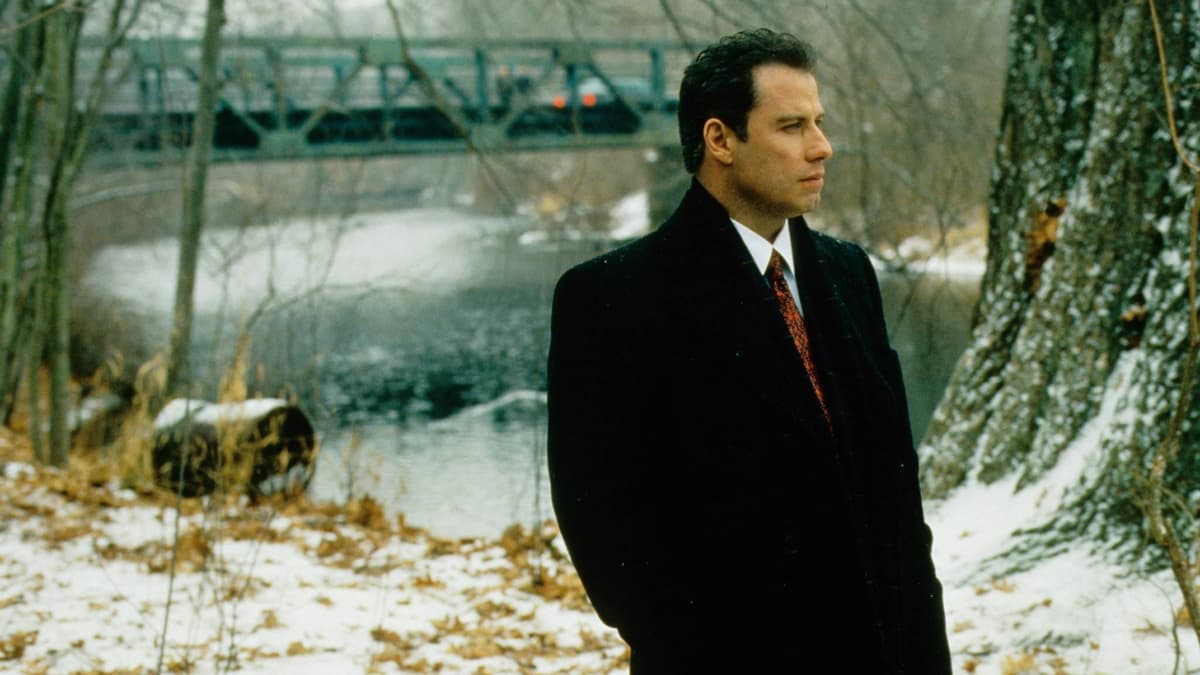
At a Catholic school in the Bronx in 1964, Sister Aloysius, the rigid principal, suspects that Father Flynn, the charismatic priest of the parish, may have an inappropriate relationship with a 12-year-old male student who is the only Black child at the school. A young nun, Sister James, is caught between her loyalty to Sister Aloysius and her affection for Father Flynn as the suspicion deepens.
What Is the Budget of Doubt (2008)?
Doubt (2008), written and directed by John Patrick Shanley and distributed by Miramax Films, was produced on a reported budget of $20,000,000. Financing was provided by Miramax Films along with Scott Rudin Productions, with executive producer credits for Mark Roybal, Celia Costas, and Tracey Becker. The film adapts Shanley's 2004 Pulitzer Prize and Tony Award-winning play "Doubt: A Parable," with the playwright also serving as screenwriter and director for the screen adaptation. The Miramax-tier $20,000,000 budget reflects a deliberate prestige-drama positioning that paired Shanley's adaptation responsibilities with an A-list ensemble of Meryl Streep, Philip Seymour Hoffman, Amy Adams, and Viola Davis.
The budget reflects classic late-stage Miramax economic discipline. Under Bob and Harvey Weinstein's tenure (the company was sold to Disney in 1993 and remained Disney-owned through 2010), Miramax built a brand around literary-source prestige dramas budgeted between $15,000,000 and $30,000,000, with awards-season positioning as the primary commercial strategy. Doubt fits the template exactly: a stage-adapted period piece, a contained interior setting, a high-prestige writer-director, and a cast whose top tier (Streep, Hoffman, Davis) was capable of generating individual acting nominations across the four major awards ceremonies.
Key Budget Allocation Categories
Doubt's $20,000,000 budget was distributed across several core production areas:
- Above-the-Line Talent: Meryl Streep as Sister Aloysius, Philip Seymour Hoffman as Father Flynn, Amy Adams as Sister James, and Viola Davis as Mrs. Miller anchored the ensemble. Streep's $5,000,000 to $6,000,000 quote at the time was the largest above-the-line cost, with Hoffman ($2,500,000 to $3,000,000) and Adams ($1,000,000 to $1,500,000) at supporting-lead rates. Viola Davis appears in a single 11-minute scene that drew her sole Academy Award nomination across her career to that point. Director-writer John Patrick Shanley's combined writing-directing fee added another $1,500,000 to $2,000,000.
- Period Production Design: Production designer David Gropman recreated 1964 Bronx Catholic-school interiors, parish church and rectory environments, and the surrounding neighborhood with period-accurate detail. The film's contained interior setting (most action takes place in the principal's office, the church, the schoolyard, and the rectory) allowed for tighter design budgets than open-location period dramas while still requiring extensive period-appropriate dressing and furnishings.
- New York Location Shoot: Principal photography took place in New York over a roughly 8-week schedule. The Bronx parish setting was created at a former Catholic school in College Point, Queens that had been preserved with period-appropriate features. The film qualified for the New York State Film Production Tax Credit on the post-2004 expanded basis.
- Costume Design: Costume designer Ann Roth handled the period-specific Catholic-school uniforms, nun's habits, and clerical garments that were structurally central to the film. Roth, a six-time Academy Award nominee, brought the precise period-accuracy expected of the Miramax prestige tier.
- Score and Music: Composer Howard Shore, fresh off his Lord of the Rings trilogy work, scored the film with a contained chamber-orchestra approach that emphasized the film's dramatic tension over showy thematic statement. Shore's fee and orchestra session work pushed music spend to approximately $1,000,000.
- Cinematography: Roger Deakins served as cinematographer, his ninth collaboration with various prestige directors that decade. Deakins' rate at the time was at the top of the cinematographer market, contributing significantly to the film's visual prestige and to its Oscar nomination for cinematography.
How Does Doubt's Budget Compare to Similar Films?
At $20,000,000, Doubt sits firmly within the prestige-drama tier of late-2000s adaptations of literary or theatrical source material. The comparison set illustrates the genre's economic discipline:
- Atonement (2007): Budget $30,000,000 | Worldwide $129,266,061. Joe Wright's adaptation of Ian McEwan's novel cost 50 percent more than Doubt and outperformed it by more than two and a half times worldwide, defining the upper tier of contemporaneous prestige drama.
- The Reader (2008): Budget $32,000,000 | Worldwide $108,902,486. Stephen Daldry's contemporaneous adaptation of Bernhard Schlink's novel, also released by Miramax, cost 60 percent more than Doubt and earned Kate Winslet the Best Actress Oscar in the same season Streep was nominated for Doubt.
- Frost/Nixon (2008): Budget $25,000,000 | Worldwide $27,426,335. Ron Howard's adaptation of Peter Morgan's stage play cost 25 percent more than Doubt with a comparable awards-season positioning and a smaller commercial outcome.
- Revolutionary Road (2008): Budget $35,000,000 | Worldwide $75,963,750. Sam Mendes' adaptation of Richard Yates' novel cost 75 percent more than Doubt with a comparable late-2008 awards positioning.
- Milk (2008): Budget $20,000,000 | Worldwide $54,565,890. Gus Van Sant's contemporaneous biographical drama is the closest direct economic peer for Doubt, with an identical production budget and very similar worldwide gross.
Doubt Box Office Performance
Doubt opened in limited release on December 12, 2008 in 15 theaters in New York and Los Angeles, expanding gradually through the awards-qualifying corridor before reaching a wide-release peak of 1,279 theaters in January 2009. The platform release strategy was textbook Miramax awards-positioning, designed to build critical and industry support before broadening to capture awards-driven audience attention. Here is the financial breakdown:
Box Office Breakdown
Doubt

Doubt returned approximately $2.58 in worldwide gross for every $1 of production budget invested, a respectable ratio that compressed once Miramax's $20,000,000 to $25,000,000 in prints, advertising, and awards-campaign spend was layered in. The film's domestic share was $33,446,470 against an international share of $18,251,658, a 65/35 split. International performance was driven by strong specialty-cinema bookings in the UK, France, Italy, and Germany.
The film's strongest financial driver beyond theatrical was the home-entertainment market, where it sold an estimated 1,200,000 DVD units in its first six months of release and generated continuing revenue through awards-season cycle. Combined home-entertainment, television-licensing, and pay-cable revenue is estimated to have pushed lifetime returns well into clear profitability across the production-and-marketing investment.
Doubt Production History
Development on Doubt began in 2005, immediately following the closing of John Patrick Shanley's Pulitzer Prize-winning Broadway production of "Doubt: A Parable" at the Walter Kerr Theatre. Shanley had previously won an Academy Award for Best Original Screenplay for Moonstruck (1987) and had developed a parallel directing career, and he was determined to adapt and direct the screen version of the play himself rather than hand it to a studio system that he had previously found uncongenial. Miramax Films, then a Disney-owned specialty division, acquired the rights and committed to the Shanley adaptation.
Casting was assembled across 2007. Meryl Streep was approached for the role of Sister Aloysius (originated on Broadway by Cherry Jones) and signed on first, with Philip Seymour Hoffman attached as Father Flynn (originated on Broadway by Brían F. O'Byrne). Amy Adams, fresh off her breakout in Enchanted (2007), was cast as Sister James (originated on Broadway by Heather Goldenhersh). The supporting cast included Viola Davis as Mrs. Miller, with Davis cast after Shanley saw her in a small role in Far from Heaven (2002) and an off-Broadway production. Davis had a single 11-minute scene that became the film's emotional centerpiece.
Principal photography ran from December 2007 through early 2008 across New York, with the principal Bronx Catholic-school setting recreated at a former Catholic school in College Point, Queens that had retained its 1960s architectural features. Cinematographer Roger Deakins handled the film's deliberately constrained visual approach with an emphasis on enclosed spaces, long takes during the dialogue confrontations, and carefully blocked exterior sequences in the parish schoolyard.
Post-production took place across 2008, with Miramax setting a December 12, 2008 platform-release date to position the film for the awards-qualifying window. The platform-to-wide expansion strategy continued through January and into the early-February Academy Award nomination announcement on January 22, 2009.
Awards and Recognition
Doubt received five Academy Award nominations at the 81st Academy Awards in February 2009: Best Actress (Meryl Streep), Best Supporting Actor (Philip Seymour Hoffman), Best Supporting Actress (Amy Adams), Best Supporting Actress (Viola Davis), and Best Adapted Screenplay (John Patrick Shanley). The film did not win any of the five nominations, with each actor losing their respective category to a competing performance. The four acting nominations made Doubt the second film in Academy Award history to receive nominations in all four acting categories, after Reds (1981).
The film received six Golden Globe nominations, fifteen Screen Actors Guild Award nominations across individual and ensemble categories (winning Outstanding Performance by a Cast in a Motion Picture for the ensemble), eight Critics Choice Awards nominations, and three BAFTA nominations. Viola Davis received the National Board of Review Award for Breakthrough Performance for her 11-minute scene, an unusual honor for such a contained performance. The combined awards-season recognition was a significant validation of the Miramax-tier prestige model at the close of the Disney ownership era.
Critical Reception
Doubt received generally strong reviews from mainstream critics, with particular acclaim for the lead performances. The film holds a 78 percent approval rating on Rotten Tomatoes based on 236 critic reviews, with a critical consensus that called the film "powerful" and praised the ensemble while flagging Shanley's sometimes static direction of his own theatrical material. On Metacritic, the film scored 68 out of 100, indicating generally positive reviews. Audiences surveyed by CinemaScore gave the film a B+, a solid grade for a serious-themed prestige drama.
Critics broadly praised Streep's carefully calibrated severity as Sister Aloysius, Hoffman's ambiguous warmth as Father Flynn, and the structural integrity of the Streep-Hoffman confrontation scenes that anchor the film's second half. Viola Davis's single scene drew universal acclaim, with critics describing it as the standout performance of the year despite its brief screen time. Roger Ebert gave the film 3.5 out of 4 stars, calling it "an extraordinarily intelligent film." The New York Times' Manohla Dargis wrote that "Ms. Streep and Mr. Hoffman go at each other like two armies in formation." Variety's Todd McCarthy called Davis's scene "the dramatic high point of the film."
Critical reservations centered on Shanley's direction. Some critics argued that the film's tightly framed visual style and reliance on direct two-character confrontations failed to fully escape its theatrical origins, with The New Yorker's David Denby writing that Shanley "doesn't open up the play so much as illustrate it." The film's reputation has held up well over time, with subsequent retrospective coverage citing it as one of the defining stage-to-screen adaptations of the 2000s and as a landmark in Viola Davis's career. The Streep-Hoffman confrontation scenes are widely studied in acting and screenwriting curricula.
Frequently Asked Questions
How much did Doubt (2008) cost to make?
The reported production budget was $20,000,000. Miramax Films, then a Disney-owned specialty division, financed and distributed the film in partnership with Scott Rudin Productions. The budget reflects classic Miramax-tier prestige-drama positioning at the close of the Disney ownership era.
How much did Doubt earn at the box office?
Doubt grossed $33,446,470 domestically and $18,251,658 internationally, for a worldwide total of $51,698,128. It opened in limited release on December 12, 2008 in 15 theaters and expanded to a wide release peak of 1,279 theaters in January 2009.
Was Doubt profitable?
Marginally at the theatrical window and clearly profitable after home entertainment. Against a $20,000,000 production budget and an estimated $20,000,000 to $25,000,000 in marketing and awards-campaign spend, the film returned $51,698,128 worldwide. Strong DVD sales of approximately 1,200,000 units in the first six months of release pushed lifetime returns into clear profit.
How many Academy Award nominations did Doubt receive?
Doubt received five Academy Award nominations at the 81st Academy Awards: Best Actress (Meryl Streep), Best Supporting Actor (Philip Seymour Hoffman), Best Supporting Actress (Amy Adams), Best Supporting Actress (Viola Davis), and Best Adapted Screenplay (John Patrick Shanley). The film did not win any of the five nominations. The four acting nominations made Doubt the second film in Academy Award history to receive nominations in all four acting categories, after Reds (1981).
Is Doubt based on a play?
Yes. Doubt is adapted from John Patrick Shanley's 2004 play "Doubt: A Parable," which won both the Pulitzer Prize for Drama and the Tony Award for Best Play in 2005. Shanley wrote and directed the film adaptation himself, the only writer-director to adapt his own Pulitzer-winning play to the screen in the 2000s.
Who directed Doubt (2008)?
John Patrick Shanley directed the film. Shanley had previously won the Academy Award for Best Original Screenplay for Moonstruck (1987) and had developed a parallel directing career across film and theater. Doubt was his return to feature directing after a long gap from his 1990 directorial debut Joe Versus the Volcano.
Where was Doubt filmed?
Principal photography took place in New York from December 2007 through early 2008. The Bronx Catholic-school setting central to the film was recreated at a former Catholic school in College Point, Queens that had retained its 1960s architectural features. The film qualified for the New York State Film Production Tax Credit Program.
How long is Viola Davis's scene in Doubt?
Viola Davis appears in a single 11-minute scene as Mrs. Miller, the mother of the only Black student at the parish school. The scene is the film's emotional centerpiece and drew Davis her first Academy Award nomination for Best Supporting Actress. The brief screen time relative to her impact on the film is widely studied as an example of compressed dramatic effectiveness.
What did critics think of Doubt (2008)?
Doubt received generally strong reviews. The film holds a 78 percent rating on Rotten Tomatoes (236 critics) and a 68 out of 100 on Metacritic. Audiences gave it a B+ CinemaScore. Critics praised the lead performances and the Streep-Hoffman confrontation scenes while some reservations centered on Shanley's direction not fully escaping the play's theatrical origins.
Did Doubt win any major awards?
Doubt won the Screen Actors Guild Award for Outstanding Performance by a Cast in a Motion Picture and Viola Davis won the National Board of Review Award for Breakthrough Performance. It received six Golden Globe nominations and five Academy Award nominations without winning either ceremony. The film's combined awards-season recognition was a significant validation of the Miramax-tier prestige model.
Filmmakers
Doubt

Official Trailer
Build budgets like this one in Saturation
Start from an industry-standard feature film template, import the schedule and rates you already have, and let the cost report keep itself current as you spend. Real-time collaboration, no spreadsheets.