Cutthroat Island Budget
 ActionAdventure2h 4m
Updated
Synopsis
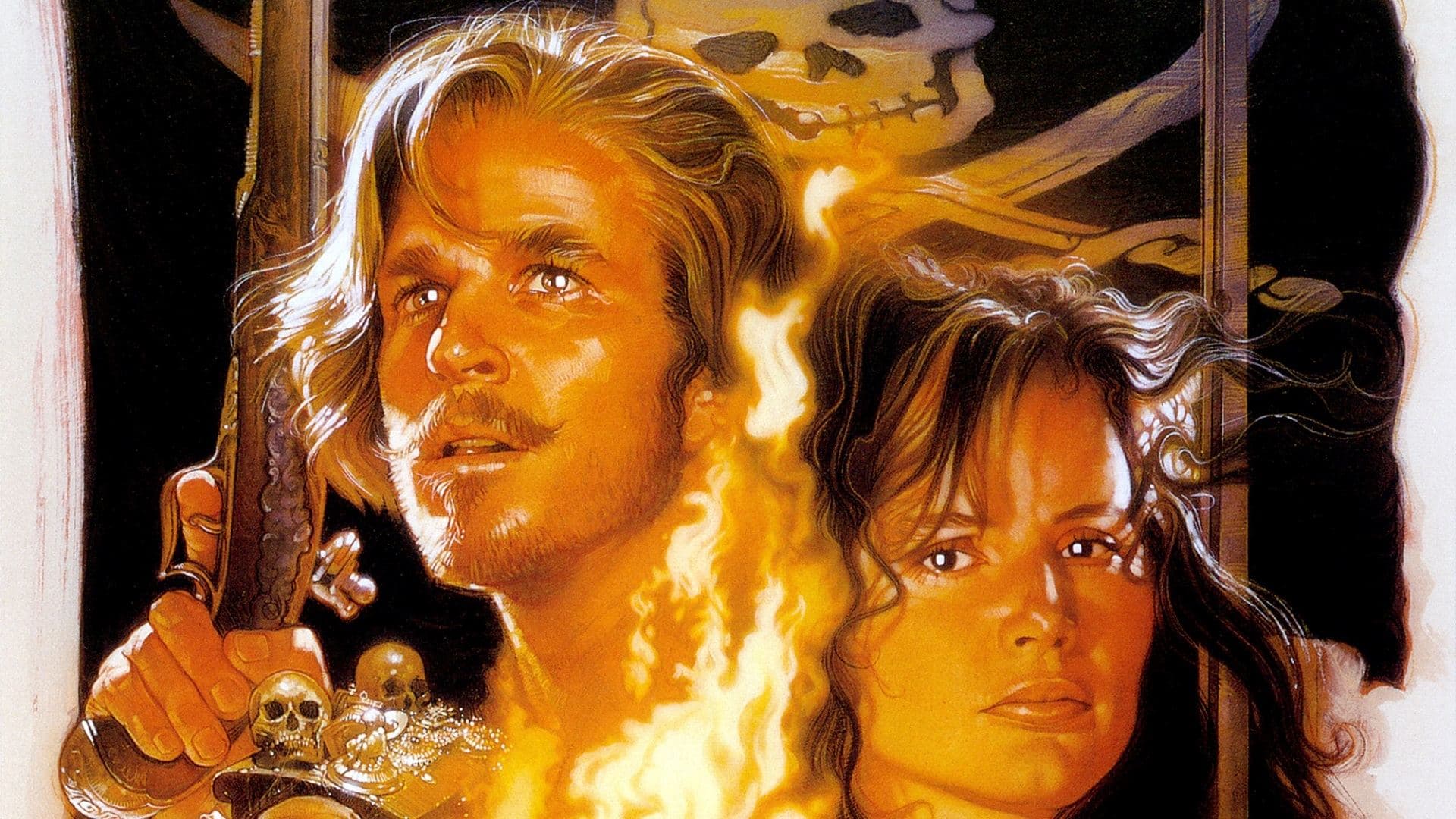
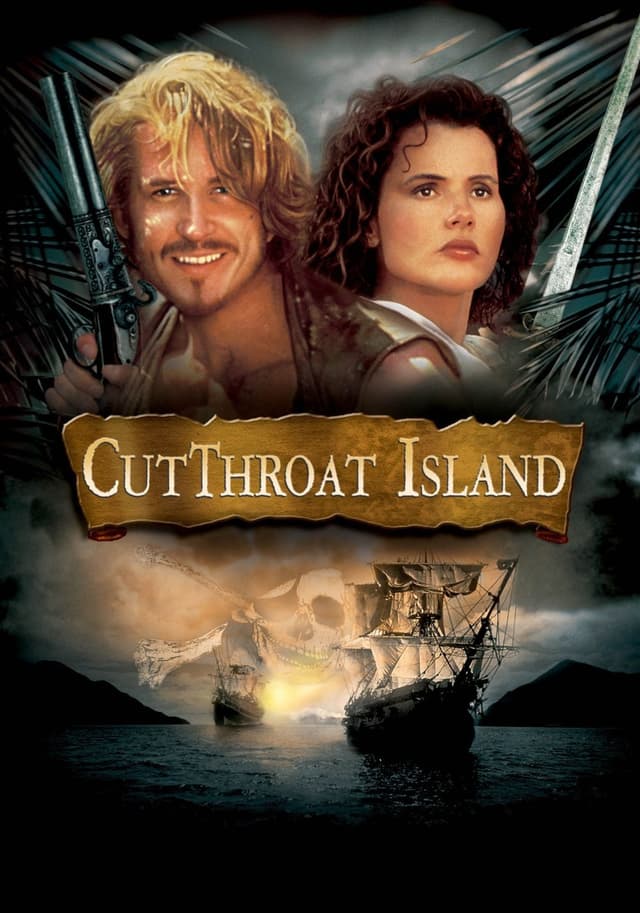
"Cutthroat Island" is a swashbuckling adventure film that follows the daring escapades of Morgan Adams, played by Geena Davis, a fierce and determined pirate captain. Set in the 17th century, Morgan embarks on a quest to locate a hidden treasure map that leads to a legendary fortune buried on a mysterious island. Accompanied by her charming but unreliable partner, William Shaw, portrayed by Matthew Modine, the duo faces treacherous waters, rival pirates, and their own tumultuous relationship.
As they navigate through perilous encounters, including confrontations with the ruthless pirate captain Dog Brown, played by Frank Langella, Morgan's resolve is tested. The film showcases thrilling sword fights, daring ship battles, and breathtaking visuals, all while exploring themes of loyalty, adventure, and the quest for freedom. Ultimately, "Cutthroat Island" is a tale of courage and ambition, where the pursuit of treasure becomes a journey of self-discovery and empowerment.
What is the budget of Cutthroat Island?
"Cutthroat Island," an action released in 1995, was directed by Renny Harlin and stars Geena Davis, Matthew Modine. The production budget was $102,000,000, placing it in the high-budget range for action productions of the 1990s.
Key Budget Allocation Categories
While specific budget breakdowns are not publicly available, typical cost drivers for an action production like this include:
- Stunts, Action Sequences & Visual Effects: Action films allocate a substantial portion of their budget to choreographing and executing practical stunts, pyrotechnics, and CGI-heavy sequences.
- Above-the-Line Talent (Cast & Director): A-list talent commands significant upfront fees plus backend participation.
- Production Design, Sets & Locations: Action films frequently require multiple international shooting locations, large-scale set construction, vehicle acquisitions and modifications, and specialized equipment , all of which drive production costs well above those of dialogue-driven genres.
- Casting: At the time the film was in development, Renny Harlin was married with Geena Davis, and he convinced producer Mario Kassar to cast Davis, who was by then known for light comedies, hoping it would turn her into an action-adventure star.
What were the major cost factors in Cutthroat Island?
Several factors contributed to the overall production costs of "Cutthroat Island."
- Stunts: Stunts, Action Sequences & Visual Effects is one of the primary cost drivers in action productions of this scale.
- Above-the-Line Talent (Cast: Above-the-Line Talent (Cast & Director) is one of the primary cost drivers in action productions of this scale.
- Production Design: Production Design, Sets & Locations is one of the primary cost drivers in action productions of this scale.
How Does Cutthroat Island's Budget Compare to Similar Films?
At $102,000,000, Cutthroat Island sits in the high-budget range. Here is how it compares to productions with a similar budget:
- Cloud Atlas (2012): Budget $102,000,000, Worldwide Gross $130,482,868
- A Wrinkle in Time (2018): Budget $103,000,000, Worldwide Gross $132,675,864
- 1917 (2019): Budget $100,000,000, Worldwide Gross $446,064,352
- American Gangster (2007): Budget $100,000,000, Worldwide Gross $269,755,430
- Bad Boys: Ride or Die (2024): Budget $100,000,000 , Gross $404,547,819
The median budget for wide-release action films in the era ranges from $30 to 80M for mid-budget to $150M+ for tentpoles.
Cutthroat Island Box Office Performance
"Cutthroat Island" earned $10,017,322 domestically and $16,000,000 worldwide at the box office. Against a production budget of $102,000,000, the film faced challenges in theatrical release. Home video, streaming, and ancillary revenue may have contributed to its overall performance.
A film typically needs to earn approximately twice its production budget to cover marketing and distribution costs. For "Cutthroat Island," that break-even threshold was roughly $204,000,000. With worldwide earnings of $16,000,000, the film did not reach break-even in theatrical release.
Box Office Breakdown
Cutthroat Island

At -84.3%, "Cutthroat Island" did not recoup its production budget through theatrical release alone.
Cutthroat Island Production History
At the time the film was in development, Renny Harlin was married with Geena Davis, and he convinced producer Mario Kassar to cast Davis, who was by then known for light comedies, hoping it would turn her into an action-adventure star. Douglas eventually pulled out, claiming that Davis's role as Morgan was expanded at his character's expense, while Davis wanted to quit when Douglas did, but was contractually obligated to finish the film. Oliver Reed was originally cast for a cameo as Mordechai Fingers, but was fired after getting in a bar fight and attempting to expose himself to Davis while intoxicated.
Shooting was delayed for various reasons, causing the budget to spiral out of control. When Harlin fired chief camera operator Nicola Pecorini following a dispute, more than two dozen crew members quit. Towards the end of filming, an entire room was found to be full of unopened juice, and everyone present was obliged to drink it.
The film's orchestral score was composed by John Debney. It is one of the film's aspects that has been critically acclaimed, compared with the classic works of Erich Wolfgang Korngold.
Awards and Recognition
1 nomination total
Critical Reception
On Rotten Tomatoes, Cutthroat Island has a 40% rating based on 42 reviews, with an average rating of 4.90/10. The site's consensus reads: "Cutthroat Island may aspire towards the earnest thrills of classic swashbucklers, but a distinct lack of charm and stilted script make this adventure a joyless hodgepodge of the pirate genre's flotsam and jetsam." On Metacritic the film has a score of 37% based on reviews from 20 critics, indicating "generally unfavorable" reviews. Audiences surveyed by CinemaScore gave the film a grade "B-" on scale of A to F.
Frequently Asked Questions
How much did Cutthroat Island cost to make?
The production budget was $98,000,000, an extraordinary figure for a mid-1990s adventure film. Carolco Pictures financed the bulk of the production, with MGM/UA handling North American distribution after the film's near-collapse during pre-production.
How much did Cutthroat Island earn at the box office?
Cutthroat Island grossed approximately $10,000,000 worldwide, with $10,017,322 domestic and effectively negligible international returns due to distribution problems. It opened to a catastrophic $2,371,000 on December 22, 1995.
Why is Cutthroat Island called the biggest box office bomb?
The Guinness Book of World Records cited Cutthroat Island as the largest box office bomb of all time, based on the ratio of $98,000,000 production cost plus approximately $20,000,000 in marketing to the $10,000,000 worldwide gross. The film bankrupted Carolco Pictures, which filed for Chapter 11 protection.
Who stars in Cutthroat Island?
Geena Davis plays the pirate captain Morgan Adams. Matthew Modine plays the conman Shaw, with Frank Langella as the rival pirate Dawg Brown, Maury Chaykin, Patrick Malahide, and Stan Shaw.
Who directed Cutthroat Island?
Renny Harlin directed the film, his follow-up to Die Hard 2 (1990) and Cliffhanger (1993). Cutthroat Island was a vehicle for his then-wife Geena Davis, and the commercial failure preceded the dissolution of their marriage in 1998.
How did Cutthroat Island bankrupt Carolco?
Carolco Pictures had already been weakened by the underperformance of Cliffhanger's sequel attempts, Showgirls (1995), and other projects. The $98,000,000 production cost plus approximately $20,000,000 in marketing against the $10,000,000 worldwide gross produced a loss of approximately $108,000,000, triggering Carolco's Chapter 11 filing on November 10, 1995, before the film even opened.
Where was Cutthroat Island filmed?
Principal photography took place primarily in Malta, with additional sequences in Thailand. The Malta production used the dry dock facilities at Rinella for the elaborate pirate ship sequences, which involved building a near-full-scale Morgan Adams ship.
What did critics think of Cutthroat Island?
Reviews were overwhelmingly negative, with a 41% approval rating on Rotten Tomatoes. Critics objected to the underwritten script, the chemistry-free pairing of Davis and Modine after Michael Douglas dropped out, and the lavish but soulless production design.
Did Cutthroat Island kill the pirate movie genre?
Yes. The catastrophic failure of Cutthroat Island made major studios reluctant to greenlight large-budget pirate films for the next seven years. The genre remained dormant until Pirates of the Caribbean: The Curse of the Black Pearl (2003, $140,000,000 budget, $654,300,000 worldwide) revived it.
Where can I watch Cutthroat Island today?
The film is available for digital rental and purchase on Amazon Prime Video, Apple TV, and Google Play. The complicated rights situation following Carolco's bankruptcy has meant that the film has rarely appeared on major subscription streaming platforms.
Official Trailer
Build budgets like this one in Saturation
Start from an industry-standard feature film template, import the schedule and rates you already have, and let the cost report keep itself current as you spend. Real-time collaboration, no spreadsheets.