Cure Budget
Updated
Synopsis
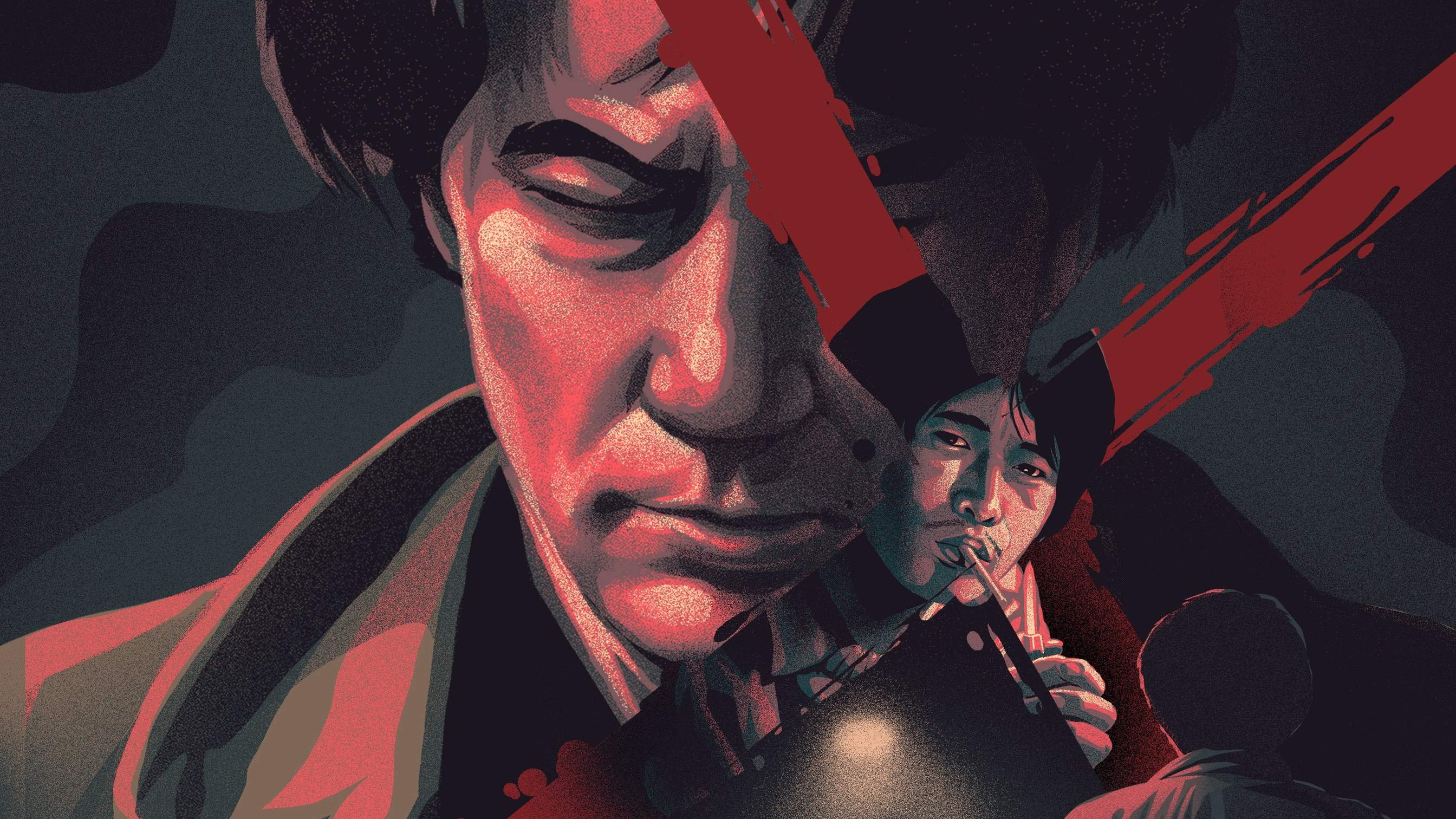
Tokyo detective Kenichi Takabe (Koji Yakusho) investigates a string of nearly identical murders committed by strangers with no apparent connection to one another or to their victims, each killer marking an X on the throat of the dead. The trail leads to Kunihiko Mamiya, an amnesiac drifter who induces ordinary citizens to commit violence through hypnotic conversation, drawing Takabe into a slow, dread-filled meditation on identity, mesmerism, and the spread of evil through everyday life.
What Is the Budget of Cure (1997)?
Cure (Kyua), Kiyoshi Kurosawa's 1997 Japanese psychological horror film produced by Daiei Film and Twins Japan and distributed by Shochiku-Fuji, has no precisely confirmed production budget in major industry databases. Public sources cite a reported figure of roughly 1,000,000 yen, a number widely repeated online but almost certainly understated for a 35mm theatrical feature with a 111-minute runtime, name-brand lead Koji Yakusho, location work across Tokyo, and a full Daiei production crew. Box Office Mojo and The Numbers do not track Japanese domestic theatrical budgets from this period, and Daiei never released a formal cost statement.
Working from the film's actual production profile (a major Japanese star coming off Shall We Dance?, a five-week Tokyo shoot with practical locations, a Daiei Film studio production credit, and a 35mm color negative finish), Cure's real working budget almost certainly fell in the 80,000,000 to 200,000,000 yen range, equivalent to roughly $650,000 to $1,650,000 at the 1996 to 1997 exchange rate. Japanese mid-tier theatrical features of the late 1990s typically operated in this band, financed through a combination of studio equity from Daiei, distribution advances from Shochiku-Fuji, and television and home-video pre-sales rather than international co-production cash.
Key Budget Allocation Categories
Although Daiei has never published a line-item breakdown, the production points to a recognizable set of dominant cost categories for a late-1990s Japanese studio horror feature:
- Above-the-Line Cast: Koji Yakusho, fresh off the international success of Shall We Dance? (1996), was the largest single talent cost and the primary commercial asset securing distribution. Masato Hagiwara as the amnesiac drifter Mamiya, Tsuyoshi Ujiki as the police psychologist Sakuma, and Anna Nakagawa as Takabe's wife rounded out the principal cast at standard Japanese guild scale.
- Tokyo Location Shoot: Principal photography took place across greater Tokyo, including derelict industrial interiors, anonymous suburban apartments, hospital wards, and the abandoned former mental institution that serves as the film's key location. Location permits, security, and equipment trucking across multiple urban locations represented a meaningful below-the-line cost line.
- Production Design and Set Dressing: Tomoyuki Maruo's production design built the film's distinctive deadpan, slightly off-kilter interiors. The decision to favor real locations dressed for the camera over constructed sets kept the design spend lower than a comparable studio thriller of the period, though the abandoned institution sequence required substantial dressing and practical effects work.
- Cinematography and Lighting: Tokusho Kikumura shot the film on 35mm color negative in a long-take, fixed-camera style that defined Kurosawa's mature visual language. Masao Kanazawa's lighting package, the 35mm stock and lab processing, and the rental of dolly and crane equipment for the film's carefully composed wide shots together formed one of the larger fixed-cost line items.
- Sound and Score: Katsumi Kimura and Hiromichi Kori's production sound, combined with composer Gary Ashiya's sparse, atonal score and the elaborate, near-musical use of ambient drones and washing-machine hum that became a hallmark of Kurosawa's work, drove a relatively heavy post-production sound bill for a film of this scale.
- Editing and Post-Production: Kan Suzuki's 111-minute final cut was assembled in a conventional Japanese post-production schedule. Color timing and lab work for theatrical release prints, dialogue editing for the hypnosis sequences, and the foley work supporting the film's violent set pieces consumed the post budget.
- Marketing and Print Delivery: Shochiku-Fuji handled the Japanese theatrical rollout, which included the Tokyo International Film Festival premiere on November 6, 1997 and a national release on December 27, 1997. Press materials, theatrical trailers, festival print delivery, and the Daiei advertising allocation sat outside the production budget but consumed a comparable share of total investment.
How Does Cure's Budget Compare to Similar Films?
With the working budget anchored in the $650,000 to $1,650,000 range, Cure sits among other late-1990s Japanese genre features, Kiyoshi Kurosawa's own filmography, and the broader category of psychological-thriller and serial-killer features it would later be compared to:
- Ringu (1998): Budget not publicly disclosed (estimated $1,200,000) | Worldwide $20,000,000+ across its global theatrical run. Hideo Nakata's J-horror landmark, released a year after Cure and credited with launching the international Japanese horror wave, operated at roughly the same Japanese mid-tier budget scale and demonstrated the commercial ceiling Cure helped open.
- Audition (1999): Budget not publicly disclosed (estimated $1,500,000) | Worldwide $174,000 US gross. Takashi Miike's breakout international success was produced and budgeted at a similar Japanese studio tier and offers the closest financial peer in terms of arthouse-horror crossover positioning.
- Pulse (Kairo) (2001): Budget not publicly disclosed | Worldwide $324,558 US gross. Kurosawa's own follow-up J-horror feature, made four years after Cure with broadly the same Daiei-era production crew, is the closest internal benchmark for Cure's likely cost tier.
- Memories of Murder (2003): Budget $2,800,000 | Worldwide $11,200,000. Bong Joon-ho's Korean serial-killer procedural, frequently cited as a direct descendant of Cure's atmosphere and structure, was produced at roughly double the budget six years later and demonstrates the regional Asian cost inflation between 1997 and 2003.
- Se7en (1995): Budget $33,000,000 | Worldwide $327,300,000. David Fincher's American serial-killer procedural is the canonical Hollywood reference point for the same subgenre and was made for roughly twenty times Cure's estimated cost, illustrating the structural budget gap between Hollywood and Japanese studio thrillers of the mid-1990s.
- Zodiac (2007): Budget $65,000,000 | Worldwide $84,800,000. Fincher's later procedural, often paired with Cure in critical writing on patient, investigation-driven thrillers, shows the extreme upper end of the budget range for the genre and the gulf separating Hollywood prestige from Japanese mid-tier production.
Cure Box Office Performance
Cure premiered at the Tokyo International Film Festival on November 6, 1997, then opened theatrically in Japan on December 27, 1997 through Shochiku-Fuji. The Japanese theatrical release performed strongly relative to its production tier and is widely described in retrospect as the film that established Kiyoshi Kurosawa as a major Japanese auteur, though Daiei never disclosed precise domestic gross figures. The United States theatrical release, handled through Cowboy Pictures and later boutique distributors, did not arrive until July 2001 and was confined to a small art-house run. Box Office Mojo and The Numbers do not list a tracked theatrical gross for Cure in either territory.
Box Office Breakdown
Cure

Without a confirmed budget and gross, the standard "$X for every $1 invested" calculation cannot be performed for Cure. The commercial profile of the film is closer to a Japanese studio mid-tier feature with strong domestic theatrical performance than to an international blockbuster, and its return on investment is best understood through the long-tail of repeat home-video releases, festival programming, streaming rights, and the 2024 Janus Films and Criterion Collection 4K restoration that has driven a renewed theatrical and home-video cycle nearly three decades after the original release.
Cure's commercial significance has compounded over time. The film opened doors for Kurosawa's subsequent international career across Cannes, Venice, and the New York Film Festival, established the production template that fed directly into Ringu and the broader J-horror commercial wave, and entered the Criterion Collection in 2024, an event that effectively guarantees decades of additional rights revenue. The film's commercial story is one of patient, sustained earning rather than opening-weekend impact.
Cure Production History
Cure originated in Kiyoshi Kurosawa's long-running interest in mesmerism, hypnosis, and the dissolution of individual identity, themes he had explored in earlier television and direct-to-video work through the early 1990s. Kurosawa wrote the screenplay himself, building the story around the figure of Mamiya, an amnesiac drifter who induces apparently unconnected ordinary citizens to commit nearly identical murders through hypnotic conversation. The script was developed at Daiei Film with producers including Atsuyuki Shimoda, Tetsuya Ikeda, Tsutomu Tsuchikawa, Satoshi Kanno, and Shigeo Minakami across 1996 and 1997.
The casting of Koji Yakusho as Detective Takabe was central to the project's green light. Yakusho had become one of Japan's most internationally visible stars with the worldwide success of Shall We Dance? (1996), and his agreement to lead Kurosawa's comparatively low-budget psychological thriller gave Daiei the marquee name needed to secure distribution through Shochiku-Fuji. Masato Hagiwara, cast as Mamiya, brought a deliberately blank, affectless presence that defined the film's central performance dynamic. Tsuyoshi Ujiki and Anna Nakagawa completed the principal cast.
Principal photography took place across greater Tokyo, with locations ranging from anonymous suburban apartments and police interrogation rooms to the abandoned mental institution that serves as the film's climactic location. Cinematographer Tokusho Kikumura shot the film on 35mm in the long-take, fixed-frame style that became the visual signature of Kurosawa's mature work. The lighting package, designed by Masao Kanazawa, favored ambient, available-light values and the diffuse fluorescent quality of Tokyo institutional interiors. Tomoyuki Maruo's production design dressed the practical locations with a deliberately ordinary, slightly off-key quality that gives the film its distinctive everyday-uncanny atmosphere.
Post-production was completed at Daiei's Tokyo facilities with editor Kan Suzuki. The film's elaborate sound design (the recurring hum of washing machines, dripping water, ambient industrial drones, and Gary Ashiya's sparse atonal score) was constructed in tandem with the editing and is generally regarded as one of the most influential sound designs in 1990s Japanese cinema. The hypnosis sequences relied on practical performance and minimal optical or visual-effects work, with the disturbing imagery generated entirely through framing, sound, and the deadpan affect of Hagiwara's performance.
Cure premiered in competition at the Tokyo International Film Festival on November 6, 1997 and opened nationwide in Japan on December 27, 1997. International circulation built slowly across the late 1990s through festival programming at Rotterdam, Toronto, the New York Film Festival, and Sitges before Cowboy Pictures handled a limited US theatrical release in July 2001. The film entered the Criterion Collection in 2024 in a new 4K restoration, with theatrical re-releases through Janus Films and a Blu-ray and 4K UHD home-video edition that introduced the film to a new generation of audiences worldwide.
Awards and Recognition
Cure won the FIPRESCI Prize from the International Federation of Film Critics at the 1997 Tokyo International Film Festival, the film's most significant festival prize at its world premiere. Koji Yakusho's lead performance as Detective Takabe was widely cited as one of his finest screen roles and contributed to his canonization as one of the defining Japanese screen actors of the 1990s and 2000s. The film was a critical and audience success at the 1998 Rotterdam International Film Festival and gathered substantial press attention at its subsequent international festival appearances.
Within Japan, Cure was nominated for and won several Yokohama Film Festival and Mainichi Film Award honors recognizing Kurosawa's screenplay and direction and the principal performances. Best Director and Best Screenplay recognition at the Yokohama Film Festival helped consolidate Kurosawa's position as a leading voice in Japanese cinema of the late 1990s. The film does not appear in the Academy Awards or BAFTA databases and was not Japan's submission for Best International Feature in its release year.
The film's canonical status has been built primarily through retrospective critical recognition. Filmmakers including Bong Joon-ho (Memories of Murder, Parasite) and Ari Aster (Hereditary, Midsommar) have publicly named Cure as a defining influence. The Criterion Collection added the film to its catalog in 2024 in a new 4K restoration, an institutional honor that effectively confirms the film's status among the most important Japanese features of the post-1990 era. Cure has appeared on numerous best-of-the-1990s and greatest-horror-film lists in recent years from outlets including Sight & Sound, Sight and Sound's 2022 Greatest Films of All Time critics' poll, Reverse Shot, Film Comment, and IndieWire.
Critical Reception
Cure holds a 94 percent positive score on Rotten Tomatoes based on 67 critic reviews, a Metacritic score of 70 out of 100 from 13 critic reviews, and an IMDb average of 7.5 from roughly 30,000 user ratings. CinemaScore does not survey audiences for art-house Japanese releases, so no exit-poll grade exists. The Rotten Tomatoes critics' consensus describes the film as "mesmerizing and psychologically intriguing," and the audience score sits at 85 percent on the platform's Popcornmeter, an unusually strong audience reading for a deliberately paced subtitled horror film.
At its 1997 release, Variety praised Kurosawa's "rigorous control of mood and atmosphere" and singled out Tokusho Kikumura's cinematography for its long-take precision. Tony Rayns, the leading Western critic of contemporary Japanese cinema, championed the film in repeated Sight & Sound essays as the most important Japanese horror feature of the decade. Jonathan Romney in The Guardian called the film "a chillingly methodical exercise in dread" and ranked it among the strongest international releases of the late 1990s. Manohla Dargis and J. Hoberman, writing later for the New York Times and the Village Voice, treated the film as a foundational text of the J-horror movement.
In subsequent retrospective coverage, Cure has been increasingly recognized as a landmark of late-twentieth-century cinema. Anton Bitel in Little White Lies described the film as "an increasingly hallucinatory piece where murderousness is a disease spreading rapidly through the susceptible Japanese psyche." Bong Joon-ho has repeatedly named Cure as a direct influence on Memories of Murder, and Ari Aster has cited the film as one of the most important horror works of his lifetime. The 2024 Criterion Collection release was met with near-universal critical acclaim and has positioned the film as a permanent fixture in the international art-house canon.
Frequently Asked Questions
How much did it cost to make Cure (1997)?
The production budget for Cure has not been precisely disclosed by Daiei Film. A figure of roughly 1,000,000 yen is widely cited online but is almost certainly understated for a 35mm theatrical feature led by Koji Yakusho and produced by a major Japanese studio. Based on the film's profile (a Tokyo location shoot, a 111-minute runtime, a full Daiei production crew, and a star lead coming off Shall We Dance?), the working budget likely fell in the 80,000,000 to 200,000,000 yen range, equivalent to roughly $650,000 to $1,650,000 at the 1996 to 1997 exchange rate.
How much did Cure (1997) earn at the box office?
Cure performed strongly in Japan following its December 27, 1997 release through Shochiku-Fuji, but Daiei Film did not publish a precise domestic gross. The United States theatrical release, handled by Cowboy Pictures from July 2001, was confined to a small art-house run that was not tracked by Box Office Mojo or The Numbers. A reliable worldwide gross figure is therefore not available, though the film is generally regarded as commercially successful for its tier.
Was Cure (1997) profitable?
Without a confirmed budget and gross figure, a precise ROI calculation for Cure is not possible. The film is widely understood to have recouped during its Japanese theatrical run and to have generated steady ongoing revenue across multiple home-video format cycles (VHS, DVD, Blu-ray, and the 2024 Criterion Collection 4K restoration). Its 2024 entry into the Criterion Collection effectively guarantees decades of additional rights revenue.
Who directed Cure (1997)?
Cure was written and directed by Kiyoshi Kurosawa, the Japanese filmmaker who would go on to direct Pulse (2001), Tokyo Sonata (2008), and Cannes Best Director-recognized work including Wife of a Spy. Cure is widely regarded as the film that established Kurosawa as a major international auteur and as a foundational text of the late-1990s Japanese horror wave.
Who stars in Cure (1997)?
Koji Yakusho stars as Detective Kenichi Takabe, the Tokyo police investigator at the center of the film. Masato Hagiwara plays Kunihiko Mamiya, the amnesiac drifter who induces ordinary citizens to commit murder through hypnotic conversation. Tsuyoshi Ujiki and Anna Nakagawa complete the principal cast as Takabe's colleague Sakuma and his wife Fumie respectively.
Where was Cure (1997) filmed?
Principal photography took place across greater Tokyo, with locations including anonymous suburban apartments, police interrogation rooms, hospital interiors, derelict industrial spaces, and the abandoned mental institution that serves as the film's climactic location. Cinematographer Tokusho Kikumura shot the film on 35mm color negative in the long-take, fixed-frame style that became Kiyoshi Kurosawa's mature visual signature.
Where did Cure (1997) premiere?
Cure premiered at the Tokyo International Film Festival on November 6, 1997, where it won the FIPRESCI Prize from the International Federation of Film Critics. The film opened theatrically in Japan on December 27, 1997 through Shochiku-Fuji, screened internationally across 1998 at festivals including Rotterdam and Toronto, and finally received a limited United States theatrical release in July 2001 through Cowboy Pictures.
What awards did Cure (1997) win?
Cure won the FIPRESCI Prize at the 1997 Tokyo International Film Festival, multiple Yokohama Film Festival honors including Best Director and Best Screenplay for Kiyoshi Kurosawa, and Mainichi Film Award recognition in Japan. The film does not appear in the Academy Awards or BAFTA databases. Its most significant institutional honor is its 2024 inclusion in the Criterion Collection in a new 4K restoration.
Is Cure (1997) a horror film?
Cure is most commonly classified as a psychological horror film with crime, mystery, and procedural elements. The film operates as a deliberately paced serial-killer investigation in the manner of David Fincher's Se7en or Bong Joon-ho's Memories of Murder, but its central premise (hypnotic transmission of violence between strangers) and its formal patience place it squarely in the J-horror tradition that Hideo Nakata's Ringu (1998) would commercialize a year later.
Where can you watch Cure (1997) today?
Cure is available on Blu-ray and 4K UHD from the Criterion Collection following the 2024 restoration, on the Criterion Channel streaming service, and for digital rental or purchase from several platforms including Fandango at Home. Janus Films handles ongoing theatrical re-release bookings for repertory cinemas worldwide. The film is also widely programmed at university and cinematheque retrospectives of Kiyoshi Kurosawa's work.
Filmmakers
Cure

Official Trailer
Build budgets like this one in Saturation
Start from an industry-standard feature film template, import the schedule and rates you already have, and let the cost report keep itself current as you spend. Real-time collaboration, no spreadsheets.