Crime 101 Budget
 CrimeThriller2h 21m
Updated
Synopsis
Crime 101 follows Davis, an elusive thief eyeing his final score, who crosses paths with a disillusioned insurance broker at her own crossroads. As their lives become increasingly entangled, a relentless detective closes in on them both, determined to stop the multi-million dollar heist they are planning together. Based on Don Winslow's novella and directed by Bart Layton, the film explores the blurry line between criminal and civilian and the choices that pull ordinary people toward extraordinary danger.
What Is the Budget of Crime 101?
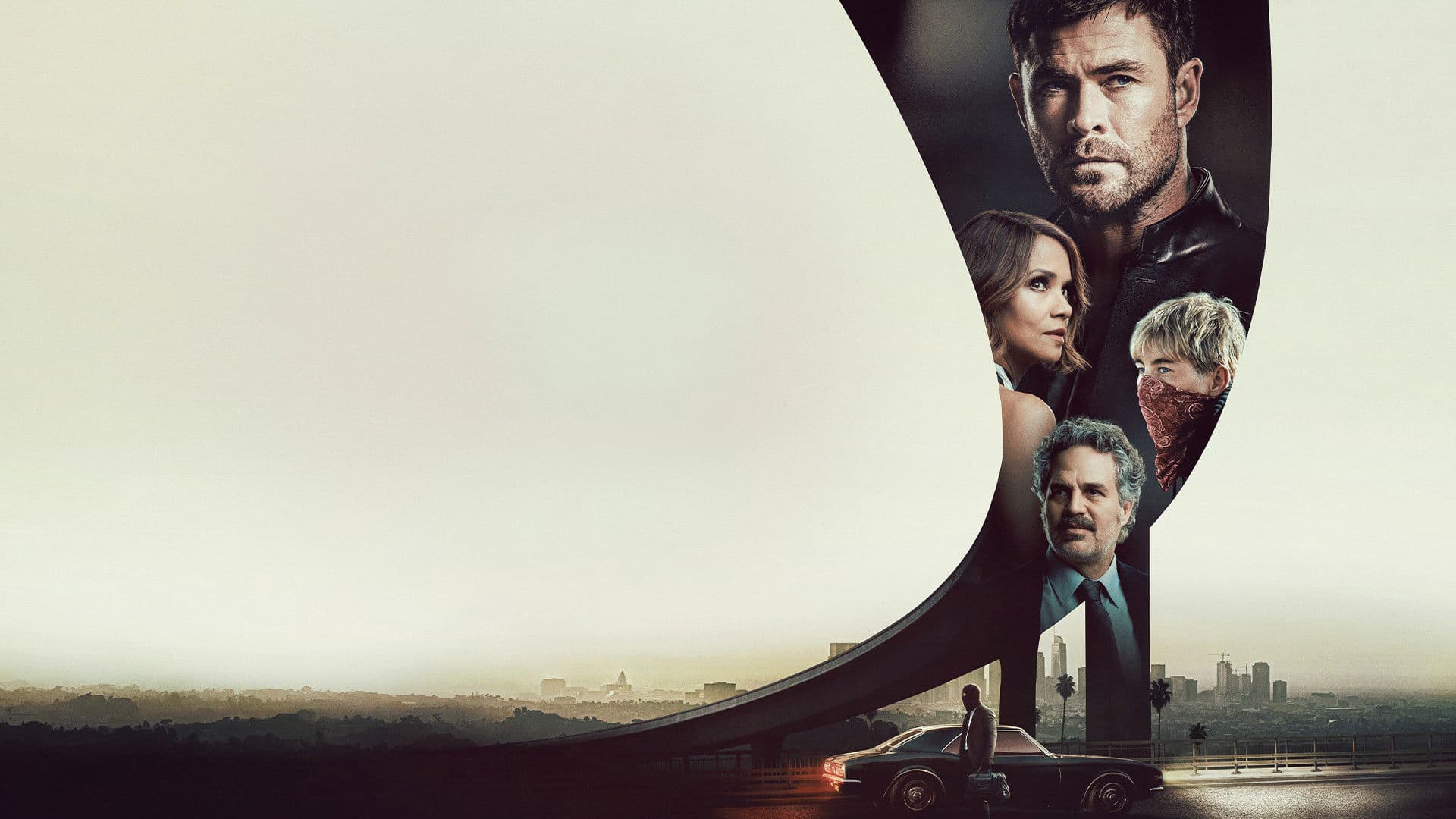
Crime 101 (2026) was produced on a budget of $90 million, a major crime thriller from Amazon MGM Studios, Working Title Films, and RAW (production company associated with director Bart Layton). Directed by Layton, whose previous work includes the acclaimed documentary The Imposter and the narrative-documentary hybrid American Animals, the film stars Chris Hemsworth as a professional thief whose elaborate heists unfold along the iconic 101 freeway in Los Angeles.
Against its $90 million budget, Crime 101 grossed $72.8 million worldwide, a result that fell short of theatrical break-even but demonstrated meaningful audience interest in an original, director-driven crime film at a time when the genre was rarely produced at this budget level.
Key Budget Allocation Categories
- Above-the-Line Talent: Chris Hemsworth, who also served as a producer through his arrangement with the production, commands a leading fee in the $20 million range for major studio productions. Mark Ruffalo (Spotlight, The Kids Are All Right), Halle Berry (Monster's Ball, John Wick: Chapter 3), and Barry Keoghan (The Banshees of Inisherin, Saltburn) constitute one of the most critically distinguished ensemble casts assembled for a 2026 genre film, with their collective above-the-line fees likely consuming $40 to 50 million of the budget.
- LA Freeway and Location Production: Shooting high-stakes heist sequences along the 101 freeway in Los Angeles required extensive coordination with the California Highway Patrol and Los Angeles city permitting authorities. Practical freeway sequences were supplemented by controlled studio environments and partial street closures, with the LA location work adding cost and complexity compared to productions that use substitute locations.
- Practical Heist and Stunt Work: Director Bart Layton's background in real-world documentary storytelling informed a preference for practical stunts and location-based filmmaking over digital substitution. Cinematographer Erik Wilson (American Animals, Under the Shadow) developed a visual approach that prioritized the physical texture of the heist environments.
- Score: Benjamin John Power, who records as Blanck Mass and has composed for a range of experimental and genre projects, brought a propulsive, electronic-influenced score to the film's freeway sequences and the character dynamics between the thief and the insurance investigator pursuing him.
- Working Title and Amazon MGM Co-Production: Working Title's involvement, as producers of the Focus and About Time era of British-American productions, provided development credibility and access to international talent pipelines. Amazon MGM's studio apparatus handled domestic distribution and streaming rights, with RAW producing independently.
How Does Crime 101's Budget Compare to Similar Films?
Crime 101 sits in the upper-mid-budget range for contemporary crime thriller filmmaking, comparable to recent ensemble heist and procedural films.
- American Animals (2018): Budget $6M | Worldwide $6.5M. Bart Layton's previous narrative feature; Crime 101 represents a 15x budget escalation from his breakout, with commensurately larger commercial expectations.
- Baby Driver (2017): Budget $34M | Worldwide $226M. Edgar Wright's LA-adjacent crime action film; Crime 101 operates at 2.6x that budget with a more ensemble-driven rather than single-protagonist approach.
- The Town (2010): Budget $37M | Worldwide $154M. Ben Affleck's Boston heist film as comparison for ensemble crime dramas; Crime 101's larger budget reflects its A-list cast rather than production scope differences.
- Heat (1995): Budget $60M (adjusted ~$120M 2026) | Worldwide $187M. The LA crime epic benchmark; Crime 101's 101 freeway heist structure deliberately references the Heat legacy of LA-specific crime cinema, with a fraction of the adjusted budget and comparable thematic ambition.
Crime 101 Box Office Performance
Crime 101 opened on February 11, 2026, distributed by Amazon MGM Studios theatrically before moving to Prime Video. The film grossed $72,824,188 worldwide, with domestic performance representing the majority of theatrical revenue. The ensemble cast and Layton's critical reputation drove strong opening-weekend interest from adult audiences, though sustained hold proved difficult in a competitive February marketplace.
With a $90 million production budget and estimated P&A of $50 million for the wide release, total investment reached approximately $140 million. At a 50% studio share of worldwide gross, Amazon MGM recovered approximately $36.4 million from theatrical alone, leaving a $103.6 million gap to be addressed by Prime Video streaming performance.
Box Office Breakdown
Crime 101

Crime 101 earned roughly $0.81 for every $1 invested in production at the theatrical window, a shortfall that Amazon MGM's streaming infrastructure and the film's strong critical profile were positioned to offset. The film's adult audience and critical reception positioned it as a strong candidate for sustained streaming viewership.
Crime 101 Production History
Crime 101 was developed by Bart Layton following the critical acclaim of American Animals (2018), his hybridized narrative-documentary feature about an art heist at the University of Kentucky. That film's success established Layton as a filmmaker who could bring a documentarian's attention to behavioral detail to genre filmmaking. Working Title and Amazon MGM developed the Crime 101 concept around Layton's ability to ground high-stakes crime in lived human specificity.
The screenplay, written by Layton, centers on an elusive thief named Davis (Hemsworth) whose heists are architecturally designed around the 101 freeway's geography: specific on-ramps, interchanges, and traffic patterns that allow precise timing and escape routes. His path intersects with Lou (Mark Ruffalo), a disillusioned insurance investigator, and Sharon (Halle Berry), a character at her own crossroads. Barry Keoghan was cast as Ormon, a volatile figure in Davis's orbit, and Nick Nolte appeared as Money, a mentor figure.
Principal photography took place primarily in Los Angeles, with extensive 101 freeway sequences requiring coordination with city authorities and the California Highway Patrol. Erik Wilson's cinematography treated the freeway as a character in itself, its light-trails at night and gridlock geometry during day-time sequences establishing the visual identity of the film's world. Bart Layton shot substantial amounts of observational footage alongside scripted scenes, consistent with his documentary instincts.
The film opened February 11, 2026, sharing the date with GOAT in a crowded studio release weekend. Amazon MGM's theatrical-to-streaming strategy for Crime 101 positioned it as a prestige genre film capable of performing as a Prime Video anchor title beyond its theatrical run.
Awards and Recognition
Crime 101 received significant awards attention for its ensemble, with Barry Keoghan's performance as Ormon generating the most sustained critics' group discussion. The film was recognized in cinematography circles for Erik Wilson's 101 freeway visual grammar, and Bart Layton's screenplay was noted as an outstanding example of original crime writing in an era dominated by IP adaptations. Mark Ruffalo's performance was cited by multiple critics' associations as among his strongest screen work.
Critical Reception
Critics gave Crime 101 strong reviews, praising Layton's precise direction, the quality of the ensemble performances, and the film's commitment to character interiority over action spectacle. Barry Keoghan's volatile, unpredictable performance was the most discussed element, with several critics describing it as among the year's standout character work. The 141-minute runtime was noted as demanding but justified by the film's measured character development.
The consensus positioned Crime 101 as one of 2026's better original crime films, hampered commercially by its long runtime and a marketplace that has increasingly struggled to support adult-oriented theatrical releases. The Heat comparisons were made approvingly, with reviewers noting that Layton achieved genuine tension and moral complexity within the genre framework without sacrificing the pleasures of the heist form.
Frequently Asked Questions
How much did it cost to make Crime 101 (2026)?
The production budget was $90,000,000, covering principal photography, cast and crew salaries, locations, sets, post-production, and music. Marketing and distribution (P&A) costs are estimated at an additional $45,000,000 - $72,000,000, bringing the total studio investment to approximately $135,000,000 - $162,000,000.
How much did Crime 101 (2026) earn at the box office?
Crime 101 grossed $18,209,249 domestic, $54,349,918 international, totaling $72,559,167 worldwide.
Was Crime 101 (2026) profitable?
The film did not break even theatrically, earning $72,559,167 against an estimated $225,000,000 needed. Ancillary revenue may have improved the picture.
What were the biggest costs in producing Crime 101?
The primary cost drivers were above-the-line talent (Chris Hemsworth, Mark Ruffalo, Halle Berry); talent compensation, location cinematography, and tension-driven editorial; international production across United Kingdom, United States of America.
How does Crime 101's budget compare to similar crime films?
At $90,000,000, Crime 101 is classified as a mid-budget production. The median budget for wide-release crime films in the 2020s ranges from $30 - 80M for mid-budget to $150M+ for tentpoles. Comparable budgets: Bad Boys for Life (2020, $90,000,000); Contact (1997, $90,000,000); DC League of Super-Pets (2022, $90,000,000).
Did Crime 101 (2026) go over budget?
There are no widely reported accounts of significant budget overruns for this production. However, studios rarely disclose precise budget overrun figures publicly. The reported production budget reflects the final estimated cost.
What was the return on investment (ROI) for Crime 101?
The theatrical ROI was -19.4%, calculated as ($72,559,167 − $90,000,000) ÷ $90,000,000 × 100. This measures gross revenue against production budget only - it does not account for P&A or exhibitor shares.
What awards did Crime 101 (2026) win?
N/A.
Who directed Crime 101 and who were the key crew members?
Directed by Bart Layton, written by Bart Layton, shot by Erik Wilson, with music by Benjamin John Power, edited by Julian Hart, Jacob Secher Schulsinger.
Where was Crime 101 filmed?
Crime 101 was filmed in United Kingdom, United States of America.
Filmmakers
Crime 101

Official Trailer
Build budgets like this one in Saturation
Start from an industry-standard feature film template, import the schedule and rates you already have, and let the cost report keep itself current as you spend. Real-time collaboration, no spreadsheets.