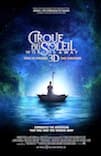
Cirque du Soleil: Worlds Away Budget
 Adventure
Updated
Synopsis
A young woman named Mia is mesmerized by an aerialist at a traveling circus and follows him into a dreamlike alternate world where the seven Cirque du Soleil Las Vegas resident shows come alive. Director Andrew Adamson weaves the live-show captures together with a wordless narrative throughline as Mia and the Aerialist seek each other across the dimensional worlds.
What Is the Budget of Cirque du Soleil: Worlds Away (2012)?
Cirque du Soleil: Worlds Away (2012), directed by Andrew Adamson and distributed by Paramount Pictures, was produced on a reported budget of $20,000,000. The 3D narrative feature was financed by Paramount Pictures, Reel FX Creative Studios, and Cirque du Soleil itself in partnership with executive producer James Cameron's Lightstorm Entertainment. The investment positioned the film as a theatrical capture of seven different Cirque du Soleil Las Vegas resident shows, woven together with a narrative throughline involving a young woman who falls into the dreamlike world of the performers.
The math required the film to earn roughly $50,000,000 worldwide to clear breakeven after marketing, a target it missed by a wide margin as the film failed to find an audience beyond existing Cirque du Soleil fans. The commercial outcome made the film one of Paramount's softer 3D releases of the holiday 2012 corridor.
Key Budget Allocation Categories
Cirque du Soleil: Worlds Away's $20,000,000 budget was distributed across several core production areas:
- Above-the-Line Talent: Director Andrew Adamson (Shrek, The Chronicles of Narnia) worked at studio-feature director rates appropriate to his earlier commercial success, with executive producer James Cameron lending his post-Avatar 3D credibility to the project. The two principal narrative leads, Erica Linz as Mia and Igor Zaripov as the Aerialist, were active Cirque du Soleil performers cast from the existing Las Vegas resident troupes rather than traditional dramatic actors. Both took compensation appropriate to their performer status rather than feature-acting rates.
- Las Vegas Show Capture: The film captured live performance footage from seven Cirque du Soleil Las Vegas resident shows: O (Bellagio), KÀ (MGM Grand), Mystère (Treasure Island), LOVE (The Beatles, Mirage), Zumanity (New York-New York), CRISS ANGEL Believe (Luxor), and Viva ELVIS (Aria, since closed). Each show capture required custom 3D camera rigs at multiple positions, performer redress for camera angles, and coordination with the existing resident-show schedules.
- 3D Cinematography: The film was shot natively in 3D using stereoscopic rigs developed in partnership with James Cameron's Lightstorm Entertainment and Paradise FX. The 3D pipeline required dual-camera configurations at every show capture, slower setup times in the working theater venues, and additional render time for the dimensional integration of multi-show footage. The 3D positioning was a centerpiece of the marketing strategy.
- Narrative Wraparound Production: The narrative throughline involving Mia and the Aerialist was filmed on Las Vegas locations and at Reel FX Creative Studios with the principal Cirque performers. The wraparound footage required custom set construction for the dreamlike interstitial sequences, dance choreography that bridged the resident-show captures, and a deliberately limited dialogue track that allowed the film to play wordlessly across language markets.
- Visual Effects and Show Integration: Reel FX Creative Studios handled the visual effects work that seamlessly transitioned between the seven distinct resident-show worlds, with environmental compositing, dimensional layer integration, and the dreamlike transition sequences that bridged the segments. The VFX pipeline represented a meaningful share of the post-production budget given the film's reliance on transitions as narrative connective tissue.
- Music and Score: Composer Benoît Jutras, a longtime Cirque du Soleil composer who had scored multiple resident shows, supplied original wraparound music that bridged the existing show scores. Music rights clearance for the seven different resident-show soundtracks, including the Beatles catalog used in LOVE, required substantial licensing negotiation and represented a meaningful budget line item.
How Does Cirque du Soleil: Worlds Away's Budget Compare to Similar Films?
At $20,000,000, Cirque du Soleil: Worlds Away sat at the low end of the 2012 3D theatrical bracket:
- Step Up Revolution (2012): Budget $33,000,000 | Worldwide $140,419,495. Summit's contemporary 3D dance feature cost 65% more than Worlds Away and earned roughly 10x its worldwide gross, illustrating the gulf between narrative-led 3D dance cinema and the resident-show-capture model.
- Pina (2011): Budget $5,000,000 | Worldwide $13,002,930. Wim Wenders' contemporary 3D Pina Bausch dance documentary cost a quarter of Worlds Away and earned roughly the same worldwide while winning an Oscar nomination for Best Documentary Feature.
- U2 3D (2008): Budget $15,000,000 | Worldwide $25,856,000. The earlier 3D concert film cost 25% less than Worlds Away and earned 80% more worldwide, an outcome closer to Cirque's actual addressable audience and a reference point Paramount may have miscalibrated.
- Justin Bieber: Never Say Never (2011): Budget $13,000,000 | Worldwide $99,142,162. Paramount's earlier 3D concert film cost 35% less than Worlds Away and earned roughly 7x its worldwide gross, an outcome that demonstrated the gulf between fan-driven music concert films and live-performance circus capture.
- Glee: The 3D Concert Movie (2011): Budget $8,000,000 | Worldwide $18,597,712. Fox's contemporary 3D concert film cost 60% less than Worlds Away and earned 30% more worldwide, an inferior commercial outcome that may have masked the smaller budget's significant ROI advantage.
Cirque du Soleil: Worlds Away Box Office Performance
Cirque du Soleil: Worlds Away opened on December 21, 2012 to $2,128,000 across 825 theaters, a soft fifth-place finish on the holiday corridor. The opening fell well below Paramount's projections and the limited theatrical footprint reflected the studio's own muted commercial expectations. Subsequent weeks saw the film expand to additional theaters before contracting, with the domestic run closing at $7,754,623.
Against a $20,000,000 production budget the film needed approximately $50,000,000 worldwide to clear breakeven after marketing. Here is the financial breakdown:
Box Office Breakdown
Cirque du Soleil: Worlds Away

Cirque du Soleil: Worlds Away returned approximately $0.31 in theatrical revenue for every $1 invested when measured against total estimated production and marketing spend. The domestic share was $7,754,623 against an international share of $4,733,743, a 62/38 split that performed roughly in line with category norms but at far below the threshold required for breakeven.
The commercial disappointment effectively ended Paramount's strategy of bringing live-performance entertainment to theatrical 3D exhibition through resident-show capture. James Cameron's Lightstorm Entertainment continued to pursue 3D theatrical projects through the Avatar franchise. Subsequent Cirque du Soleil theatrical features including the 2015 OneNeXt documentary were structured at significantly smaller budgets with documentary-track positioning rather than the narrative-feature framing that Worlds Away attempted.
Cirque du Soleil: Worlds Away Production History
Development on what became Cirque du Soleil: Worlds Away began in 2010 when James Cameron's Lightstorm Entertainment approached Cirque du Soleil and Paramount with a proposal to capture multiple Cirque resident shows in 3D and weave them together with a narrative throughline. Cirque du Soleil co-founder Guy Laliberté committed the company's Las Vegas resident-show inventory to the project, with the seven targeted shows representing the active Las Vegas lineup at the time.
Andrew Adamson attached to direct in 2011 on the strength of his Shrek and Chronicles of Narnia work, bringing both family-audience credibility and an established relationship with major-studio 3D production. Cirque du Soleil performers Erica Linz, who had performed in O at the Bellagio, and Igor Zaripov, an aerialist from the Russian circus tradition who had recently joined the Cirque company, were cast as the narrative leads.
Principal photography for the show captures took place across late 2011 and early 2012 at the seven Las Vegas resident venues, with 3D camera rigs installed in working theater venues during the established show schedules. Each show capture required performer redress for camera angles, additional rehearsal time to accommodate the 3D camera positions, and coordination with the resident-show production teams to avoid disrupting the paying audience experience.
The narrative wraparound was filmed at Reel FX Creative Studios with the principal performers in spring 2012, including the dreamlike interstitial sequences that bridged the resident-show segments. Post-production extended through summer and fall 2012 to accommodate the show-integration visual effects work and the music rights clearance for the seven different resident-show soundtracks. The film premiered at the El Capitan Theatre in Hollywood ahead of the December 21, 2012 theatrical release.
Awards and Recognition
Cirque du Soleil: Worlds Away received no major awards recognition. The film failed to register at the Academy Awards, Golden Globes, or major guild ceremonies. The 3D Creative Arts Awards recognized the production for its show-integration cinematography, but the targeted technical recognition did not translate to broader awards-conversation visibility.
The film received warmer reception from the live-performance press, with Cirque du Soleil organizational publications and circus-arts journals praising the documentation of the resident shows that have since seen changes (with multiple of the seven captured shows subsequently closing or being significantly altered). The film became an unintended archival document of the early-2010s Cirque du Soleil Las Vegas presence, a context that has shaped subsequent academic discussion of the production.
Critical Reception
Cirque du Soleil: Worlds Away received divided reviews. The film holds a 38% approval rating on Rotten Tomatoes based on 89 critic reviews, with a critical consensus that called it "a feast for the eyes that's bafflingly threadbare in narrative." On Metacritic, the film scored 51 out of 100, indicating mixed or average reviews. Audiences surveyed by CinemaScore gave the film a B+, a warmer ticket-buyer response that did not translate to broad commercial appeal.
Critics praised the 3D cinematography, the show-integration visual effects, and the resident-show capture footage that brought the live Cirque experience to non-Las-Vegas audiences for the first time. Roger Ebert awarded the film 3 stars and wrote that the film "is a visual spectacle that doesn't quite work as cinema, but does work as an introduction to Cirque du Soleil for those who can't get to Las Vegas." Variety's Andrew Barker called the film "breathtaking in its 3D circus capture, less compelling as a narrative."
Critical pushback focused on the threadbare narrative throughline that several reviewers found confusing rather than dreamlike, and on the difficulty of sustaining audience engagement across seven distinct show worlds without a stronger connective tissue. The Hollywood Reporter's Justin Lowe wrote that the film "works best when treating the resident shows as standalone segments, less well when trying to thread them together." The combination of mixed critical reception and limited theatrical performance produced a film that has since been remembered more as a Cirque du Soleil archival document than as a narrative feature.
Frequently Asked Questions
How much did it cost to make Cirque du Soleil: Worlds Away (2012)?
The reported production budget was $20,000,000. The film was financed by Paramount Pictures, Reel FX Creative Studios, and Cirque du Soleil itself, with James Cameron's Lightstorm Entertainment producing in partnership. The budget covered seven distinct Cirque du Soleil Las Vegas resident show captures plus the narrative wraparound footage.
How much did Cirque du Soleil: Worlds Away earn at the box office?
The film grossed $7,754,623 domestically and $4,733,743 internationally, for a worldwide total of $12,488,366. It opened to $2,128,000 in the United States on 825 theaters, finishing fifth on its December 21, 2012 opening weekend during the crowded holiday corridor.
Was Cirque du Soleil: Worlds Away a box office bomb?
Yes. Against a $20,000,000 production budget and an estimated $15,000,000 to $25,000,000 in marketing spend, the film returned approximately $0.31 in worldwide gross for every $1 invested. The commercial disappointment effectively ended Paramount's strategy of bringing live-performance entertainment to theatrical 3D exhibition through resident-show capture.
Who directed Cirque du Soleil: Worlds Away?
Andrew Adamson directed the film. Adamson previously co-directed Shrek (2001), Shrek 2 (2004), and The Chronicles of Narnia: The Lion, the Witch and the Wardrobe (2005) and Prince Caspian (2008). Worlds Away was his first narrative feature outside the family-fantasy mode that established his career.
Where was Cirque du Soleil: Worlds Away filmed?
Principal photography for the show captures took place across late 2011 and early 2012 at seven Las Vegas resident venues including the Bellagio (O), MGM Grand (KÀ), Treasure Island (Mystère), Mirage (LOVE), New York-New York (Zumanity), Luxor (CRISS ANGEL Believe), and Aria (Viva ELVIS). The narrative wraparound was filmed at Reel FX Creative Studios in spring 2012.
How many Cirque du Soleil shows does the film capture?
The film captures seven Cirque du Soleil Las Vegas resident shows: O at the Bellagio, KÀ at the MGM Grand, Mystère at Treasure Island, LOVE (The Beatles) at the Mirage, Zumanity at New York-New York, CRISS ANGEL Believe at the Luxor, and Viva ELVIS at the Aria. Multiple of the seven captured shows have since closed or been significantly altered, making the film an unintended archival document.
Is Cirque du Soleil: Worlds Away in 3D?
Yes. The film was shot natively in 3D using stereoscopic rigs developed in partnership with James Cameron's Lightstorm Entertainment and Paradise FX. The 3D pipeline required dual-camera configurations at every show capture, slower setup times in the working theater venues, and additional render time. The 3D positioning was a centerpiece of the marketing strategy.
How does Worlds Away compare to other 3D performance films?
Cirque du Soleil: Worlds Away cost $20M and earned $12M worldwide. Pina (2011), Wim Wenders' 3D dance documentary, cost $5M and earned $13M while winning an Oscar nomination. Justin Bieber: Never Say Never (2011) cost $13M and earned $99M. U2 3D (2008) cost $15M and earned $26M. Worlds Away had the worst ROI of the four major 3D performance films of the era.
What did critics think of Cirque du Soleil: Worlds Away?
The film received divided reviews, with a 38% approval rating on Rotten Tomatoes (based on 89 critics) and a 51 out of 100 score on Metacritic. Audiences gave it a B+ CinemaScore. Critics praised the 3D cinematography and show capture footage but objected to the threadbare narrative throughline. Roger Ebert awarded the film 3 stars, calling it "a visual spectacle that doesn't quite work as cinema."
Did Cirque du Soleil: Worlds Away win any awards?
No major awards recognition. The film failed to register at the Academy Awards, Golden Globes, or major guild ceremonies. The 3D Creative Arts Awards recognized the production for its show-integration cinematography, but the targeted technical recognition did not translate to broader awards-conversation visibility.
Filmmakers
Cirque du Soleil: Worlds Away

Build budgets like this one in Saturation
Start from an industry-standard feature film template, import the schedule and rates you already have, and let the cost report keep itself current as you spend. Real-time collaboration, no spreadsheets.