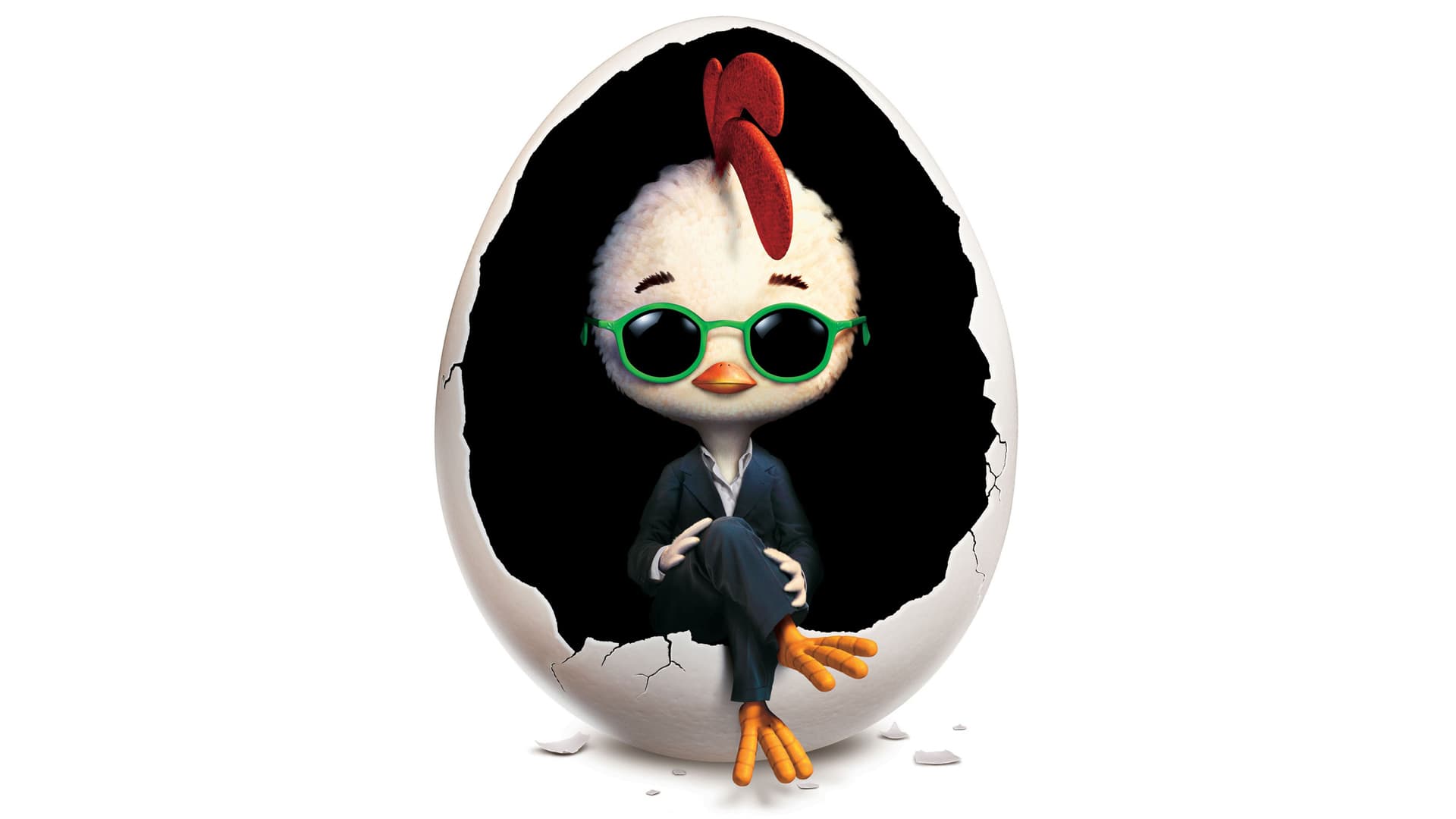
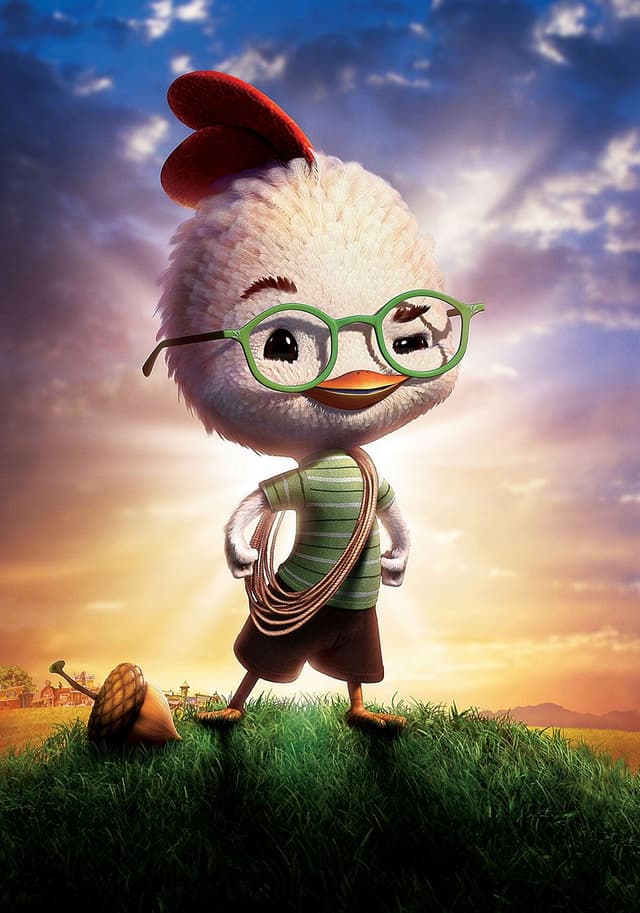
Chicken Little Budget
 AnimationFamilyComedy1h 21m
Updated
Synopsis
It is now one year after the “unfortunate acorn incident” when Chicken Little caused bigtime havoc in his hometown of Oakey Oaks by proclaiming that the sky was falling after being conked on the head by what appeared to be an acorn. Down but not out, the plucky chicken joins the local baseball team in the hopes of reviving his reputation and winning the respect of his father, Buck Cluck. When he leads the town to an upset victory, he becomes the toast of the town. But no sooner has the champion chicken redeemed himself when he is hit on the head one more time. And this time the sky really is falling! Fearful of once again being labeled crazy, he is reluctant to tell anyone what has happened. Instead, he enlists the help of his closest pals—Runt of the Litter, Abby Mallard (aka Ugly Duckling), and Fish Out of Water—in an attempt to save the day without sending the town into a whole new panic.
What is the budget of Chicken Little?
"Chicken Little," a animation released in 2005, was directed by Mark Dindal and stars Zach Braff, Garry Marshall. The production budget was $150,000,000, placing it in the blockbuster range for animation productions of its era.
Key Budget Allocation Categories
While specific budget breakdowns are not publicly available, typical cost drivers for a animation production like this include:
- Animation Production Pipeline: The bulk of an animated film's budget funds the multi-year production pipeline: storyboarding, character modeling, rigging, animation, lighting, rendering, and compositing.
- Voice Talent: Celebrity voice casting has become standard for studio animation, with A-list actors earning $5 to 15 million for voice roles.
- Music, Songs & Sound Design: Original songs and orchestral scores are central to animated storytelling. Sound design for animated worlds must be created entirely from scratch.
- Casting: When originally envisioned as a female character, Holly Hunter provided the voice for the title character for eight months, until it was decided for Chicken Little to be a male.
What were the major cost factors in Chicken Little?
Several factors contributed to the overall production costs of "Chicken Little."
- Animation Production Pipeline: Animation Production Pipeline is one of the primary cost drivers in animation productions of this scale.
- Voice Talent: Voice Talent is one of the primary cost drivers in animation productions of this scale.
- Music: Music, Songs & Sound Design is one of the primary cost drivers in animation productions of this scale.
How Does Chicken Little's Budget Compare to Similar Films?
At $150,000,000, Chicken Little sits in the blockbuster range. Here is how it compares to productions with a similar budget:
- 6 Underground (2019): Budget $150,000,000
- Angels & Demons (2009): Budget $150,000,000, Worldwide Gross $485,930,816
- Batman Begins (2005): Budget $150,000,000, Worldwide Gross $374,218,673
- Bee Movie (2007): Budget $150,000,000, Worldwide Gross $287,594,577
- Beverly Hills Cop: Axel F (2024): Budget $150,000,000
The median budget for wide-release animation films in the 2000s ranges from $30 to 80M for mid-budget to $150M+ for tentpoles.
Chicken Little Box Office Performance
"Chicken Little" earned $135,386,665 domestically and $314,400,000 worldwide at the box office. Against a production budget of $150,000,000, the film showed modest profitability in theatrical release.
A film typically needs to earn approximately twice its production budget to cover marketing and distribution costs. For "Chicken Little," that break-even threshold was roughly $300,000,000. With worldwide earnings of $314,400,000, the film cleared that threshold comfortably.
Box Office Breakdown
Chicken Little

At 109.6%, "Chicken Little" earned roughly $2.1 for every $1 invested in production.
Chicken Little Production History
When originally envisioned as a female character, Holly Hunter provided the voice for the title character for eight months, until it was decided for Chicken Little to be a male. Against forty actors competing for the title role, Zach Braff auditioned. Dindal noted he "pitched his voice slightly to sound like a junior high kid.
The soundtrack album contains an original score composed and produced by John Debney, who had previously worked with Dindal on The Emperor's New Groove (2000), with music by a wide range of artists, some musical veterans, such as Patti LaBelle and Diana Ross, as well as others.
Awards and Recognition
4 wins & 15 nominations total
Critical Reception
Rotten Tomatoes, reports that of surveyed critics gave positive reviews; the average score is . The critical consensus states: "Disney expends more effort in the technical presentation than in crafting an original storyline." Metacritic, gave the film an average score of 48 based on 32 critics, indicating "mixed or average" reviews. Audiences polled by CinemaScore gave the film an average grade of "A-" on an A+ to F scale.
Frequently Asked Questions
How much did it cost to make Chicken Little (2005)?
The production budget was $150,000,000, covering principal photography, visual effects, cast and crew salaries, locations, sets, post-production, and music. Marketing and distribution (P&A) costs are estimated at an additional $75,000,000 - $120,000,000, bringing the total studio investment to approximately $225,000,000 - $270,000,000.
How much did Chicken Little (2005) earn at the box office?
Chicken Little grossed $135,386,665 domestic, $179,013,335 international, totaling $314,400,000 worldwide.
Was Chicken Little (2005) profitable?
The film did not break even theatrically, earning $314,400,000 against an estimated $375,000,000 needed. Ancillary revenue may have improved the picture.
What were the biggest costs in producing Chicken Little?
The primary cost drivers were above-the-line talent (Zach Braff, Garry Marshall, Don Knotts); multi-year animation production, celebrity voice talent, and original musical compositions.
How does Chicken Little's budget compare to similar animation films?
At $150,000,000, Chicken Little is classified as a big-budget production. The median budget for wide-release animation films in the 2000s ranges from $30 - 80M for mid-budget to $150M+ for tentpoles. Comparable budgets: 6 Underground (2019, $150,000,000); Angels & Demons (2009, $150,000,000); Batman Begins (2005, $150,000,000).
Did Chicken Little (2005) go over budget?
There are no widely reported accounts of significant budget overruns for this production. However, studios rarely disclose precise budget overrun figures publicly. The reported production budget reflects the final estimated cost.
What was the return on investment (ROI) for Chicken Little?
The theatrical ROI was 109.6%, calculated as ($314,400,000 − $150,000,000) ÷ $150,000,000 × 100. This measures gross revenue against production budget only - it does not account for P&A or exhibitor shares.
What awards did Chicken Little (2005) win?
4 wins & 15 nominations total.
Who directed Chicken Little and who were the key crew members?
Directed by Mark Dindal, written by Mark Dindal, Steve Bencich, Mark Kennedy, Ron Anderson, with music by John Debney, edited by Dan Molina.
Where was Chicken Little filmed?
Chicken Little was filmed in United States of America.
Filmmakers
Chicken Little

Official Trailer
Build budgets like this one in Saturation
Start from an industry-standard feature film template, import the schedule and rates you already have, and let the cost report keep itself current as you spend. Real-time collaboration, no spreadsheets.