Chernobyl Budget
Updated
Synopsis
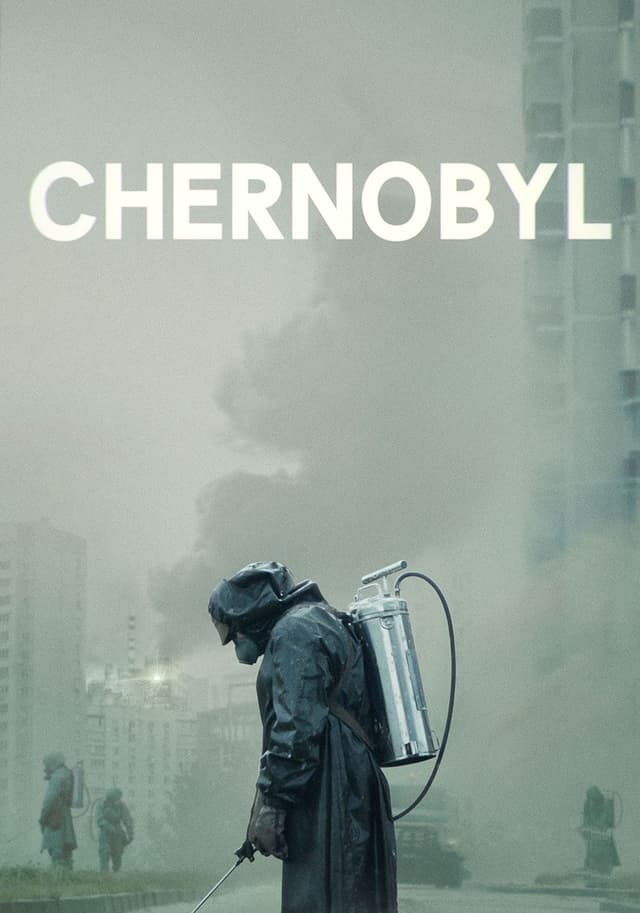
Chernobyl (2019) is the HBO and Sky Atlantic limited series created and written by Craig Mazin and directed by Johan Renck dramatizing the April 26, 1986 nuclear-reactor disaster at the Chernobyl Nuclear Power Plant in Soviet Ukraine and the subsequent Soviet government response. Jared Harris plays nuclear physicist Valery Legasov, who led the post-disaster scientific investigation, alongside Stellan Skarsgård as Boris Shcherbina and Emily Watson as composite Belarusian scientist Ulana Khomyuk. The five-episode series aired from May 6 through June 3, 2019 and won 10 Primetime Emmy Awards including Outstanding Limited Series.
What Is the Budget of Chernobyl (2019)?
Chernobyl (2019), the HBO and Sky Atlantic limited series created and written by Craig Mazin and directed by Johan Renck, was produced on a reported total budget of approximately $40,000,000 across its five episodes, averaging approximately $8,000,000 per episode. HBO and Sky UK co-financed the production through Sister Pictures, The Mighty Mint, and Word Games, with Lithuanian and Ukrainian location shooting anchoring the production base. The figure was confirmed in Sky-affiliated trade press at the time of the May 2019 launch and represented a premium prestige-limited-series tariff that placed the project firmly in the upper tier of contemporaneous HBO scripted-drama production.
The economics of the project were structured around HBO's prestige-limited-series slot in collaboration with Sky's expanded scripted-content investment beginning in 2017 and 2018. Sister Pictures, the Jane Featherstone-led independent producer (Kudos founder), produced the series with HBO and Sky as co-financiers. The Lithuanian location shooting base, particularly the use of the Ignalina Nuclear Power Plant in Visaginas as a direct visual analog for the Chernobyl reactor and the Fabijoniškės district of Vilnius as a direct visual analog for the Soviet-era Pripyat apartment blocks, drove the budget allocation across location-and-period production design.
Key Budget Allocation Categories
Chernobyl's reported $40,000,000 total budget broke down across the cost centers typical of a premium prestige-limited-series period drama, with several show-specific items reflecting its Soviet-era nuclear-disaster production design:
- Above-the-Line Cast: Jared Harris as Valery Legasov, Stellan Skarsgård as Boris Shcherbina, Emily Watson as composite Belarusian scientist Ulana Khomyuk, Paul Ritter as Anatoly Dyatlov, Jessie Buckley as Lyudmila Ignatenko, and Adam Nagaitis as Vasily Ignatenko anchored the principal cast. Harris and Skarsgård both commanded premium prestige-drama lead quotes, with Watson, Ritter, Buckley, and Nagaitis rounding out the ensemble at standard HBO scripted-drama rates.
- Lithuanian Location Production: Principal photography took place primarily in Lithuania across spring and summer 2018, with the Fabijoniškės district of Vilnius standing in for Soviet-era Pripyat apartment blocks and the Ignalina Nuclear Power Plant in Visaginas standing in for the Chernobyl reactor itself. Lithuanian crew, local hire, location permits, and the use of intact Soviet-era nuclear infrastructure made the Lithuanian production base materially cheaper than a Ukrainian or Russian equivalent while delivering superior visual authenticity.
- Period-Authentic Soviet Production Design: Production design by Luke Hull across Soviet-era apartment interiors, Chernobyl reactor control rooms, hospital wards, Politburo meeting rooms, and Kiev tribunal courtrooms formed the single largest non-cast production-cost item. The level of period-authentic detail (1980s Soviet wallpaper, period telephones, accurate Politburo costuming, Soviet-era vehicles) absorbed substantial set-construction and prop-sourcing cost across the five episodes.
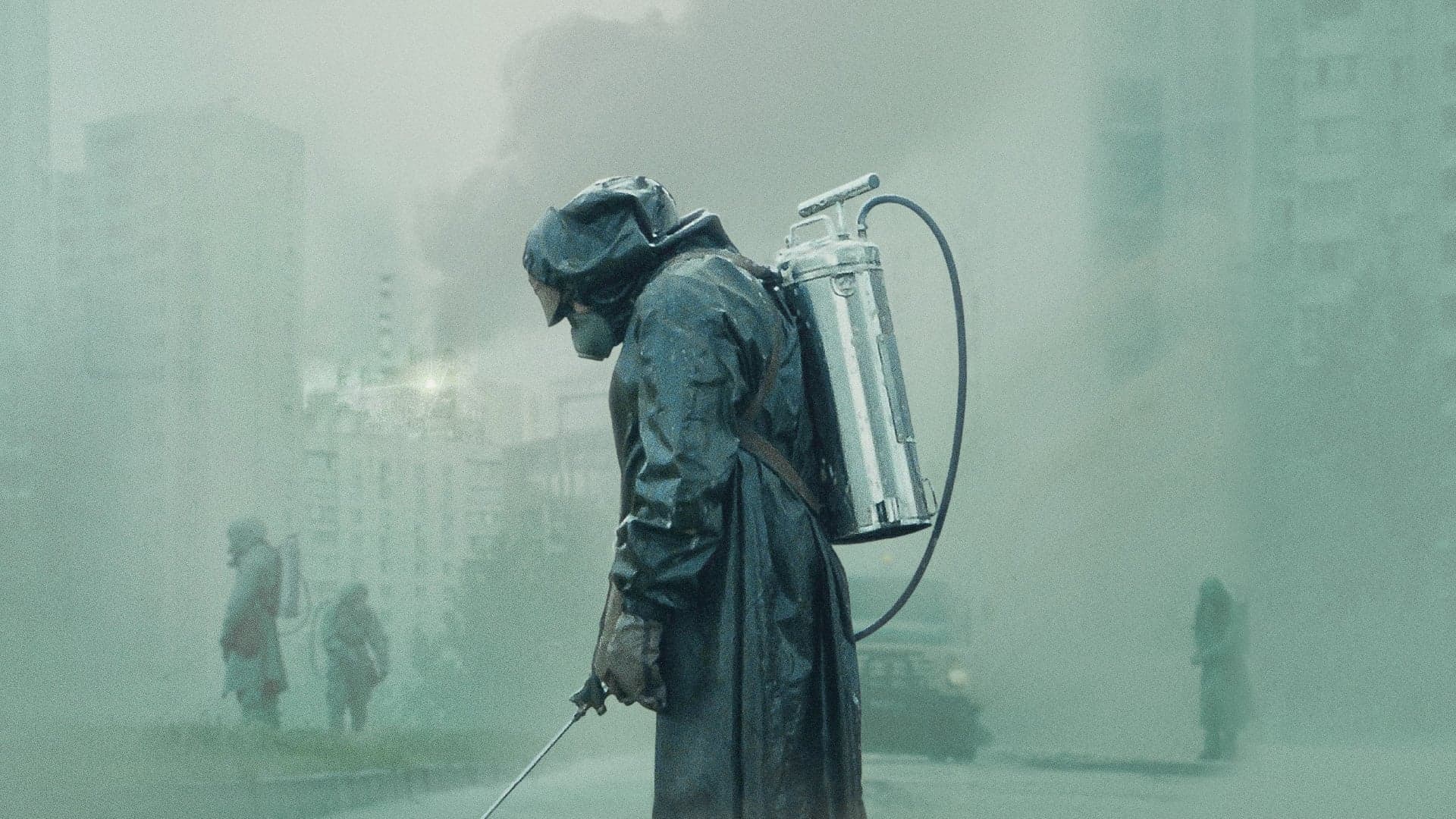
- Costume Design and Period Authenticity: Costume design by Odile Dicks-Mireaux across the Soviet bureaucratic uniforms, civilian period dress, hazmat-and-radiation-suit construction, and military uniforms drove a recurring production-cost item. The hazmat-and-protective-suit construction was particularly cost-intensive given the multiple custom Soviet-era specifications required for the cleanup and reactor-investigation sequences.
- Radiation-and-Burn Practical Effects: The depiction of acute radiation syndrome (ARS) burn-and-decomposition effects across the hospital-ward sequences in Episode 3 required extensive practical-effects makeup work by Daniel Parker and his team. The practical-effects budget for the ARS sequences absorbed substantial below-the-line cost above the standard HBO scripted-drama makeup budget.
- Original Score by Hildur Guðnadóttir: Icelandic composer Hildur Guðnadóttir, who would win the 2020 Academy Award for Best Original Score for Joker (2019), composed an industrial-and-electronic score for Chernobyl built around field recordings she made inside the Ignalina Nuclear Power Plant during a 2018 location visit. The score, which won the Primetime Emmy Award for Outstanding Music Composition and the Grammy Award for Best Score Soundtrack for Visual Media, formed a discrete music-budget line item including original composition, field-recording production, and orchestra integration.
- Visual Effects for Reactor and Radiation Imagery: While Chernobyl was largely a practical production, the series required visual-effects work for the reactor-fire sequences, the radiation-cloud meteorological effects, the helicopter-crash imagery, and selected aerial-and-environmental enhancements. DNEG and additional vendor houses handled the post-production VFX pipeline across the five episodes.
- Director Johan Renck and Writer Craig Mazin: Swedish director Johan Renck, who directed all five episodes, brought his established music-video-and-Breaking Bad credentials to the project. American screenwriter Craig Mazin, who created and wrote the series after extensive research into the Chernobyl historical record, commanded the showrunner-creator quote across the five episodes. Both compensations reflected the premium prestige-limited-series creative tier.
How Does Chernobyl's Budget Compare to Similar Series?
At $40,000,000 total ($8,000,000 per episode), Chernobyl sat within the standard premium HBO prestige-limited-series economics, comparable to peer HBO and Showtime limited-series productions of the same window:
- Big Little Lies (Season 1, 2017): Estimated per-episode budget approximately $7,000,000. HBO's prior contemporaneous prestige limited series (Reese Witherspoon, Nicole Kidman, Shailene Woodley, Laura Dern) ran at a comparable per-episode tariff, illustrating the standard premium HBO limited-series economics of the late 2010s.
- Sharp Objects (2018): Estimated per-episode budget approximately $8,000,000. HBO's Amy Adams Gillian Flynn adaptation ran at a comparable per-episode tariff with similar prestige-limited-series production economics, illustrating the consistent HBO tariff across the 2017 to 2019 prestige-drama window.
- The Crown (Season 3, 2019): Estimated per-episode budget approximately $13,000,000. Netflix's contemporaneous British period drama ran at a meaningfully higher per-episode tariff than Chernobyl, reflecting the additional period-design overhead of the royal-family-and-Buckingham-Palace setting and the larger ensemble cast.
- Catherine the Great (2019): Estimated per-episode budget approximately $6,000,000 to $8,000,000. HBO and Sky Atlantic's contemporaneous Helen Mirren historical drama ran at a comparable per-episode tariff with similar HBO-and-Sky co-financed prestige-limited-series economics.
- Patrick Melrose (2018): Estimated per-episode budget approximately $5,000,000 to $6,000,000. Sky Atlantic's prior contemporaneous Benedict Cumberbatch limited series ran at a slightly lower per-episode tariff than Chernobyl, illustrating the Sky-side scripted-drama economics that anchored the BBC-and-Sky-influenced UK-prestige tier.
- Watchmen (2019): Estimated per-episode budget approximately $10,000,000. HBO's contemporaneous Damon Lindelof comic-book drama ran at a higher per-episode tariff than Chernobyl, reflecting the additional visual-effects-and-action-set-piece overhead of the superhero genre format.
Chernobyl Performance and Cultural Impact
Chernobyl premiered on HBO in the United States on May 6, 2019 and on Sky Atlantic in the United Kingdom on May 7, 2019, with all five episodes airing weekly through June 3, 2019. The series became a global cultural phenomenon, with HBO reporting strong opening US audience figures and the post-broadcast streaming and download performance ranking among HBO's strongest of the 2019 calendar year. The economic framework breaks down as follows:
- Per-Episode Budget: approximately $8,000,000 across the five-episode limited series
- Total Series Investment: $40,000,000 across the five-episode limited series
- Network: HBO in the United States; Sky Atlantic in the United Kingdom; Now TV streaming; additional international territories through HBO and Sky distribution windows
- Audience/Ratings: US premiere drew approximately 700,000 live HBO viewers; cumulative viewing across HBO's linear-and-streaming windows reached approximately 8,000,000 to 10,000,000 US viewers across the broadcast and post-broadcast window; UK Sky Atlantic figures reached approximately 1,300,000 across the broadcast window
- International Distribution: HBO and Sky distribution windows across over 60 territories; subsequent global cultural footprint included a Russian-government statement criticizing the depiction and confirmed plans for a Russian-financed counter-series that never reached production
- Library/Syndication Value: Chernobyl remains a steady catalogue performer on HBO Max and Sky's Now TV streaming service; subsequent prestige-limited-series Russian-and-Eastern-European subject-matter productions (including The Patient, 2022) have repeatedly cited the show as creative precedent
Chernobyl's cultural impact extended well beyond the audience metrics. The Russian Ministry of Foreign Affairs issued a formal statement in June 2019 criticizing the series' depiction of Soviet authorities, and confirmed plans for a Russian-financed counter-series (which never reached production). Pripyat tourism increased materially in the months following the broadcast, with Ukrainian tour operators reporting 30% to 40% increases in Chernobyl-Exclusion-Zone tourist bookings across summer 2019. The series became a primary creative reference point for subsequent prestige-limited-series productions on Soviet-era and Eastern European historical subject matter.
The Hildur Guðnadóttir score became one of the most-discussed prestige-television musical accomplishments of the 2019 broadcast year, with her field-recording-derived industrial-and-electronic score winning both the Primetime Emmy Award for Outstanding Music Composition and the Grammy Award for Best Score Soundtrack for Visual Media. Guðnadóttir's subsequent 2020 Academy Award win for Joker (2019) reinforced the cultural-and-industry footprint of her Chernobyl achievement.
Chernobyl Production History
Craig Mazin, an American screenwriter whose prior credits included The Hangover Part II (2011) and The Huntsman: Winter's War (2016), began researching the Chernobyl disaster in 2014 ahead of pitching the limited series to HBO in 2016. Mazin spent more than two years reading primary-source historical accounts, including Svetlana Alexievich's Voices from Chernobyl (1997) and Grigori Medvedev's The Truth About Chernobyl (1989), and interviewing scientists and Ukrainian and Russian historians. HBO greenlit the five-episode limited series in late 2017 with Sky UK as co-financier. Sister Pictures (Jane Featherstone), The Mighty Mint, and Word Games entered the production as joint independent producers, with Lithuanian filming locations Lithuania anchored by tax credits and the Vilnius-based crew base.
Casting Jared Harris as Valery Legasov in early 2018 brought a Mad Men (2007 to 2015) supporting actor and Tony Award nominee into a prestige-limited-series lead role at a pivotal career moment. Stellan Skarsgård was cast as Boris Shcherbina, with Emily Watson playing composite Belarusian scientist Ulana Khomyuk (a fictional composite character representing the broader Soviet scientific community's nuclear-physics expertise). Paul Ritter played Anatoly Dyatlov, Jessie Buckley played Lyudmila Ignatenko, and Adam Nagaitis played Vasily Ignatenko across the ensemble cast.
Principal photography ran from April through October 2018 across Lithuania, with the Fabijoniškės district of Vilnius standing in for Soviet-era Pripyat apartment blocks and the Ignalina Nuclear Power Plant in Visaginas standing in for the Chernobyl reactor. Selected scenes were filmed in Ukraine, including aerial-and-environmental coverage of the actual Chernobyl Exclusion Zone for documentary-authenticity purposes. The Lithuanian crew base and Eastern European location shooting reduced net production cost materially below what a Western European or American equivalent would have required.
Director Johan Renck delivered all five episodes across the post-production window of late 2018 and early 2019, with editor Jinx Godfrey and additional editors compiling the five-episode arc into the broadcast cut. Hildur Guðnadóttir delivered the original score after a 2018 location visit to the Ignalina Nuclear Power Plant during which she recorded the ambient industrial-and-electronic field recordings that became the score's primary musical material. The score was integrated with the picture cut through spring 2019 ahead of the May 6, 2019 HBO premiere.
Craig Mazin produced a companion podcast, The Chernobyl Podcast, alongside the broadcast, with five episodes accompanying each broadcast week. The podcast, hosted by NPR's Peter Sagal, provided historical-and-creative context for each episode and became a primary supplementary text for the broader prestige-television-criticism conversation of the 2019 broadcast year. The companion podcast format has since been adopted by multiple subsequent HBO prestige-limited-series productions.
Awards and Recognition
Chernobyl won 10 Primetime Emmy Awards at the 71st Primetime Emmy Awards in September 2019, including Outstanding Limited Series, Outstanding Directing for a Limited Series (Johan Renck), and Outstanding Writing for a Limited Series (Craig Mazin). The series received 19 total Primetime Emmy nominations including Outstanding Lead Actor in a Limited Series (Jared Harris), Outstanding Supporting Actor in a Limited Series (Stellan Skarsgård), and Outstanding Supporting Actress in a Limited Series (Jessie Buckley).
At the 77th Golden Globe Awards in January 2020, Chernobyl won Best Limited Series or Motion Picture Made for Television, with Stellan Skarsgård winning Best Supporting Actor in a Series, Limited Series or Motion Picture for Television. The series additionally won at the BAFTA Television Awards (Best Mini-Series), the Critics Choice Television Awards (Best Limited Series), and the Producers Guild of America Awards (Outstanding Producer of Limited-Series Television).
Hildur Guðnadóttir's original score won the Grammy Award for Best Score Soundtrack for Visual Media in January 2020. The cumulative awards recognition cemented Chernobyl as the defining prestige-limited-series achievement of the 2019 broadcast year and one of the most-honored HBO scripted-drama productions of the late 2010s. The series' impact on the broader prestige-television conversation has held up consistently across subsequent retrospective assessments.
Critical Reception
Chernobyl received overwhelmingly positive reviews. The series holds a 95% approval rating on Rotten Tomatoes based on 153 critic reviews, with a critical consensus describing it as offering "creeping dread that never dissipates" and "sterling craft." On Metacritic, the series scored 82 out of 100 across 21 critic reviews, indicating universal acclaim. The near-universal critical embrace of the series across both aggregators was an unusual achievement for a prestige-limited-series broadcast in the 2019 calendar year.
The New York Times' James Poniewozik called Chernobyl "a stunning achievement of writing, directing and acting," while Variety's Daniel D'Addario praised "the show's commitment to systemic critique alongside individual heroism." The Guardian's Lucy Mangan offered a five-star review, writing that the series "would have been a remarkable piece of work in any year, but in this year, it stands as a singular achievement." The Hollywood Reporter's Tim Goodman called it "a perfect production from top to bottom."
Retrospective reception has remained strongly positive. Chernobyl has appeared on essentially every "best television of 2019" and "best of the 2010s" critical list compiled by major US and UK publications, including IndieWire, Entertainment Weekly, The Atlantic, The Guardian, and Time. The series' impact on subsequent prestige-limited-series production, particularly on Soviet-era and Eastern European historical subject matter, has been recognized as a defining factor in the broader prestige-television-criticism conversation of the late 2010s and early 2020s.
Frequently Asked Questions
How much did Chernobyl (2019) cost to produce?
The reported total production budget was approximately $40,000,000 across the five-episode limited series, averaging approximately $8,000,000 per episode. HBO and Sky UK co-financed the production through Sister Pictures, The Mighty Mint, and Word Games. The Lithuanian location shooting base reduced net production cost materially below a Western European or American equivalent would have required.
How many episodes of Chernobyl are there?
Chernobyl is a five-episode limited series. All five episodes aired weekly on HBO in the United States and Sky Atlantic in the United Kingdom between May 6 and June 3, 2019. The series was conceived as a single-season limited series with no continuation planned.
Who created Chernobyl?
American screenwriter Craig Mazin created and wrote Chernobyl, working from more than two years of historical research including Svetlana Alexievich's Voices from Chernobyl (1997) and Grigori Medvedev's The Truth About Chernobyl (1989). Mazin had previously written The Hangover Part II (2011) and The Huntsman: Winter's War (2016) before pivoting to prestige drama with Chernobyl. Swedish director Johan Renck directed all five episodes.
Where was Chernobyl filmed?
Principal photography took place primarily in Lithuania across spring and summer 2018. The Fabijoniškės district of Vilnius stood in for Soviet-era Pripyat apartment blocks, and the Ignalina Nuclear Power Plant in Visaginas stood in for the Chernobyl reactor itself. Selected scenes were filmed in Ukraine, including aerial-and-environmental coverage of the actual Chernobyl Exclusion Zone for documentary-authenticity purposes.
Did Chernobyl win any Emmys?
Yes. Chernobyl won 10 Primetime Emmy Awards at the 71st Primetime Emmy Awards in September 2019, including Outstanding Limited Series, Outstanding Directing for a Limited Series (Johan Renck), and Outstanding Writing for a Limited Series (Craig Mazin). The series received 19 total Primetime Emmy nominations.
Who stars in Chernobyl?
Jared Harris plays nuclear physicist Valery Legasov, Stellan Skarsgård plays Soviet Council of Ministers vice-chairman Boris Shcherbina, Emily Watson plays composite Belarusian scientist Ulana Khomyuk (a fictional composite character), Paul Ritter plays Chernobyl deputy chief engineer Anatoly Dyatlov, Jessie Buckley plays Lyudmila Ignatenko, and Adam Nagaitis plays firefighter Vasily Ignatenko.
How does Chernobyl compare to other HBO limited series?
Chernobyl ran at approximately $8,000,000 per episode, comparable to HBO's Big Little Lies Season 1 (2017) at approximately $7,000,000 per episode and Sharp Objects (2018) at approximately $8,000,000 per episode. HBO's contemporaneous Watchmen (2019) ran at a higher per-episode tariff of approximately $10,000,000 because of additional VFX-and-action overhead.
What did critics think of Chernobyl?
The series received overwhelmingly positive reviews, with a 95% approval rating on Rotten Tomatoes (153 critics) and an 82 out of 100 score on Metacritic. The New York Times called it "a stunning achievement of writing, directing and acting." The Guardian gave it a five-star review, writing that it stands as "a singular achievement." The Hollywood Reporter called it "a perfect production from top to bottom."
Who composed the score for Chernobyl?
Icelandic composer Hildur Guðnadóttir composed the original score, building it around field recordings she made inside the Ignalina Nuclear Power Plant during a 2018 location visit. The industrial-and-electronic score won the Primetime Emmy Award for Outstanding Music Composition and the Grammy Award for Best Score Soundtrack for Visual Media. Guðnadóttir subsequently won the 2020 Academy Award for Best Original Score for Joker (2019).
Did Chernobyl have any real-world impact?
Yes. The Russian Ministry of Foreign Affairs issued a formal statement in June 2019 criticizing the series' depiction of Soviet authorities, and confirmed plans for a Russian-financed counter-series (which never reached production). Pripyat tourism increased 30% to 40% in the months following the broadcast, with Ukrainian tour operators reporting substantial increases in Chernobyl-Exclusion-Zone tourist bookings across summer 2019.
Filmmakers
Chernobyl

Official Trailer
Build budgets like this one in Saturation
Start from an industry-standard feature film template, import the schedule and rates you already have, and let the cost report keep itself current as you spend. Real-time collaboration, no spreadsheets.