Chāi dàn zhuānjiā Budget
Updated
Synopsis
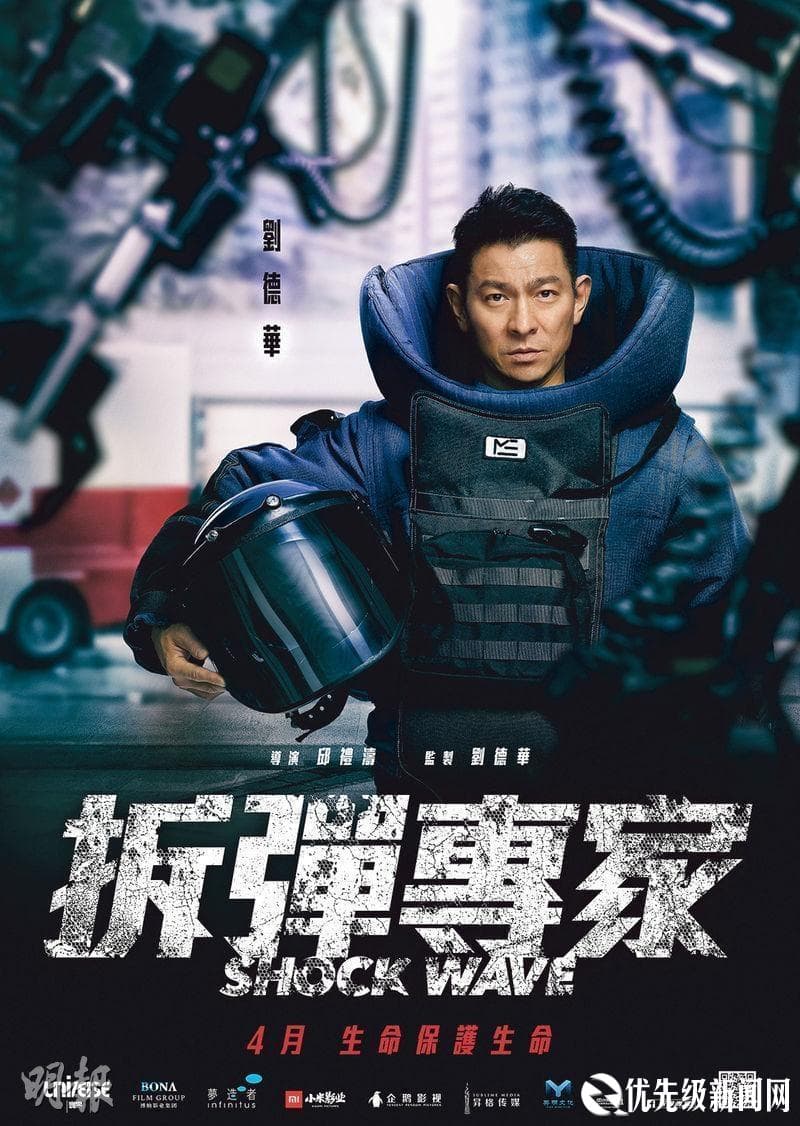
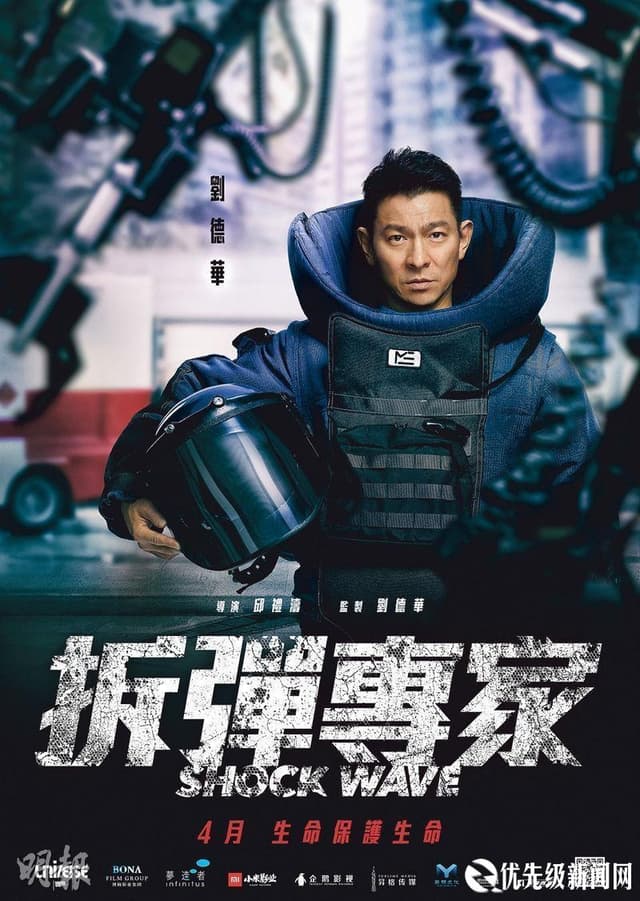
Hong Kong Police Senior Inspector J.S. Cheung, a bomb-disposal officer, goes undercover to bring down a notorious bomber. Three years later the same bomber returns with a plot to seize the Cross-Harbour Tunnel and hold hundreds of motorists hostage. Herman Yau's thriller stars Andy Lau in a producer-and-star role that anchored a wave of large-scale Hong Kong action cinema in the late 2010s.
What Is the Budget of Shock Wave (2017)?
Shock Wave carried a production budget of approximately $23,000,000, a figure that reflects the cast, locations, and visual-effects load required by the screenplay.
Key Budget Allocation Categories
The production allocated the budget across the following major categories.
- Above-the-Line: Andy Lau served as star and producer through his Focus Films banner, with a participation deal that included back-end gross points and creative approval on the bomb-disposal sequences.
- Cross-Harbour Tunnel Set: A full-scale section of the Cross-Harbour Tunnel was built on a Hong Kong soundstage to allow the climactic collapse, the single largest physical-build expense on the film.
- Pyrotechnics and Explosions: The bomb-disposal scenes and the tunnel demolition required practical pyrotechnics supervised by a specialist crew brought in from mainland China, with CGI augmentation by HK and Beijing vendors.
- Hong Kong Location Shoot: Principal photography took place across Hong Kong with Police support for street and tunnel exterior access, contributing to a tightly compressed 70-day schedule.
- Chinese Co-Production: Bona Film Group, Beijing Sparkle Roll, and Sil-Metropole Organisation co-financed the production, qualifying it for mainland Chinese release as a co-production rather than an import-quota film.
- Post-Production VFX: Approximately 600 shots of digital effects work was completed across vendors in Hong Kong, Beijing, and Shenzhen.
How Does Shock Wave's Budget Compare to Similar Films?
Placed against comparable releases, the budget reads as follows.
- Operation Mekong (2016): Budget $20,000,000, Worldwide $187,000,000. The previous year's Bona-backed Hong Kong action hit demonstrated the ceiling Shock Wave was aiming for.
- Cold War 2 (2016): Budget $20,000,000, Worldwide $98,000,000. A comparable Hong Kong police thriller with a heavy mainland China gross.
- Shock Wave 2 (2020): Budget $33,000,000, Worldwide $194,000,000. The sequel four times outgrossed the original by leaning further into Chinese co-production and Andy Lau's mainland brand.
- Line Walker (2016): Budget $20,000,000, Worldwide $86,000,000. A roughly contemporaneous Hong Kong action film with similar regional positioning.
Shock Wave Box Office Performance
Shock Wave opened in Hong Kong on April 20, 2017 and expanded to mainland China on April 28, 2017, posting an opening weekend of approximately $14,500,000 in China.
Box Office Breakdown
Chāi dàn zhuānjiā (2017)

The film returned roughly $1.46 for every $1 invested at the worldwide box office.
Mainland China contributed approximately $44,600,000 of the worldwide gross, with Hong Kong adding $3,500,000 and other Asian territories contributing the balance. The strong China performance led directly to a 2020 sequel and confirmed Andy Lau and Herman Yau as a bankable creative pairing for cross-border productions.
Shock Wave Production History
Herman Yau wrote the original screenplay in 2014 after consulting with serving members of the Hong Kong Police Force's Explosive Ordnance Disposal Bureau, drawing on real-world bomb-disposal procedures and the city's tunnel-infrastructure vulnerabilities. Andy Lau's Focus Films acquired the project in early 2015 and brought in Bona Film Group as the primary financier alongside Beijing Sparkle Roll and Sil-Metropole.
Principal photography ran from May through August 2016 across Hong Kong, with a full-scale section of the Cross-Harbour Tunnel constructed on a soundstage in Tseung Kwan O for the climactic siege and collapse. The Hong Kong Police Force provided technical advisors and on-site access for street-level sequences.
The bomb-disposal sequences used practical pyrotechnics overseen by a specialist crew drawn from mainland China, supplemented by approximately 600 shots of CGI work completed across Hong Kong, Beijing, and Shenzhen vendors. Andy Lau performed most of his own stunts in the suit-up scenes.
The film was registered as a Hong Kong-China co-production, exempting it from the annual import-quota system that limited many foreign and even Hong Kong films from reaching mainland Chinese audiences. This structure proved decisive for the box office.
Awards and Recognition
Shock Wave received seven nominations at the 37th Hong Kong Film Awards in 2018, including Best Picture, Best Director for Herman Yau, and Best Actor for Andy Lau. The film won Best Sound Design but lost in the other categories to Our Time Will Come and Mad World.
The film also competed at the 11th Asian Film Awards in the Best Sound category and received Hong Kong Film Critics Society recognition. At the Huading Awards in mainland China, Andy Lau won Best Actor.
Critical Reception
Critics in Hong Kong responded warmly while mainland reviews were more measured. Rotten Tomatoes recorded a 78 percent approval rating from a small sample of nine reviews, with no Metacritic score recorded. Douban audiences in China rated the film 6.4 out of 10.
The South China Morning Post called Shock Wave "Andy Lau's most physically committed performance in a decade" and praised the tunnel-collapse set piece. Time Out Hong Kong wrote that "Herman Yau delivers his most polished commercial work" while noting that "the screenplay relies on coincidence to bridge its three acts." Mainland Chinese outlets gave more reserved notices, often praising the production scale while questioning the procedural plausibility.
Build budgets like this one in Saturation
Start from an industry-standard feature film template, import the schedule and rates you already have, and let the cost report keep itself current as you spend. Real-time collaboration, no spreadsheets.