Carry-On Budget
 ThrillerAction2h
Updated
Synopsis
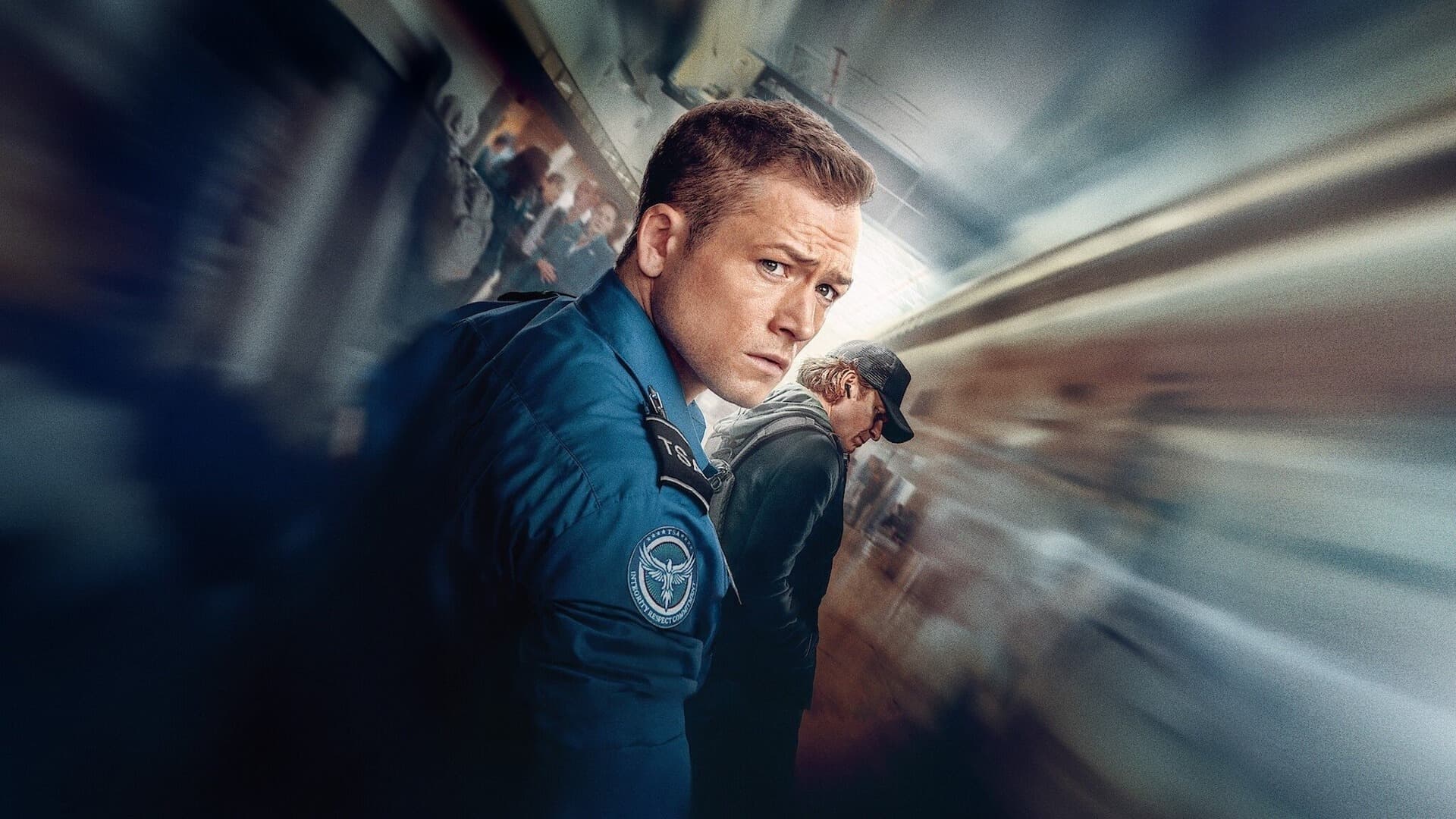
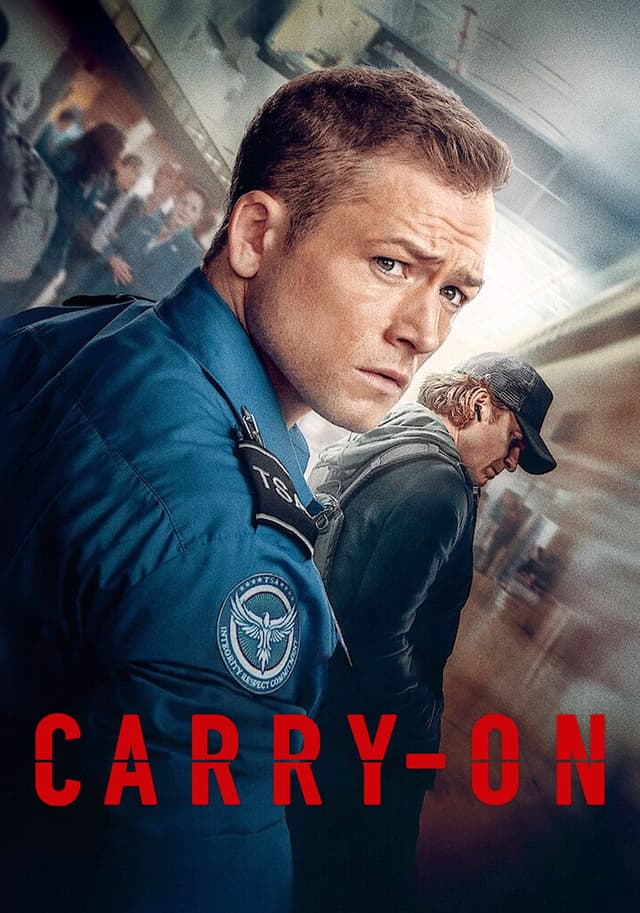
On Christmas Eve at Los Angeles International Airport, young TSA agent Ethan Kopek (Taron Egerton) is blackmailed by a mysterious traveler (Jason Bateman) into allowing a dangerous package to pass through security and onto a packed holiday flight. As FBI agents close in, Kopek must outmaneuver his unseen handler before the package reaches its target.
What Is the Budget of Carry-On (2024)?
Carry-On (2024), directed by Jaume Collet-Serra and distributed by Netflix, was produced on a reported budget of $47,000,000. The figure places the action thriller in the middle tier of Netflix's 2024 originals, well below the streamer's Red Notice tentpole bracket but consistent with the budget rangeestablished by Collet-Serra's earlier Netflix collaboration Jungle Cruise on the Disney side and his Liam Neeson action features at Universal.
The budget covered a roughly 60-day shoot from January to April 2024, with production based at studio facilities outside Los Angeles and additional location work at Hollywood Burbank Airport and Los Angeles International Airport for the airport-set storyline. The film was developed and packaged by Dylan Clark Productions in partnership with DreamWorks Pictures, with Netflix coming aboard as the global financier and distributor.
Key Budget Allocation Categories
The $47,000,000 was distributed across:
- Cast: Taron Egerton in the lead role of TSA agent Ethan Kopek, with Jason Bateman as the unnamed antagonist and Sofia Carson, Danielle Deadwyler, and Theo Rossi rounding out the ensemble. Egerton's post-Rocketman fee combined with Bateman's rate accounted for a significant portion of the above-the-line spend.
- Director and Producing Fee: Jaume Collet-Serra came off The Black Phone-producer Dylan Clark's slate with a feature-action specialist rate. Clark, who produced the Planet of the Apes reboot trilogy and The Bourne Legacy, packaged the project through his DreamWorks-housed company.
- Airport Production Design: Production designer Mark Worthington built standing TSA checkpoint and terminal sets at studio facilities outside Los Angeles, with additional location days at LAX and Hollywood Burbank Airport. Standing sets allowed for the controlled lighting and stunt choreography that the largely confined-setting action required.
- Stunts and Action Choreography: Stunt coordinator Bobby Hewitt designed a series of confined-environment fight sequences, vehicle action, and the climactic airport-runway set piece. The action design was choreographed for the practical-effects-heavy style associated with Collet-Serra's Liam Neeson features.
- Music: Composer Lorne Balfe wrote the original score, his second collaboration with Collet-Serra after Jungle Cruise. The score combined orchestral and electronic elements tailored to the holiday-thriller mood.
- Visual Effects: Visual effects supervised by ILM and DNEG handled the airport-runway and aerial sequences, with extensive digital extensions to live-action footage shot at practical airport locations.
How Does Carry-On's Budget Compare to Similar Films?
At $47,000,000, Carry-On sits in the middle range of confined-setting holiday-action thrillers:
- Die Hard (1988): Budget approximately $28,000,000 | Worldwide $141,000,000. The John McTiernan original, inflation-adjusted to roughly $75,000,000 in 2024 dollars, set the genre template for confined-setting holiday action.
- Red Notice (2021): Budget approximately $200,000,000 | Worldwide streaming-exclusive. Netflix's earlier action tentpole cost more than four times Carry-On and starred Dwayne Johnson, Ryan Reynolds, and Gal Gadot.
- Plane (2023): Budget approximately $25,000,000 | Worldwide $73,400,000. Jean-François Richet's Gerard Butler airline thriller ran at roughly half Carry-On's cost as a Lionsgate theatrical release.
- Non-Stop (2014): Budget approximately $50,000,000 | Worldwide $222,800,000. Jaume Collet-Serra's earlier Liam Neeson airplane thriller for Universal ran at a comparable budget to Carry-On.
Carry-On Box Office Performance
Carry-On debuted globally on Netflix on December 13, 2024, with no traditional theatrical release. Netflix reported that the film accumulated 86,000,000 views and 173,400,000 hours watched in its first 28 days, making it the most-watched Netflix original film of 2024 and the third most-watched English-language film in the platform's history at the time of release. The film stayed in Netflix's global Top 10 list for ten consecutive weeks.
Box Office Breakdown
Carry-On

The film's performance comfortably exceeded Netflix internal benchmarks for action-tentpole originals. Producer Dylan Clark publicly described the result as exceeding the streamer's expectations, and a sequel was reportedly in development by early 2025. The Christmas Eve setting drove strong holiday-period engagement that continued through New Year's weekend.
The film became a holiday-period cultural conversation through repeat viewing, with audiences specifically engaging with the Jason Bateman against-type villain performance. Bateman, primarily known for comedy and Ozark, generated significant social media discussion about his menacing turn, with several outlets publishing pieces specifically about the casting decision.
Carry-On Production History
T.J. Fixman's spec script for Carry-On sold to Netflix in 2021 following bidding from multiple studios, with Jaume Collet-Serra attached to direct shortly after. Dylan Clark Productions packaged the project through Clark's DreamWorks-housed deal, with development continuing through 2022 and 2023 before principal photography began in January 2024.
Production was based at studio facilities outside Los Angeles, with practical airport-checkpoint and terminal sets built on stages. Additional location work was completed at Hollywood Burbank Airport and Los Angeles International Airport during off-peak hours, allowing the production to shoot in actual TSA checkpoint environments under controlled conditions. The 60-day shoot wrapped in April 2024.
Collet-Serra's direction emphasized the confined-setting tension that defined his earlier Liam Neeson features Non-Stop, Run All Night, and The Commuter, with the TSA-checkpoint setting providing a single-location pressure cooker for the bulk of the film. Stunt coordinator Bobby Hewitt designed the action sequences for the constrained environment, with the larger runway-set climax adding scale in the final act.
Post-production at the Netflix Studios facility in Hollywood was completed in time for a December 13, 2024 global launch. Composer Lorne Balfe, reuniting with Collet-Serra after Jungle Cruise, delivered an original score balancing orchestral menace with electronic-action tension. Marketing emphasized the Die Hard comparison and the holiday-action framing.
Awards and Recognition
Carry-On did not receive major awards consideration in the 2024-2025 cycle. The film was nominated for the People's Choice Award for Best Drama Movie at the 2025 ceremony but lost to Wicked. As a streaming-exclusive holiday action release, the film was not designed for prestige-circuit consideration and was excluded from most critics association ballots.
Industry recognition has come through the film's streaming performance metrics rather than awards. Netflix's announcement that Carry-On became the platform's third most-watched English-language film ever and its 2024 most-watched original positions the film as a commercial benchmark for streaming-exclusive action features. A sequel was reportedly in early development by Q1 2025.
Critical Reception
Carry-On received mixed-to-positive reviews. The film holds a 90% approval rating on Rotten Tomatoes based on 79 critic reviews with a critical consensus that the film 'doesn't reinvent the wheel, but Carry-On is an efficient holiday thriller that does just enough to deliver the genre goods.' On Metacritic, the film scored 66 out of 100, indicating generally favorable reviews. The film does not carry a CinemaScore grade because it bypassed wide theatrical release.
Variety's Owen Gleiberman called Carry-On 'a sleek, propulsive thriller that knows exactly what it is.' The Hollywood Reporter's David Rooney described Jason Bateman's villain as 'a quietly chilling against-type turn.' IndieWire's David Ehrlich praised the film as 'the rare Netflix action film that earns its 119 minutes.' The New York Times' Glenn Kenny was more measured, noting that the film 'works hard within its limits but never quite transcends them.'
Frequently Asked Questions
How much did Carry-On cost to make?
Carry-On was produced for $47,000,000. The figure places the Netflix action thriller in the middle tier of the platform's 2024 originals, well below the Red Notice tentpole bracket but consistent with the budget range established by director Jaume Collet-Serra's earlier action features at Universal and Disney.
Did Carry-On have a theatrical release?
No. Carry-On was a Netflix exclusive that bypassed traditional theatrical distribution and premiered globally on the streaming platform on December 13, 2024. Standard box office metrics do not apply.
How many people watched Carry-On?
Netflix reported that Carry-On accumulated 86,000,000 views and 173,400,000 hours watched in its first 28 days, making it the platform's most-watched original film of 2024 and the third most-watched English-language film in Netflix history at the time of release.
Who directed Carry-On?
Jaume Collet-Serra directed the film. The Spanish-born filmmaker is best known for the Liam Neeson action features Non-Stop, Run All Night, The Commuter, and Unknown, as well as Disney's Jungle Cruise and DC's Black Adam. Carry-On was his first Netflix-exclusive feature.
Where was Carry-On filmed?
Principal photography took place primarily in and around Los Angeles between January and April 2024. The production used studio facilities outside the city for standing TSA checkpoint and terminal sets, with additional location days at Hollywood Burbank Airport and Los Angeles International Airport during off-peak hours.
Did Carry-On win any awards?
No. Carry-On was nominated for the People's Choice Award for Best Drama Movie at the 2025 ceremony but lost to Wicked. As a streaming-exclusive holiday action release, the film was not designed for prestige-circuit consideration and was excluded from most critics association ballots.
Will there be a sequel to Carry-On?
Reports in early 2025 indicated that a sequel was in early development at Netflix following the film's record-setting holiday performance. No formal greenlight or release date was announced publicly. Dylan Clark Productions and Jaume Collet-Serra were both reported as attached.
What did critics think of Carry-On?
Carry-On received broadly positive reviews with a 90% approval rating on Rotten Tomatoes based on 79 critic reviews and a 66 out of 100 score on Metacritic. Variety called it 'a sleek, propulsive thriller that knows exactly what it is,' and Jason Bateman's against-type villain performance was widely singled out.
Is Carry-On a Christmas movie?
Yes. The film is set on Christmas Eve at Los Angeles International Airport and uses the holiday-travel pressure-cooker framing as a structural device. Netflix marketed the release as a holiday-period action title and audience engagement was strongest from the December 13, 2024 launch through New Year's weekend.
Who is the villain in Carry-On?
Jason Bateman plays the unnamed antagonist, credited simply as 'The Traveler,' who blackmails Taron Egerton's TSA agent Ethan Kopek into allowing a dangerous package through security. The casting was widely discussed as an against-type performance for Bateman, who is primarily known for comedy and Ozark.
Filmmakers
Carry-On

Official Trailer
Build budgets like this one in Saturation
Start from an industry-standard feature film template, import the schedule and rates you already have, and let the cost report keep itself current as you spend. Real-time collaboration, no spreadsheets.