Breaking Budget
 CrimeDramaThriller1h 43m
Updated
Synopsis
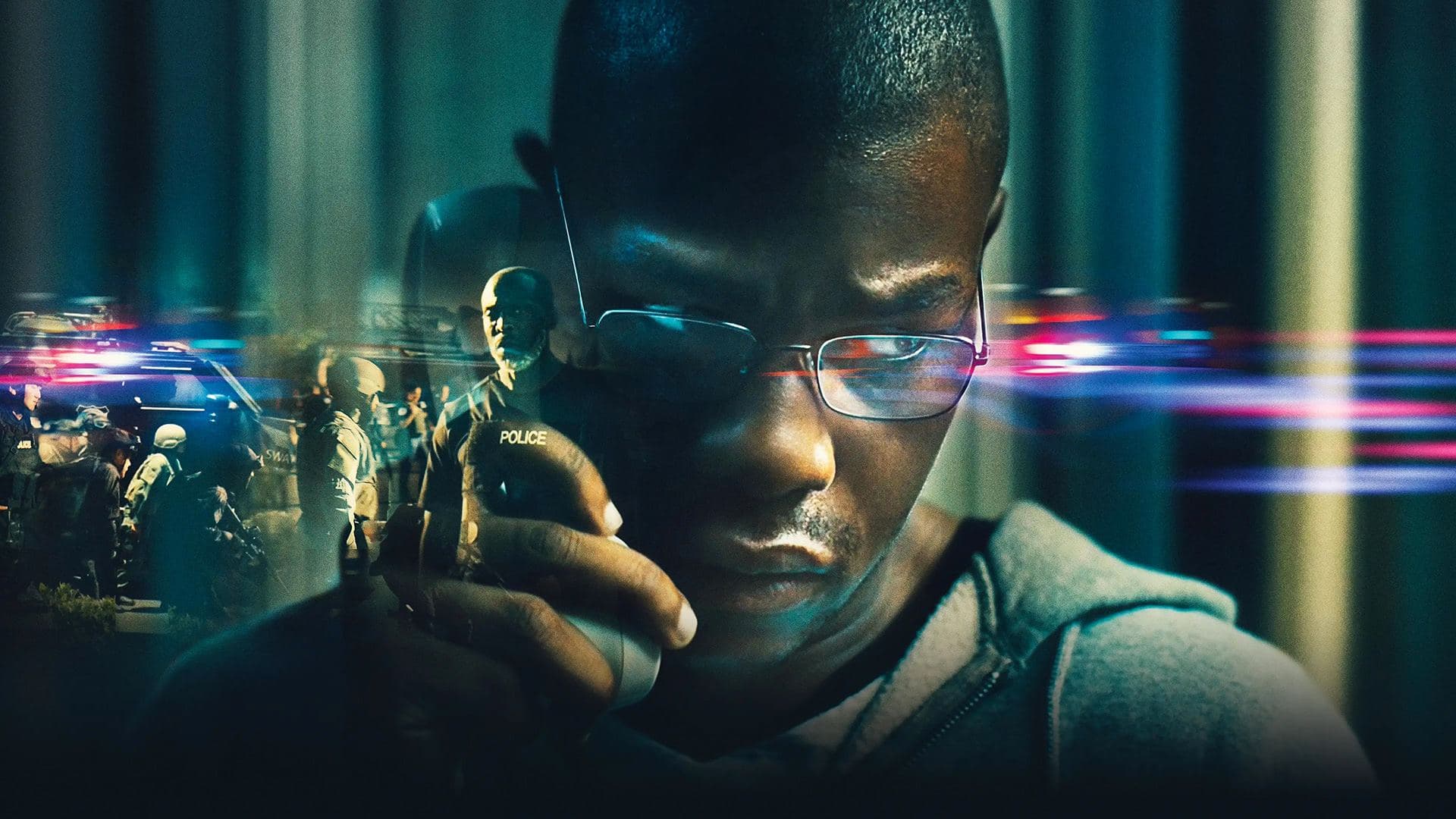
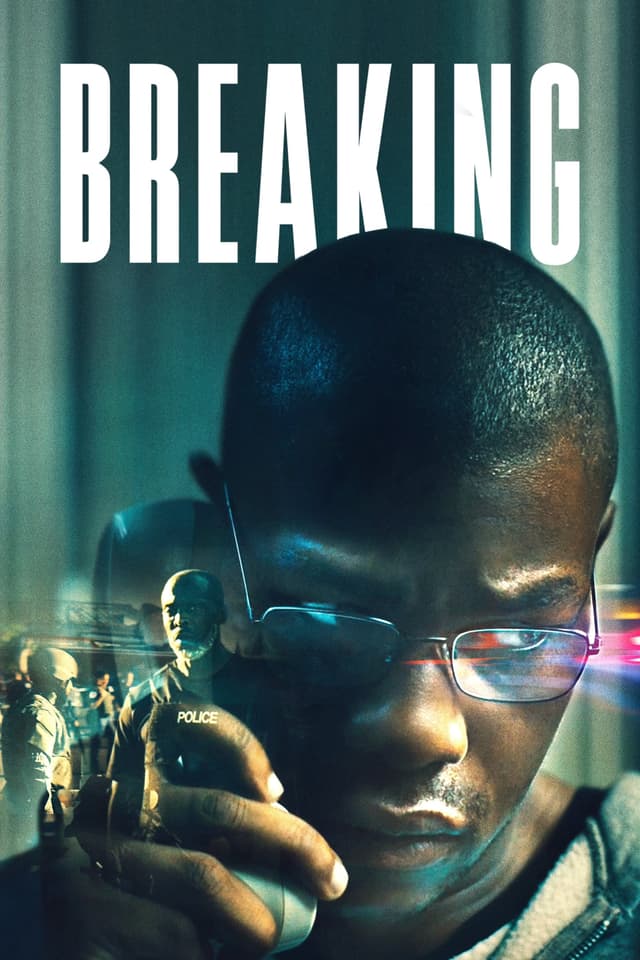
Lance Corporal Brian Brown-Easley, a Marine veteran struggling with PTSD and homelessness after the Department of Veterans Affairs withholds his disability check, walks into a Wells Fargo branch in Marietta, Georgia, tells a teller he has a bomb, and takes two employees hostage to demand the $892 he is owed. Over the next several hours he negotiates with a hostage negotiator, a local television reporter, and the VA itself, fighting less for the money than for a public reckoning with how the system has failed him.
What Is the Budget of Breaking (2022)?
Breaking (2022), directed by Abi Damaris Corbin and distributed by Bleecker Street, is an independent true-story hostage drama whose production budget was never publicly disclosed. Produced by Salmira Productions, Epic Magazine, Little Lamb, and UpperRoom Productions, the film operates squarely in the indie awards-circuit lane where total spend is rarely reported and is generally estimated by industry observers to fall between $5 million and $12 million for a single-location ensemble drama with a notable lead.
What the budget had to deliver was a contained, performance-driven Wells Fargo standoff anchored by John Boyega as Marine veteran Brian Brown-Easley, with Nicole Beharie, Michael K. Williams (in his final on-screen film role), Selenis Leyva, and Connie Britton filling out the ensemble. The film's economics favor talent compensation, a 30-day Los Angeles shoot, and the marketing required to platform a Sundance-acquired drama into limited theatrical release rather than the spectacle line items that drive larger productions.
Key Budget Allocation Categories
With the production cost undisclosed, the following categories represent where an indie single-location hostage drama of this scale concentrates its spend:
- Cast and Above-the-Line Talent: John Boyega carries nearly every frame of the film and his Star Wars-era quote sets the ceiling for above-the-line costs, with Michael K. Williams, Nicole Beharie, Selenis Leyva, and Connie Britton supporting at established indie scale. Director Abi Damaris Corbin and co-writer Kwame Kwei-Armah took fees consistent with first-feature financing.
- Single-Location Production Design: Production designer Justin Trask built a working Wells Fargo branch interior for the standoff sequences, dressed for the Marietta, Georgia setting of the real 2017 incident. The contained location reduces overall spend versus a multi-stop shoot, but demands meticulous detail because the camera lives inside the bank for most of the runtime.
- Cinematography and Camera Package: Cinematographer Doug Emmett shot largely handheld in close quarters, requiring a versatile lens kit, low-profile rigs for tight teller-window blocking, and lighting tuned to match the fluorescent feel of a working bank. The compressed coverage demanded multiple camera operators on key dialogue beats.
- Score and Music Licensing: Composer Michael Abels, who scored Get Out and Us, delivered a restrained, anxiety-driven score that holds the tension without overwhelming the performances. Source-music licensing for radio cues and the period-appropriate Atlanta soundscape added incremental cost.
- Editorial and Post-Production: Editor Chris Witt shaped the real-time tension across multiple cutting passes, with sound design building the layered phone-call audio between Boyega, Williams' negotiator, and Beharie's reporter. Color grading by Company 3 finalized the muted palette.
- Sundance Delivery and Festival Submission: Completing the film for its January 2022 Sundance premiere in the U.S. Dramatic Competition required festival-ready deliverables, screening copies, publicity stills, and a press kit, all of which sit outside the headline production budget but are essential for an indie drama relying on festival acquisition.
- Marketing and Limited Theatrical Release: Bleecker Street's limited theatrical rollout to 902 theaters on August 26, 2022 required prints and advertising spend separate from production, including trailer cuts, billboard buys in select cities, talent-driven press tours, and digital marketing aimed at adult drama audiences.
How Does Breaking's Budget Compare to Similar Films?
Placing Breaking alongside other contained hostage thrillers, single-location dramas, and true-story films puts its likely scale into context:
- Dog Day Afternoon (1975): Budget $1,800,000 | Worldwide $50,000,000. Sidney Lumet's Brooklyn bank-robbery drama is the inescapable comparison and the film Breaking explicitly riffs on in its negotiator beats. Adjusted for inflation Lumet's budget would sit in the $10 million range today, roughly parallel to where Breaking likely landed, though Dog Day's theatrical run dwarfed Breaking's by an order of magnitude.
- Money Monster (2016): Budget $27,000,000 | Worldwide $93,300,000. Jodie Foster's contained-thriller hostage drama at a TV studio with George Clooney and Julia Roberts ran on a star-driven budget several times Breaking's likely figure. The comparison shows what a contained single-location hostage story costs when produced inside the studio system rather than the indie space.
- Phone Booth (2002): Budget $13,000,000 | Worldwide $98,000,000. Joel Schumacher's Colin Farrell thriller compressed its action into a single Manhattan phone booth and turned a contained premise into a sleeper hit, with a budget that probably brackets Breaking's at the higher end and a theatrical performance Breaking did not approach.
- Buried (2010): Budget $2,000,000 | Worldwide $19,300,000. Rodrigo Cortes's Ryan Reynolds coffin thriller is the indie endurance benchmark for single-location drama. Its sub-$2 million Spanish-financed budget likely sits well below Breaking's, but its theatrical multiple was significantly higher.
- Fruitvale Station (2013): Budget $900,000 | Worldwide $17,400,000. Ryan Coogler's Sundance-launched true-story drama is the closest comparison for festival path and subject matter, with police violence and Black masculine grief central to both films. Coogler's micro-budget delivered nearly twenty times its cost theatrically, a performance level Breaking did not match.
- The Banker (2020): Apple-financed Anthony Mackie and Samuel L. Jackson true-story drama released through limited theatrical and Apple TV+, sharing Breaking's adult-drama audience and platform-distribution playbook. Apple shielded the budget figure as it does most originals, but the production sits in the same indie-prestige tier.
Breaking Box Office Performance
Bleecker Street opened Breaking in limited release on August 26, 2022, expanding to 902 North American theaters for the opening weekend. The film grossed approximately $985,921 in its opening frame, an underwhelming per-screen average that signaled the difficulty of platforming an adult-skewing true-story drama into a late-summer marketplace dominated by genre titles. Worldwide theatrical revenue closed at approximately $2,810,000, with the film transitioning to home video and streaming windows over the following months.
The available financial breakdown:
Box Office Breakdown
Breaking

With production cost withheld, a clean ROI figure cannot be calculated, but the theatrical performance alone clearly fell short of recoupment for the financiers. A film acquired by Bleecker Street out of Sundance with a 902-theater rollout typically needs to clear $8 to $12 million domestically just to cover P&A and minimum-guarantee payments before profit participation begins.
Breaking's longer-term commercial life played out across digital rental, streaming licensing, and television sales. The film became a steady catalog title once it landed on streaming, with Michael K. Williams' posthumous performance driving renewed attention in the months following its theatrical close. For Salmira Productions and the Epic Magazine co-financiers, the Sundance ensemble award, the John Boyega awards-season campaign, and the platform-credibility of working with Bleecker Street arguably justified the spend independent of theatrical receipts.
Breaking Production History
Breaking originated with a 2018 Epic Magazine article by Aaron Gell titled "They Didn't Have to Kill Him," reporting on the July 7, 2017 incident in Marietta, Georgia when Marine veteran Lance Corporal Brian Brown-Easley walked into a Wells Fargo bank, told a teller he had a bomb, and demanded the $892 in disability benefits he believed the Department of Veterans Affairs had wrongly withheld. Director Abi Damaris Corbin, developing her feature debut, optioned the article and co-wrote the screenplay with British-Ghanaian playwright Kwame Kwei-Armah, drawing on extensive reporting and contact with Brown-Easley's family.
John Boyega attached to the lead role of Brian Brown-Easley in 2020, with Boyega producing through his UpperRoom Productions banner alongside Salmira Productions, Epic Magazine, and Little Lamb. The casting of Michael K. Williams as hostage negotiator Eli Bernard, Nicole Beharie as local television reporter Lisa Larson, Selenis Leyva and Olivia Washington as Wells Fargo employees Estel Valerie and Rosa Diaz, and Connie Britton as a Veterans Affairs claims officer assembled an ensemble built around restrained, dialogue-driven performance rather than star presence.
Principal photography ran from July 6 to August 16, 2021 in Los Angeles, with production designer Justin Trask building a working Wells Fargo branch interior to stage the standoff. Cinematographer Doug Emmett shot largely handheld in close quarters, with the camera embedded inside the bank for the majority of the runtime. The film was originally titled 892 for its festival debut, after the dollar figure Brown-Easley demanded from the bank.
Michael K. Williams completed his work on the film before his death on September 6, 2021. Breaking became his final completed feature, dedicated to his memory at the end of the credits. The production marked Corbin's transition from short-form work to her first feature, and the screenplay won the U.S. Dramatic Special Jury Award for Best Screenplay at Sundance 2022 before its title change to Breaking for the August theatrical release through Bleecker Street.
Awards and Recognition
Breaking received its highest-profile recognition at the 2022 Sundance Film Festival, where it premiered as 892 on January 21, 2022 in the U.S. Dramatic Competition. The film won the U.S. Dramatic Special Jury Award for Ensemble Cast, recognizing John Boyega, Michael K. Williams, Nicole Beharie, Selenis Leyva, Olivia Washington, and Connie Britton, and the Waldo Salt Screenwriting Award for Abi Damaris Corbin and Kwame Kwei-Armah's screenplay.
John Boyega earned a Gotham Award nomination for Outstanding Lead Performance and a Spirit Award nomination at the 2023 Independent Spirit Awards, while Michael K. Williams received a posthumous Best Supporting Male nomination at the same ceremony. The film was also nominated at the NAACP Image Awards in Outstanding Independent Motion Picture and Outstanding Actor in a Motion Picture for Boyega, cementing its place on the 2022 specialty awards circuit despite a modest theatrical run.
Critical Reception
Breaking received generally positive reviews from critics, holding an 81% approval rating on Rotten Tomatoes from 156 reviews and a 66 out of 100 score on Metacritic. The Rotten Tomatoes critics' consensus described the film as carrying noble intentions backed by John Boyega's compelling performance, while noting that it struggles at moments to convey its messages with the precision the subject demands. Audiences responded warmly, with an 84% Popcornmeter score and a 55% positive PostTrak reading from opening-weekend ticket buyers.
Odie Henderson at The Boston Globe wrote that the performances by Beharie, Williams, and especially Boyega ultimately save the film, while Leslie Felperin in the Financial Times praised the way Breaking confronts bureaucratic inefficiency, institutional racism, and the culture of violence in American life. Stephen Romei at The Australian framed it as an honorable successor to Dog Day Afternoon. Critics repeatedly singled out Michael K. Williams' negotiator scenes as a fitting closing performance for the actor, with several reviews using the film as the occasion to assess his late-career body of work.
Detractors found Corbin's restraint occasionally over-correcting into flatness, with several reviewers wishing the film leaned harder into the systemic critique of the Department of Veterans Affairs that the screenplay sets up. Even skeptical reviews acknowledged Boyega's central performance and the ensemble interplay between Boyega, Williams, and Beharie as the film's defining achievement.
Frequently Asked Questions
How much did it cost to make Breaking (2022)?
Breaking's production budget was not publicly disclosed. As an independently financed true-story drama produced by Salmira Productions, Epic Magazine, Little Lamb, and John Boyega's UpperRoom Productions, the film operates in the indie awards-circuit range industry observers estimate at $5 million to $12 million for a single-location ensemble drama of this scale.
How much did Breaking earn at the box office?
Breaking grossed approximately $2,810,000 worldwide, opening to $985,921 from 902 North American theaters on August 26, 2022. Bleecker Street handled the limited theatrical release before the film transitioned to home video, streaming, and television windows.
Who directed Breaking?
Abi Damaris Corbin directed Breaking, marking her feature debut. She co-wrote the screenplay with British-Ghanaian playwright Kwame Kwei-Armah, and the pair won the Waldo Salt Screenwriting Award at the 2022 Sundance Film Festival for their work.
Is Breaking based on a true story?
Yes. Breaking dramatizes the July 7, 2017 incident in Marietta, Georgia when Marine veteran Lance Corporal Brian Brown-Easley walked into a Wells Fargo branch, claimed he had a bomb, and took two employees hostage to demand the $892 in disability benefits he believed the Department of Veterans Affairs had wrongly withheld. The screenplay was developed from Aaron Gell's 2018 Epic Magazine article "They Didn't Have to Kill Him."
Was Breaking Michael K. Williams' final film?
Yes. Breaking became Michael K. Williams' final completed feature film role. He plays hostage negotiator Eli Bernard, completing his work before his death on September 6, 2021. The film is dedicated to his memory in the closing credits, and his performance received a posthumous Best Supporting Male nomination at the 2023 Independent Spirit Awards.
Where was Breaking filmed?
Breaking was shot in Los Angeles from July 6 to August 16, 2021, with production designer Justin Trask building a working Wells Fargo branch interior to stage the standoff. The film is set in Marietta, Georgia, where the real 2017 incident took place, but the production worked entirely on the West Coast.
Why was Breaking originally called 892?
The film premiered at Sundance 2022 under the title 892, the dollar figure Brian Brown-Easley demanded from Wells Fargo, equal to the disability benefit the Department of Veterans Affairs had withheld from him. Bleecker Street renamed the film Breaking for its August 2022 theatrical release to broaden the marketing appeal beyond a numeric title.
Did Breaking win any awards?
Yes. Breaking won two awards at the 2022 Sundance Film Festival, the U.S. Dramatic Special Jury Award for Ensemble Cast recognizing John Boyega, Michael K. Williams, Nicole Beharie, and the ensemble, and the Waldo Salt Screenwriting Award for Corbin and Kwei-Armah. John Boyega received Gotham, Independent Spirit, and NAACP Image Award nominations, and Michael K. Williams earned a posthumous Spirit Award nomination.
What did critics think of Breaking?
Critics responded positively, with Breaking holding an 81% Rotten Tomatoes approval rating from 156 reviews and a 66 on Metacritic. Reviewers consistently praised John Boyega's lead performance and the negotiator scenes between Boyega and Michael K. Williams, while some felt the film could have leaned harder into its critique of the Department of Veterans Affairs. The audience Popcornmeter score sat at 84%.
How does Breaking compare to Dog Day Afternoon?
Critics widely compared Breaking to Sidney Lumet's Dog Day Afternoon (1975), and Corbin and Kwei-Armah's screenplay openly invokes its rhythms in the standoff, negotiator, and media-circus beats. Where Dog Day Afternoon turned a real Brooklyn bank robbery into a star-making vehicle for Al Pacino, Breaking applies the same template to a contemporary failure of the Department of Veterans Affairs, with John Boyega as the unstable but sympathetic figure at the center.
Filmmakers
Breaking

Official Trailer
Build budgets like this one in Saturation
Start from an industry-standard feature film template, import the schedule and rates you already have, and let the cost report keep itself current as you spend. Real-time collaboration, no spreadsheets.