Bone Tomahawk Budget
Updated
Synopsis
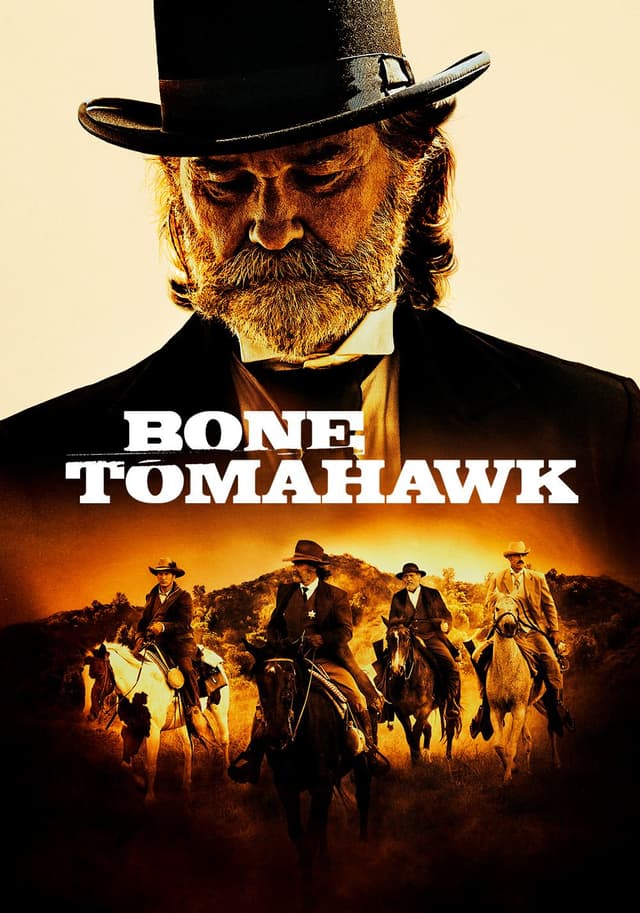
During a shootout in a saloon, Sheriff Hunt injures a suspicious stranger. The doctor's assistant, wife of the local foreman, tends to him in prison. That night, the town is attacked and they both disappear,only the arrow of a cannibal tribe is found. Hunt and a few of his men go in search of the prisoner and the foreman's wife.
What is the budget of Bone Tomahawk?
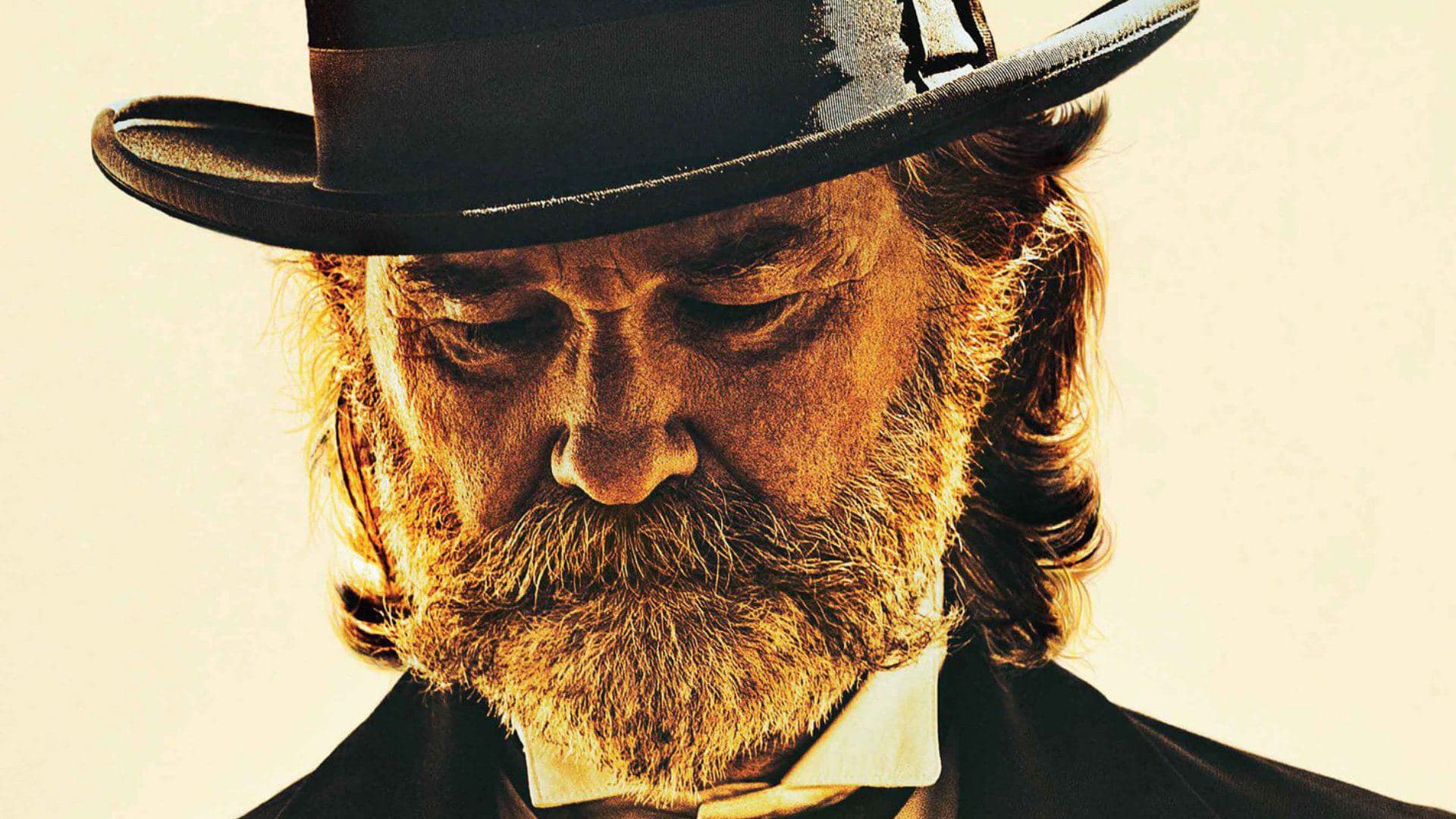
"Bone Tomahawk," a western released in 2015, was directed by S. Craig Zahler and stars Kurt Russell, Patrick Wilson. The production budget was $1,800,000, placing it in the micro-budget range for western productions of its era.
Key Budget Allocation Categories
While specific budget breakdowns are not publicly available, typical cost drivers for a western production like this include:
- Stunts, Action Sequences & Visual Effects: Action films allocate a substantial portion of their budget to choreographing and executing practical stunts, pyrotechnics, and CGI-heavy sequences.
- Above-the-Line Talent (Cast & Director): A-list talent commands significant upfront fees plus backend participation.
- Production Design, Sets & Locations: Action films frequently require multiple international shooting locations, large-scale set construction, vehicle acquisitions and modifications, and specialized equipment , all of which drive production costs well above those of dialogue-driven genres.
- Casting: right|upright=1.3|Kurt Russell's agent handed over the script to Peter Sarsgaard, who enjoyed the script and signed on to the movie, leading to him passing the script off to Russell.
What were the major cost factors in Bone Tomahawk?
Several factors contributed to the overall production costs of "Bone Tomahawk."
- Stunts: Stunts, Action Sequences & Visual Effects is one of the primary cost drivers in western productions of this scale.
- Above-the-Line Talent (Cast: Above-the-Line Talent (Cast & Director) is one of the primary cost drivers in western productions of this scale.
- Production Design: Production Design, Sets & Locations is one of the primary cost drivers in western productions of this scale.
How Does Bone Tomahawk's Budget Compare to Similar Films?
At $1,800,000, Bone Tomahawk sits in the micro-budget range. Here is how it compares to productions with a similar budget:
- Dog Day Afternoon (1975): Budget $1,800,000, Worldwide Gross $56,665,856
- Dr. Strangelove or: How I Learned to Stop Worrying and Love the Bomb (1964): Budget $1,800,000 , Gross $9,500,000
- A Nightmare on Elm Street (1984): Budget $1,800,000, Worldwide Gross $57,004,513
- Carrie (1976): Budget $1,800,000, Worldwide Gross $33,800,000
- The Art of Self-Defense (2019): Budget $1,800,000, Worldwide Gross $2,400,000
The median budget for wide-release western films in the 2010s ranges from $30 to 80M for mid-budget to $150M+ for tentpoles.
Bone Tomahawk Box Office Performance
"Bone Tomahawk" earned $475,846 worldwide at the box office. Against a production budget of $1,800,000, the film faced challenges in theatrical release. Home video, streaming, and ancillary revenue may have contributed to its overall performance.
A film typically needs to earn approximately twice its production budget to cover marketing and distribution costs. For "Bone Tomahawk," that break-even threshold was roughly $3,600,000. With worldwide earnings of $475,846, the film did not reach break-even in theatrical release.
Box Office Breakdown
Bone Tomahawk

At -73.6%, "Bone Tomahawk" did not recoup its production budget through theatrical release alone.
Bone Tomahawk Production History
right|upright=1.3|Kurt Russell's agent handed over the script to Peter Sarsgaard, who enjoyed the script and signed on to the movie, leading to him passing the script off to Russell. On October 31, 2012, Russell, Sarsgaard, Richard Jenkins and Jennifer Carpenter signed on to play a sheriff, a cowboy, an oldster, and one of the captives of troglodyte cannibals, respectively. On September 24, 2014, Patrick Wilson and Matthew Fox joined the cast.
Principal photography occurred over 21 days at the Paramount Ranch in California. Zahler avoids using too many close-ups in the film, remarking that "most of the time you interact with people, you're not looking just their faces from a close distance unless you're intimate." He believes that modern filmmaking's use of close-ups misses a lot of body language, especially the hands. The troglodytes' cave was shot in California and was a setting in the TV series Weeds and the movie Iron Man (2008).
The film's soundtrack was composed by Zahler's friend Jeff Herriott.
Awards and Recognition
- Q6359085
- Sitges Film Festival Best Director award
Frequently Asked Questions
How much did it cost to make Bone Tomahawk (2015)?
The production budget was $1,800,000, covering principal photography, cast and crew salaries, locations, sets, post-production, and music. Marketing and distribution (P&A) costs are estimated at an additional $900,000 - $1,440,000, bringing the total studio investment to approximately $2,700,000 - $3,240,000.
How much did Bone Tomahawk (2015) earn at the box office?
Bone Tomahawk grossed $475,846 worldwide.
Was Bone Tomahawk (2015) profitable?
The film did not break even theatrically, earning $475,846 against an estimated $4,500,000 needed. Ancillary revenue may have improved the picture.
What were the biggest costs in producing Bone Tomahawk?
The primary cost drivers were above-the-line talent (Kurt Russell, Patrick Wilson, Richard Jenkins); visual effects, practical stunts, and A-list talent compensation; international production across United States of America, United Kingdom.
How does Bone Tomahawk's budget compare to similar western films?
At $1,800,000, Bone Tomahawk is classified as a micro-budget production. The median budget for wide-release western films in the 2010s ranges from $30 - 80M for mid-budget to $150M+ for tentpoles. Comparable budgets: Dog Day Afternoon (1975, $1,800,000); Dr. Strangelove or: How I Learned to Stop Worrying and Love the Bomb (1964, $1,800,000); A Nightmare on Elm Street (1984, $1,800,000).
Did Bone Tomahawk (2015) go over budget?
There are no widely reported accounts of significant budget overruns for this production. However, studios rarely disclose precise budget overrun figures publicly. The reported production budget reflects the final estimated cost.
What was the return on investment (ROI) for Bone Tomahawk?
The theatrical ROI was -73.6%, calculated as ($475,846 − $1,800,000) ÷ $1,800,000 × 100. This measures gross revenue against production budget only - it does not account for P&A or exhibitor shares.
Who directed Bone Tomahawk and who were the key crew members?
Directed by S. Craig Zahler, written by S. Craig Zahler, shot by Benji Bakshi, with music by S. Craig Zahler, Jeff Herriott, edited by Fred Raskin, Greg D'Auria.
Where was Bone Tomahawk filmed?
Bone Tomahawk was filmed in United States of America, United Kingdom. Principal photography occurred over 21 days at the Paramount Ranch in California. Zahler avoids using too many close-ups in the film, remarking that "most of the time you interact with people, you're not looking just their faces from a close distance unless you're intimate." He believes that modern filmmaking's use of close-ups misses a lot of body language, especially the hands. The troglodytes' cave was shot in California and was a setting in the TV series Weeds and the movie Iron Man (2008).
Filmmakers
Bone Tomahawk

Official Trailer
Build budgets like this one in Saturation
Start from an industry-standard feature film template, import the schedule and rates you already have, and let the cost report keep itself current as you spend. Real-time collaboration, no spreadsheets.