Blue Moon Budget
 HistoryDramaComedy1h 40m
Updated
Synopsis
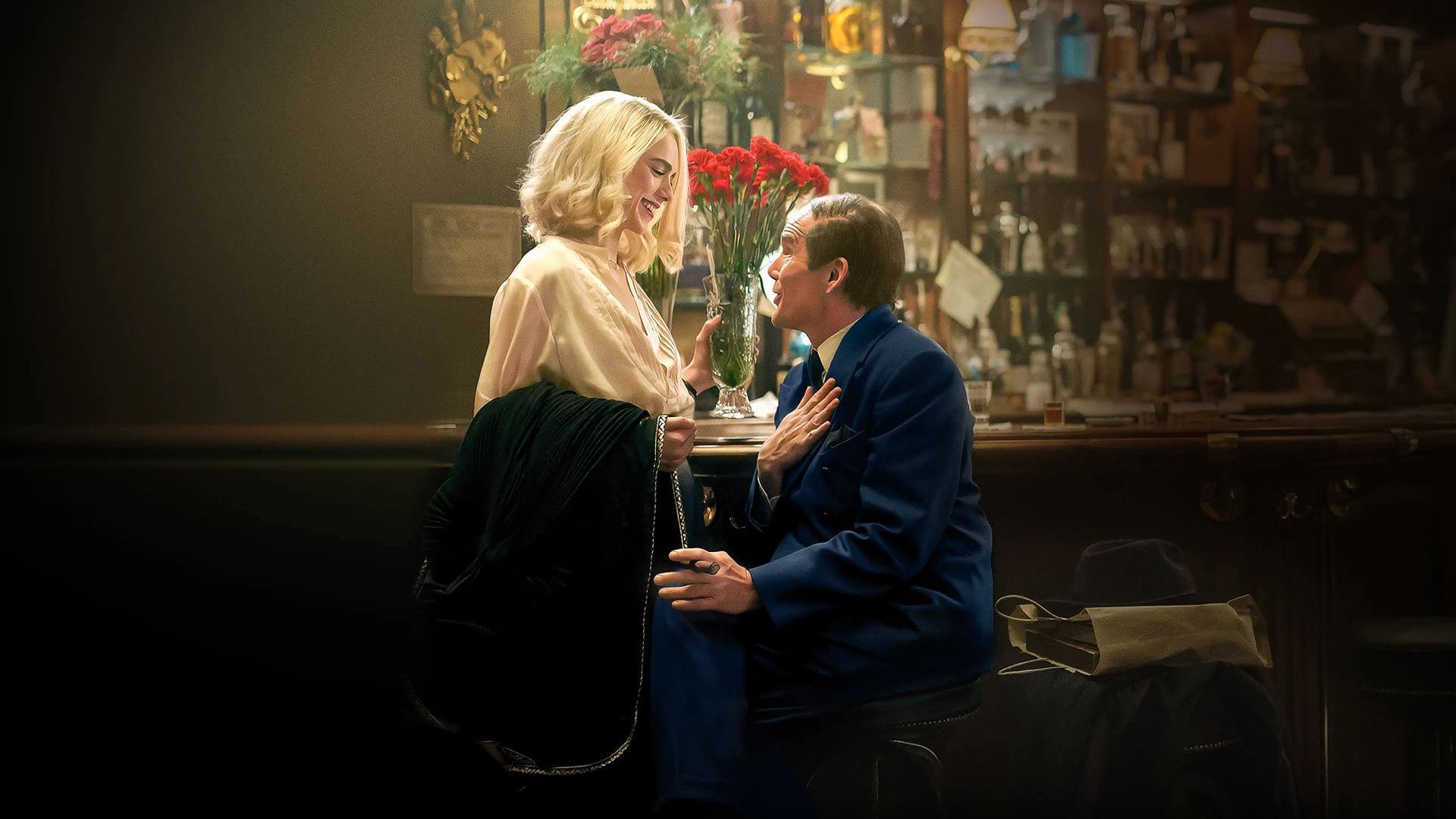
On the opening night of Oklahoma! in 1943, songwriter Lorenz Hart sits at the bar of Sardi's restaurant as the show that buried his partnership with Richard Rodgers triumphs around the corner. Across one drink-soaked evening he holds forth on craft, unrequited love, and the impossibility of staying the same artist when the form moves on without you.
What Is the Budget of Blue Moon (2025)?
Blue Moon (2025), directed by Richard Linklater and distributed by Sony Pictures Classics, was made on an undisclosed but conspicuously contained budget that industry observers estimate in the $3,000,000 to $5,000,000 range based on its single-location bar setting, 15-day Dublin soundstage shoot, and small principal cast led by Ethan Hawke. Linklater developed the project for 12 years before securing financing, and the final production model was designed to keep the cost of admission as low as possible for a director-driven prestige play.
The economics reflected Linklater's approach to passion projects: a tightly contained shoot with a soundstage standing in for the Sardi's restaurant interior, a script that runs almost entirely in a single location, and a cast led by Linklater's long-running collaborator Ethan Hawke (Before trilogy, Boyhood) at a friend-rate quote. Margaret Qualley, Bobby Cannavale, and Andrew Scott (Berlinale Silver Bear winner for the film) filled out the principal cast. Sony Pictures Classics acquired distribution rights ahead of the Berlinale premiere.
Key Budget Allocation Categories
The estimated budget was allocated across these core areas:
- Above-the-Line Talent: Ethan Hawke in the central role of Lorenz Hart at his Linklater collaborator rate, Margaret Qualley as Elizabeth Weiland, Bobby Cannavale as Eddie, and Andrew Scott as Richard Rodgers anchored the principal cast at indie-prestige quotes. Linklater's director fee through Detour Filmproduction reflected his auteur status without studio-tentpole markup.
- Dublin Soundstage Production: Principal photography ran for 15 days on a Dublin soundstage that recreated the Sardi's restaurant interior. The single-location, single-set approach kept location costs, company moves, and per-day production overhead minimal. Ireland's film tax credit program provided meaningful incentive recovery for qualifying labor and infrastructure spend.
- Period Production Design: The 1943 New York setting required precise period production design for the Sardi's recreation, including authentic Broadway theater-district atmosphere, period costumes, and Sardi's wall caricatures. Production designer Bruno Delbonnel and the costume department delivered the period interior on a soundstage budget.
- Music Licensing: The film's engagement with the Rodgers and Hart songbook required licensing of "Blue Moon" and other Hart-credited compositions. Music licensing costs for the title track and the integrated period songs formed a meaningful budget line, with the Rodgers and Hart estates licensing the catalog for indie-prestige use.
- Cinematography: The cinematography budget covered the soundstage lighting and camera packages required for a long, dialogue-heavy single-location film. The aesthetic deliberately recalls intimate stage drama, with the cinematography functioning as a careful supporting layer to performance rather than an independent visual statement.
- 12 Years of Development: Linklater spent 12 years developing the project, with screenwriter Robert Kaplow refining the script across that period. While the development overhead is not always reflected in the production budget per se, the long gestation kept agency packaging fees and rewrite spending modest relative to a more conventional studio development cycle.
How Does Blue Moon's Budget Compare to Similar Films?
At an estimated $3,000,000 to $5,000,000, Blue Moon sits at the low end of director-driven indie-prestige drama and well below studio biopic budgets:
- Boyhood (2014): Budget $4,000,000 | Worldwide $57,300,000. Linklater's 12-year shoot operated on a comparable budget tier and generated substantial returns through specialty theatrical distribution.
- Before Midnight (2013): Budget under $3,000,000 estimated | Worldwide $20,000,000. The Before trilogy's closing entry is a closer single-location dialogue-driven comparison.
- The Father (2020): Budget $6,000,000 | Worldwide $35,500,000. Florian Zeller's prestige drama is a comparable single-location intimate awards player.
- A Most Wanted Man (2014): Budget $15,000,000 | Worldwide $34,300,000. Anton Corbijn's John le Carré adaptation is a higher-budget specialty release in the same Sony Pictures Classics tier.
- The Lighthouse (2019): Budget $11,000,000 | Worldwide $18,300,000. Robert Eggers' two-hander is a higher-budget closely contained dialogue film.
Blue Moon Box Office Performance
Blue Moon had its world premiere at the 75th Berlin International Film Festival main competition on February 18, 2025, where Andrew Scott won the Silver Bear for Best Supporting Performance. Sony Pictures Classics released the film theatrically in the United States on October 17, 2025 with a specialty platform release strategy targeting major markets before gradual expansion.
Box Office Breakdown
Blue Moon

Blue Moon returned approximately $0.25 to $0.42 per dollar invested in the theatrical-only window. The film opened to $554,321 on its first weekend, expanded modestly across the specialty platform release, and accumulated $3,000,000 worldwide across its theatrical run. The financial outcome was always expected to extend across awards-season VOD rentals, streaming licensing, and the long Linklater-Hawke catalog tail rather than to rely on the theatrical window alone.
Strong awards traction has reshaped the commercial calculus. With Hawke nominated for Best Actor at both the Golden Globes and Academy Awards, and Robert Kaplow nominated for Best Original Screenplay at the Academy Awards, the film's post-theatrical revenue is expected to substantially exceed the theatrical gross. The awards-driven home video and streaming uplift, alongside Sony Pictures Classics' multi-window release pattern, will determine the project's ultimate financial outcome over a multi-year tail.
Blue Moon Production History
Richard Linklater began developing Blue Moon in approximately 2013, drawn to Lorenz Hart's position as a songwriter whose career was eclipsed by the form that he and Richard Rodgers had helped pioneer. Screenwriter Robert Kaplow built the script around the letters of Elizabeth Weiland to Hart, using those documents to anchor a single-evening structure at Sardi's restaurant on the opening night of Oklahoma! in March 1943.
The project gestated for 12 years before financing closed. Linklater's long-running collaborator Ethan Hawke attached as Hart, with Linklater specifying that the role required someone who could carry an entire single-location dialogue piece at the same emotional pitch as the Before trilogy. Margaret Qualley, Bobby Cannavale, and Andrew Scott filled out the principal cast in late 2023 and early 2024.
Principal photography ran for 15 days on a Dublin soundstage in 2024, with the production benefiting from Ireland's film tax credit program. The single-set production design recreated Sardi's restaurant in 1943, including the wall caricatures and Broadway theater-district atmosphere central to the film's sense of place. Linklater shot the film in roughly continuous chronological order to allow Hawke's performance to develop in real time across the single evening the script depicts.
Post-production extended into late 2024 ahead of Berlin Film Festival submission. The film premiered at the Berlinale main competition on February 18, 2025, where Andrew Scott won the Silver Bear for Best Supporting Performance. Sony Pictures Classics had acquired distribution rights ahead of the festival and scheduled an October 17, 2025 U.S. theatrical release.
Awards and Recognition
Blue Moon received substantial awards recognition. Andrew Scott won the Silver Bear for Best Supporting Performance at the 75th Berlin International Film Festival in February 2025, the first major honor for the production. At the 83rd Golden Globe Awards the film was nominated for Best Motion Picture (Musical or Comedy) and Ethan Hawke was nominated for Best Actor in a Musical or Comedy.
At the 98th Academy Awards Robert Kaplow received a nomination for Best Original Screenplay and Ethan Hawke received a nomination for Best Actor. The Academy Award nominations marked the film's elevation into the prestige awards conversation and substantially extended its commercial life. Other recognition included nominations at the Critics' Choice Awards, the Screen Actors Guild Awards, and the BAFTAs.
The recognition pattern reflected the film's positioning as a director-driven prestige play rather than a wide-release commercial event. The Berlinale Silver Bear and the Academy Award nominations validated the 12-year development arc and confirmed Linklater's indie-prestige model as one of the most reliably awards-relevant in American specialty cinema.
Critical Reception
Blue Moon received strong reviews. The film holds a 90% approval rating on Rotten Tomatoes from 199 critics and a 78 out of 100 score on Metacritic indicating generally favorable reviews. The critical consensus described the film as an intimate single-evening character study elevated by Ethan Hawke's central performance.
Critics broadly praised Hawke's lead work, with The New York Times' Manohla Dargis calling it "one of the actor's finest performances" and Variety's Owen Gleiberman writing that "Hawke disappears into Hart with the kind of complete inhabitation that defines the best biographical screen acting." The Guardian's Peter Bradshaw highlighted Andrew Scott's Berlinale-winning supporting turn as Rodgers, calling the dynamic between the two characters "the year's most quietly devastating screen friendship."
Critics also praised Robert Kaplow's screenplay and Richard Linklater's direction, with NPR's Bob Mondello writing that the film "feels like sitting with smart people in a retro bar, covered in a gentle blanket of cocktail piano." Some negative reviews objected to the film's confined single-location structure and the heavy reliance on Hart-as-monologuist, with critics flagging the formal restraint as either virtuosic or claustrophobic depending on tolerance for talky drama. The film's Academy Award nominations for Hawke and Kaplow cemented its position as one of the year's most respected director-driven prestige releases.
Frequently Asked Questions
How much did it cost to make Blue Moon (2025)?
The production budget has not been publicly disclosed by Sony Pictures Classics or Richard Linklater's Detour Filmproduction. Industry observers estimate the budget in the $3,000,000 to $5,000,000 range based on the single-location bar setting, 15-day Dublin soundstage shoot, and small principal cast.
How much did Blue Moon earn at the box office?
Blue Moon earned $3,000,000 worldwide at the box office during its theatrical run, opening to $554,321 in its first weekend. Sony Pictures Classics released the film with a specialty platform strategy targeting major markets. The commercial outcome will extend across awards-season video-on-demand rentals, streaming licensing, and the long Linklater-Hawke catalog tail.
Who directed Blue Moon?
Richard Linklater directed the film. Linklater spent 12 years developing the project before financing closed. His previous collaborations with Ethan Hawke include the Before trilogy (Before Sunrise, Before Sunset, Before Midnight) and Boyhood (2014), establishing one of the most prolific director-actor partnerships in American independent cinema.
Where was Blue Moon filmed?
Principal photography took place over 15 days on a Dublin soundstage in 2024, with the production benefiting from Ireland's film tax credit program. The single-set production design recreated Sardi's restaurant in 1943 New York, including the wall caricatures and Broadway theater-district atmosphere central to the film's sense of place.
Is Blue Moon based on a true story?
Yes. The film is set on the opening night of Oklahoma! in March 1943 and follows real-life Broadway lyricist Lorenz Hart on the evening his former songwriting partner Richard Rodgers premiered the show that became the foundational work of the modern American musical. The script by Robert Kaplow is inspired by Hart's letters to Elizabeth Weiland.
Who stars in Blue Moon?
Ethan Hawke stars as Lorenz Hart, with Margaret Qualley as Elizabeth Weiland, Bobby Cannavale as Eddie, and Andrew Scott as Richard Rodgers. Andrew Scott won the Silver Bear for Best Supporting Performance at the 75th Berlin International Film Festival for his portrayal of Rodgers.
Did Blue Moon win any awards?
Andrew Scott won the Silver Bear for Best Supporting Performance at the 75th Berlin International Film Festival in February 2025. At the 83rd Golden Globe Awards the film was nominated for Best Motion Picture (Musical or Comedy) and Ethan Hawke for Best Actor. At the 98th Academy Awards Robert Kaplow was nominated for Best Original Screenplay and Hawke for Best Actor.
How long is Blue Moon?
The film runs approximately 100 minutes. The script takes place almost entirely across a single evening at Sardi's restaurant in 1943, with Hart drinking at the bar while Oklahoma! premieres around the corner. The temporal compression and single-location structure allowed for a tightly contained 15-day production schedule.
What did critics think of Blue Moon?
The film received strong reviews with a 90% Rotten Tomatoes approval rating from 199 critics and a 78 out of 100 Metacritic score. The New York Times called Ethan Hawke's performance "one of the actor's finest." Variety wrote that "Hawke disappears into Hart with the kind of complete inhabitation that defines the best biographical screen acting." Andrew Scott's supporting turn drew comparable praise.
How does Blue Moon compare to other Richard Linklater films?
At an estimated $3,000,000 to $5,000,000 the budget sits at a comparable scale to Boyhood (2014) at $4,000,000 and the Before trilogy entries, all director-driven Linklater projects made on contained budgets with strong specialty theatrical and awards-season returns. The 12-year development arc matches the patient timeline approach Linklater used on Boyhood.
Filmmakers
Blue Moon

Official Trailer
Build budgets like this one in Saturation
Start from an industry-standard feature film template, import the schedule and rates you already have, and let the cost report keep itself current as you spend. Real-time collaboration, no spreadsheets.